
R. Karl Hebenstreit Of Perform & Function On An Inside Look at the Benefits and Impact Of Working With an Executive Coach
Building self-confidence, combatting imposter syndrome, building executive presence. “I have seen a marked improvement in how I look at things and how I am perceived.” “… I have seen a shift in their attitude towards me and what I contribute, as well as different, more visible responsibilities. Level of respect up the chain has definitely been shifting from tactical to strategic.” “Better equipped to speak up — seriously. I had gotten to a place where I was holding back and not allowing myself to share my perspective after being shut down. I have found a renewed confidence.”
The competitive edge in business often comes down to a combination of strategy, foresight, and professional development. For executives looking to level up their skills, an executive coach can be their biggest asset. In this feature, we talk to business leaders who heavily invest in personal and professional development opportunities, coaching, and leadership programs. They’ll share why they invest so much and the impact it has on their life. Today, I had the privilege of speaking with R. Karl Hebenstreit, Ph.D., PCC, PHR.
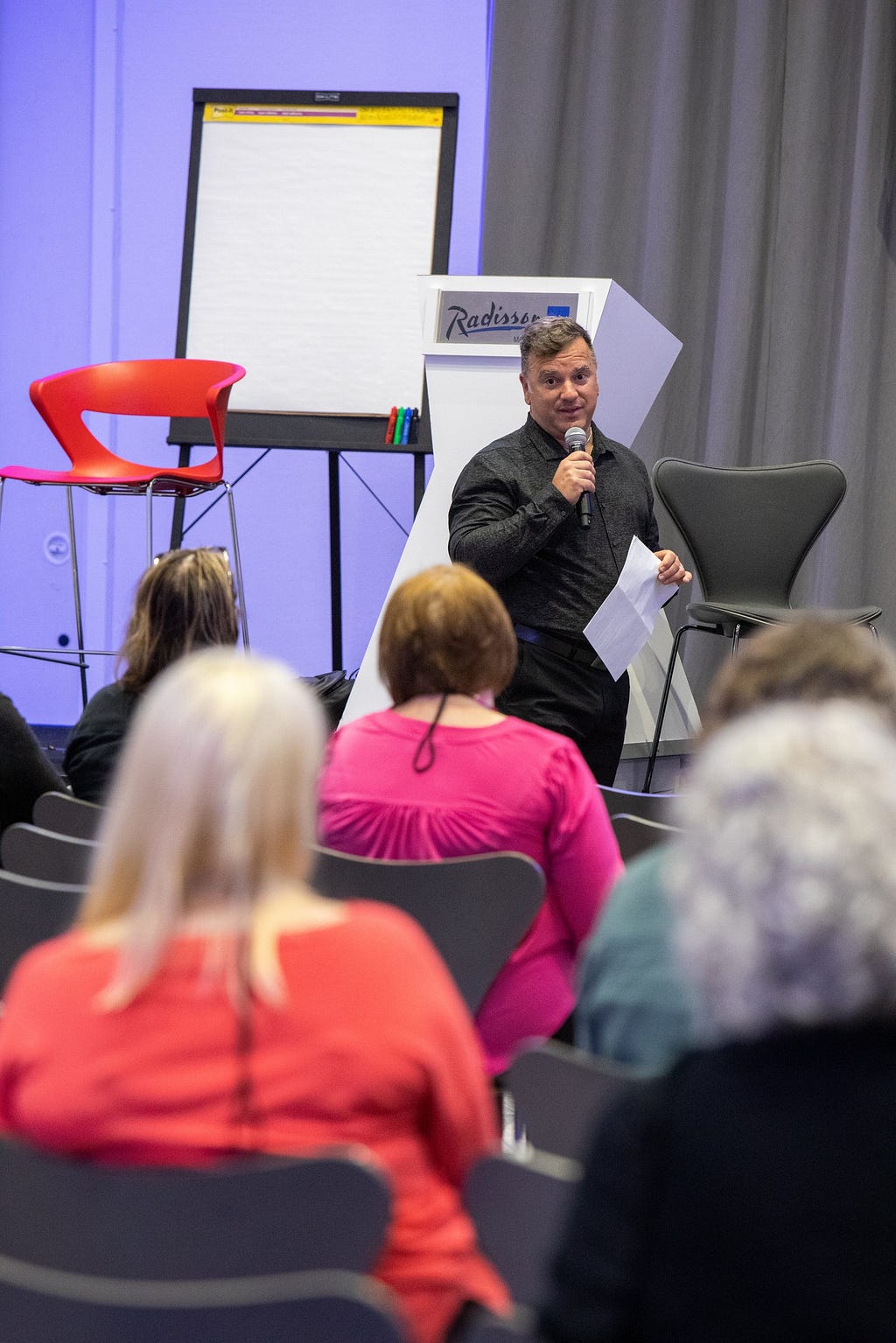
R. Karl Hebenstreit, Ph.D., PCC, PHR is a certified Executive Coach and Enneagram Practitioner, Leadership/Team/Organization Development Consultant, and international speaker with over 30 years of experience. His areas of focus are in leadership development, employee motivation and engagement, and in building psychologically-safe, inclusive cultures. He holds a PhD in Organizational Psychology and has authored two business books (the PenCraft Award-winning “The How and Why: Taking Care of Business with the Enneagram” (now in its third edition) and the Axiom-award winning “Explicit Expectations: The Essential Guide & Toolkit of Management Fundamentals”) and one children’s book (the PenCraft Award-winning and Readers’ Favorite 5-Star Award-winning “Nina and the Really, Really Tough Decision”).
Thanks for being part of this series. Let’s jump in and focus on your early years. First off, can you give us a snapshot of your life before you started your career?
Thank you for having me! I was born in New York and raised in Greece from 2–9 years old, then back to the US (New Jersey, until I moved to California in 1998). I attended and graduated from Rutgers College with a triple-major in Psychology, French, and Political Science, and continued on for my Master of Science in Human Resource Management from the Rutgers School of Management and Labor Relations, while I was working as a temporary employee at Merck & Co., Inc, in their Human Resources departments. I eventually went on to get my Ph.D. in Organizational Psychology from the California School of Professional Psychology/Alliant International University. That piqued my interest in executive coaching and culminated in my Evidence-Based Coaching Certificate from Fielding Graduate University and my Professional Certified Coach (PCC) designation by the International Coaching Federation (ICF).
What was it about personal and professional development that attracted you to start investing in yourself? Also, can you share when you started and what your first investment was?
My parents always stressed and imparted in me the importance of education. As an only child, I was fortunate that they had planned financially for my college education. Once I graduated into an economy where that wasn’t enough (in 1993), I continued on to get my Master’s Degree part-time at night, while working full-time as a temporary employee during the day to pay for it, eventually leveraging tuition reimbursement when I landed a benefited job two years later to finish it up. And once that was attained (in 1996, and after having sworn I was done with school!), I decided to go back to get my Ph.D. three years later (to evolve from Human Resources to Organization Development). That’s where and when I was introduced to the Enneagram (in 1999), which started a new self-awareness and development journey that went far deeper than previous instruments I used (like MBTI). This, coupled with my pursuit of my executive coaching certificate, jumpstarted my self-development journey. Life is a continuous learning journey of deepened self-awareness and additional knowledge, skills, tools, and certifications to help me and my clients.
Can you think back and share one of the biggest blind spots you had that someone helped you see and something specific about what you learned and how it showed up in your life?
One of my biggest life lessons that I carry to today happened when I was about 27 years old. While I was in Human Resources, I was working in a Marketing role for a talent management product. As part of my duties, I was tapped to present the product at the Society for Human Resource Management Conference in two back-to-back sessions, in the hopes of enticing attendees to influence their companies to buy membership into the Talent Alliance. I approached it from a sales demo perspective, assuming this is what the audience wanted, and was met with a mass exodus of disappointed attendees exiting my session before it was done. I was devastated. That was when I had the epiphany that I didn’t know what they wanted or expected. I vowed to never have that experience or feeling happen again. At the beginning of the next session, I asked them what they were hoping to get out of the session and customized the presentation content in the moment to meet those expectations. This averted another repeat mass exodus, as the second round attendees received what they wanted, and I got my message across in a way that made sense to them. I would later come to realize that I was stuck in the self-focused Golden Rule mindset and instead needed to adopt the Platinum Rule — treat people the way THEY want to be treated. And the only way to find out what they want — what they really, really want — is to ask them (because none of us is a mind reader). This is why I always start each workshop or coaching session with genuine curiosity to find out what the participants’ or client’s expectations are (which counteracts any arrogance of thinking that I already know). And this is what helps me make sure I meet and exceed their expectations.
How long have you had an executive coach and how would you describe your relationship?
I have been a certified executive coach for over 16 years. My coaching engagements have ranged from several sessions (program-specific), three months (targeted coaching), six months, to three years. I’d like to think that my clients consider me to be collaborative, congenial, humorous, while still firmly holding them accountable to meet their growth goals, expanding their mindsets and perspectives, and helping them optimize their leadership potential and effectiveness.
If I was sitting down with your coach, and asked “what’s the one thing your client needs to work on more than anything else in the world” what would I hear them say about you?
Personally, people-pleasing, setting and maintaining healthy boundaries, and saying “No!” These are and will always be a struggle for me and my personality/motivation type (as an ENFJ and Enneagram type 2). Coaching and self-coaching will always help … AND it’s a lifelong focus and practice. It’s important to remember that, regardless of how much work we do on ourselves, we are human and some of these hardwired habits and mindsets may creep back up in moments when we are not 100% present, self-aware, and “demure and mindful” (this will most likely happen when we’re stressed, triggered, complacent, or bored).
If you were questioned about your “ROI” (return on investment), is there anything you can point to that justifies how much you spend on being coached? If not, how do you justify it?
Typical executive coaching engagements are usually scheduled for 45–60 minutes every two weeks. Of course, I also make myself available in cases where a true emergency pops up; ad hoc coaching can be scheduled at a mutually-convenient time for the coach and coachee. AND my AI coach is always available 24/7/365 for immediate coaching in between sessions. I have been fortunate to have a longitudinal case study where I partnered in long-term coaching engagements over three years with a CEO and his leadership team. During that time, they achieved almost double year-over-year revenue growth and received the highest employee satisfaction and engagement scores of all divisions in the entire company. Furthermore, all employees who continued their coaching received promotions and role expansions. This experience aligns with studies that show that the ROI for executive coaching is 500% — 700%.
Let’s dive into specifics. What are the top 5 things you’ve either gained or learned about yourself, where you specifically made changes, and have seen positive results. Be specific and feel free to give us either the background or story about each.
Again, I will address this from the perspective of a coach, using anonymous examples and quotes from various of my coaching engagements and clients.
1. Developing comfort in delegating effectively. Beginning to understand that it’s impossible to do it all alone, by yourself, AND that doing it all alone robs others of the opportunity to learn and develop, and increases the risk of the leader burning out (and then not having backups who know how to fill in the gaps). Also, learning how to delegate effectively with explicit expectations, guardrails, support (when needed), and feedback along the way. This frees up time for leaders to be more strategic instead of tactical. Learning to delegate effectively and “Having the time to think differently, plan and engage with others has opened up communications even more. Moved to a mentoring / collaborative mindset.”
2. Letting go of the Golden Rule (treat others the way you want to be treated) and adopting the Platinum Rule (treat others the way THEY want to be treated). “Having the time to think differently, plan and engage with others has opened up communications even more. Moved to a mentoring / collaborative mindset.”
3. Prioritizing and time management in a world where everything is a priority and achieving the right results. This usually involves introducing the Urgent/Important Matrix and how to decide which activities go into which quadrant, allowing clients to focus first on what’s truly relevant to the accomplishment of their own goals, while delegating, pushing back, or totally letting go of the rest, appropriately. “I have helped in impacting company financial growth since coaching started.”
4. Building self-confidence, combatting imposter syndrome, building executive presence. “I have seen a marked improvement in how I look at things and how I am perceived.” “… I have seen a shift in their attitude towards me and what I contribute, as well as different, more visible responsibilities. Level of respect up the chain has definitely been shifting from tactical to strategic.” “Better equipped to speak up — seriously. I had gotten to a place where I was holding back and not allowing myself to share my perspective after being shut down. I have found a renewed confidence.”
5. Self-care, staying true to self and values, and expressing vulnerability. “Work feels calmer and more thoughtful.” Sometimes this has even resulted in the coachee coming to the realization that their current work situation is not healthy for them and that they should go elsewhere or take on a different role that is more aligned with their values, aspirations, ideals, goals, and needs. Role modeling vulnerability has led to increased trust of the leader by their team members, as well as their willingness to be more vulnerable with and trusting of each other.
What advice would you give other entrepreneurs who don’t think it’s worth investing in a coach or spending money to join a leadership program?
Some myopic leaders subscribe to the scarcity mindset of “What if we invest in developing my people and they leave to go to a competitor?” to which the response is “what if you don’t, and they stay?” The same applies to the concept of insanity: don’t expect different/better results if you keep doing things the same way. If you’re comfortable and pain-free being the way you are and achieving what you’re achieving, there’s no argument I can give you to change, expand your mindset, and develop yourself. People will only pursue change and development once their perceived pain of staying the same is greater than the perceived pain of undergoing change/development. Inventory what’s going on around you and be proactive before the pain gets to be too much. Continuous growth, learning, and self-development are the way.
Do you have any examples of how being coached had an impact on others who work around you? How has it spilled over to your team or your family?
There’s a danger when someone is being coached and experiences the value of coaching. Remember, coaching is about asking questions to have the coachee find out the answer that is within them. Oftentimes, people who are being coached (and even coaches themselves) see how valuable it is for them, and start addressing every situation as a coaching engagement (unconsciously). The targets of their coaching may not be interested in this type of interaction and may call it out. It’s always best to be aware and explicit in seeking consent for any type of coaching. This reminds me of some great relationship advice: When your partner is complaining about something, ask them what they want from you — an empathic ear, advice, or a co-created solution to the problem? This will stave off a lot of potential arguments and misunderstandings …
There are so many executive coaches out there. How did you go about selecting the right one for you?
As an Executive Coach, I am used to receiving referrals from other colleagues who see me as a better match for their friends or potential clients. People also have found me after having listened to me on podcasts. Chemistry interviews are also recommended, where coaching clients get to interview available coaches to consider for their coaching investment, prior to engaging in a coaching contract with them. Keep in mind that some solopreneur coaches (myself included) also work through larger coaching houses like CoachSource, who may receive large coaching engagements with corporations requiring multiple coaches at the same time for their leadership development programs. Factors to consider include the personality chemistry between the coach and coachee, coaching style/methodologies, in-person availability (if that’s important to the coachee, although most sessions are conducted virtually these days), time zone, specialty in the focus area of coaching (i.e., executive presence, EQ, becoming more strategic, career coaching, etc.) and/or certification in the instruments being used (i.e., Enneagram, Leadership Circle Profile, etc.), ICF or EMCC coaching certification of the coach, AI capabilities, recommendations/referrals from trusted friends/colleagues, cost, duration, etc.
Lastly, where can our audience go to follow your journey and perhaps get inspired to make their own investment in coaching?
I invite and welcome Authority’s readers to:
connect with me via LinkedIn at https://linkedin.com/in/rkarlhebenstreit
check out my website and join my mailing list: www.performandfunction.com
check out my books on Amazon and Ingram Spark:
The How and Why: Taking Care of Business with the Enneagram: https://a.co/d/afDU79r
Nina and the Really, Really Tough Decision, English version: https://a.co/d/jgt0uxr
Nina and the Really, Really Tough Decision, Spanish version: https://a.co/d/fnRvn9o
Nina and the Really, Really Tough Decision, French version: https://a.co/d/068uRvGv
Nina and the Really, Really Tough Decision, Greek version:
https://shop.ingramspark.com/b/084?params=HEGKuYH2TwIVwOIdMIp9xOSNZ1OzyzmZAEDZH1CZlPC
Explicit Expectations: The Essential Guide & Toolkit of Management Fundamentals:
on Amazon: https://a.co/d/3ngzE2B
on IngramSpark: https://shop.ingramspark.com/b/084?params=cxSZyUaUPyMCA5ourhtMXaerxzY0gVTiPG8xpJRn3zM
Thank you so much for joining us! We wish you only success.
It has been my pleasure! Thank you for the opportunity to contribute to your work, from the perspective of an executive coach!
R. Karl Hebenstreit Of Perform & Function On An Inside Look at the Benefits and Impact Of Working… was originally published in Authority Magazine on Medium, where people are continuing the conversation by highlighting and responding to this story.