
The Future Is Personal: Jesse Favre Of Jesse Favre Business Solutions, LLC On How Leaders Are Building Brands That Outlast Their Businesses
Visibility shortened the sales cycle because trust had already been established. They knew they wanted to work with me before I ever spoke a word to them.
People trust people more than they trust companies. That’s why more CEOs, founders, and executives are stepping out from behind the logo and building a real public voice, one that reflects what they stand for and where they’re trying to take their business. In this series, we’re talking with leaders who’ve made that shift, from running the day-to-day to becoming recognizable authorities in their space. They’ve learned that credibility builds over time, and that personal branding, when done right, can create influence that leads to something very meaningful.
As a part of this series, we had the pleasure of interviewing Jesse Favre.
Jesse Favre is a leadership trainer and public speaker, specializing in human behavior and mental health in the workplace. With a dual MSW/MBA, she has led over 1,000 seminars, frequently speaking on burnout, resilience, and team performance. Through her own experience cultivating a visible professional presence, Jesse demonstrates how credibility and connection can grow when leaders step into the spotlight with intention.
Thank you so much for joining us in this interview series. Before we dive into the discussion, our readers would love to “get to know you” better. Can you share your backstory and what brought you to your current career path?
Of course! Zooming out on my career, I think it’s always focused on the intersection of people, performance, and workplace pressure.
In 2013, I graduated with a dual Master of Social Work and Master of Business Administration from Washington University in St. Louis and then completed a two-year administrative fellowship at Seattle Children’s Hospital. From there, I moved into healthcare leadership and consulting roles, where I worked with everyone from frontline staff to executives, focusing on continuous quality improvement and patient safety.
At the same time, I was eager to support leaders in high-pressure roles across other industries. So, I spent several years as a part-time senior trainer at a university, developing and delivering performance-improvement programs for law enforcement, city government, and federal agencies.
While these were very different industries, similar dynamics kept coming up: burnout, miscommunication, and pressure to perform with limited resources.
My work was largely focused on technical training, but it became clear that many of the challenges were behavioral, as well. I could feel my social work and business backgrounds colliding.
That realization ultimately led me to found my training and speaking company in 2022. Since then, I’ve delivered more than 1,000 workshops and seminars, helping leaders better understand human behavior at work and build healthier, higher-performing teams.
Was there a defining moment when you realized that building a personal brand was no longer optional for leaders, it was essential?
Yes, and I was lucky to have learned this early in my career.
In many onboarding programs, a leader might pop in from time to time, rattling off the mission statement or organizational values before running out to their next meeting.
However, one hospital president made a completely different entrance.
He walked in with a huge smile and shared some vulnerable, funny, and relatable stories.
His personal brand was an authentic reflection of who he was and what he stood for. It was consistent from onboarding onward.
Looking back, I don’t think people followed him just because of his title. They followed him because of who he was as a person. And we knew who he was because he presented himself so genuinely.
To me, that’s personal branding done right. It’s stuck with me for years.
How would you describe the relationship between your business brand and your personal brand today? Do they operate separately, or are they intentionally intertwined?
As a solopreneur in the speaking and training space, my business and personal brands are largely one and the same.
Self-employment can certainly feel like a crash course in personal branding.
What’s the biggest misconception people have about personal branding for established leaders or executives?
I think many leaders believe they need to come across as perfect: totally flawless, totally composed, all the time.
I’ll give you an example.
I once had a colleague reach out and say, “I’m so envious that you get to be funny online. I wish I could be funny, too!”
She had built such a polished personal brand that she worried her business would fall flat if she showed up with humor.
It’s an easy trap to fall into when you’re trying to showcase the best of what you have to offer. And for established leaders, it can feel like there’s too much to lose.
I think of it like this: in an era of AI headshots and ChatGPT-generated posts, what’s real is going to be what sticks.
That doesn’t mean you need to overshare. You just need to let people see the humanity in you.
Can you share a time when becoming more visible personally directly benefited your company or career?
Absolutely.
The first time I noticed the business impact of visibility was during a call with a prospective client.
As I started to explain my background, it became clear they already knew it… and more.
I panicked. How did they know all these details about me?
And then it hit me: they’d read my blog, they’d watched my videos, they were following my work online. It just never occurred to me that clients would take the time to do that much research.
Here’s the thing: the call wasn’t about whether I was the right fit. It was just about pricing and logistics.
Visibility shortened the sales cycle because trust had already been established. They knew they wanted to work with me before I ever spoke a word to them.
What were some of the first steps you took to define your personal narrative or thought leadership platform?
As I narrowed down what I’d focus on in thought leadership, I asked myself some critical questions. For instance, what change did I most want to see in the world? In what areas could my skillset and experience add unique value?
Once I identified my focus areas, I developed and refined my “story of origin”: why I do my work and how my experiences connect.
I wanted talking points that were quick, clear, and compelling.
I worked with an incredibly supportive mastermind group that gave me candid feedback on my story for several months. I continue to be so grateful for that experience! Having a story of origin has helped in multiple areas, from media appearances to sales calls.
Many leaders fear self-promotion or worry about appearing “too public.” How did you overcome that mindset, and what advice would you give others struggling with it?
On a deeply human level, attention can feel scary.
I’ve had to remind myself that my audience isn’t predators; they’re people looking to connect.
And if someone doesn’t resonate with who I am and what I stand for, that’s okay. A strong personal brand repels the wrong people and attracts the right ones. Both matter.
For me, maintaining a positive mindset about all of this involves regular therapy. It’s important to have a safe space to voice your fears and frustrations.
How has media, including interviews, podcasts, and social platforms, helped amplify your personal voice, and what lessons have you learned from those experiences?
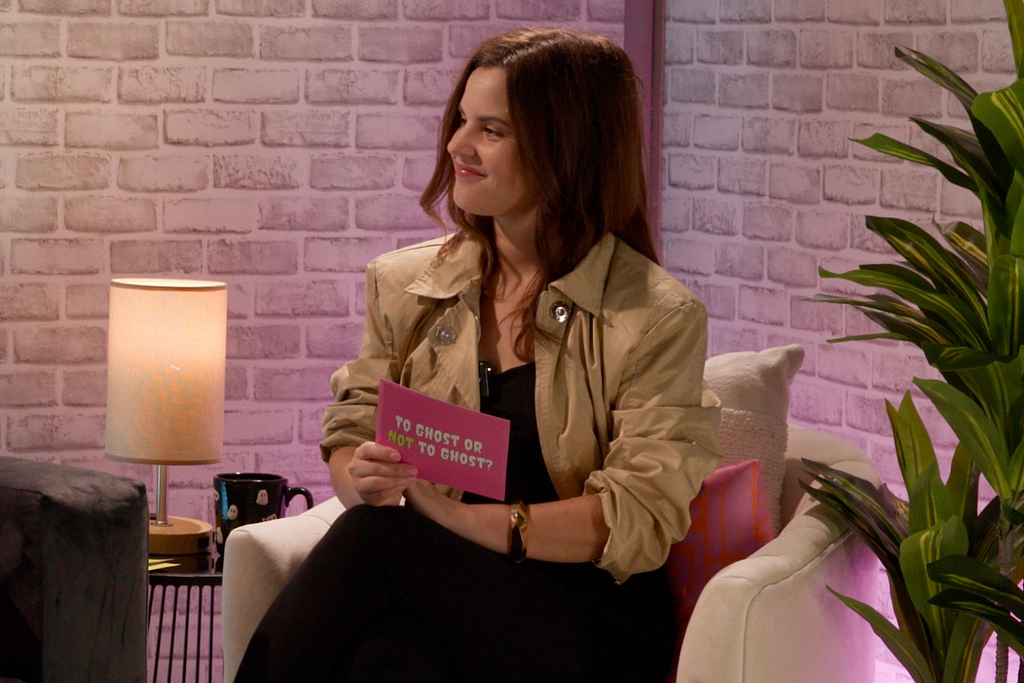
Media exposure has been incredibly helpful for demonstrating my speaking abilities and showcasing my areas of expertise. I’ve participated in everything from podcasts to articles to a talk show.
My biggest lesson for live events is to prepare thoroughly… and then let go. The best moments happen when I’m fully present and enjoying the conversation.
Can you share a mistake or misstep you made early in your personal branding journey, and what it taught you?
I wish I could show you my original website. It was unbelievably confusing! I was trying to do way too much, and in turn, I was doing nothing.
Someone once told me they had visited my site and had no idea what my job was. That feedback was brutal, but I needed to hear it. My website required a total rebuild.
I think of personal branding like throwing clay on a wheel. At first, it’s probably going to wobble. But once you find the center, everything starts to take shape.
How do you ensure that your personal brand evolves as you and your business grow, without losing credibility or focus?
As I’ve evolved in my business, I’ve leaned deeper into a distinctive brand.
In fact, I went from not being able to commit to a color scheme to being meticulous about the color of my paper clips.
Speaking of colors, I did have some initial concerns about using pink in my branding. For reasons I could unpack elsewhere, I was worried I wouldn’t look as professional or capable. As it turned out, I get so many compliments on it!
I remember speaking at a conference and filling the room with pink materials. After my session, a woman introduced herself and said she’d left her pink jacket in her car that morning. She loved her coat, but she worried she wouldn’t look professional enough. So, here she was, relieved to see the pink. It reminded me that branding is about making a connection, and sometimes those bold moves are the right ones.
In a crowded market, what do you do to sound like yourself instead of generic ‘thought leadership’?”
I read my written communication aloud. If it doesn’t sound like something I’d actually say, I rework it.
I also avoid obsessing over what competitors are doing. No one else has my exact experiences, voice, or perspective. So, I’m comfortable putting out work that hits a little differently.
How do you measure whether your personal brand is working, what signals matter, and what signals don’t?
It’s an interesting question, and this may not be the most nuanced response.
I used to be more focused on measuring immediate impact, like views and post impressions.
However, the further I got into my work, the more I could see that this is the long game.
Think of it this way: you may post a video that someone finds three years later, and it results in you booking a gig. Did the fact that it had 50 views in the first month matter? Not necessarily.
Sure, there are metrics that can help you tighten your message and improve your presentation skills.
With that said, I don’t obsess over short-term signals. I’m much more concerned about building a brand I want to continue to grow and putting a message out there that attracts aligned clients.
When the right kind of work keeps coming in, I consider my personal brand a success.
Here is our main question. Based on your experience, what are the top 5 strategies leaders can use to build a personal brand that outlasts their business? (Please share an example or story for each.)
1. Take stock of your personal brand today.
Whether you realize it or not, you already have a personal brand. It’s how you show up online and in person. It’s how people experience you. It’s how they talk about you in rooms you’re not in.
So, take a moment to look at it. Google your name and notice what comes up. Look at your LinkedIn as if you were a prospective customer, business partner, or new hire seeing it for the first time.
Ask a few people you trust what you’re known for and where they think you add unique value.
You can’t intentionally shape your personal brand until you see it for what it is.
2. Get clear on your goals.
In an ideal state, where are you headed in your career? Where is your company headed?
Now compare that image to your current personal brand and ask yourself: Do you see that future reflected yet?
If not, it’s just information. It tells you where to start making adjustments.
For example, say you want to be a thought leader. Are you sharing your perspective online yet?
Maybe you want to be a trusted coach. Are you showing up consistently and authentically?
Your personal brand should point toward where you’re going, not just where you’ve been.
3. Embrace the cringe.
It can be extremely uncomfortable to put yourself out there for your friends, family, and former co-workers to see.
Just keep in mind that you’re sending a signal: a signal that attracts the right people into your world.
Think of the cringe as just part of being seen in an intentional way.
4. “Talk nice” to your nervous system.
The more visible you become, the more you may feel the pressure of having eyes on you.
From a brain science perspective, that can register as a threat. After all, if you were out in nature and that many eyes were on you, it probably wouldn’t be safe!
So, instead of interpreting attention as danger, try reframing it as an opportunity to connect.
How you relate to visibility determines not only how you feel but also how people experience you.
5. Decide what you don’t want to share.
We often focus on what we want to put out into the world. But what you choose not to share is equally important.
As a mental health speaker, vulnerability is a meaningful part of my work, but I don’t share everything.
A virtual or in-person stage should not be treated as a therapy office. There’s nothing private about your platform.
Once you put something out into the world, just assume you won’t be able to take your words back.
So, make a list of what you want to keep to yourself. Maybe it doesn’t advance your professional goals. Maybe it’s something precious to you, and it’s important to protect it.
Clear boundaries are what make a personal brand feel safe and grounded. And that’s exactly what’s going to help you shine!
You are a person of enormous influence. If you could inspire a movement that would bring the most amount of good to the most amount of people, what would that be?
I’m not sure I’m a person of enormous influence, but thankfully, we all have the ability to shape our world in some way.
If I could wave a magic wand, my first order of business would be improving mental health support. I’d love to see work environments where humanity is always acknowledged, resources are offered, and regular check-ins are just part of how businesses operate.
How can our readers continue to follow you or your company online?
I’d love to connect on LinkedIn (Jesse Favre).
I also share content on Instagram and TikTok (@jessefavre) as well as YouTube (@jesse_favre).
If you’re interested in human behavior and well-being at work, I host a new talk show called Inside the Team with Jesse Favre. You can watch it on YouTube (@inside_the_team) and find episode transcripts plus free resources on my website (jessefavre.com).
Thank you so much for sharing all of these insights. We wish you continued success and good health!
Thanks for having me!
The Future Is Personal: Jesse Favre Of Jesse Favre Business Solutions, LLC On How Leaders Are… was originally published in Authority Magazine on Medium, where people are continuing the conversation by highlighting and responding to this story.