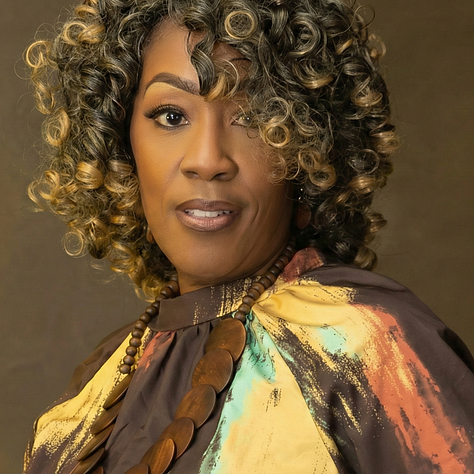
The Future Is Personal: Dr. Misty D. Freeman of Mocha Sprout On How Leaders Are Building Brands That Outlast Their Businesses
Your personal brand is your credibility infrastructure. It’s how people assess whether you have the expertise, lived experience, and moral authority to lead on complex issues.
As a part of this series, we had the pleasure to interview Dr. Misty D. Freeman.
Dr. Misty D. Freeman is a visionary leader at the intersection of equity, education, technology, and behavioral science, and founder of Mocha Sprout, a “belonging in tech” lab. Known as “The Belonging Scientist™,” she empowers organizations to create inclusive, human-centered cultures through her proprietary Mocha Mixture™ framework, challenging algorithmic bias and elevating underrepresented voices in AI and emerging technology. With over 25 years of experience in education and a Doctorate in Instructional Technology, Dr. Freeman is the author of “Unconscious Algorithms” and a sought-after keynote speaker on ethical AI and belonging strategy.
Thank you so much for joining us in this interview series. Before we dive into the discussion, our readers would love to “get to know you” better. Can you share your backstory and what brought you to your current career path?
I’m from rural South Alabama. My journey through education wasn’t just about personal advancement. It was about survival and ultimately discovering my purpose. I earned multiple degrees, including a Doctorate in Instructional Technology, but the real education came from lived experience. For over 25 years, I have worked as a social worker, educator, school administrator, and director of special education. Throughout all these roles, I noticed a consistent thread: marginalized individuals, particularly Black girls and women, neurodivergent students, and those from underserved communities, were systematically excluded from spaces where decisions were being made about their futures. I witnessed how patterns of exclusion were being encoded into the very technology that was supposed to democratize education. In 2021, I founded Mocha Sprout, but I soon realized the fight for inclusion had moved into a new, critical arena: artificial intelligence. I developed the Mocha Mixture™, a behavioral science approach that transforms belonging from corporate buzzwords into measurable, actionable strategy. Today, my work focuses on challenging algorithmic bias, closing the digital divide, and ensuring that ethical innovation and inclusive design are driving forces, not afterthoughts.
Was there a defining moment when you realized that building a personal brand was no longer optional for leaders, it was essential?
Absolutely. Throughout my career, regardless of my title or institution, I kept returning to the same mission: advocating for marginalized voices. The turning point came when I recognized that the most critical space where these voices were needed wasn’t just in traditional education anymore. It was in artificial intelligence. As an educator, I could influence hundreds, maybe thousands, of students. But if I stepped forward as a public voice, as “The Belonging Scientist”, I could influence the systems, algorithms, and technologies that would impact millions. That’s when I understood that personal branding wasn’t about ego or self-promotion. It was about stewardship. The experiences I’d lived, the expertise I’d built, the perspective I carried as a Black woman from rural Alabama who’d sat at tables where people like me were never expected, weren’t just my story. It was a responsibility. The algorithms being built today will shape education, hiring, healthcare, and criminal justice for generations. Personal branding became essential the moment I realized my voice could change not just individual lives, but entire systems.
How would you describe the relationship between your business brand and your personal brand today? Do they operate separately, or are they intentionally intertwined?
They are absolutely and intentionally intertwined. Dr. Misty D. Freeman is Mocha Sprout, and Mocha Sprout embodies everything I stand for. There’s no separation between my values and my business mission; they’re the same. Mocha Sprout is the vessel, but my personal brand is the foundation. My lived experiences, my academic rigor, my passion for behavioral science, my commitment to dismantling bias, all of that flows directly into the work Mocha Sprout does. When organizations hire Mocha Sprout, they’re getting my methodology, my perspective, and my refusal to let belonging remain performative. I’ve never tried to create distance between the two because authenticity is my competitive advantage. Clients come to Mocha Sprout because of who I am, what I’ve overcome, and what I represent. In a space as sensitive as AI ethics and belonging strategy, that trust is everything.
What’s the biggest misconception people have about personal branding for established leaders or executives?
The biggest misconception is that personal branding is about self-promotion or vanity; that it’s somehow less serious than “just doing the work.” That couldn’t be further from the truth. Your personal brand is your credibility infrastructure. It’s how people assess whether you have the expertise, lived experience, and moral authority to lead on complex issues. For leaders like me working at the intersection of equity and emerging technology, personal branding is actually about accountability. When I put my name and face on my work, when I share my perspectives publicly, I’m saying: “This is what I believe. This is what I stand for. Hold me to it.” That’s the opposite of vanity; it’s vulnerability and commitment. Another misconception is that personal branding means being everywhere and saying everything. It’s about being strategic, consistent, and authentic in the spaces that matter most to your mission. I’m laser-focused on AI bias, belonging in tech spaces, and the ways algorithmic systems impact marginalized communities. That specificity isn’t limiting; it’s what makes my voice credible and distinctive.
Can you share a time when becoming more visible personally directly benefited your company or career?
Without question, the most significant moment was being invited to speak as a keynote speaker at Khan Lab School alongside Sal Khan, the founder of Khan Academy. That opportunity came because I had built a personal brand as a thought leader on AI bias in education and belonging in tech spaces. Leading up to that keynote, I’d been consistently sharing perspectives on LinkedIn and positioning myself as “The Belonging Scientist,” able to bridge behavioral science, education, and emerging technology. Speaking at Khan Lab School and serving as a panelist at Howard University contributed to my expertise in this specific space. These opportunities did three major things. First, it validated my positioning and opened doors to conversations with educational institutions and EdTech companies that had been out of reach. Second, it attracted clients who specifically wanted to work with someone who’d shared stages with some of the most respected voices in education. Third, it amplified my message exponentially to audiences I could never have reached on my own.
What were some of the first steps you took to define your personal narrative or thought leadership platform?
The first step was identifying my unique intersection. I asked myself, Where do my lived experience, academic expertise, and passion converge in a way that’s desperately needed but underserved? The answer was clear: the intersection of AI, education, behavioral science, and equity, specifically focusing on how algorithmic bias impacts marginalized communities. I created the Mocha Mixture™, my behavioral science approach to belonging. By having a named methodology, I positioned myself as someone who hadn’t just identified problems but had created solutions. I branded myself as “The Belonging Scientist™,” a title that immediately communicates what I do and how I’m different. I began showing up consistently, sharing insights that were both accessible and deeply informed by research. And critically, I connected my personal story to the work. I never shied away from talking about growing up in poverty in South Alabama or experiencing bias. These experiences aren’t separate from my expertise; they’re the foundation of it.
Many leaders fear self-promotion or worry about appearing “too public.” How did you overcome that mindset, and what advice would you give others struggling with it?
This was one of my biggest challenges early on. Growing up in the South, I was taught to be humble. I also carried the awareness that visibility comes with additional scrutiny. What shifted everything was reframing visibility as responsibility rather than vanity. The work I’m doing, advocating for marginalized voices in AI, disrupting algorithmic bias, is too important to keep quiet about. Every day I stay small, someone else fills that space, often someone who doesn’t carry the lived experience or commitment to equity that I do. I started asking different questions. What if the Black girl in rural Alabama who’s being misevaluated by a biased AI system never hears a message that could change her trajectory, because I was too uncomfortable to share it? What if the organization that could transform its culture never finds Mocha Sprout, because I was afraid of looking “too public”? My advice is separate self-promotion from self-service. You’re not sharing for ego; you’re sharing for impact. If your work genuinely helps people, promoting it is an act of service. Remember that visibility is a tool to amplify your message and create change at scale. Find your “why” that’s bigger than you. When your visibility serves a mission that transcends your comfort, it becomes easier to push through the fear.
How has media, including interviews, podcasts, and social platforms, helped amplify your personal voice, and what lessons have you learned from those experiences?
The media has been transformational. Authority Magazine interviews like this one give me credibility markers. LinkedIn has been my primary platform for thought leadership. I’ve landed speaking opportunities and consulting contracts directly from posts that resonated with the right people. Consistency compounds. One interview doesn’t change everything, but showing up consistently builds a body of work that establishes undeniable expertise. Authenticity beats polish. People connect with my story much more than jargon-heavy presentations. Specificity is your superpower. By being laser-focused on AI bias and marginalized communities, I became the go-to expert in a niche rather than one of many in a crowded field. My story is data, my lived experience is expertise. Finally, strategic silence is okay. You don’t have to comment on everything or be everywhere.

Can you share a mistake or misstep you made early in your personal branding journey, and what it taught you?
My biggest misstep was positioning myself too broadly. When I first started building my public presence, I was talking about unconscious bias, educational equity, and inclusive leadership; all important, but I was trying to be everything to everyone. The result? Polite nods, but no traction. The turning point came when I asked- Where are marginalized voices needed most right now, and where do I have unique authority? The answer: Artificial Intelligence. AI is being built at scale, encoding biases that will impact billions. Once I repositioned myself at the intersection of AI, education, behavioral science, and equity, everything changed. I became “The Belonging Scientist™.” Suddenly, I wasn’t one of many; I was one of the only voices connecting these critical dots. Clarity creates demand. The more specific you are about the problem you solve, the more indispensable you become. Timing matters; personal branding is about where your expertise intersects with urgent, emerging needs. Evolution is not failure; adjusting your positioning demonstrates strategic thinking.
How do you ensure that your personal brand evolves as you and your business grow, without losing credibility or focus?
I anchor evolution to unchanging core values. My positioning may evolve, but my core mission never changes: ensuring marginalized individuals feel included and respected in all spaces. I let my learning be visible. As AI evolves, I share what I’m learning, which builds credibility. I expand concentrically, not randomly; new services are always adjacent to my core expertise. I measure evolution by transformation, not transactions. I revisit positioning annually but stay consistent daily. And I build equity in brand assets that compound over time.
In a crowded market, what do you do to sound like yourself instead of generic ‘thought leadership’?
I let my voice be unapologetically personal. I reference growing up in rural South Alabama, my mama’s lessons, and the specific challenges I experienced. When I talk about algorithmic bias, I’m speaking from lived experience, that authenticity is impossible to replicate. I use proprietary language: the Mocha Mixture™ and “The Belonging Scientist™.” I bridge worlds that usually don’t talk to each other — education, technology, behavioral science, and social justice. I don’t shy away from specificity: “Biased algorithms are misevaluating Black Gen Z girls in educational systems right now. Here’s exactly how.” I share transformation stories, not just theories. And my thought leadership is grounded in research; when I make claims, I bring receipts.
How do you measure whether your personal brand is working, what signals matter, and what signals don’t?
Transformation stories are number one. Is my work changing outcomes for marginalized individuals? Quality of inbound opportunities. Client outcomes and renewals. Thought leadership invitations. Feedback quality: Are people telling me “this changed how I think”? Signals that don’t matter as much: follower count. I’d rather have 1,000 engaged decision-makers than 100,000 random followers. Post likes can be nice validation, but they don’t change systems. Being everywhere, I don’t need every platform. Perfect polish — none of that mattered as much as showing up authentically. I do quarterly “brand health checks,” asking: How many transformation stories? What was the quality of opportunities? Am I moving the needle on AI bias and belonging? Do I feel energized or drained? This keeps me focused on impact, not ego metrics.
Here is our main question. Based on your experience, what are the top 5 strategies leaders can use to build a personal brand that outlasts their business?
1. Root Your Brand in Unchanging Values, Not Changing Services
My offerings evolved from general unconscious bias coaching to an AI-specific belonging strategy, but my core mission never changed: ensuring marginalized individuals feel included. When I founded Mocha Sprout, I anchored it to a deeper value: measurable belonging. When the market shifted toward AI ethics, I didn’t rebuild my brand; I applied my existing foundation to the emerging need. Services become obsolete, but if your personal brand is anchored to timeless values like equity and innovation, you can pivot to new ventures while maintaining your core identity.
2. Build Proprietary Intellectual Property That Carries Your Name
I created the Mocha Mixture™, a branded framework that’s uniquely mine. I wrote “Unconscious Algorithms.” I claimed “The Belonging Scientist™” as positioning. Before developing the Mocha Mixture™, my services were hard to differentiate. Once I codified my methodology into a framework with a memorable name, everything changed. Even if Mocha Sprout evolves, the Mocha Mixture™ remains mine. That IP is portable. I can take it into any future venture. Proprietary frameworks and books become assets that transcend any single company.
3. Lead with Your Story, Not Just Your Credentials
I have impressive credentials — a doctorate, multiple degrees, and 25-plus years in education. But what makes my brand memorable is my story as a Black woman from South Alabama, and now I advise organizations on AI ethics. I share: “I grew up in poverty in South Alabama, where I experienced firsthand how bias limits opportunities. Now I use behavioral science to ensure AI systems don’t encode those same biases for the next generation.” That story creates an emotional connection. Your story is the only asset that’s truly yours and can never be commoditized. When people remember your story, they remember you — regardless of what company name is on your card.
4. Cultivate Visibility in Spaces That Archive Your Expertise
I’m strategic about where I show up. LinkedIn posts are valuable but ephemeral. Authority Magazine interviews, keynote speeches at Khan Lab School, published books — these create permanent records of my thought leadership that remain searchable for years. My appearance at Khan Lab School became a credential I can reference indefinitely. This interview becomes a permanent artifact. Ten years from now, even if Mocha Sprout has evolved, these archived pieces will still position me as an authority. Businesses can rebrand or close, but your contributions to industry conversations create a permanent body of work that establishes expertise independent of any business entity.
5. Define Success by Transformation, Not Transactions
I measure my brand’s success not by the number of clients signed or the revenue generated, but by whether I’m transforming outcomes for marginalized individuals. Early on, I focused on typical metrics, speaking engagements booked, and followers gained. Those are fine for a quarter, but they don’t build a legacy. Now I track: Is a Black girl getting a fairer assessment because an AI system was redesigned? Is an organization truly measuring belonging? Are marginalized professionals finding their voices because of frameworks I’ve shared? Those transformation stories become testimonials that outlast any business cycle. When your personal brand is defined by the change you create rather than the services you sell, it transcends any single company.
You are a person of enormous influence. If you could inspire a movement that would bring the most amount of good to the most amount of people, what would that be?
The one movement I would inspire is valuing everyone’s voice — genuinely, structurally, and measurably. We live in a world that claims to value diversity, but certain voices are still systematically excluded from rooms where decisions are made. This is especially true in AI, where algorithms being built today will shape society for generations. Yet the people most impacted are rarely at the table designing them. In technology, every team building AI systems would include voices from impacted communities as co-designers with decision-making power. In organizations, belonging would be measured through behavioral science, like the Mocha Mixture™, creating real accountability. In education, every child’s brilliance would be recognized by systems designed to see them fully. When we genuinely value everyone’s voice, we unlock innovation we never knew was possible. The most transformative ideas come from the intersection of different perspectives, especially those of historically marginalized people. This movement would bring the most good because when we design technology and systems that work for the most vulnerable, we create solutions that work better for everyone. That’s the beauty of true inclusion.
How can our readers continue to follow you or your company online?
Connect with me on LinkedIn at linkedin.com/in/drmistydfreeman for in-depth thought leadership on AI bias and belonging strategy. Follow me on Instagram @drmistydfreeman for personal insights, and TikTok @drmistydfreemanwhere I break down complex AI ethics concepts. Visit www.mochasprout.org to learn about the Mocha Mixture™ framework, and www.drmistydfreeman.com for speaking engagements and consulting inquiries.
Thank you so much for sharing all of these insights. We wish you continued success and good health!
Thank you for this opportunity.
The Future Is Personal: Dr Misty D Freeman of Mocha Sprout On How Leaders Are Building Brands That was originally published in Authority Magazine on Medium, where people are continuing the conversation by highlighting and responding to this story.