
If you lead genuinely with purpose — whatever that purpose is — people will lean in and follow you.
The most successful modern CEOs are rewriting the rules of leadership. They’re not only building profitable companies but building purposeful brands with personal voices behind them. These leaders understand that in today’s world, people invest in people. Their stories, values, and visibility fuel loyalty, attract opportunities, and drive business growth far beyond traditional metrics. In this interview series, we’re sitting down with leaders who’ve learned to balance purpose, profit, and personal brand — and who are using their influence to shape the future of business leadership.
As a part of this series, I had the pleasure of interviewing Tyler Christianse.
Tyler Christianse brings over a decade of multifamily experience to Funnel, including six years running the national sales organization for one of the top three property management software companies. He is focused on disrupting antiquated practices that don’t make sense, and waste money or time. He believes tech should bring out the best in your business, your team and for your customers, which is why Funnel’s renter management software flips the status quo multifamily business model on its head.
Thank you so much for joining us in this series. Before we begin, our readers would love to get to know you a bit better. Can you share your backstory and what led you to become the leader you are today?
I was born into the multifamily industry and raised around the apartment business. My father was a commercial real estate banker who eventually moved into multifamily development, so I spent my childhood stopping at apartment deals between soccer games. I started my own career looking at parcels of land for potential development. Eventually, I joined a tech company called Property Solutions, now known as Entrata, back when websites and online payments were the disruptive trends. I joined Funnel’s predecessor, Nestio, in 2018 as Chief Revenue Officer and became CEO in 2020. My journey from a sales development representative to leading a major software organization has been driven by a desire to see how much I can grow and how many people our business can truly help.
What’s the “why” that drives your work? How has your personal sense of purpose evolved as your business has grown?
My drive stems from a desire to achieve my fullest potential. When I played college and semi-pro soccer, I felt fulfilled knowing I achieved what I could on the field. I feel that same pull in business. I’m constantly looking for more renters we can assist and more employees we can support. My “why” is not fulfilled if I leave potential impact on the table. This led to the creation of HOME, Funnel’s 501c3 philanthropic initiative. We committed that for every individual we help find a home through our software, we donate one dollar to help someone else find a home. On a personal level, my purpose is to be a great husband and father, providing a wonderful life for my family and inspiring my kids to be good humans and find their own purpose.
Let’s now move to the core of our discussion. This series is about balancing purpose, profit, and personal branding. Can you help explain why each of those three matters, and why they can sometimes pull against each other? If possible, share a real example from your experience.
Everything starts with purpose. For me, that means checking if I’m balancing my role as a father and husband while expanding that sense of care through my work. Profit is a natural extension of that. If you’re doing your job and adding value, the money will follow. We never started Funnel thinking we would be profitable tomorrow; we knew that if we truly helped the industry, we would eventually build a profitable business. This year, we will achieve that. Personal brand is often a goal for people, but I don’t believe you can attain a lasting one if it’s your primary focus. If you drive purpose and add value, a personal brand grows naturally from that. These elements pull against each other when people prioritize the transactional aspects over the genuine ones.
Many CEOs focus heavily on strategy and profitability but hesitate to invest in their personal brand. What do you think about that? What have you seen work best?
The multifamily industry is defined by long-term enterprise contracts, and to maintain and nurture those relationships, personal brand is one of the most efficient ways to build trust on a daily basis. Our clients are making decisions to partner with us for years at a time, investing millions of dollars in tools their employees will use every day. That level of investment requires a huge amount of trust, which is built by demonstrating character and competence. I recently took a new client to dinner and a member of their C-suite mentioned that part of their decision to work with Funnel was based on the fact that she had known me for 15 years, even though we had only spoken a few times over that time. That connection was based on limited interactions and reputation, and it’s something I’m proud of.
What are some misconceptions you’ve encountered about personal branding in the C-suite, and how do you challenge those narratives?
The biggest misconception is that personal branding is about ego. In reality, it is about visibility and accountability. When I take a public stand on an issue, it strengthens my credibility. For example, I have been vocal about the need to end junk fees in multifamily. This is a controversial approach because some companies use these fees to pad margins, but I believe transparency is the only right way forward. By sharing that story authentically, I’m not just building a brand; I’m showing our partners what we stand for.
What’s one specific way your visibility as a leader, through interviews, speaking, or social media, has directly impacted your organization’s success? Walk us through what happened. How did you know it worked, what changed in measurable terms?
Being known as a vocal advocate for centralization has fundamentally changed our company trajectory. Five years ago, many called our ideas unrealistic. By consistently speaking on this topic through our podcast and at conferences, we built a community of believers. And now, centralization is widely accepted across the industry as the new operating model and a critical step to achieving AI success.
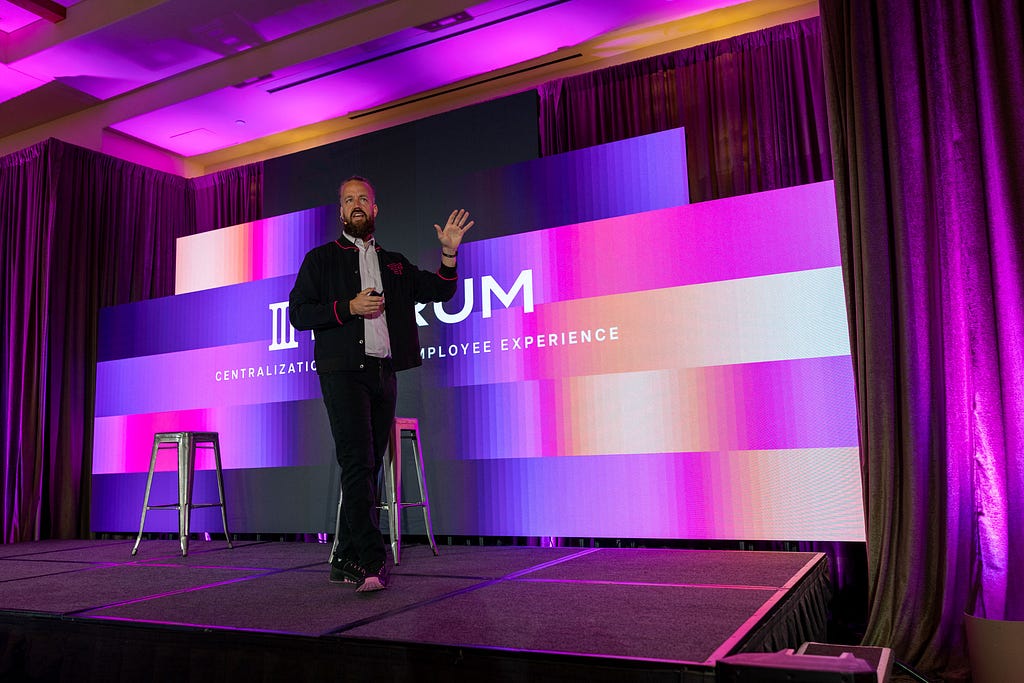
We now host an annual user conference called Forum for believers in this path. The event brings together 100’s of industry leaders focused on scaling what works, and candidly sharing their lessons learned with executive peers. It’s called the “best event in multifamily” for a reason — no vendor expo, no distractions, just candid, unfiltered conversations with operators who are actively reshaping the future.
Our podcast, Multifamily Unpacked, gives us the opportunity to sit down with some of the boldest and brightest minds in multifamily to have honest conversations about the industry and the tech that defines it. This visibility has directly impacted our growth, as we’re now the CRM and AI partner for nine of the 15 largest apartment owners in the country.
Balancing profit and purpose is easier said than done. What practices or principles guide your decision-making when those two goals seem to conflict?
If profit and purpose conflict, purpose must come first. We want to be the good guy in SaaS. We make decisions daily, particularly around AI, where we choose not to take the path of highest immediate profit if it harms the renter experience. For example, we will never use auto dialers because I hate them as a consumer.
Can you share a story about how aligning your personal values with your company’s mission created a breakthrough in performance or growth?
When we launched HOME, it was about creating something universally beneficial that would live beyond my leadership. We decided to contribute to philanthropic impact even before we were profitable. Today, that program is nearing $100,000 dollars in annual giving and is one of the top reasons people tell me they want to work at Funnel. When your purpose aligns with your objectives, it brings brand recognition and profit as a byproduct.
Our philosophy was simple: someday Funnel will make our investors lots of money, be profitable, and help millions of renters, but who cares unless we’re making an impact for good? Now that we’re on the cusp of profitability, that impact has grown significantly, projected to double in the next 18 months. That’s a clear example of when purpose and objectives align. It brings the company brand recognition, profit, and purpose to so many.
In your view, what separates a leader who simply “runs a company” from one who builds a movement around their message?
A purely commercial business is just transactional. Building a movement requires aligning with partners on their deeper purpose. We don’t just want to sell software; we want to move the industry forward for everyone. When a longtime client uses our specific terminology, like the “new operating model,” it shows we are speaking the same language and building a community together.
It’s our mission to identify employees, investors, and clients that have a mutual understanding and belief of where multifamily is headed. While you absolutely can build a profitable business around transactions alone, a purpose-driven business will always outlive and outperform the former in the long run.
How do you integrate storytelling into your leadership, both internally with your team and externally with your audience or clients?
Storytelling is the primary vehicle I use to move away from the transactional nature of software and instead highlight the human element of housing. Externally, I use our aforementioned podcast, Multifamily Unpacked, to build a community of believers. It allows us to show that we’re not just selling a product; we’re telling the story of a better, more productive way to manage the renter journey.
Internally, I integrate storytelling by starting every meeting at Funnel with our mission statement to remind the team why we’re here. I often share personal anecdotes, like my own stressful experience trying to rent a home sight unseen when moving my family (all 7 of us!) from New York to Florida. By sharing these vulnerable moments, I help our team understand the real-world impact of our work. We’re helping people with the most emotional and important financial investment they make every month.
Can you share a time when taking a public stand or sharing your story authentically strengthened your credibility or influence?
Recently, we took a very public stand on fee transparency, which has significantly strengthened our credibility. I’ve been vocal on LinkedIn and in my Forbes column that these surprise fees have no business in our industry. We chose to be a first mover here for no other reason besides it’s the right thing to do for the renter. Shortly after taking this stand, I received a message from the General Counsel at global real estate giant Greystar, expressing how pleased they were to see our public support for fee transparency. While some may try to look at this issue from multiple sides, I believe there’s only one right way: being honest about costs upfront and everywhere. Standing by this belief, even when it’s unpopular, has earned us respect from the highest levels of the industry.
What are your “Top 5 principles for balancing purpose, profit, and personal visibility?” (Please include a short example for each, plus one action a reader could try this week.)
1. Be Genuine
It is easy to say but hard to do. I see this a lot on LinkedIn — the more genuine you are and the more obvious your posts aren’t written by AI, the more engagement you tend to get. Whenever we’re producing content, we ask how genuine it is.
2. Move Off the Solution
Stop the transactional sales pitch. Seek to really get the challenges and objectives of your client first. Don’t simply make assumptions or regurgitate the problem; understand and respond thoughtfully. Anyone can answer questions — understanding a client’s purpose is what sets successful teams apart from those just checking the boxes.
3. Purpose Over Profit
If you have to choose, choose the one that aligns with your values. The money will eventually follow.
4. Relationships Over Quotas
In enterprise sales, the relationship matters more than the immediate number.
5. Be Honest About Limitations
Don’t over-promise what your technology can do or your team can deliver. Honesty builds long term trust and credibility.
Finally, if you could summarize your leadership philosophy in one sentence, what would it be — and why?
Lead genuinely with purpose.
Our recent employee survey showed that 95% of Funnel employees “strongly agree” that their leaders genuinely care about them. That brought tears to my eyes. As managers, we mess so many things up and usually employee surveys are a safe space to air grievances. But hearing that our team believes their managers truly want what’s best for them tells me we’re doing something right. If you lead genuinely with purpose — whatever that purpose is — people will lean in and follow you.
How can our readers continue to follow you or your company online?
You can follow me or Funnel on LinkedIn, listen to the Multifamily Unpacked podcast available wherever you listen to podcasts including Spotify, Apple Podcasts, and Google), or visit https://funnelleasing.com/ for more information.
Thank you so much for sharing all of these insights. We wish you continued success and good health!
The New CEO Playbook: Tyler Christianse of Funnel On Balancing Purpose, Profit, and Personal Brand was originally published in Authority Magazine on Medium, where people are continuing the conversation by highlighting and responding to this story.