An Interview With Chad Silverstein
I want to help educate younger generations on the importance of protecting their hearing and provide them with a solution that’s easy to incorporate into their lifestyle without cramping their style.
The most successful modern CEOs are rewriting the rules of leadership. They’re not only building profitable companies but building purposeful brands with personal voices behind them. These leaders understand that in today’s world, people invest in people. Their stories, values, and visibility fuel loyalty, attract opportunities, and drive business growth far beyond traditional metrics. In this interview series, we’re sitting down with leaders who’ve learned to balance purpose, profit, and personal brand — and who are using their influence to shape the future of business leadership.
As a part of this series, I had the pleasure of interviewing Bob Verlaat.
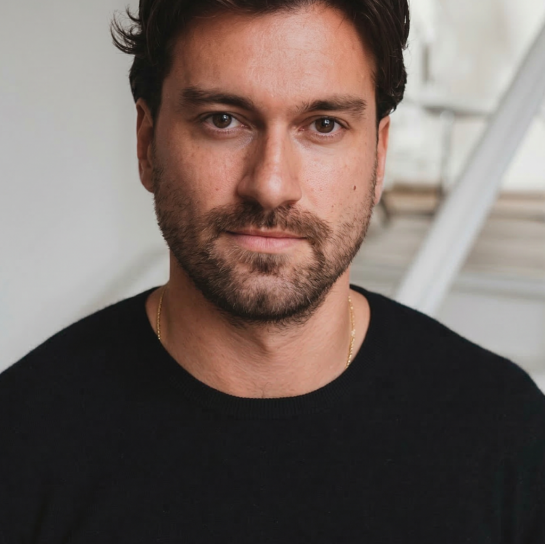
Bob Verlaat is a 28-year-old entrepreneur based in Amsterdam with a proven track record in building and scaling direct-to-consumer brands. With a keen eye for branding and a deep understanding of consumer behavior, Bob has successfully co-founded multiple D2C companies, positioning himself as a rising star in the ecommerce world.
Thank you so much for joining us in this series. Before we begin, our readers would love to get to know you a bit better. Can you share your backstory and what led you to become the leader you are today?
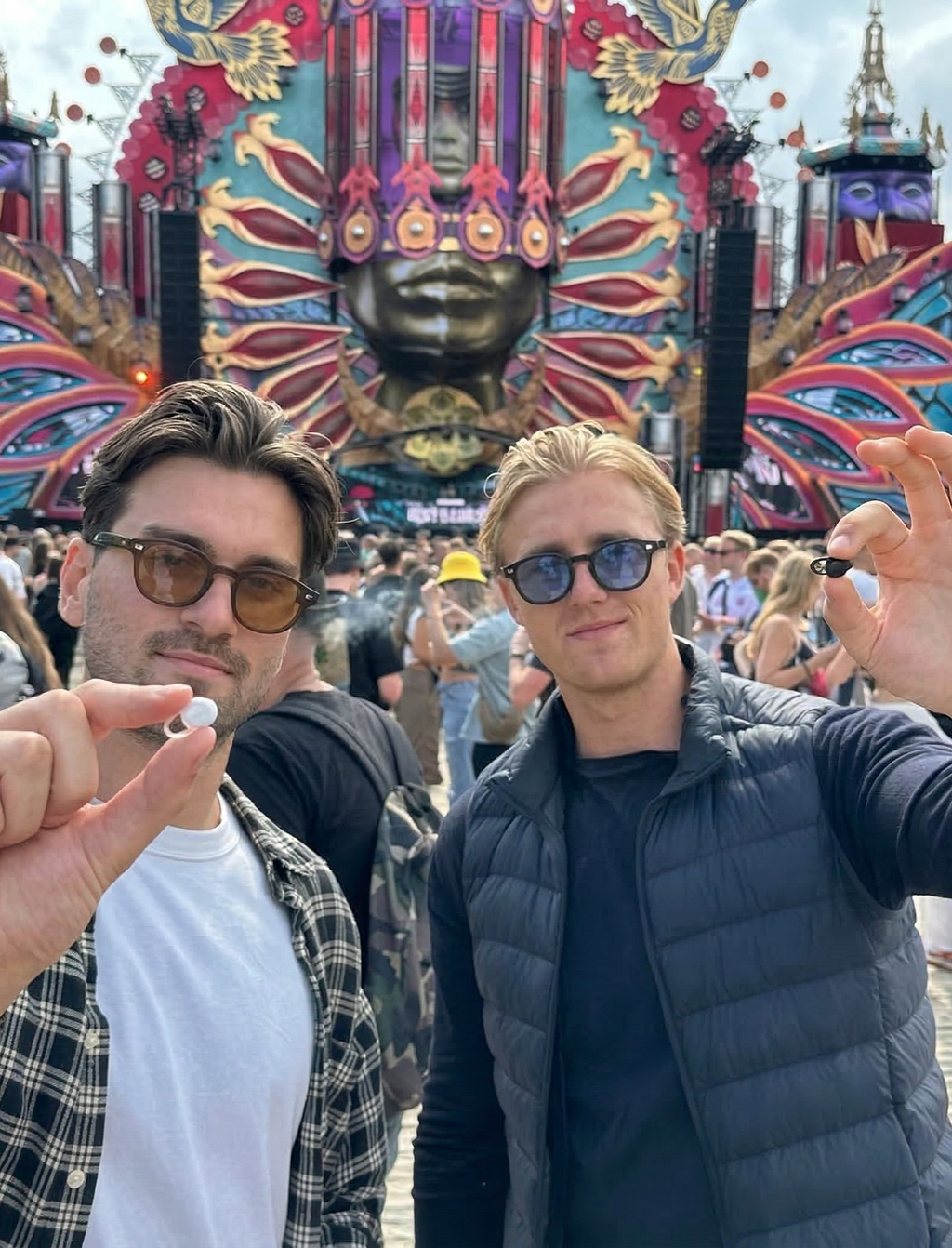
Since I was 16, I’ve always had an entrepreneurial eye, and knew I wanted to start my own business and be the founder behind the cool and innovative products on the market. As I got older and ideas started taking shape, I knew I wanted to be the founder of products consumers didn’t know they needed. When it came to Hears, I almost sort of fell into it. One morning, I woke up with a high-pitched ringing in my ear that wouldn’t go away. Unfortunately, I wasn’t exactly surprised. As a music festival regular and lover of the club and concert scene, I knew I was constantly exposed to 100 dB at events, and that earplugs were a solution. But the problem was that all earplugs on the market muddled the music and looked awkward and bulky. The perfect earplug for the lifestyle I was living simply didn’t exist. That’s when I turned to my best friend and long-time business partner Nick Nijhof, who I’d already built luxury sleep wellness brand Dore & Rose with. We asked ourselves a simple question: “Why aren’t we wearing earplugs?” The answer was equally simple: earplugs needed a refreshed design and the best possible technology to protect hearing without sacrificing sound quality or style. So we decided to create this ourselves. We believe in being the consumer first and this helped us immensely when going into R&D for Hears. We knew what kind of earplugs we would want at a concert or festival: one that didn’t muffle sound, get uncomfortable after a few hours, and didn’t look obnoxious or unaesthetic. This also led us to intentionally work alongside a team that felt the same way — musicians and sound engineers who similarly knew the need for the product and had our vision for the ideal product in mind.
What’s the “why” that drives your work? How has your personal sense of purpose evolved as your business has grown?
The wellness market is focused on many aspects of health — from oral hygiene to sleep health to fitness and heart rate variability, but hearing health is a category often left out. 1 billion young people are at risk for noise-induced hearing damage as early as age 20. I want to help educate younger generations on the importance of protecting their hearing and provide them with a solution that’s easy to incorporate into their lifestyle without cramping their style. At first, I really wanted to make a product that people would simply wear and enjoy. But over time, I realized the effect our hearing health has on so many other aspects of our overall wellbeing, and how much noise we’re exposed to in our daily lives. Through my work at Hears, I get to see people all over the world enjoying their daily lives and doing the things that I love to do (i.e., listen to music at full volume, go to concerts and loud workouts, commute through a noisy city), but without the negative consequences. We’ve also started donating a portion of every Hears sale to the Hearing Health Foundation to show how much we care about this movement and direct our customers to the organization. I’m so proud that we’ve already been able to help over 200,000 people around the world protect their hearing by using Hears, with thousands more in our sights.
Let’s now move to the core of our discussion. This series is about balancing purpose, profit, and personal branding. Can you help explain why each of those three matters, and why they can sometimes pull against each other? If possible, share a real example from your experience.
Purpose is what drives everything we do. It’s one thing to have a product that is trending and looks cool, but it means more when it serves a real purpose that helps the greater population. And with every sale, we know that we are helping one more person preserve their hearing health, which to us, is how we really get to fulfill our mission. Profit is also what helps us keep the wheels turning so we can keep innovating our products, expand our global reach, and grow our team. Purpose and profit aren’t mutually exclusive. We donate a portion of our proceeds to the Hearing Health Foundation, which does incredible work to advance the conversation around hearing health and treatment accessibility.
Many CEOs focus heavily on strategy and profitability but hesitate to invest in their personal brand. What do you think about that? What have you seen work best?
My co-founder Nick and I have driven a significant online momentum by promoting Hears through our personal brands. It’s important that as the faces of Hears, we connect with our audience and show that we created the product for people just like us and that we use it every day. We don’t see Hears as separate from our daily lives, but an extension of it. When we succeed, the brand succeeds, and vice versa. In a crowded attention economy, we’ve learned that it’s important to show up actively on social channels and use these platforms as another vertical to reach target consumers. Our key customer is spending time online, so we’ll show up there and make sure that if they’re following us for lifestyle or business content, Hears is naturally woven in.
What are some misconceptions you’ve encountered about personal branding in the C-suite, and how do you challenge those narratives?
One that comes to mind is that leaders have to focus solely on long-term strategy and scaling the business. However, what I’ve come to find is that if you’re in a C-Suite position, you have to play multiple parts. While I do guide strategy for entering new verticals, product innovation, etc., I’m also just as much a brand marketer and ambassador. Dynamic CEOs and C-Suite level executives have to live and breathe the missions of their brand, and in order to do that, I’ve learned that you need to be integrated into all aspects of the business, especially at a scale-up like Hears.
What’s one specific way your visibility as a leader, through interviews, speaking, or social media, has directly impacted your organization’s success? Walk us through what happened. How did you know it worked, what changed in measurable terms?
Positioning myself as the voice for the company has inspired people to buy my products. Not only that, reviewing other brands has given me insights and inspiration for how to position my own. I openly did reviews on YouTube, and saw what people were doing wrong, which helped me realize where I could implement changes.
Balancing profit and purpose is easier said than done. What practices or principles guide your decision-making when those two goals seem to conflict?
Leading with purpose is at the core of who we are as a brand, especially since our product is centered around a mission of promoting hearing protection.
- Selling Higher Volume vs. Promoting Responsible Use (we chose responsible use)
- Lower-Cost Materials vs. Hearing Safety (we chose quality)
Can you share a story about how aligning your personal values with your company’s mission created a breakthrough in performance or growth?
We’ve always tried to do what’s right, and we’ve seen that the messaging about how we want to change this epidemic of hearing loss amongst our generation is actually our core leader in convincing people to actually buy earplugs. So our personal values here were to protect people from hearing damage genuinely. It’s what’s also caused people to buy and also cause natural affiliates to promote our brand because they align with our vision and want to represent the company from a non-commercial standpoint.
In your view, what separates a leader who simply “runs a company” from one who builds a movement around their message?
For one, my co-founder and I created the product for people just like us — active individuals who live busy lives and like to listen to music at full volume, whether in the gym or at a concert. Two years into building the brand, we still wear the product nearly every day. Even at our level, we take every chance we can get to connect with our users on social media and in-person at events. For an overlooked category like ours, it’s important to spread the message around why hearing health matters and that it can be cool to protect your ears, especially with a product like Hears. The fact that you can see our earplugs at night clubs, festivals, and even noisy office buildings around the world is pretty incredible. It creates a way for our audience to build community, which has driven a lot of organic, word-of-mouth support.
How do you integrate storytelling into your leadership, both internally with your team and externally with your audience or clients?
An instigator for starting Hears was because of my own experience with noise-induced hearing loss in my twenties. This story is embedded in our founding journey, and why I feel so connected to our mission and community. I’ve been very vocal online about how I used to forgo hearing protection because I wasn’t aware of the consequences and simply didn’t like what was on the market. That message has become relatable for both our internal team and Hears users.
Can you share a time when taking a public stand or sharing your story authentically strengthened your credibility or influence?
This occurs continuously in ads. Sharing my personal story is the most returning piece of media that we’ve seen, and I continue to share my story as people will continue to align with it.
What are your “Top 5 principles for balancing purpose, profit, and personal visibility?” (Please include a short example for each, plus one action a reader could try this week.
1. Listen To Your User
I try to emphasize this as much as possible, and it informs the way I think about innovation. Intentionally connect with our community on social media, at events, in the street, etc. to hear what they’re wanting, enjoying, and interested in.
2. If You See A Gap In The Market, Fill It
Find what matters to you, analyze the problems, then look for solutions. When coming up with a creative campaign, jot down the first five things that come to mind.
3. Outsource Expertise When Needed
Managing a business is tough, so rely on those around you with industry expertise and experience to help guide your decision-making. Ask yourself, am I the right person for this task? If not, see how you can lean on those around you for support.
4. Wear Your Values On Your Sleeve
Lead every meeting with the same purpose and vision that made you want to get into business. Write down your top five values, and set reminders for yourself to review them at least once a day.
5. Be Vulnerable
Being a leader requires you to be open about failures, mistakes, and the wins too. Get a recurring meeting on the books with fellow C-Suite members every week to go over what worked, what didn’t, and what you’d do differently.
Finally, if you could summarize your leadership philosophy in one sentence, what would it be — and why?
I empathize with the community I’m leading and find intentional ways to make a situation better for them, whether it’s developing a new product, making an adjustment to the model, or advocating for a partnership they want to see come to life — I try to anticipate problems and create effective solutions, exercising a deep level of empathy with the consumer to create meaningful cultural change.
How can our readers continue to follow you or your company online?
They can visit our website at hears.com, follow us on Instagram @hearsearplugs, YouTube @gethears, and give me and my co-founder a follow @bobverlaat & @nicknijhof.
Thank you for sharing these inspiring insights!
About The Interviewer: Chad Silverstein is a seasoned entrepreneur with 25+ years of experience as a Founder and CEO. While attending Ohio State University, he launched his first company, Choice Recovery, Inc., a nationally recognized healthcare collection agency — twice ranked the #1 workplace in Ohio. In 2013, he founded [re]start, helping thousands of people find meaningful career opportunities. After selling both companies, Chad shifted his focus to his true passion — leadership. Today, he coaches founders and CEOs at Built to Lead, advises Authority Magazine’s Thought Leader Incubator.
The New CEO Playbook: Bob Verlaat of Hears On Purpose, Profit, and Personal Brand was originally published in Authority Magazine on Medium, where people are continuing the conversation by highlighting and responding to this story.