
Breaking the Marketing Mold: Scott Clary of Success Story Podcast and WWA On 5 Innovative & Non Traditional Marketing Strategies That Can Engage Audiences Like Never Before
An Interview With Chad Silverstein
The access is free. The trust is absolutely not.
Traditional marketing methods are no longer sufficient in today’s dynamic and fast-evolving market. To truly engage and captivate audiences, businesses need to think outside the box and adopt innovative and non-traditional marketing strategies. What are these strategies, and how can they transform audience engagement?
As a part of this series, we had the pleasure of interviewing Scott Clary.
Scott Clary is the host of the Success Story Podcast, one of the top business podcasts in the world with over 100 million downloads, where he has interviewed Fortune 500 CEOs, billionaires, best-selling authors, and world-class operators across more than 650 episodes. With over 2 million followers across social platforms, he is also the founder of WWA, a social-first agency that builds personal brands and content engines for founders and executives, and reaches over 321,000 subscribers weekly through his newsletter. Previously, Scott built his career in enterprise B2B SaaS sales before leaving corporate to build media full-time.
Thank you so much for joining us in this interview series! To start, could you share when and how you got started in marketing?
My background is sales, not marketing. I spent years in enterprise B2B, cold-calling into Fortune 500 companies and selling SaaS solutions, and there was nothing creative about what I was doing at all. But I kept noticing this pattern where the reps who over and over won deals, it wasn’t that they had better scripts or better products, it’s that the prospects already knew who they were before anybody picked up the phone. Somebody had read their LinkedIn post or heard their name mentioned, and there was this baseline level of trust already in place before the first conversation even happened.
That stuck with me, and in 2018 I just started posting on LinkedIn about what I was seeing in my deals. I’d lose a deal and write about what happened. I’d close something and share what I thought worked. Very raw, very unpolished, nothing strategic about it. And within a couple months people I’d never spoken to started reaching out. I launched the podcast in 2019 because I wanted to sit down with people who were way ahead of me and just learn from them, and the show ended up becoming this connective tissue that tied together everything I was building. But I still to this day think about all of it through a sales lens, does this build trust and does it eventually lead to revenue, because if it doesn’t do both of those things I’m really not interested.
What has been the biggest shift in the marketing industry and can you give us an example of how it impacted you?
Distribution was the moat for a long time. You needed a publisher or a network or somebody willing to carry your message to an audience, and if you didn’t have that access you were basically invisible. That whole dynamic is completely gone now. The tools are the same for everybody, so reaching people isn’t the hard part anymore. Getting people to actually care about what you have to say, that’s the hard part. Totally different problem.
For me personally, that shift is what made my entire career possible. I went from being a sales rep with a LinkedIn account to building a top-ten global business podcast, and I didn’t need anybody’s permission to do that. But it took six years of putting out episodes every single week to earn that audience. The access is free. The trust is absolutely not.
Can you explain why it’s essential for businesses to break away from traditional marketing and embrace new strategies?
Because the economics of the whole thing flipped. Traditional marketing was always about interruption, you buy someone’s attention and you jam your message into it, and that worked when people had three TV channels and one local newspaper. Now the cost of skipping past you is one thumb movement. One scroll and you’re gone.
But the thing people miss, and I think this is the bigger insight, is that at the exact same time interruption stopped working, building a real audience became incredibly cheap. It used to cost millions to reach people at scale and now it takes a laptop and some consistency. So the strategy that actually works got accessible to everyone right as the old one started failing. I don’t think that’s a trend. I think it’s a permanent structural shift.
Could you share and briefly explain the first major change you made to break the trend of traditional marketing that was not so common?
I stopped thinking about content and started thinking about conversations. When I launched the show, I wasn’t sitting there worrying about titles and hooks and what was going to get clicks. I just wanted to sit across from someone I admired and ask them the questions I actually wanted answered.
And the thing that surprised me is that the episodes where I got completely lost in the conversation, where I basically forgot anyone was going to listen to it, those consistently outperformed the ones where I was being strategic about it. People can tell when something is real. You can hear it in the conversation. I don’t think you can fake that regardless of how good your production is.
What specific results did you see after implementing this change?
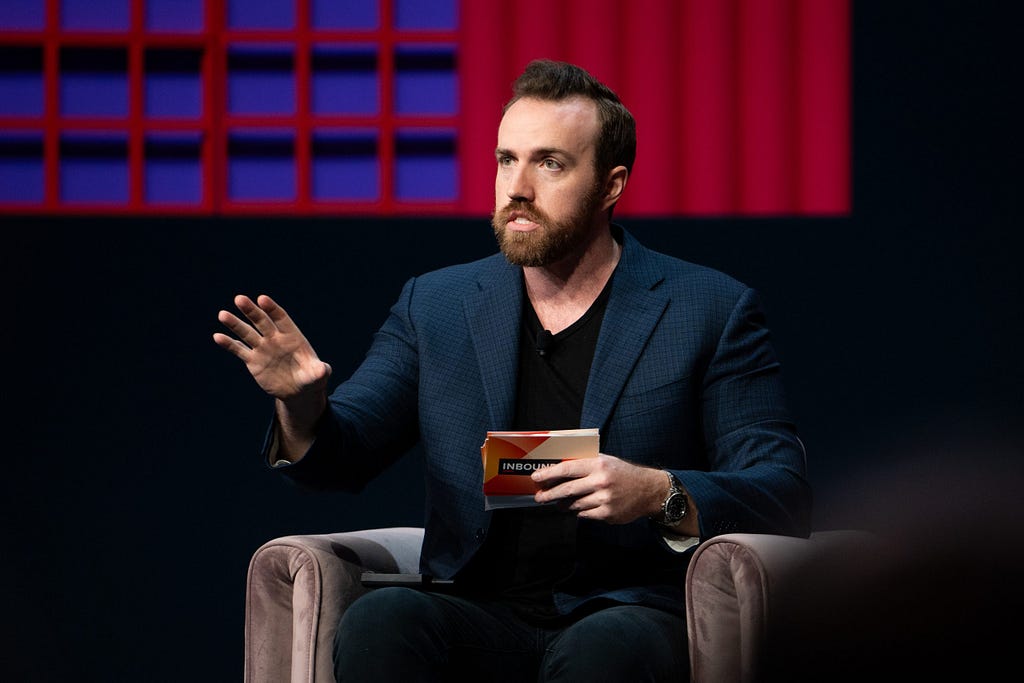
Over six years that compounded into 100 million downloads, 321,000+ newsletter subscribers with a 50%+ open rate, Fortune 500 brand partnerships, a keynote at INBOUND, and WWA, the agency I founded. No paid advertising for audience growth. Not a dollar.
But the result that changed my day-to-day life more than anything was going from chasing to attracting. When I started I was pitching everything, every guest, every sponsor, every chance. Now the dynamic is completely reversed. A podcast conversation ended up leading to the INBOUND keynote. A different one became the relationship that turned into my agency. You cannot plan outcomes like those. You just show up consistently long enough for the compounding to start working.
How do you ensure that these new marketing strategies connect with your target audience?
I write my newsletter as if I’m writing it for myself two years ago. I book guests I actually want to learn from. When that alignment is real between me and the audience, you skip past the whole resonance question because I am the audience. Where I see people get into trouble is when they try to reverse-engineer what’s going to perform from data and analytics, and they end up producing something that checks every box but nobody actually feels anything about it.
Can you share an example of something you tried that didn’t deliver expected results or ended up becoming a financial burden, and what you learned from that experience?
I scaled into video way too early. The logic was sound on paper, video is clearly where things are heading, get a head start. So I rented studio space, hired a whole production team, bought all the gear. The problem wasn’t the strategy. The problem was trying to be excellent at audio, newsletter, and video at the same time, and what ended up happening is I became mediocre at all three of them.
I was spending tens of thousands a month producing stuff that was just okay. And I think “okay” is the most expensive outcome in media because it costs real money but doesn’t actually move anything. So I shut down the video operation, went all-in on audio and the newsletter until those were actually best-in-class, built the revenue engine around those, and then came back to video later when I could fund it properly without needing immediate payback. The lesson I give every founder now is be unreasonably good at one thing before you try to be adequate at three. Premature scaling kills more media brands than bad ideas ever will.
Great. Now, let’s dive into the heart of our interview. Could you list “5 Innovative & Non Traditional Marketing Strategies That Can Engage Audiences Like Never Before”?
1. Use Content as a Trojan Horse for Access
Most people think about a podcast or a newsletter as the product. The thing you’re making is the content. I think about it completely differently. The content is the byproduct. The relationships are the product. The show is just the excuse to build them.
When I started the podcast I could get a meeting with basically anyone. CEOs, bestselling authors, investors, people I never would have gotten fifteen minutes with through normal channels. And the reason is that “can I interview you for my podcast” is a completely different ask than “can I pick your brain” or “can we hop on a call.” People say yes to the first one. They delete the second one. So suddenly I’m having these hour-long conversations with people who are way out of my league, and after you sit with someone for an hour you don’t have a contact, you have a relationship. I’ve had guests who ended up becoming business partners, sending me deals, making introductions that changed the whole direction of my business. And this wasn’t the plan when I booked any of them. But 650 conversations later, I’ve built a network that most founders spend decades trying to put together.
This isn’t just a strategy for media companies. A financial advisor could start a show interviewing CPAs and estate attorneys in their market. A SaaS founder could interview their dream customers. A contractor could interview architects and developers. You’re not “doing content marketing.” You’re building a relationship machine that happens to produce marketing as a side effect, and I think most people get this backwards because they spend all their energy optimizing the content when the real ROI is in the relationships.
2. Give Away Your Entire Playbook
I’ve published everything about how I built my business. How I grew the podcast, how I structure brand deals, how the newsletter works, how I think about content strategy. Hundreds of hours of it, all free, nothing held back. And people ask me all the time, aren’t you worried someone’s going to steal your playbook? And I get why that concern makes sense on the surface, but the gap between knowing how to do something and actually executing on it is so wide it almost doesn’t matter.
I’ve put out the exact blueprint. Very few people actually run with it. Not because they can’t, but because the execution is the hard part and it always has been. What actually happens is that founders read the playbook over months, trust builds up, and eventually the ones who don’t want to do the work themselves reach out to hire me. And by that point the sales conversation is the easiest thing in the world because they’ve already seen the entire operation. They know it works. There’s nothing to convince them of.
If your competitive advantage disappears the moment you explain what you do, you have a fragile business. But if it holds up even when people can see the full picture, you’ve got something real. Execution is the moat. Knowledge never was.
3. One Conversation Turns Into Twenty Pieces of Content
This is probably the most tactical thing I can share, and honestly most businesses are still not doing this. They’ve got a social media person thinking up posts every Monday morning, a separate blog writer working from a brief, maybe a video team doing their own thing on a separate track. Nothing connects to anything else. The voice drifts. Everybody is working way harder than they need to be.
The way we do it is I record one podcast conversation, and from that single session my team pulls the full audio episode, a YouTube video, anywhere from ten to fifteen short clips for Instagram and TikTok and LinkedIn, the newsletter topic for that week, standalone quotes for Twitter, carousel concepts for Instagram. One conversation, sometimes under an hour, turns into three to four weeks of content across every platform. And because it all comes from the same source it actually sounds like me across all of it, which I think is a consistency problem that most brands never solve because they’re building content from six different starting points and wondering why their messaging feels scattered.
Whatever your business is, find your version of the source conversation. Could be a weekly founder video diary, could be customer interviews, could be an internal team roundtable. Record one real thing and build the system to break it apart and distribute it everywhere.
4. Build the Audience Before You Build the Product
This is exactly how WWA happened. I didn’t sit in a room and decide I wanted to start an agency and then go looking for clients. That’s not how it worked at all. I spent years building the podcast and the newsletter and just sharing publicly everything I was learning about personal branding and audience building. And over time, founders started reaching out asking me to do for them what I’d been doing for myself. By the time I formally launched the agency I already had clients waiting. No pitch deck. No outbound sales. No ad spend for the first customers.
You can absolutely build a business the traditional way where you build the product first and then find customers. It works fine. But it’s expensive and risky. The alternative is you spend six months or a year building an audience in a space, you listen to what those people are telling you they need, and then you build the thing they’re already asking for. Your customer acquisition cost drops to basically nothing because the trust is already there. And you also learn what the market actually wants, which in my experience is almost never what you assume it wants when you’re just sitting in a room by yourself planning.
5. Share the Worst Week, Not Just the Win
Every business knows how to announce a product launch or share a milestone. Very few know how to talk publicly about a week that went sideways. And I’ve watched this play out so many times now, both in my own content and with the founders we work with at WWA, that it’s almost predictable at this point.
A founder posts about a big win, they get some polite engagement, a few likes, couple of congrats, whatever. That same founder posts about a mistake they made or a client they lost or a quarter that didn’t go the way they planned, and the response is five to ten times bigger. People reply, they DM, they share it with their teams. And the audience it attracts is just a different caliber of person. The highlight reel gets you followers who want what you have. The honest stuff gets you followers who trust how you think. And trust is what actually converts.
I’m not talking about performing vulnerability or manufacturing drama for engagement. I’m talking about when something real happens in your business and instead of spinning it or hiding it you just tell the truth about what went wrong and what you took away from it. I’ve watched founders at WWA agonize for days over whether to publish something honest about a setback and then have that post outperform everything else they’ve ever put out. In a world where everyone is polishing their image, being real is probably the most differentiated thing you can do.
What challenges might companies face when transitioning away from traditional marketing strategies, and how can they overcome them?
Almost always the challenge is internal. The CFO wants attribution numbers three weeks into a brand initiative, and three weeks in you don’t have anything to show them. That’s just the reality of how this works. Brand compounds over time the way fitness compounds over time, you can’t measure the ROI of a single workout, but you can absolutely measure two years of consistent effort.
What I tell companies is to protect 20 to 30 percent of their marketing budget from short-term measurement pressure. Measure that portion on different things entirely, like engagement quality and inbound volume and the number of conversations that start with “I’ve been following your stuff for a while.” Give it a year. If after a year you’re not seeing more openings come in organically, then fine, you’ve got a strategy problem. But three weeks is meaningless. The talent piece is real too. Campaign marketers and brand builders are very different skill sets, different way of thinking entirely. You might need to bring in different people to make this work.
How do you measure the success and ROI of these new marketing strategies?
The single most telling metric for me is what percentage of my opportunities come inbound, meaning people reach out to me without being asked. When that number goes up, I know trust is compounding. When it flatlines, something needs to change.
I also look at whether the caliber of chances is improving over time. Same effort, bigger outcomes. That’s the compound effect doing its thing. And I think the mistake a lot of people make is trying to attribute brand marketing the way you’d attribute a Google ad. Somebody reads your newsletter for six months, listens to a few episodes, follows you on socials, and then one day they reach out and want to do a deal. Which touchpoint closed it? They all did. You can’t separate them and I think trying to is a waste of time.
Looking forward, how do you see the role of innovative marketing evolving in the next 5–10 years?
AI is going to make content production basically free. Technically competent podcasts and newsletters and video, anyone is going to be able to produce all of that at scale. When that happens, and I think it’s happening faster than people realize, the only differentiators left are trust, taste, and access. Trust because people are going to need a reason to choose the human version. Taste because somebody still has to decide what’s worth paying attention to. And access because real relationships produce raw material that no model can create on its own.
I also think the smartest companies of the next decade are going to flip the traditional sequence entirely. Instead of building a product and then scrambling to find customers, they’ll build the audience first. And once you have people who already pay attention to you and already trust your thinking, you just build what they need. That’s an advantage that is very hard to compete with once someone has it.
What advice would you give to business leaders who are hesitant to move away from traditional marketing methods?
Think about your own behavior as a consumer for a second. When did you last buy something because of a banner ad? You probably don’t even remember. When did you last buy something because someone you trust told you it was worth checking out? You’ll have an answer in two seconds. That gap between those two questions tells you everything you need to know.
If you want a practical starting point, have your founder post on LinkedIn three times a week for 90 days. Not polished corporate stuff. Real observations from the business, things they learned that week, mistakes they made, what caught them off guard about a customer conversation. Just be a human being in public. After 90 days count the inbound conversations that would not have existed without those posts. I’ve given that exact challenge to dozens of founders at this point and I have not found a single one who did it consistently without being surprised by what came back. It costs nothing and you’ll learn more from doing it than from any marketing book or conference.
Can you share any upcoming initiatives or plans you have for further innovating your marketing strategies?
Community is the next big thing for us. Everything I’ve built so far, the podcast, the newsletter, it’s all one-directional. I talk, people listen. We’re building that into a two-way thing through our Skool community, because I truly believe that at a certain point the most valuable thing you can offer your audience isn’t more of your content, it’s access to each other. You can replicate a newsletter format. You can study someone’s content strategy. But you cannot replicate a living community of people who chose to be in the same room together.
We’re also scaling WWA to compress the timeline for founders who want to build what I’ve built. I spent six years figuring out what works and what doesn’t when it comes to personal brand and content. The playbook is proven. The challenge now is running it for multiple founders at the same time without cutting corners on the things that actually make it work.
How can our readers follow your work and learn more about your approaches to modern marketing?
The Success Story Podcast is on Apple, Spotify, YouTube, wherever you listen to podcasts. Newsletter goes out weekly at scottdclary.com. I’m most active on Instagram and LinkedIn, both @scottdclary. And if you’re a founder who wants to build a personal brand and content engine seriously, check out worldwideagency.com to see what we’re doing at WWA. I read everything that comes in so don’t hesitate to reach out.
This was great. Thank you so much for the time you spent sharing with us.
About The Interviewer: Chad Silverstein is a seasoned entrepreneur with 25+ years of experience as a Founder and CEO. While attending Ohio State University, he launched his first company, Choice Recovery, Inc., a nationally recognized healthcare collection agency — twice ranked the #1 workplace in Ohio. In 2013, he founded [re]start, helping thousands of people find meaningful career opportunities. After selling both companies, Chad shifted his focus to his true passion — leadership. Today, he coaches founders and CEOs at Built to Lead, advises Authority Magazine’s Thought Leader Incubator.
Breaking the Marketing Mold: Scott Clary of Success Story Podcast and WWA On 5 Innovative & Non… was originally published in Authority Magazine on Medium, where people are continuing the conversation by highlighting and responding to this story.