
An Interview With Chad Silverstein
In the end, AI is the tool. People are the product.
In today’s tech-driven world, artificial intelligence has become a key enabler of business success. But the question remains — how can businesses effectively harness AI to address their unique challenges while staying true to ethical principles?
As a part of this series, we had the pleasure to interview Andrea Marchiotto.
Andrea Marchiotto is a senior AI, product, and venture leader with 15 years of experience, including senior roles at Amazon, Philips, and Unilever, where he built Unilever’s first global eCommerce strategy, scaled Amazon marketplace operations in Europe, and led product ventures at Philips. He is the founder of BlackCube Labs, an AI-powered consultancy, founders’ community, and product ecosystem, and the author of Adopting AI for Business Transformation, published by BPB Publications, one of the largest IT publishers in the world. Today, he works at the intersection of agentic AI, venture building, and operational systems, helping founders and businesses move from AI curiosity to AI adoption that sticks.
Thank you so much for joining us in this interview series. Before we dive into our discussion, our readers would love to “get to know you” a bit better. Can you share with us the backstory about what brought you to your specific career path in AI?
I’ve always loved new technology. When I was 13, I built and tweaked computers, which sparked my early interest. Later, I worked at companies like Yahoo and Amazon, where I used machine learning and AI to build things like customized recommendations. I’ve worked with AI for years, but my interest has grown in recent years as large language models have become more common. The weird part is that I am not an engineer or a programmer, and I live and breathe AI with business and marketing lenses, more than code.
Around 2018, I turned my attention to blockchain and NFTs for a while. But that field didn’t quite meet my expectations (I also got scammed, lost money), so my interest faded. In 2021, before tools like Midjourney and Stable Diffusion were available, I started exploring generative AI for creating images from text while working with an undoxxed startup called Contrastive. Undoxxed means that the founders did not publicly disclose their identities. It was weird, fun, and wonderful; it was genuinely ahead of what anyone else was doing at the time. As the lead moderator there, I worked with over 10,000 community members and ran experiments to generate images from prompts, winning some creativity contests along the way. That’s what pulled me back in the heart of AI innovation. More precisely, generative AI and visual art expression.
I created BlackCube Labs as an ecosystem for entrepreneurs like myself. It’s a pretty unique setup that includes an AI-focused consultancy, an automation agency, and a community interested in generative AI, visual art, and new technologies. We experiment constantly. Everything we build has to work in the real world and sit right with us ethically.
Can you share the most interesting story that happened to you since you started working with artificial intelligence?
TL;DR: Building with AI is easy. Getting people to use it? That’s the hard part. Let me tell you why.
The story I keep coming back to started with my work as Venture Lead at a Venture Studio in LATAM. I headed a team through the exploration, incubation, and acceleration phases of a startup that aimed to help business owners in Latin America delegate with trust and confidence, across industries such as retail, recycling, food manufacturing, and restaurants.
The problem we found is that it’s very difficult to trust people. Every owner we spoke with said the same thing: they had no way to know what was happening in their business when they weren’t physically there. So we thought about how to create an AI system that could guide blue-collar workers through their daily tasks, build their confidence, and reduce their dependence on the owner’s physical presence.
This story stands out because we saw how much users appreciated what we built. I literally created the first version of our agentic AI workflow myself. The main takeaway for me is that building with AI is one thing, but real success comes when behavior change sticks and adoption persists. Getting regular use and building habits means understanding people’s behaviors, fears, and pain points. In the end, AI is the tool. People are the product.
You are a successful leader in the AI space. Which three character traits do you think were most instrumental to your success? Can you please share a story or example for each?
First: resilience. You need to handle uncertainty and bounce back from challenges.
Throughout my life, I have experienced a lot of downs:
- I’ve been let go.
- I’ve been given very harsh feedback.
- My team has left me aside. I’ve been alone.
I made mistakes, but I learned a lot. I learned from my mistakes and owned them. That’s how I built a tougher version of myself.
The second trait is key: a positive mindset and a bit of detachment from problems.
Your attitude and energy set the tone. Discipline matters more than intention. Practice this mindset every day. That’s what pays off.
Detachment helps you see your emotions clearly. It lets you turn problems into opportunities and spot options you missed before.
Third: humility mixed with ambition. Dream big, stay humble. Take small steps, be patient, and do the work. Success takes years. You’ll mess up. What matters is showing up and building, not just talking.
Let’s jump to the primary focus of our interview. Can you share a specific example of how you or your organization used AI to solve a major business challenge? What was the problem, and how did AI help address it?
One great example I have in mind is the deal partner program I’m part of with BlackCube Labs, Boardy, the AI Super connector, and its Venture Fund. We needed a structured way to evaluate inbound founders and startups before deciding whether to introduce them to the Boardy AI Venture Fund. The problem here was to create a process that was fast, fair, aligned with our values, ethos, and the way we work, and also founder-friendly and scalable. Basically, we needed to protect our reputation while keeping a high-quality experience for the entrepreneurs. I designed an AI-powered intake as a decision support system to analyze before sending any information to the fund. Basically, the way it works is through an agentic AI workflow that does the following: it analyzes inbound founder emails and decides whether to introduce, reject, or review them.
In the case of the review, there is a human-in-the-loop (HITL) that provides continuous human control in case of ambiguity.
The whole thing runs on explicit rules that reflect how we actually think about founders. It can understand, detect missing information, and follow up with the founder. There is a clear decision logic. The logic is based on a number of factors, such as:
- The stage of maturity of the startup
- The timing of fundraising
- The quality of the team and the founder
- The type of customer traction they’ve seen
- how much the network is leveraged
- What constitutes the alignment in terms of ethics?
- The use of AI in an ethical and responsible way
- the completeness of the information
This process helped both BlackCube Labs and the founders. Founders came in better prepared, with more clarity and credibility. The quality of introductions shot up. Founders told us the experience was better. AI-powered workflows and clear decision logic lead to higher-quality applications. I back this up 100%.
What are some of the common misconceptions you’ve encountered about using AI in business? How do you address those misconceptions?
I found the following three misconceptions repeatedly. Let me go through them one by one.
The first is that “AI will replace my people”. I hear this constantly, and it scares some entrepreneurs and business owners away. The reality is different. What AI replaces is the task, not the person, specifically the part of the task that is mechanical, repetitive, and candidly not the best use of anyone’s brain. At BlackCube Labs, when I build workflow automations, I am not eliminating roles. I am eliminating the parts of a role that nobody wants to do anyway. The people who are paying attention use that reclaimed time to think more clearly, move faster, and work on what matters.
The second misconception is that “AI is for big companies”. I understand where this comes from. Most of what you read about AI involves Google, Amazon, or some well-funded startup in San Francisco. But I have been working in Latin America for the past two years, building AI systems for small manufacturing businesses and restaurant owners. These are people with no IT department and no AI budget to speak of. What I found is that the tools available today work on a phone, cost less than $100 a month, and can meaningfully change how a small business runs. The barrier is not the budget. The barrier is knowing where to start, what to focus on. That’s why AI consultancies are everywhere. People need help figuring out what to do.
The third, I think, is the most dangerous one: “You just plug it in, and it works.” No. AI does not run itself. The system needs governance, clear boundaries, and careful workflow design. I learned this the hard way. The first time I built an agentic workflow lacking proper constraints, the outputs were inconsistent and occasionally wrong. The technology worked. The system design did not. The customers complained, and some left. What makes AI reliable in a commercial context is not the model. It is the architecture around it: role logic, decision thresholds, human-in-the-loop checkpoints, and explicit rules for what the AI should never do on its own.
Here’s how I handle misconceptions: skip the theory, show something real. Pick a business problem, build a workflow, and let people see it work. Watching 45 minutes of work get done in three? That’s what changes minds.
In your opinion, what is the most significant way AI can make a positive impact on businesses today?
When I think about the single biggest shift AI makes possible, for me, I see how, for the first time in history, a founder working alone can think and operate like a team. That changes everything.
Fundamentally, entrepreneurship is a solo journey. It is a very hard journey, with high risk and high reward.
The most concrete thing we can do is show up for the entrepreneur at the start. Not everyone comes from a leading business school, right? No one knows everything! You can only do so much in your life in terms of thinking, producing, creating, and building. You also have to take care of your spirit and body, exercise, eat well, and nurture your relationships with your family and friends. Yet, on the professional side, you are mostly alone in that journey, and sometimes you need a partner to spar with. You need an advisor, a marketer, and a product leader. Through agentic AI, this can happen, so the solopreneur, the entrepreneur with a very limited budget, or the startup with limited resources and headcount can augment their work.
Although I do think it’s very important to know that there should always be an expert in the field. It would be unwise to rely on and give everything to the AI, which is there to fill gaps and complement, especially when a founder doesn’t have the budget to hire a $150,000-per-year engineer or the best marketer in the market. That’s where the real opportunity sits, when we can have a positive impact in a relationship where each makes the other more effective. Our work as human beings matters even more in the AI era, so AI can facilitate business growth. It can also facilitate connections and the work of like-minded people seeking a common purpose and communities to be part of.
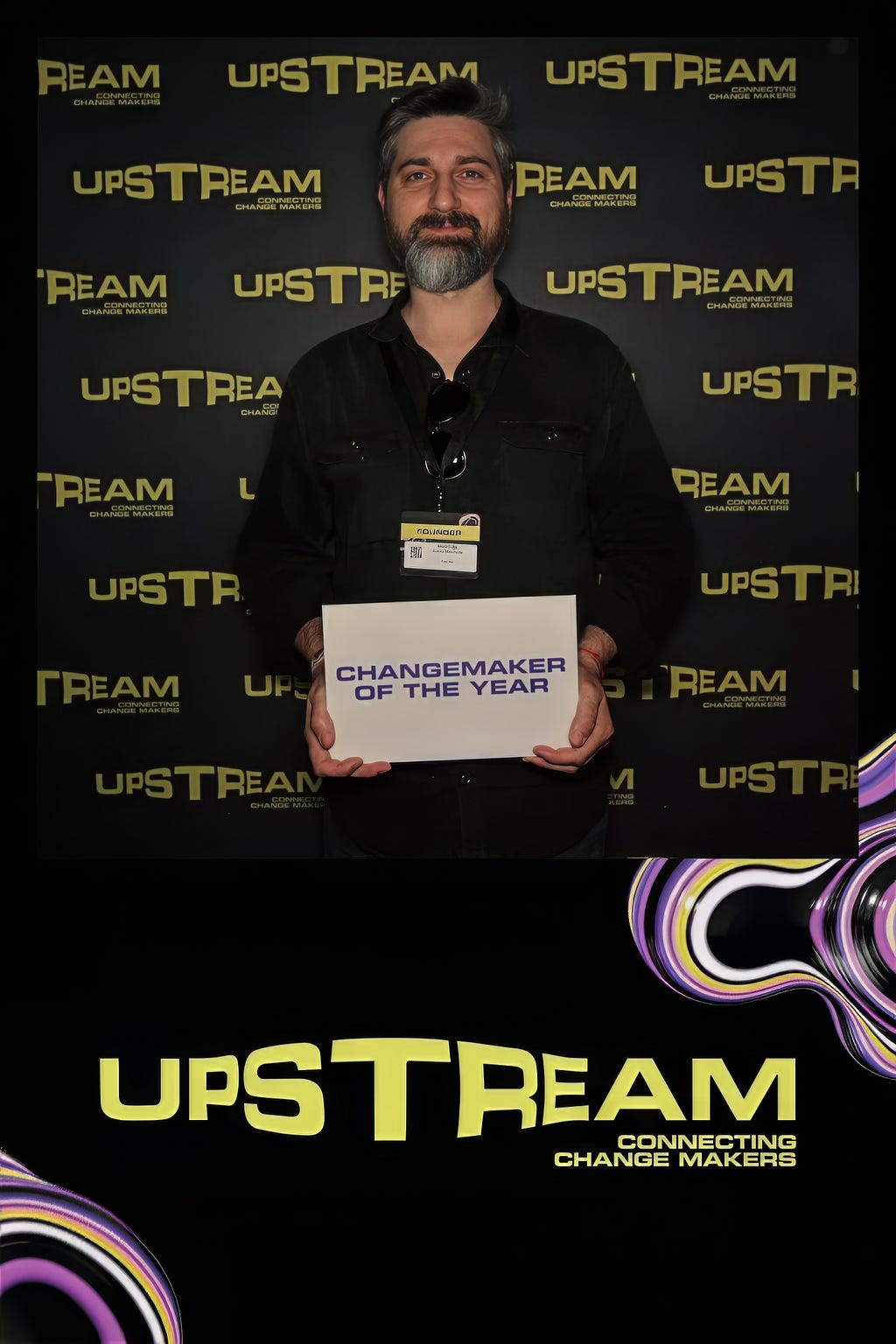
Ok, let’s dive deeper. Based on your experience and research, can you please share “5 Ways AI Can Solve Complex Business Problems”? These can be strategies, insights, or tools that companies can use to make the most of AI in addressing their challenges. If possible, please share examples or stories for each.
1. Turn one piece of content into ten, without losing quality or brand voice.
Every business creates content, just to watch it die in one channel, because no one has time to repurpose it. The problem is not creativity. It is bandwidth.
At BlackCube Labs, I designed a multi-channel content operations system called the News Virality Repurposer. The concept is simple: feed it one source, a news article, a company update, a research piece, and it produces a contextualized Slack update, a LinkedIn post, a Facebook post, an X post, and a WhatsApp community message. Each is formatted for its platform. Each is consistent with brand voice and ethics rules. Each output is in JSON Schema format, ready for downstream automation.
The real value isn’t just in repurposing content, but in keeping things consistent. Without a system, five people might create five different voices across channels. With a good content workflow, one piece of content turns into five assets that are all on-brand and ready in minutes.
If you create content, you can build this. The investment is small. The leverage is big.
2. Use AI to find operational inefficiency before it costs you money.
Most businesses do not know what is breaking until it has already broken. Equipment fails. A shipment is late. A supplier underperforms. The response is reactive, and reactive is expensive.
In my book, Adopting AI for Business Transformation, I wrote about the work Nexocode did for a manufacturing client. They implemented an AI-powered predictive maintenance system, using Agile sprints to gradually train and refine ML models on sensor data from the client’s machinery. The result: equipment failures were predicted before they happened, maintenance was scheduled proactively, and unplanned downtime dropped significantly.
The principle applies well beyond manufacturing. Any operation that has recurring processes and produces data — logistics, retail, food service, distribution — has enough signal to build predictive systems. You do not need a data science team. You need someone who understands the workflow and can structure the right inputs.
Google DeepMind took a similar approach in its own data centers. Their AI algorithms reduced cooling costs by 40%. Not because someone had a brilliant insight. Because AI found efficiency patterns in operational data that humans could not see at that scale.
The takeaway is that you probably already have the data. You just haven’t used AI to look at it yet.
3. Use AI to redesign products faster and closer to what customers actually need.
Most product development cycles are too long, too expensive, and too dependent on guesswork. By the time you test a concept, manufacture a prototype, and get feedback, months have passed.
New Balance changed this. Since 2015, they partnered with design studio Nervous System to use generative design software that analyzes pressure data from athletes’ feet and produces 3D-printable midsoles optimized for each runner’s specific foot structure and running style. The result wasn’t just a better product. It was a fundamentally different development process, one in which AI generates design variations, and humans select the best ones, rather than humans generating from scratch.
I saw a version of this at Philips, where I led product and venture work across personal care and connected care platforms. The question we kept asking was: how do we move from standard product design to something that adjusts to the individual? AI in the design loop does not replace the designer. It removes the manual constraint on the number of variations you can explore. That alone changes what is possible.
Any company making physical or digital products should consider this. In the next decade, the edge will go to businesses that can develop and evolve faster than others. Using AI in design is one of the quickest ways to speed up that process.
4. Use AI to negotiate and optimize your supply chain at a scale humans cannot reach.
Walmart deployed AI-powered chatbots to negotiate with suppliers. Not as a gimmick. As a real operational system. The result: 1.5% savings in supplier negotiations while extending payment terms across thousands of contracts. They also applied ML algorithms to demand forecasting, inventory levels, and transportation logistics across one of the world’s most complex supply chains.
I spent four years at Unilever, where I built the company’s first global eCommerce strategy and scaled digital launches across Europe, LATAM, and APAC. Even then, with all those resources, supply chain decisions were slow, human-intensive, and often made on imperfect information. The data was there. The system to process it fast enough was not.
AI lets you process thousands of variables at once: traffic, weather, demand, lead times, storage costs. No analyst team can match that. Not at scale. Not in real time.
You don’t need to be Walmart. If you handle procurement, logistics, or inventory, AI can help. A good place to start is with demand forecasting.
5. Use AI to train your people at scale, with personalization that classroom training cannot match.
Knowledge transfer is expensive. I’ve seen it firsthand with dozens of Latin American business owners. Onboarding drags on. Skills go stale. Training is generic and slow.
IBM tackled this at scale. They pushed cross-functional teams to work together on AI projects. Different perspectives, better problem-solving.
For instance, IBM’s Garage Methodology fosters innovation by assembling cross-functional teams to work on AI solutions, breaking down barriers between departments. A key strategy not only for knowledge sharing but for dismantling silos as well.
At BlackCube Labs, training is core. I’ve run AI bootcamps for founders and young leaders across continents. Every time, the pattern is clear: generic training fails. Contextual, role-specific training with AI adapts to your job and skill level. Adoption rates go way up.
The tools are here. Platforms adapt learning to each person. AI tutors answer in context. Simulations let employees practice safely. Companies using these tools close the skills gap fast. The rest get left behind.
How can smaller businesses or startups with limited budgets effectively integrate AI into their operations?
Start with one real problem, not with AI. I’ve seen founders try to ‘do AI’ and end up with shelfware. I’ve done it myself. Pick a task that’s slow, repetitive, or inconsistent. If it’s a pain point, ask if AI can help with part of it.
For small businesses, AI and automation work best on customer support, social content, research synthesis, and lead qualification.
You don’t need a big budget for tools. Here’s my stack: ChatGPT or Claude for thinking and drafting. Make.com or n8n for automation. MIRO for brainstorming. Canva for assets. Gamma for presentations. Wispr Flow for speaking instead of writing. Granola for notes (my favorite). Notion for knowledge. Airtable for data. Leadshark for LinkedIn. I run big operations for under $300 a month. PS. Our community has deals and perks for most of these.
Note. You can’t automate what you don’t understand. Map out every step of your process for a week. Write it down. Once you know the flow, you can build a solution or let a partner like us handle it.
And finally, build habits before systems. Change your behavior first. Use AI daily for two weeks before making it official. Founders who win with AI are already thinking this way. It takes time to get fluent. Start now.
What advice would you give to business leaders who are hesitant to adopt AI because of fear, misconceptions, or lack of understanding?
Fear comes from not understanding. I’ve had this conversation dozens of times. What actually moves people is not an explanation. It’s showing a working prototype of their own workflow, running live in front of them. That’s what we do at BlackCube Labs, we don’t pitch AI, we show it in context.
But first and foremost, instead of focusing on the tech, focus on understanding the problem in depth with a laser. What problem are you trying to solve for whom? If you are solving a problem for yourself and think AI can help (AI can definitely help), write down the following:
- What is the problem?
- What is the business outcome, the transformation you are looking for?
- What is the status quo, how are things being done today?
- What is the desired scenario, how would you like to see things done differently?
For example, I recently spoke with a seasoned career coach who wanted to build an AI-powered version of her deep diagnostic process. She was initially focused on the technology and worried about complexity, but our conversation shifted entirely when we framed it around the real problem: helping more people access her transformative insights without diluting the human coaching experience. Once we mapped the problem, the current way she works, and the transformation she wants her clients to experience, the AI questions became much simpler.
In your opinion, how will AI continue to shape the business world over the next 5–10 years? Are there any trends or emerging innovations you’re particularly excited about?
I was reading the latest newsletter from Perplexity, and I quote: “Industry momentum is shifting from chatbots to autonomous, multi-step task agents, expected to transform support, operations, and enterprise software workflows by 2026.” This is already happening. What was a prediction is now the baseline.
Here’s where I see things going: reactive, proactive, and predictive multi-agent systems. Imagine an orchestrator managing a team of specialized agents, each tuned to your business. That’s how you grow by 10x or 1,000x.
The shift I am watching most closely is the move from AI as a tool you prompt to AI as an agent that acts.
Most businesses use AI as a smart search engine or ghostwriter. Useful, but not transformative. What’s coming is AI that takes a goal and pursues it step-by-step, using multiple tools over time. That’s agentic AI.
Once agentic AI is reliable and easy, small businesses will feel the impact first. One person with the right agents can handle research, marketing, and customer service at once. The only limits left: judgment, creativity, and taste. That’s human territory.
The second thing I am watching is AI for underserved markets. Most AI conversations take place within large corporations in North America and Europe. But in LATAM, Southeast Asia, and Africa, millions of small business owners are making decisions today without access to structured tools, data, or advisory services. If we can build AI systems that work in local languages, adapt to local contexts, and are simple enough to use on a phone with unreliable internet, we can change not simply individual businesses but entire economic ecosystems.
That’s where I see the biggest potential. Not just the next AI model, but the next market ready to benefit.
How do you think the use of AI to solve business problems influences relationships with customers, employees, and the broader community?
Here’s the thing: it all depends on how you use AI.
With customers, AI can speed things up. But speed without warmth is useless. I’ve seen chatbots that answer fast but make people feel like numbers. The best companies use AI for routine stuff and let people handle the moments that matter. Customers should feel cared for, not lost. When AI takes over the repetitive work, people either grow into higher-value roles or they don’t. That depends on whether the business invests in them. AI isn’t the problem. Not investing in people is.
With the broader community, I believe we have a unique chance for AI to spread opportunity instead of concentrating it. Even a street vendor in Mexico City can use tools to manage inventory and talk to customers like a big retailer. It’s not guaranteed. It takes people building with this goal. But it’s possible, and I think it’s worth chasing.
You are a person of great influence. If you could start a movement that would bring the most amount of good to the most amount of people through AI, what would that be? You never know what your idea can trigger. 🙂
Thinking out loud, I’d call it something like: AI for the 99%.
Here is the reality: most of the benefits of AI are flowing to people who are already well educated, already connected, already operating within systems that provide them with resources and backing. The founder in San Francisco with a Stanford network and a laptop gets AI-accelerated leverage. The market vendor in Guadalajara, the seamstress running a small clothing operation in Colombia, the restaurant owner in Lagos, they are still making every operational decision by memory and intuition, with no tools, no data, and no margin for error.
The movement I would start would be focused on practical AI literacy for entrepreneurs, delivered in their language, in contexts they recognize, at a cost they can afford.
In truth, I’m already building this: a private, curated community for founders who want to integrate AI, not just play with it. It’s for the ones who tried ChatGPT, watched tutorials, bought tools, and then stopped. The problem isn’t the tech. It’s that nobody gave them a system that works for their business, with real support.
Back to the movement, it would not be a coding bootcamp or an AI theory course. Something more like a guided apprenticeship, where a local entrepreneur spends four weeks learning how to use AI tools to write better, communicate faster, manage operations, and understand their numbers. Real workflows. Real tools. Measurable impact on their real business.
I’ve built pieces of this in LATAM with BlackCube Labs. I’ve seen what happens when a small business owner gets their first real AI co-pilot. They don’t just save time. They start thinking differently. They see new possibilities.
Making this change on a large scale isn’t just a business opportunity. It’s a chance to make a real difference. That’s my focus for the forthcoming years.
How can our readers further follow you online?
You can join our private community or start a project with us at BlackCube Labs. It’s a great place for entrepreneurs and creators who are serious about integrating AI into their work, not just exploring it. I hope you find it helpful!
This was great. Thank you so much for the time you spent sharing with us.
About The Interviewer: Chad Silverstein is a seasoned entrepreneur with 25+ years of experience as a Founder and CEO. While attending Ohio State University, he launched his first company, Choice Recovery, Inc., a nationally recognized healthcare collection agency — twice ranked the #1 workplace in Ohio. In 2013, he founded [re]start, helping thousands of people find meaningful career opportunities. After selling both companies, Chad shifted his focus to his true passion — leadership. Today, he coaches founders and CEOs at Built to Lead, advises Authority Magazine’s Thought Leader Incubator.
Andrea Marchiotto Of BlackCube Labs On How Artificial Intelligence Can Solve Business Problems was originally published in Authority Magazine on Medium, where people are continuing the conversation by highlighting and responding to this story.