
An Interview With Chad Silverstein
ESOP ownership is a tool to close the inequality wealth gap in the United States.
In a business landscape increasingly marked by employee entitlement and corporate greed, Employee Stock Ownership Plans (ESOPs) stand out as innovative outliers in business succession. ESOPs not only secure business continuity but also spread the wealth, tying a company’s success to employee well-being. This approach shifts the corporate success narrative towards participation, engagement, transparency, and collective prosperity. In this interview series, we are talking with forward-thinking leaders adopting ESOPs, despite the challenges.
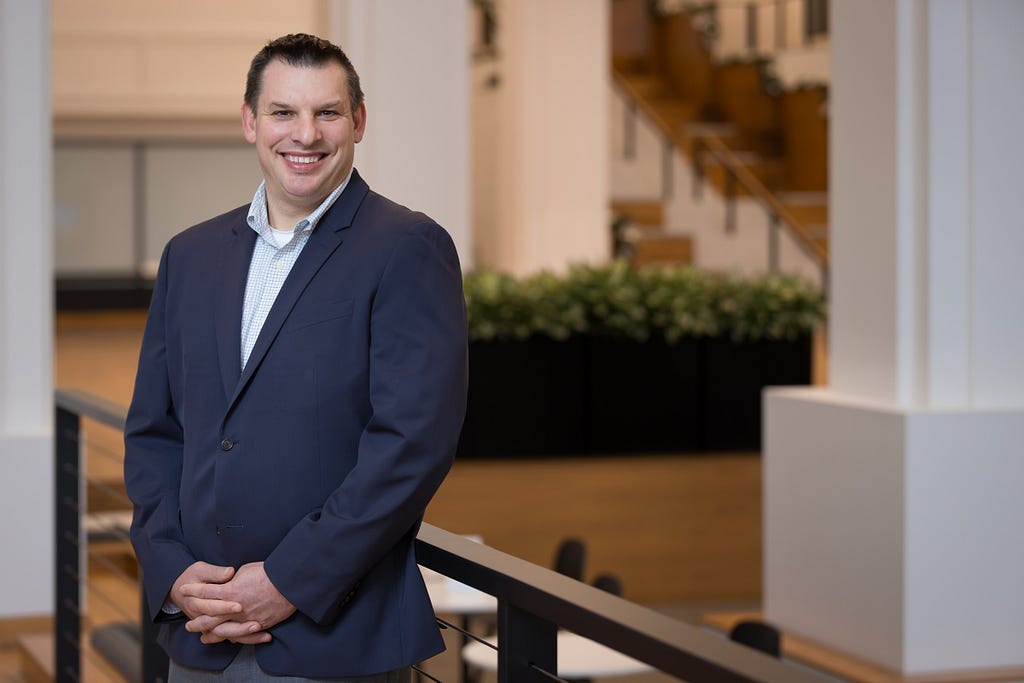
As a part of this series, we had the pleasure of interviewing Dan Markowitz.
Dan is an Assurance Partner at Boulay, a Minneapolis-based Assurance, Tax, Consulting and Financial Advisory. He leads the Employee Stock Ownership Program (ESOP) practice and specializes in audit and other financial reporting engagements for public, private and ESOP-owned clients in a variety of industries including retail, engineering, professional services, real estate, and manufacturing and distribution. Dan analyzes business operations to provide recommendations for enhancing overall business performance, and he provides financial and consulting services to ESOP companies, including ESOP feasibility studies, ESOP sustainability projects, repurchase obligation studies, and managing annual ESOP administration. He also leads the due diligence team in evaluating the financial and operational reporting system of acquisition target companies, and assists clients with merger and acquisition activities, including deal structuring, tax impact of transactions, and quality of earnings reports. In addition to his work at Boulay, Dan serves on the Executive Committee of the National Center for Employee Ownership (NCEO) Board of Directors, further advancing and advocating for employee ownership.
Thank you so much for joining us in this interview series! Before we dive in, our readers would love to “get to know you” a little bit about you. Can you tell us about your background and how the ESOP practice at Boulay evolved?
Boulay started in the ESOP practice in the 1970s, transacting the very first ESOP in the state of Minnesota. Years later, the partner at Boulay who was leading our ESOP practice was retiring. So, I stepped in. We had 40 ESOPs at the time. Fast forward to today, we work with 275+ ESOP companies annually. We’ve closed approximately 80 transactions in the last eight years.
I have a passion for the ESOP ownership as it provides a liquidity event to the selling shareholders along with giving employees the upside equity growth of the company going forward. ESOP ownership is a tool to close the inequality wealth gap in the United States.
How would you describe the culture at your company and what has been the biggest contributor?
Boulay has a very entrepreneurial culture where individuals who have a passion for specific service lines are given the opportunity and the space to grow those. It’s a place where people with entrepreneurial spirit are provided the resources to allow them to develop and grow.
How would you explain what an ESOP is to someone who has never heard of it before?
An Employee Stock Ownership Plan (ESOP) is a structure that allows employees to become beneficial owners of the company over time. It’s an M&A ownership structure that is an alternative to private equity, strategic buyer or management buyout. It’s for owners looking for something different. Instead of selling the business to a third party, the owner sells shares to a trust on behalf of employees. Those shares are allocated to employees as a retirement benefit over a period of time, and they gain value as the company performs well. It’s both a succession strategy and a way to align employees with the long-term success of the business. Additionally, the transaction is paid for by company’s profits and the employees do not have to use any of their own cash to buy the shares unlike a 401k plan. This is an added retirement benefit for employees for working at the Company and doing their day-to-day job.
Looking back, what was the catalyst that made you start thinking about transitioning to an ESOP?
The catalyst (for my clients) is typically a combination of succession planning and values alignment. Many owners reach a point where they want liquidity but don’t want to sell to private equity or a strategic buyer that might disrupt the company’s culture or workforce. ESOPs offer a way to exit gradually while preserving independence, rewarding employees, and maintaining the company’s legacy. ESOPs are a great way to enhance recruitment and retention of new and existing employees.
Was there ever a point you doubted the ESOP route? What kept you motivated to push through those challenges?
A common concern we hear from the companies we work with is that ESOP is a structure that they don’t clearly understand. We help them push through this by walking them through each step of the process to make sure they understand clearly. We show them that ultimately, they can control their exit out of the company, which is not always the case when working with a private equity firm or strategic buyer.
What makes your company stand out from others, thanks to the ESOP structure?
ESOP companies tend to foster a culture where employees think and act like owners. That translates into higher engagement, stronger accountability, and better long-term decision-making. Employees understand that their work directly impacts company value, which drives productivity and boosts morale. Over time, this creates a more resilient, performance-oriented organization with lower turnover and a stronger sense of purpose. Also, companies that are 100% employee-owned, S-Corp. ESOP companies, are exempt from federal and most state income taxes, which allows them to reinvest in their business in organic and inorganic growth. ESOP companies tend to grow faster than non-ESOP companies because of the tax savings.
Great. Now, let’s dive into the heart of our interview. The transition to an ESOP involves a lot of challenges and opportunities to learn. Could you list the top “Five Things You Need to Successfully Leverage the Power of ESOPs”?
1. Consistent financial performance and cash flow
ESOPs work best in stable, profitable companies that can support the transaction and ongoing obligations.
2. Clear leadership continuity and / or future succession planning
Maintaining experienced management ensures stability and confidence post-transaction.
3. Employee education and communication
Ownership only drives behavior if employees understand how the ESOP works and how value is created.
4. Managing future repurchase obligations
This is critical to the long-term sustainability of the Company and the ESOP.
5. Alignment of culture and incentives
The success of ESOP-owned companies comes when the ownership mindset translates into daily operations and decision-making.
Financial literacy is crucial in an ESOP for employees to understand the value of their shares and how their actions impact the company’s success. What initiatives have you taken to educate your employees about financial aspects and the workings of the ESOP?
Financial literacy is important. Companies who are ESOP-owned should continually communicate the ESOP benefit and how it fits into a participant’s retirement planning and future financial success. Most ESOP companies will do trainings and meetings throughout the year to promote the benefits of the ESOP to help employees understand the benefit they’re getting, and how they can help the company through increased financial performance.
Employee ownership often changes the dynamics of engagement and participation. How have you seen employee involvement evolve in decision-making and daily operations since transitioning to an ESOP?
Employee involvement typically increases significantly. While employees don’t manage day-to-day decisions directly, they become more engaged in improving operations, reducing costs, and driving growth because they share in the upside. The mindset shifts from “punching the clock” to “building value,” which enhances collaboration and accountability across the organization.
Company culture and the ability to attract top talent are critical factors for business success. How has adopting an ESOP model impacted your company culture and your approach to recruiting and retaining employees? Do you believe the ESOP model has given you an advantage in the labor market?
ESOPs are a powerful differentiator in recruiting and retention. They offer a tangible wealth-building opportunity that many companies can’t match. Internally, they create a culture of ownership, which leads to higher morale, stronger alignment, and lower attrition. In competitive labor markets, this can be a significant advantage. Employees are more likely to stay, perform at a higher level, and feel invested in the company’s future. Also, when hiring C-suite and other significant roles at an ESOP company, there are ways to implement management incentive plans outside the ESOP to reward the individuals that are driving the growth of the company.
How can readers further follow you or your company online?
You can learn more about how Boulay transacts ESOPs here.
You can follow me on LinkedIn here.
You can follow Boulay on LinkedIn here.
This was great. Thank you so much for the time you spent sharing with us.
About The Interviewer: Chad Silverstein is a seasoned entrepreneur with 25+ years of experience as a Founder and CEO. While attending Ohio State University, he launched his first company, Choice Recovery, Inc., a nationally recognized healthcare collection agency — twice ranked the #1 workplace in Ohio. In 2013, he founded [re]start, helping thousands of people find meaningful career opportunities. After selling both companies, Chad shifted his focus to his true passion — leadership. Today, he coaches founders and CEOs at Built to Lead, advises Authority Magazine’s Thought Leader Incubator.
Dan Markowitz of Boulay On Why ESOPs Are the Future of Business Succession was originally published in Authority Magazine on Medium, where people are continuing the conversation by highlighting and responding to this story.