
An Interview With Chad Silverstein
“At Ancestry, we see AI as an amplifier of human capability, not a replacement. In our industry where we lift insights from historical records and validate deeply personal family histories, real human involvement is critical.”
As a part of this series, we had the pleasure to interview Sriram Thiagarajan.
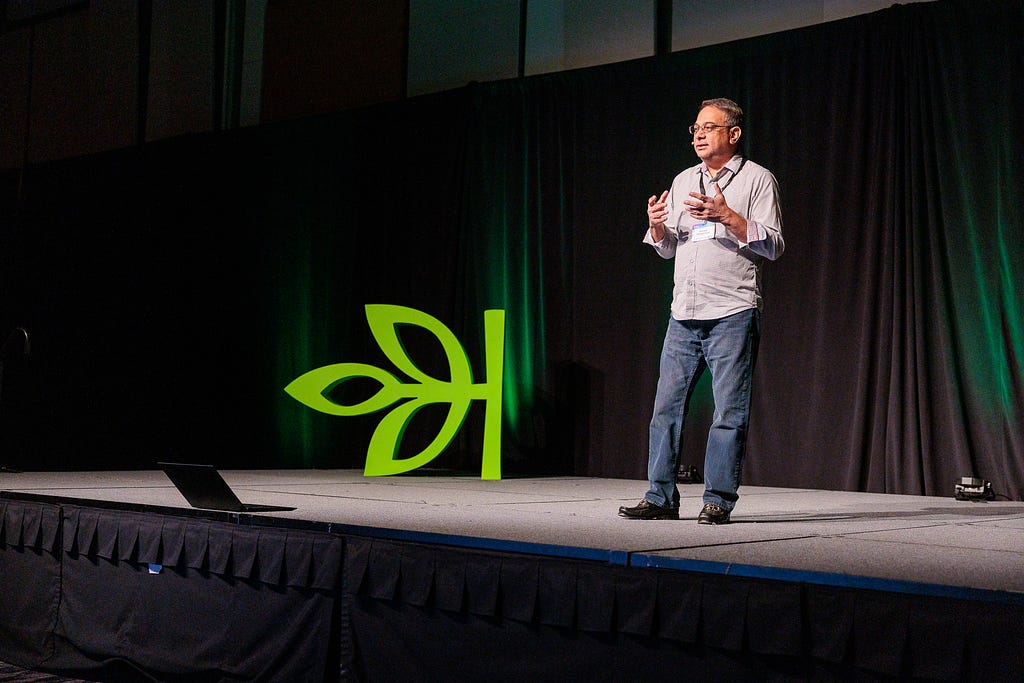
Sriram Thiagarajan currently serves as the CTO and EVP of Product & Technology at Ancestry, leveraging his over 30 years of experience in scaling B2B and B2C businesses to lead the company’s technical advancement. In his current position, he oversees the strategy and execution of all aspects of product development — playing an instrumental role in Ancestry’s evolution into an AI-powered enterprise and applying machine learning and proprietary AI capabilities to fundamentally reshape how people discover and engage with their family histories. Since joining Ancestry in 2017, Sriram has continued to play a pivotal role in evolving the organization’s digital transformation efforts.
Thank you so much for joining us in this interview series! To set the stage, tell us briefly about your childhood and background.
I grew up in a family in India that valued education and eventually ended up pursuing an engineering undergraduate degree in India. I continued my education in America, obtaining my master’s in engineering and electrical engineering. My engineering career provided me with an opportunity to pursue my passion in designing new systems and applications or finding solutions to solve existing problems. Over the course of my 30 year career, I have driven large scale digital transformation and growth for Fortune 500, Venture and Private Equity backed companies, developing scalable technology products, platforms, cybersecurity and cloud infrastructure solutions.
What were the early challenges you faced in your career, and how did they shape your approach to leadership?
I realized early on in my career that I had to be constantly curious to keep up with new technologies and continue to hone my skills. This led me to encourage a culture of innovation when I had the opportunity to lead teams, and I provide team members with space to learn and experiment with newer technologies.
We often learn the most from our mistakes. Can you share one mistake that turned out to be one of the most valuable lessons you’ve learned?
On one occasion, I had the opportunity to build and implement a large system which leveraged the latest technologies, but it ended up being too complex for its users, leading to little to no adoption. While the technology itself was state of the art, I realized what’s more important is simplicity in solutions that not only solve customer problems but also foster continued adoption. Since then, applying a customer lens to every aspect of product and engineering development has been a key tenet of mine, making decisions centered around customer value.
A.I. is a big leap for many businesses. When and what first sparked your interest in incorporating it into your operations?
Ancestry has always been a leader in technical innovation going back several decades. For more than a decade, Ancestry has developed and applied proprietary artificial intelligence and machine learning technology, including AI-powered handwriting recognition, content mapping and hint generation, to transform our product experience and digitize content faster, more accurately and more cost-effectively. With the more recent advent of generative AI, the team has explored new ways to innovate and transform family history into a deeply immersive storytelling experience for our users.
AI can be a game-changer for individuals and their responsibilities. Can you share how you personally use AI and what are your go-to resources or tools?
I use AI to improve my own productivity, be it summarization of documents and emails or leveraging LLMs for researching ideas and solutions. I do this both in my personal and professional endeavors. I use leading LLMs like Gemini, ChatGPT and others on nearly a daily basis.
On the flip side, what challenges or setbacks have you encountered while implementing A.I. into your company?
When working with a product that is as personal as family history, historical accuracy, cultural sensitivities, trust and privacy are of the utmost importance. One of the concerns people have with AI is AI hallucination. These challenges underscore the importance that, while AI can be a useful tool, human review and diverse perspectives in AI development is paramount to ensure historical accuracy and cultural awareness. We view it as a helpful tool, not a replacement for human work. At Ancestry, we employ human review to our work to ensure issues like this do not impact our records or our customers.
One of the key challenges we encountered early on was with our first AI-powered product integration on our ‘Life Story’ feature. While the technology worked, the output felt too generic and didn’t deliver meaningful value to customers. We realized the issue wasn’t the AI itself, but the quality and depth of inputs guiding it. Through multiple iterations, we refined the models to better understand the historical and personal context that matters most. As a result, we’re now able to surface richer, more nuanced storytelling that brings customers closer to their ancestors’ lived experiences.
Let’s dig into this further. Can you share the top 5 A.I. tools or different ways you’re integrating AI into your business? What specific functions do they serve and what kind of result have you seen so far? If you can, please share a story or example for each.
Expedited Content Digitization: About 15–20 years ago, digitizing records would take almost nine months to do manually at ten times the cost. Our old process was to scan the records, then outsource operations to manually index before uploading into our database where software programs would establish relationships between locations, people, etcetera. In 2021, we began to use our own proprietary AI handwriting recognition technologies and compressed the digitization process to under nine days. Ancestry now has over 71 billion records in our collection, and we have more than tripled the rate of our content growth year over year.
Generative AI for Immersive Storytelling: Late last year, we announced our new AI Stories tool featuring AI-generated record summaries and audio storytelling. This new feature allows Ancestry customers to examine a document pertaining to an ancestor, like a census record or draft card, and quickly generate a narrative or audio story that makes a once static document more engaging, accessible and easy to understand. To date over 500,000 unique users have engaged with AI Record Stories, with over a third returning to the story again.
Deeper Record Insights: In April of last year, Ancestry launched our new document transcription feature that uses AI to transcribe uploaded JPG/PNG documents to help bring clarity to difficult-to-read handwritten text. The tool supports multiple languages, including English, Italian, Spanish, French and more, to ensure our users can easily read and preserve handwritten documents from the past for future generations. This Spring, Ancestry also launched Photo Insights that scans images for context from clothing to settings and hidden details, turning a single snapshot into a fuller story of who someone was and the world they lived in.
Uncovering Marginalized Histories: A powerful story around Ancestry’s utilization of AI is our Articles of Enslavement resource released in 2024. Ahead of Juneteenth, we published the new collection that allowed descendants of enslaved people to discover crucial information about their ancestors. In partnership with Newspapers.com, our proprietary AI tools analyzed and extracted meaningful data from over 38,000 articles and advertisements published before 1900, including details like names, names of enslavers, locations, occupations, relationships and physical characteristics of more than 183,000 enslaved individuals. In 2025, we employed our AI tools to expand the collection by an additional 110,000 newly digitized newspaper articles relating to enslaved people in the U.S. between 1788 and 1867.
Internal Efficiencies: Ancestry embodies a culture of curiosity and experimentation. Teams across our company are leveraging AI tools to enhance their productivity, automate repetitive tasks, uncover deeper insights and scale faster. In engineering, teams are leveraging coding assistants, code review tools, AI driven QA tools and more, to compress time taken to build features. Our product and design teams are experimenting with AI tools for rapid prototyping and learn quickly about customer preferences of features. Our member services team is leveraging AI to turn qualitative feedback into usable insights.
There’s concern about A.I. taking over jobs. How do you balance A.I. tools with your human workforce and have you already replaced any positions using technology?
Like I mentioned earlier, at Ancestry, we see AI as an amplifier of human capability, not a replacement. In our industry where we lift insights from historical records and validate deeply personal family histories, real human involvement is critical. AI does the heavy lifting of processing out data at scale, which frees our teams to focus on strategy and innovation for our customers. Our application of AI is not about cost cutting, it’s about improving our product and the customer experience, uncovering more frequent and richer family story discoveries.
Looking ahead, what’s on the horizon in the world of AI that people should know about? What do you see happening in the next 3–5 years? I would love to hear your best prediction.
It is very difficult to predict the future over a long horizon as technology, especially AI, is evolving so rapidly. From what I can see, Agentic AI will become an integral part of all enterprises to power workflow and automate mundane tasks, in addition to AI agents performing autonomous work. This will become the norm for most application interactions.
If you had to pick just one AI tool that you feel is essential, one that you haven’t mentioned yet, which would it be and why?
AI is becoming an integral part of every application we use today, both at work and in our personal lives. I find myself using ChatGPT extensively for my personal use, be it researching home improvement options, figuring out how to fix issues around the house, planning travel and vacations or how to read medical reports after a doctor visit. It is super easy to use them, understand the explanations with references to source documents and also come up with action plans on next steps.
At work, my team and I use AWS Kiro extensively for prototyping solutions, help with coding and to perform simple tasks that enhance productivity. Our platform runs on AWS and leveraging their tool was easier for us to start our spec-driven agent AI development. Having said that, we also use Gemini for specific use cases around document transcription and translation.
For the uninitiated, what advice would you give someone looking to integrate AI into their business and doesn’t know where to start?
My advice would be to adopt a culture of experimentation. Find a small, specific friction point in customer experience or your business as a whole and apply an AI tool to solve that single problem. It doesn’t need to be perfect on day one. Run the experiment and see if it aligns with your customers’ or employees’ needs. Once you know if it adds value to your business, double down and repeat.
Where can our readers follow you to learn more about leveraging A.I. in the business world?
You can follow me on LinkedIn, where I share insights on our latest technology and AI innovations at Ancestry. You can also follow the incredible work my team is doing by checking out Ancestry’s blog for news on our new AI capabilities, partnerships and product announcements.
This was great. Thanks for taking time for us to learn more about you and your business. We wish you continued success!
About The Interviewer: Chad Silverstein is a seasoned entrepreneur with 25+ years of experience as a Founder and CEO. While attending Ohio State University, he launched his first company, Choice Recovery, Inc., a nationally recognized healthcare collection agency — twice ranked the #1 workplace in Ohio. In 2013, he founded [re]start, helping thousands of people find meaningful career opportunities. After selling both companies, Chad shifted his focus to his true passion — leadership. Today, he coaches founders and CEOs at Built to Lead, advises Authority Magazine’s Thought Leader Incubator. Learn more at www.chadsilverstein.com
Sriram Thiagarajan of Ancestry: How We Leveraged AI To Take Our Company To The Next Level was originally published in Authority Magazine on Medium, where people are continuing the conversation by highlighting and responding to this story.