
Winning Together: Cole Gagnon of OKW Architects On How Strategic Partnerships Can Unlock New Sales Opportunities
An Interview With Chad Silverstein
“When that alignment is there, the outcomes almost feel like they take care of themselves. They don’t, of course, but it feels that way because everyone is operating in their strengths and supporting each other’s.”
Strategic partnerships have the potential to unlock growth and create new opportunities in ways that businesses can’t achieve alone. To explore this important topic, we had the pleasure of interviewing Cole Gagnon.
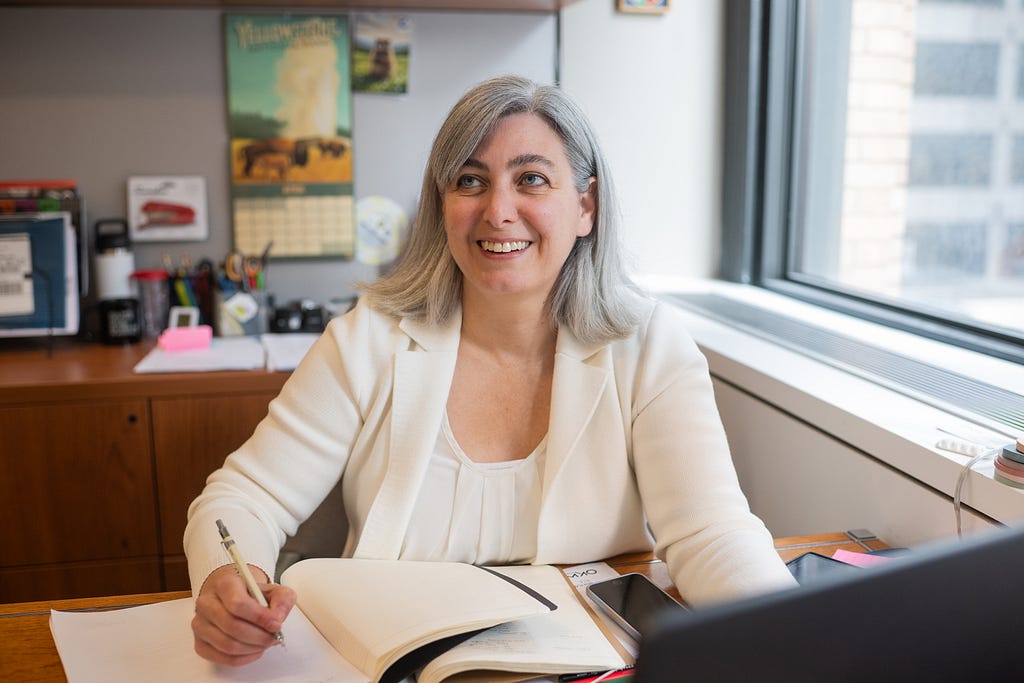
Cole Gagnon is president of OKW Architects. In her 25 years in the architecture industry, she has developed an expertise for complex, technical problem-solving across market sectors and project types. She is a registered architect and earned her master’s and bachelor’s degrees from the Catholic University of America, where she currently serves on its Board of Advisors for the School of Architecture and Allied Arts.
Thank you so much for joining us in this interview series! Before we dive into our discussion, our readers would love to “get to know you” a bit better. Can you share with us the backstory about what brought you to your specific career path?
I’ve been in the industry for almost 30 years, and early in my career I was handed projects and opportunities that, looking back, I wouldn’t have given myself. At the time, I didn’t know any better, so I showed up and did the work. More importantly, it was how I showed up, and what that made room for.
About five years in, I was given a project for a high-profile client, designing an in-house fitness center and yoga studio, long before yoga was on every corner. It was fully mine, from reclaiming space in the building to coordinating consultants, producing drawings, and navigating permitting. It was daunting for a young professional, but I showed up with curiosity, respect for the work, and a willingness to ask questions and learn.
That mindset carried into construction. The contractor was generous and supportive, and I learned a tremendous amount from him. I remember questioning a steel column base plate condition on site, not to challenge, but to understand. That back-and-forth built both the project and the relationship. It was true collaboration.
Later in my career, I found myself leading a large, complex project during construction, embedded in the trailer full-time. I had to learn quickly how to read the room, earn trust, and defuse tension. I remember walking onto a deck where a foreman was clearly frustrated and saying, “I know you think I’m a dumb architect, but tell me what you’re struggling with so we can figure it out.” That moment shifted the dynamic. We moved from conflict to alignment.
Over time, those experiences reinforced something simple: how you show up determines whether you sink or swim. That’s shaped my career, and it’s something I try to model every day, for my team and for every partner I work with.
Can you share the most interesting story that happened to you since you began working with partnerships or collaborations?
One of OKW’s long-standing clients, a senior living owner-operator, embarked on a complex life-safety upgrade across more than 120 occupied units, adding three elevators during COVID. OKW had an established relationship with the client, but the general contractor was new to both of us.
Early COVID was challenging for everyone, but construction didn’t stop. Layer in an occupied building with a vulnerable population, and the stakes were high. Each team member understood the risks, but initially, everyone stayed in their lane. The owner, the contractor, and the architect were operating more independently than collaboratively.
I knew we’d be more successful if we worked as one team, but that took time. Every week I showed up for meetings, and instead of leaving afterward, I stayed in the trailer and worked. That consistency mattered. We started sharing meals, having conversations, and seeing each other as people rather than roles.
Over time, we began to understand each other’s strengths and approaches. We stopped solving problems in isolation and started working through them together. That shift made a difficult project feel manageable, even enjoyable.
In the end, the team aligned around a shared, resident-first mindset. A project the owner was initially anxious about became one that exceeded expectations. It wasn’t perfect, but it worked because of how we showed up and committed to working together.
You are a successful leader. Which three character traits do you think were most instrumental to your success? Can you please share a story or example for each?
As a woman in architecture and construction, I’ve had to navigate how others perceive me and move past that quickly so we can focus on the work. That’s taught me to read a room, acknowledge what’s there, and shift the tone toward something more productive without giving negativity space to grow.
I’m confident in my experience, but not so rigid that I can’t ask questions, listen, and learn. I don’t accept input blindly, but I do work to understand it fully, and I’m willing to admit when I’m wrong and adjust course.
And then there’s laughter. It’s powerful, especially in high-stakes moments. When you’re willing to laugh first, it shows that you’re taking the work seriously, but not yourself too seriously. It creates space for people to think, collaborate, and solve problems together.
What does a “strategic partnership” mean to you, and why do you think it’s such an essential part of sales growth today?
At its core, it’s about working with people who are aligned, in values and in approach, people who bring out the best in you and allow you to do the same for them.
When that alignment is there, the outcomes almost feel like they take care of themselves. They don’t, of course, but it feels that way because everyone is operating in their strengths and supporting each other’s.
That kind of partnership doesn’t happen overnight. It takes intention and investment in the people on the team. But when it works, the entire team benefits, not just one company or individual. And those relationships naturally lead to future opportunities.
Once you find those partners, you want them to succeed just as much as you want your own company to succeed. That kind of generosity has a way of coming back to you.
How do you go about identifying potential partners that align with your business goals? Are there specific qualities or traits you look for in a partnership?
At OKW, we’ve spent time putting words to our core values, not because they’re new, but because they were already there. We just needed a way to articulate them.
Once we did that, it became a lot easier to recognize alignment. What used to be a gut feeling, you can now actually name. You can see pretty quickly whether someone operates the way you do or not.
We’re not looking for anything complicated. It’s people who are authentic, who care about the work, who are willing to engage and be curious in the process.
And a lot of that shows up naturally. If you’re coming into conversations and projects grounded in how you work and what you value, it either attracts people or it doesn’t. The ones it attracts are usually the right partners.
What steps do you take to build trust and ensure that a partnership will be mutually beneficial for both sides?
The things that build trust are simple. Show up. Be genuinely interested in the people you’re working with, not just the problem you’re solving. Understand what success looks like for them, not just for you.
Look beyond the immediate ask and think about the bigger picture. Use your experience to anticipate what’s coming next.
If you’re doing those things consistently, trust tends to follow.
Can you share a specific example of a strategic partnership you were involved in? How did it come about, and what impact did it have on your business?
A good example is the senior living project I mentioned earlier, where we were working with a long-standing client and a new general contractor under very complex conditions during COVID.
What made it a true strategic partnership wasn’t how it started, but how it evolved. Early on, everyone was focused on their own scope. Over time, through consistent presence and working side by side, we shifted into a more aligned, collaborative team.
That shift allowed us to better leverage each other’s strengths, communicate more openly, and stay focused on a shared, resident-first goal. The work became more fluid, even with the complexity.
The impact extended beyond the project itself. It strengthened relationships across the team and reinforced a way of working that carries forward. When that kind of trust and alignment is built, it naturally leads to continued collaboration and long-term value for everyone involved.
What role does communication play in maintaining a strong, long-lasting partnership? Are there particular practices or tools you use to keep everyone aligned and engaged?
Communication is essential, but it’s more than just being timely or clear. It starts with intent.
At OKW, we approach communication from a collaborative mindset. It’s not just about sharing information, it’s about staying aligned, understanding each other, and working through challenges together.
That’s what keeps a project moving forward and keeps partnerships strong.
Let’s now focus on actionable strategies. Based on your experience, can you share “5 Steps to Create Strategic Partnerships That Drive Sales Growth”? If you can, please share examples or stories for each.
1. Start with alignment: It begins with shared values and approach. You don’t need identical perspectives, but you do need alignment in how you work, how you communicate, and what you’re trying to achieve.
2. Show up the right way, consistently: Partnerships are built in how you show up day-to-day. Being present, engaged, curious, and respectful of the work and the people around you. That consistency is what builds the foundation.
3. Communicate with intent: Clear, direct communication grounded in a shared goal keeps everyone aligned. It helps teams address issues early and move forward without unnecessary friction.
4. Work through the hard stuff together: The real test of a partnership is how you handle challenges. Staying aligned, being direct, and working toward the same goal, even when it’s uncomfortable, is what strengthens the relationship.
5. Root for each other and keep it going: At a certain point, the relationship deepens. You advocate for each other, make introductions, and want the other person to succeed. That’s what turns a good working relationship into a lasting partnership.
What advice would you give to smaller companies or startups that may not have the resources or networks of larger businesses but want to start building strategic partnerships?
Anyone starting out, whether as a business or as a professional, should focus on meeting people authentically. You never know where opportunities will come from.
People want to work with those they trust, and those who bring value beyond the immediate task, whether that’s insight, connections, or support.
And don’t overlook the people you’re already working with. The relationships built during intense, day-to-day project work often become the most valuable over time. Those are the people you stay connected to, learn from, and rely on.
How do you handle challenges or conflicts that may arise in a partnership to ensure that the relationship stays strong and productive?
Conflict happens in every partnership. How you handle it is what defines the relationship.
I’ve found that being direct is the best approach. It’s not always easy, but it’s simple. If the partnership is real, that directness is understood as being in service of the shared goal.
It’s never about blame. It’s about resolving the issue and moving forward together.
Can you share a surprising or unexpected lesson you learned from a past partnership?
Thinking back to projects like the senior living work during COVID, or even earlier trailer experiences, one lesson that continues to surprise me is how much of the success comes down to the team dynamic, not just the technical work.
You can have the right people in the room, but until they start operating as a team, it’s harder than it needs to be. Once that shift happens, once there’s trust and a shared mindset, the work starts to move differently.
What’s unexpected is how quickly that change can happen, and how much it impacts the outcome.
What trends or changes are you seeing in how businesses approach strategic partnerships, and how do you think this will evolve in the coming years?
As the world becomes more digital and, in some ways, more isolated, people are looking for real connection again.
Strong partnerships create that. When you’re working with people who value collaboration, you fall into a rhythm quickly. You spend less time figuring out how to work together and more time solving meaningful problems.
That’s what allows teams to take on more complex challenges and deliver better outcomes.
In your opinion, how do strategic partnerships impact not just sales, but a company’s reputation, relationships, and long-term growth?
The best business is repeat business. And that comes from trust, alignment, and delivering on what you say you will.
When you’re a strong partner, people want to work with you again. You build a reputation for being reliable and easy to work with, and that spreads.
And when teams enjoy working together, the outcomes are better. It shows in the work.
You are a person of great influence. If you could start a movement that would inspire more companies to embrace collaboration and partnerships, what would that be? You never know what your idea can trigger. 🙂
At the end of the day, this all comes back to how we show up as people.
These aren’t just business values, they’re life values. Working with people who bring out the best in you, and doing the same for them, just makes sense.
It’s a simple idea, but a powerful one.
How can our readers further follow you online?
LinkedIn is the best way to follow me.
This was great. Thank you so much for the time you spent sharing with us.
About The Interviewer: Chad Silverstein is a seasoned entrepreneur with 25+ years of experience as a Founder and CEO. While attending Ohio State University, he launched his first company, Choice Recovery, Inc., a nationally recognized healthcare collection agency — twice ranked the #1 workplace in Ohio. In 2013, he founded [re]start, helping thousands of people find meaningful career opportunities. After selling both companies, Chad shifted his focus to his true passion — leadership. Today, he coaches founders and CEOs at Built to Lead, advises Authority Magazine’s Thought Leader Incubator. Learn more at www.chadsilverstein.com
Winning Together: Cole Gagnon of OKW Architects On How Strategic Partnerships Can Unlock New Sales… was originally published in Authority Magazine on Medium, where people are continuing the conversation by highlighting and responding to this story.