
Beyond Talent: Chris Brady of Chicago Fire FC On The Mindset and Disciplines of Professional Athletes
An Interview With Chad Silverstein
In the world of sports, talent is abundant but individual greatness is defined by a unique mindset and steadfast discipline.
In the world of sports, talent is abundant but individual greatness is defined by a unique mindset and steadfast discipline. In this series, we go one-on-one with athletes who raise the bar not just in skill, but in mental preparation and routine discipline. We’ll explore their thought processes and uncover the reasoning behind the specific habits that give them an edge. Prepare for a deep dive that could reshape how you approach discipline and mental resilience. This isn’t just about the game; it’s a blueprint for achieving peak performance in life. I had the honor of interviewing Chris Brady.
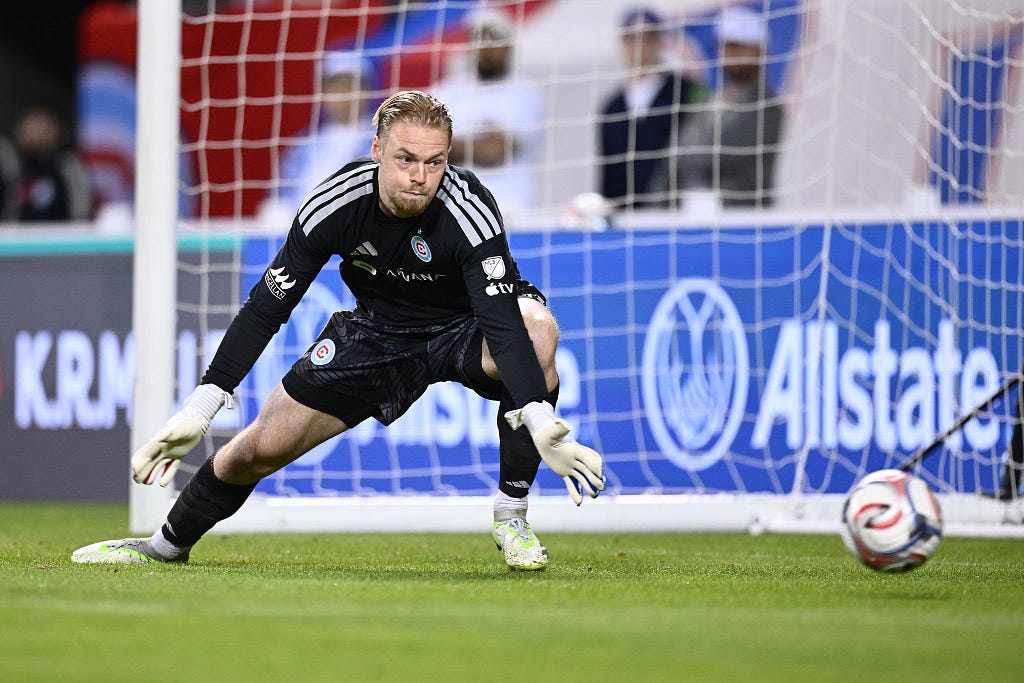
Chris Brady is an American professional soccer player who plays as a goalkeeper for Chicago Fire FC in Major League Soccer. Known for his quick reflexes, composure, and shot-stopping ability, Brady emerged through Chicago Fire’s academy system before becoming a first-team regular. Throughout is young career, he has also represented the United States at the Under-15, Under-20, and Under-23 international levels, establishing himself as one of the country’s promising young goalkeepers. In May, he was named to the U.S. Men’s National Team roster for the 2026 FIFA World Cup in North America.
Thank you so much for joining us in this interview series! Let’s jump in and focus on your early years. Can you share who your biggest influence was when you were young and provide specific examples of what you learned from them that helped shape who you’ve become and how you live your life today?
When I was younger, my biggest influence was Igor Dimov, former Chicago Fire Academy Goalkeeper Coach and current Chicago Fire 2 Goalkeeper Coach. He’s the guy who took a chance on me — a young, uncoordinated, scrawny kid at the time — and slowly worked with me to sharpen my skills over a four-year span. I learned a lot from Igor — things like how toughness and core strength are key to the position, how important reaction time is, and then many things off the field as well.
One example that has always stayed with me may seem like a small lesson, but it had a lasting impact. During a Chicago Fire academy trip, I came downstairs for breakfast with bedhead, and the moment Igor saw me, he turned it into a teaching moment. He told me to go back upstairs and fix my hair, even though it meant being late to the meal. It was a lesson I never forgot.
At the time, it seemed minor, but years later I realized the value behind it. In soccer, the way you present yourself can greatly influence how others perceive you, both on and off the field. That moment taught me the importance of carrying myself with professionalism, pride, and discipline in every situation.
Today, I try to live by those same standards — respect, responsibility, and passion — and much of that mindset was shaped by Igor and the lessons he instilled in me.
Staying on the topic of influence, who has been your biggest catalyst more recently and what can you share that you’ve learned from them that led you to make changes in your life?
More recently, one of the biggest influences on my growth has been Chicago Fire head coach Gregg Berhalter. In my opinion, Gregg has done an incredible job transforming the culture at the club, but on a personal level, he has helped me truly understand what it means to be in control — both on and off the field.
On the field, he’s taught me that certain moments in a game require me to think and operate like a quarterback: controlling the pace, organizing the team, dictating how we play, and at times even influencing whether we create scoring opportunities. That mindset has changed the way I approach the game.
What Gregg may not realize is how much those lessons have also shaped my life away from soccer. I’ve become more in control, more present, and more relaxed in my everyday life. I’ve learned not to take experiences for granted, whether it’s something as simple as going to the store with my family or grabbing lunch with friends. At the end of the day, I’m in control of how I spend my time and how I choose to live my life, and that perspective has made a meaningful difference for me.
Resilience is a hallmark of high performers, especially in the world of athletics. Could you share the hardest thing you experienced as an athlete, how you dealt with it, what you learned, and the overall impact it’s had in your life?
One of the hardest parts of being an athlete has been learning to accept the sacrifices that come with pursuing this career. So much of my time and so many life experiences have had to be given up in order to continue doing what I love. Now that soccer is my profession, missing important moments has become a little easier to justify because it comes with the territory of the job. But before that, I was still just a kid who wanted to experience all those once-in-a-lifetime moments.
Weddings, school dances, graduations, birthday parties, and family celebrations are all events I’ve become accustomed to missing over the years. It’s something that has weighed heavily on my mom as well because she feels like I missed out on an important part of growing up. And honestly, I understand that perspective.
As difficult and unfortunate as some of those sacrifices have been, I know I would make them all over again if it meant being where I am today. At a young age, I learned that chasing something you truly love sometimes requires giving up other meaningful experiences. Growing up, I always told myself, “It’ll be worth it someday,” and that mindset carried me through a lot.
I wouldn’t say those sacrifices have negatively impacted my life today, but I do think there may come a time later in life when I reflect on everything I missed and wonder what those moments might have been like.
Can you share the single most significant sports moment or achievement from your career and provide some context around why it’s your most significant highlight?
There have been several defining moments in my career so far that truly stand out to me. One was saving a free kick from Lionel Messi and keeping a clean sheet against him in the same match. Another was winning the Golden Glove award at the 2022 U-20 CONCACAF World Cup Qualifying tournament. Most recently, being called into the United States Men’s National Team squad for the 2026 FIFA World Cup was another unforgettable milestone.
For me, these achievements are reminders of how unique my journey and career have been, especially compared to most people my age. I’m incredibly grateful and blessed to be in these positions and to have experienced moments that I once only dreamed about. At the same time, they motivate me to continue pushing myself, because I believe that with hard work, belief, and consistency, even more special moments are still ahead.
You’re clearly driven by a specific set of disciplines that guide you. Can you share your top five that you personally prioritize and how they influence your daily routine?
1. Respect
Respect reminds me to carry myself the right way and treat others well, regardless of the situation.
2. Responsibility
Responsibility keeps me accountable to my commitments, my teammates, and the standards I set for myself.
3. Discipline
Discipline helps me stay consistent, especially on days when motivation alone isn’t enough.
4. Passion
Passion is what drives me to continue improving and chasing my goals.
5. Appreciation
Appreciation keeps me grounded and reminds me not to take any opportunity or experience for granted.
Together, these principles help me live with structure, purpose, and ambition. They also allow me to stay present in the moment while continuing to work toward becoming the person and athlete I ultimately aspire to be.
Nobody’s perfect. Share an instance where taking on too much served as a critical lesson that you learned from. What happened and how did you respond?
As I began achieving more success in my career, I found that many more people wanted to hang around me, often with the intention of using my platform to promote a product, brand, or personal interest to my audience. Most of the time, that has never really bothered me, and I’m usually happy to support people when I can.
At the same time, those experiences have taught me to be more aware and intentional about the relationships I keep. There have been moments where I realized that not all support is truly unconditional, and that some relationships come with expectations or hidden conditions attached. Because of that, I’ve had to mature in the way I approach some friendships and connections, making sure I surround myself with people who genuinely care about me beyond what I can provide for them.
Discipline can be a solo endeavor, but successful people tend to “borrow” other people’s disciplines. Can you share some specific examples of some of your disciplines that your teammates have picked up and the difference it made for them?
One discipline that many of my teammates and I have embraced over the years is the importance of being on time. It may sound simple, but punctuality says a lot about your professionalism, respect for others, and commitment to the team. We’ve always lived by the mindset that “early is on time, and on time is late,” and that standard has become part of our daily culture.
When one person consistently approaches training, meetings, and preparation with that level of discipline, it naturally influences the people around them. I’ve seen teammates begin to take their routines and preparation more seriously, and over time it creates a stronger sense of accountability within the group. Small habits like showing up early may not seem significant in the moment, but they build trust and a professional mentality that can make a real difference both on and off the field.
Measuring discipline can be tricky. How do you track or assess how your discipline impacts your results? Do you track or keep a scorecard of any of your daily habits or disciplines?
I don’t necessarily track my habits in a measurable way or connect every routine directly to a specific result. For me, time becomes the ultimate scoreboard when it comes to discipline. If you consistently approach your life and career with discipline, growth and progress eventually reveal themselves over time.
I enjoy reflecting on how much I’ve evolved, both personally and professionally, and recognizing which accomplishments were made possible because of the standards and discipline I held myself to along the way. In many ways, those long-term improvements are the clearest proof that the daily habits and sacrifices were worth it.
Ever found yourself at a crossroads, where your commitment to discipline clashed with other realities in your life, like team dynamics or short-term goals? How did you handle it and what was the outcome?
I’m fortunate to be part of a team culture that places a strong emphasis on discipline and accountability. At the same time, there were definitely moments when I was younger where I felt tempted to give in to short-term gratification instead of staying committed to the habits I knew would benefit me in the long run.
Things like maintaining a proper diet, getting enough sleep, and staying consistent with recovery can be difficult when you’re young because the immediate rewards of making the easier choice often seem more appealing. That’s a challenge many young athletes face.
Looking back now, I’m grateful that I chose discipline more often than not during those years because I can clearly see the impact those decisions have had on my growth, both as an athlete and as a person. The results I’m experiencing today are built on the habits and sacrifices I committed to early on.
Reflecting on your athletic journey, what’s one thing you would go back and do differently if given the chance?
If I were given the opportunity to go back and change anything, I honestly wouldn’t change a thing. Every high and low I’ve experienced along the way has shaped me into the person I am today, and I’m incredibly grateful for everything I’ve gone through to become who I am.
When it comes to pursuing the highest level in your sport, what valuable advice could you give someone that you wish someone would have told you?
Stay patient! Sports are never a linear journey, and everything happens for a reason. When I was younger, especially early in my career, I was very impatient about my path and wanted things to happen faster than they were supposed to.
Over time, I learned that if you focus on the controllables like work ethic and dedication, everything that’s meant for you will eventually fall into place. Patience is one of the hardest lessons to learn as a young athlete, but it’s also one of the most important.
If we were sitting together two years from now, looking back at the past 24 months, what specifically has to happen for you personally and professionally, for you to be happy with your results?
I don’t think there’s one specific achievement or milestone that would determine whether I’m happy with the results. For me, the most important thing would be knowing that I did all I could to put myself in the best position personally and professionally. At the end of the day, having that peace of mind would make me the happiest man on Earth.
Finally, where can fans and fellow athletes follow your journey of talent and discipline?
If anyone wants to follow my journey, Instagram is the best place to do it. I try to share content that gives people a closer look at who I am and what my life is like both on and off the field.
Instagram: @chrisbrady0
Thank you so much for sharing these insights!
About The Interviewer: Chad Silverstein is a seasoned entrepreneur with 25+ years of experience as a Founder and CEO. While attending Ohio State University, he launched his first company, Choice Recovery, Inc., a nationally recognized healthcare collection agency — twice ranked the #1 workplace in Ohio. In 2013, he founded [re]start, helping thousands of people find meaningful career opportunities. After selling both companies, Chad shifted his focus to his true passion — leadership. Today, he coaches founders and CEOs at Built to Lead, advises Authority Magazine’s Thought Leader Incubator. Learn more at www.chadsilverstein.com
Beyond Talent: Chris Brady of Chicago Fire FC On The Mindset and Disciplines of Professional… was originally published in Authority Magazine on Medium, where people are continuing the conversation by highlighting and responding to this story.