
An Interview With Chad Silverstein
Build a Team. Differing perspectives will always breed balanced innovation. A principle I personally learnt is that decisions are best made by consensus. Beyond this, developing trust in peers that have differing capabilities and interests only contributes to a further well-oiled machine. At the end of the day, presuming that everyone working on the podcast has a day job to tend to, you’d rather be working on your passion project with friends over the weekend than do it all by yourself
In an era where the podcasting landscape is more crowded than ever, growing an audience requires not just consistency and quality content but also smart, strategic planning. Today, we’re diving deep into the growth strategies of a podcaster who has successfully expanded their reach in this competitive space. With a background that blends unique storytelling with savvy marketing techniques, our guest has mastered the art of audience growth. They’re here to share the top five strategies that podcasters can use in 2024 to increase their listener base, focusing on leveraging social media, optimizing for SEO, making the most of guest appearances, and more. I had the pleasure of interviewing Anas Memon.
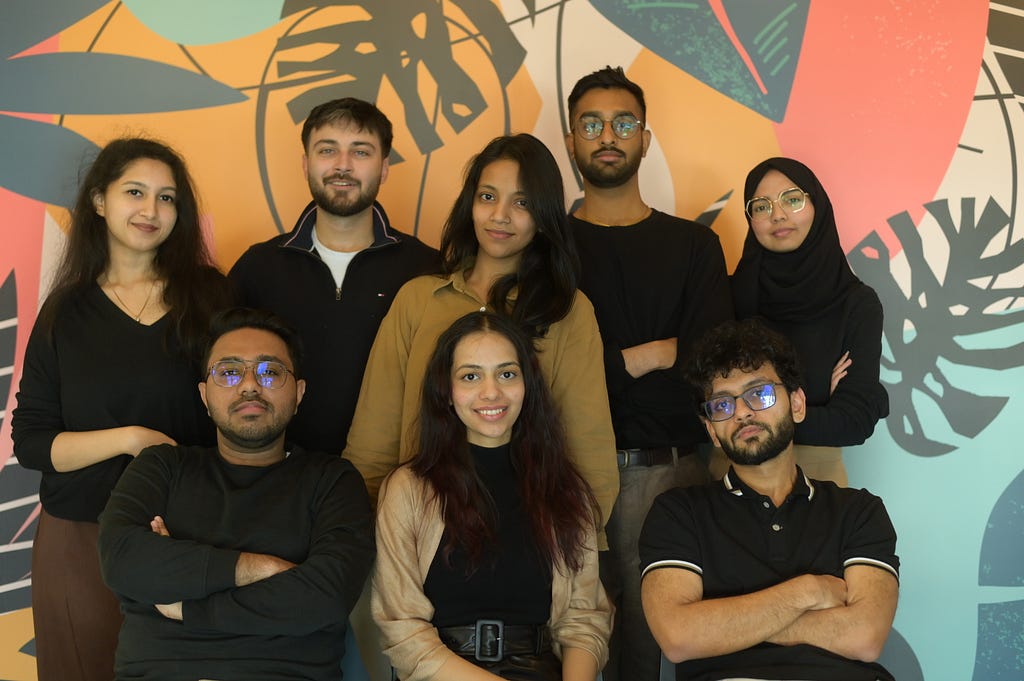
While on one end Anas Memon is an Investment Analyst at Gutmann Capital, focused on strategy execution for a private equity fund, on the other he’s passionate about storytelling and the intersection of money, ambition, and identity. A graduate of ESSEC Business School, he brings a rare blend of financial insight and creative perspective to everything he does. That same spirit is behind The Dollar Diaries Podcast — a passion project he co-leads with a small team of eight curious minds.
What started as a side project has evolved into a growing platform with listeners across the world, featuring voices that range from young professionals to founders and creators. Anas approaches it not just as a podcaster, but as someone genuinely curious about the stories behind people’s decisions — and how money plays into it all.
Thank you for joining us. To start, could you share your “origin story” with our readers? How did you begin your podcasting journey, and what challenges did you face in the early days regarding audience growth?
1. Absolutely. The story begins way before I joined the team — Abubakr, Aditya and Guhaesh, three childhood friends and *alleged* football fanatics were now in their early 20s in Dubai and struggled with delusions of grandeur. They sensed potential all around them in the bustling metropolis, but weren’t sure of a strategy to capitalize upon this. So they proceeded with what might seem to be the most natural progression. They began a podcast to educate themselves on all that they were curious about. That was to remain the plan until an idea big enough shook them hard enough to jump ship, or a logical funnel into the next platform developed. Thus began the journey with a rudimentary camera set-up, quick learning from a friend who was handy with production, and a complimentary shared workspace earmarked for student initiatives. Nascent, simple, hopeful.
2. Over time, they recruited a team of their friends, each proficient in a different workspace — this ranged from business development to video production, research for dossiers to host duties, branding to social media curation, pipeline strategy to sponsorships and much more! I’m glad to be part of this gradual cohort; as the last one in, I’d also like to take a moment to give them all a nod of thanks. This rag-tag team of eight now boasts numbers on social media that seem to double every couple months, an average pipeline of 8–10 episodes consistently in post-production, and slots for guests booked out until the end of Q3 2025. We’re nowhere near the targets we set per quarter, but I’m proud to say that we haven’t stopped putting out content for the best part of the last couple years.
3. All of us on the team also have day jobs in varying fields; not one member works in the same field as another. As a result, the environment created almost begets evolution through a difference in opinion. Having a team with diverse interests and assorted expertise also gives rise to an interesting format — any combination of 2 from the 8 on the team can routinely strike up a conversation with a guest who’s experience lies in their particular wheelhouse. While this has allowed The Dollar Diaries to attract a network of guests that include entrepreneurs, C-level executives and even ambassadors across a multitude of sectors, it’s also made this passion project an enjoyable affair, one spent amongst friends with continually rotating roles.
4. There have been challenges aplenty since the beginning — I’d imagine there always are. But developing this project into one we’re all proud of has been an extremely gratifying experience, and one that we are excited to take forward to greater heights.
Social media is a powerful tool for podcast promotion. Can you share your most effective strategy for leveraging platforms like Instagram, Twitter, or Facebook to boost your podcast’s visibility?
Something we realised over time is that attention is platform-specific. The kind of content that resonates on Instagram doesn’t perform as well on TikTok, and the pieces that flourish on LinkedIn have little connection to those that trend on YouTube. We prefer to test our ideas on YouTube and TikTok, as these platforms are particularly well-suited for high volumes of short-form content. The content that performs best and garners more engagement is then shared on our LinkedIn and Instagram profiles. This multi-platform approach helps us reach diverse audiences while strategically reinforcing our brand message. Apart from that, a strong LinkedIn presence is essential for us, especially since our podcast spans a wide range of industries, from marketing and hospitality to luxury, manufacturing, logistics, investment banking, consulting, venture capital, media and more. Of course, staying true to our name, finance plays a major role across all these sectors, and we focus on that niche to bring a unique perspective to each industry we cover. We’ve found that with consistent effort, the algorithm tends to work in our favor, driving more visibility.
Beyond that, actual visibility comes from creating a community and engaging with those who take the time out of their day to listen to a forty-minute conversation, hoping to take something meaningful from it. We try to ask our guests the same questions as our target demographic and we have even begun experimenting with audience-driven topics via pre-production polls. We also use tools like ‘Answer The Public’ to identify the most frequently asked questions and learn what people are actually interested in. Being the same age group as our audience makes it simpler to relate, think similarly, and structure discussion in a way that resonates.
SEO (Search Engine Optimization) can be a game-changer for podcasts, especially when it comes to discoverability. What SEO tactics have you found most beneficial for attracting new listeners through search engines?
1. SEO reigns supreme in a space that demands the persistent expansion of discoverability. With The Dollar Diaries, we’ve gradually learnt that SEO doesn’t just start and stop at key words — it refers to digital presence and platform-level uniformity. We began with aggressively expanding our distribution footprint. Beyond Spotify, YouTube, and Apple Podcasts, we serviced dozens of niche directories. This includes the ones that most people have never heard of, but contribute massively to Google’s indexing. Once Apple Podcasts, a syndication hub, distributes our content, we go ahead and ‘claim’ listing wherever possible, inputting standardized data such as host bios, episode summaries and guest credentials. Everything is standardized. A single update hits 17+ platforms all-together. This consistency has helped build substantial search cohesion — a quick Google search of The Dollar Diaries won’t lead one to just a few links, but a whole Knowledge Panel on the side. It’s a small but sure step to developing a digital brand as opposed to a media channel.
2. Another crucial one is blog posts and mentions across different publications — we’ve begun developing relationships with the media space in the UAE, which while nascent, is a burgeoning space of ideas, creativity and fast-paced movement. The space here is slowly transitioning from a hub that catches trends quickly to one that sets trends in the region (as opposed to the entire region unanimously importing trends from abroad). We’re also on Podeo, the region’s largest platform of Arabic-language podcasts. The brilliant team over there has helped us streamline distribution across various feeds, import legacy RSS feeds, plug-in our podcast to a whole new audience of those that typically listen to Arabic-only podcasts. Initiatives with them will eventually range from dubbing our content in Arabic as well as reaching out for distribution on airlines that Podeo is an exclusively partnered with.
3. Our pipeline and specifically, the length our pipeline, often poses a challenge. Averaging in at 8–10 weeks, we often miss the window on trending topics that we may have addressed on the episode. Addition to the SEO strategy is — on the podcast, we address a host of topics. Finding the best and most relatable one is a challenge. Our pipeline being almost 8 weeks long on average also results in us only releasing content that captures trending topics way after the fact. To mitigate this and improve headline phrasing and keyword research, we often use [w](http://Answerthepublic.com)ebsites like Answer the Public to develop insights into the most searched topics at the time of posting.
Guest appearances, both on your podcast and on others, can significantly expand your reach. Can you discuss how you’ve approached guest appearances to grow your audience? What’s your strategy for selecting guests or shows to collaborate with?
We haven’t built a clever, structured strategy when it comes to picking guests — for us, our outreach often leads from a place of pure curiosity and at times, admiration. It usually starts with a simple question: “Who would we actually want to sit down and have a coffee with?” Not in a suit-and-tie manner, but a candid conversation; someone who’s developed a level of pedigree in an industry that we can’t help but but applaud, someone who we’d like to learn from, or someone who’s just really cool.
More often than not, this translates into interviews with CXO’s, at both multinationals and start-ups. We like speaking to the ones who’ve built things and taken risks; maybe even failed a few times, but never stopped moving. Once we started reaching out, the list kind of exploded. These weren’t just conversations for us anymore — it felt like stumbling upon a goldmine of information, learning from veritable experts.
But alas, like all things, change is essential. True to the ephemeral mindset often tagged upon our generation, we like to mix things up. Sometimes we bring in someone at around the same age as us, who’s doing the same things we are — learning, building, moving. It keeps things fresh, and keeps us from falling into a routine. At the end of the day, it’s all about creating the kind of conversations we would want to listen to too. When we hit record, we aspire to ask the questions you would.
Networking within the podcasting community can open up opportunities for cross-promotion and shared growth. How have you engaged with other podcasters to support each other’s audience growth?
Absolutely. The podcasting space in the UAE, and MENA in general, isn’t mature yet. As a result, the community is brimming with podcasters of varying experience levels, interests and ideas. We’ve engaged with podcasts such as HalfANiceDay, who’ve been kind enough to come on our show as well as invite us onto theirs. This is a pipeline we’re actively building as well! Supporting each other is a maxim we’re extremely grounded in, there’s space for everyone in the podcasting community here. Since there’s always something being built in the city, we love giving shout outs to our old and new favorites! Developing that sense of community in-person has also been wonderful. We have to give a huge shout out to Podclub here, which is run in collaboration with Poddster, and the wonderful team of Vuk Zlatarov, Fari Zolf and Ivan Zeljkovic. They host the most fantastic meet-and-greets as well as some crucial educational sessions on outreach, monetization and more. Abubakr, part of the founding members of The Dollar Diaries, is also a member of their steering committee; aimed at fleshing out and supporting the podcasting community as a whole.
Beyond these methods, is there one more strategy you’ve employed that’s been particularly effective in growing your podcast audience in 2024?
One strategy that’s been working, and we wish we had employed before: We initially began by focusing on a mix of quality and quantity of short-form content (reels, clips etc.) posted. We began with posting 6–7 pieces a week, then tried cherry-picking three-four pieces of content, then even lesser. Over time, we realized that YouTube is very much a numbers game. Putting out as many pieces of content as you can from your podcasts in the form of shorts and allowing the ‘free market’ so to speak, to determine which ones are of higher quality seemed to be the best route forward. In doing so, we determined the strongest and most relatable pieces, to be reposted on socials like LinkedIn and Instagram, which value quality over quantity whilst developing a community. This is just one example of fine-tuning our approach based on the platform in front of us. Developing and iterating on strategies on a platform-level and then drilling down the same philosophy to the bottom layer of content creation has been just as important. Here, content has to reflect the needs of our audience. This is something we’re working on in 2025.
The middle of any growth journey is often where the most learning and adaptation occurs. Reflecting on your experience, what’s one major lesson you’ve learned about audience growth that you wish you knew when you started?
We used to obsess over minutia — getting every frame, caption and audio sync just right. Almost subconsciously, we believed that there was a magic formula that draws people in, that would get listeners to sit up and take note of the conversation. And then one day, a guest pointed out the simplest truth: People connect with people. Our audience wasn’t just tuning in for the conversation, they were also tuning in for us. The voices behind the mics. The metaphorical ‘people behind the curtain’. We weren’t missing polish. We were suppressing personality. So we shifted gears. We began placing a deliberate emphasis on highlighting the team with behind-the-scenes stories, inside jokes and spotlight reels for all of us. The team seems much more relatable now that they have the chance to showcase themselves in their own intricate ways. While it’s only been a few months, we’ve noticed an uptick in engagement ever since. This served as a strong reminder to us that people don’t just connect with logos, they connect with people.
Looking forward, what emerging trends or platforms do you see as having the potential to impact podcast audience growth in the next year?
In an era governed by platforms and enforced by algorithms, the rules are in constant flux. As such, the only long-term hedge is community. Not just a large enough following, but an audience that increases in its engagement with us and our content. The focus is thus bi-fold: Deepening that layer of community — understanding what our audience responds to, what they would like to listen to, and how we can relate to them. Stacked upon this is the strategic amplification of distribution through extensive syndication and symbiotic partnerships. This includes everything from expansion through platforms like Podeo to cross-promotions and the rapid expansion of our newsletter. The next phase for the podcasting space is embroiled in deeper connections and smarter distribution.
For podcasters who are just starting out or struggling to grow their audience, what advice would you give to help them stay motivated and focused on their growth strategies?
I read a harrowing statistic somewhere — 90% of podcasts don’t make it past the 3rd episode. Of those that do, another 90% fail beyond the 20th. It’s incredible how much gradual consistency and the development of strong processes play into longevity. Frankly, the beginnings are the worst. Unless you’re one of the select few, you’ll grow painfully slow at first. You’ll put out episodes that no one tunes into and publish content that has no engagement. The ones that succeed, and I use succeed loosely for it’s myriad interpretations in this context, are the ones that remain consistent. One thing I’ve learnt is that accountability breeds consistency, and we’ve been lucky to work as a unit that inherently demands accountability. So if you’re going to do this, commit to it like you would a gym routine. Preferably one that you grind through with friends.
Could you list and briefly explain “5 Key Strategies for Growing Your Podcast Audience” based on your experiences and insights? If you can, please share a story or example for each.
1. Consistency is Key. Never miss a beat. We’ve taken breaks, but the Dollar Diaries machine has not stopped churning content over the best part of the last two years. Tips to maintain consistency include i. maintaining a long pipeline in post-production (a decent lead time is 6–8 weeks, but we occasionally move into the 10–12 week category and usually hover somewhere between the two. This sounds great but can also lead to a bunch of challenges) ii. Automate anything that you can — that includes project management, distribution, social media, follow-ups, calendar management etc. — not only does this save you time but sets a foundation for sustainable practices as you build upon the building blocks of a podcast.
2. Be Everywhere. Distribution is key. Develop partnerships and follow a land-and-expand strategy across all the different channels you can capture. You will eventually find the niche that you fit into. It is extremely difficult to build for a particular niche. Instead, work towards
3. Grow your Knowledge Base. When you boil it down to brass tacks, a podcast is only as good as its content. The curation of this content begins way before your guest has arrived. Take the time out to conduct research on the individual you’re bringing on; create a 1- or 2-pager on their journey and the questions you’d like to ask them. This will create genuine interest in the experiences they have to share. Additionally, podcasts often reach the point of saturation quite quickly. Ensuring that you’re nimble in the topics you’d like to cover is the easiest way to both target a brand new segment of the audience as well as add new verticals of expertise to your rolodex.
4. Stay Nimble. As you start off, you won’t get everything right; a camera might fail on set, the power might trip, you might lose a bunch of tape on a failed SD card, or your social media might get hacked. Sometimes, you might even put in a strategy in place isn’t synchronous to your brand positioning in the name of iteration. This is all completely fine, we’ve been through this and more! The nature of the game almost paradoxically places thorough preparation right next to immense ductility. You’ve got to develop contingencies and plan for failure ahead of time, but continually incorporate feedback, both external and internal, to drive better product to your audience. Taking stock through feedback from even a single loyal fan is extremely important to us as we continue to evolve.
5. Build a Team. Differing perspectives will always breed balanced innovation. A principle I personally learnt is that decisions are best made by consensus. Beyond this, developing trust in peers that have differing capabilities and interests only contributes to a further well-oiled machine. At the end of the day, presuming that everyone working on the podcast has a day job to tend to, you’d rather be working on your passion project with friends over the weekend than do it all by yourself
The journey of growing a podcast audience is filled with both challenges and milestones. Can you share a particularly rewarding moment or achievement in your audience growth journey that stands out to you?
There’s a few that have been slightly surreal. None of them relate to our audience per se — we’re definitely growing in that segment; 65,000+ accounts reached and over 100k views across Instagram alone since the beginning of 2025, but what’s fascinating has been the experience with our guests. Recently, a C-level executive at a Fortune 500 responded to our outreach with a message that suggested he’d seen his friends on our podcast already. This was incredibly humbling and almost immediately compelled us to take stock of the platform we’ve been lucky enough to build and curate over the last two years. We’ve met some truly inspirational individuals from different backgrounds and across various fields, each excelling in their own walk of life — whether that’s on an entrepreneurial journey or at the top of the corporate ladder. It’s been an extremely rewarding journey that’s taught us more than we could have imagined, both internally through the development of this platform, and externally through the eye-opening conversations we’ve had and the sense of community we’ve garnered. We’re looking forward to bringing a bunch of our past guests through a few events we’ve been cooking.
As we wrap up, how can our readers follow your work and stay updated on your strategies and insights for podcast growth?
We have a robust team that is active on all social media channels! The link-in-bio on Instagram and our presence on LinkedIn will connect you to our ecosystem! For a quick read on the various experts in the MENA sphere that we’ve had on over the last 2 years, click here
You can find me on Instagram at @anasmemon9 and LinkedIn at Anas Memon.
Your journey and the strategies you’ve shared today provide a roadmap for podcasters looking to expand their audience. Thank you for offering such valuable insights into the art and science of podcast growth. We look forward to seeing how your podcast continues to reach new heights, and we wish you continued success in connecting with listeners around the world.
About the Interviewer: Chad Silverstein is a seasoned entrepreneur with 25+ years of experience as a Founder and CEO. While attending Ohio State University, he launched his first company, Choice Recovery, Inc., a nationally recognized healthcare collection agency — twice ranked the #1 workplace in Ohio. In 2013, he founded [re]start, helping thousands of people find meaningful career opportunities. After selling both companies, Chad shifted his focus to his true passion — leadership. Today, he coaches founders and CEOs at Built to Lead, advises Authority Magazine’s Thought Leader Incubator.
Anas Memon of The Dollar Diaries Podcast: Top 5 Strategies for Growing Your Podcast Audience was originally published in Authority Magazine on Medium, where people are continuing the conversation by highlighting and responding to this story.