
Breaking the Marketing Mold: Andrej Persolja of We Fix Boring On 5 Innovative & Non-Traditional Marketing Strategies That Can Engage Audiences Like Never Before
An Interview With Chad Silverstein
By far the best strategy with the highest impact I’ve seen work in the past few years is Formula 1 using Netflix’s Drive to Survive to open the U.S. market. Formula 1 has always aspired to gain popularity in the U.S., but has never succeeded. This time, it got a perfect partner in Netflix. They allowed Netflix an exclusive right to follow teams during the F1 season, and Netflix created a drama-filled documentary series after every season. It skyrocketed the interest in the U.S. (and F1’s shareholder value). If you had to take a lesson from that, it’s that you have to meet your customers where they are (on the channels they are already using) and give them something fun to talk about. But let’s assume you don’t have a multi-million dollar budget to create your own show!
Traditional marketing methods are no longer sufficient in today’s dynamic and fast-evolving market. To truly engage and captivate audiences, businesses need to think outside the box and adopt innovative and non-traditional marketing strategies. What are these strategies, and how can they transform audience engagement? I had the pleasure of interviewing Andrej Persolja
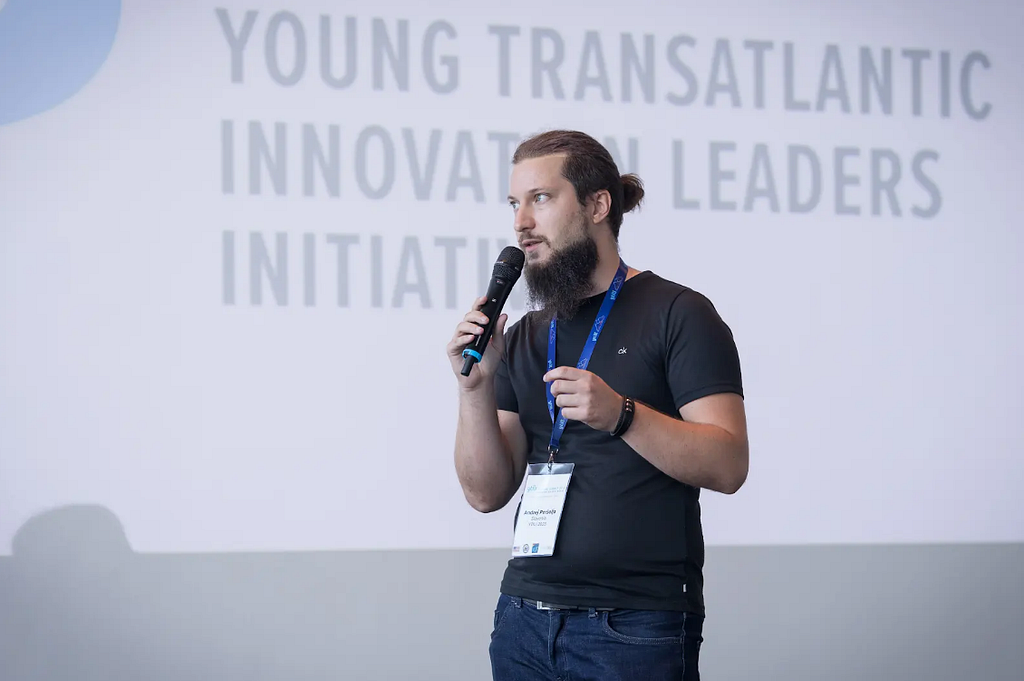
Andrej Persolja is a global expert in brand positioning, strategy, and growth. Adept at turning complex innovation into clear, compelling narratives that connect and convert, Andrej has built a business around supporting growth-stage CxOs in positioning their companies to scale faster and attract the right customers.
Thank you so much for joining us in this interview series! To start, could you share when and how you got started in marketing?
My story began in a smaller startup, where we needed someone to learn marketing “on the job”. As the only marketer/growth co-founder, I needed to wear many hats. Despite having an absolutely fantastic product that helped kids learn to read, we couldn’t get traction. Then I discovered the magical power of positioning. Understanding positioning — the context we needed to provide BEFORE the user came into our product — was key to making a success of our marketing, doubling our revenue, and attracting an investment.
That’s where my life changed. I fell in love with understanding the psychology of why people buy the stuff that they buy, and made it my mission to help companies with positioning for growth.
What has been the biggest shift in the marketing industry and can you give us an example of how it impacted you?
I’ve worked in marketing for the past 10 years, and I have to say, the biggest shift is happening right now with AI. AI makes us feel like we can do anything, but at the same time, when you work with it for a while, you start to understand that it’s only really beneficial when used in certain areas of our work. Research, for example, analysing massive amounts of data, is where AI shines. Content generation is where I avoid it.
So, for example, AI can help me analyse massive amounts of product reviews for a client, but it won’t help me create a sound strategy from the findings. That’s because it’s really good at analysing the past, but it’s not “smart” enough to create new pathways for the future. Knowing this helps me provide a better service for my clients faster. But the biggest lesson was in focus; I’ve seen companies add AI features to their products to secure investments, attract more customers, and convert more users. And in most cases, it just doesn’t work. Because in most cases, people just don’t care. They still want problems solved and their needs satisfied, regardless of how it’s done. AI or no AI. So marketing changed, but the customer side of it hasn’t really. The main principles still apply.
Can you explain why it’s essential for businesses to break away from traditional marketing and embrace new strategies?
The problem with “traditional” marketing right now is that, as a brand, you need to walk the thin edge of being controversial, but in just the right way, to get any sort of attention.
What AI allows companies to do is MORE. More content, more posts, more videos. But that doesn’t necessarily help companies stand out, as everyone is doing the same. So, controversy is the obvious way to gain attention. The problem is that it’s often negative attention — just look at the American Eagle, Jaguar, and Pepsi ads from a few years ago. People ended up moving away from the brands.
That said, many brands can’t really do without that controversy, because it feels like there’s no other way to be seen. So they keep wasting money. I recently conducted an audit on a $10M revenue company that generated $60k from its email marketing efforts. Essentially, you are paying the marketer to send out emails. Why?
What successful brands do instead is embrace that marketing has changed, and play the game differently. And there are some really strong examples of businesses that have done this brilliantly — Ryanair on socials, or what Liberty Media has done with F1 in using Drive to Survive to open a US market and expand to where F1 has wanted to go for the past 30 years.
Most brands are stuck doing the same thing they’ve always done to get people’s attention. Sending out the same emails, running the same ads, posting the same content, instead of figuring out how people’s behaviour is changing and meeting them where they are. That’s lazy. Most brands are lazy. Not because their marketing departments aren’t capable, but because sometimes it’s difficult to greenlight projects and make changes in a company.
Could you share and briefly explain the first major change you made to break the trend of traditional marketing that was not so common?
I’m not sure if it was the first one, but one of the marketing initiatives that got approved by pure luck and worked way better than even I expected was with my startup at the time — KOBI. It was a mobile app that helps dyslexic children learn to read. I found that our ideal customers were struggling to find information on how to support their children with dyslexia, particularly with challenges like letter reversals and sounding out specific phonemes. Mothers of dyslexic kids basically had to search for sporadic information on blog websites or read scientific books on how a child’s brain works. None of these options are fun.
My idea was dismissed as “too difficult to execute well” for a long time, but I wanted to write a book that made it easy. An opportunity opened up during the first COVID wave. We were locked at home, and suddenly, 60–70% of our workdays were deleted. Social gatherings, meetings, and business meetups were all gone.
I took that spare time to write an 80-page book. We offered it to people in the United States in exchange for their email addresses. It was a major success and one of the best lead magnets I’ve ever done.
What specific results did you see after implementing this change?
We were getting emails at $0.48 per registered user. I’ve never acquired users so cheaply with any product before or since. It was key in helping us lower the cost of user acquisition (CAC) by 52% through repositioning. But also key in my understanding that marketing has to come from a place where it’s useful for the audience you are targeting.
How do you ensure that these new marketing strategies resonate with your target audience?
The strategies need to be validated. Not just towards a target audience, but towards your team as well.
- For market validation, ensure that every strategy, plan, and initiative begins with research. You need to communicate with your customers and test your plans on your target audience. That ensures the strategy will work in the real world.
- Then you need to test against the team. The team needs to be able to deliver that strategy. I often see companies plan something like “We’ll run LinkedIn ads”, but they have no one in the team who understands LinkedIn ads. You can’t be the best without the knowledge, so that strategy doesn’t work. To make it work, we need to hire a LinkedIn expert.
Can you share an example of something you tried that didn’t deliver expected results or ended up ended up becoming a financial burden, and what you learned from that experience?
With a B2B enterprise sales company, we were going after the big firms. Consulting companies, banks, and insurance companies. The obvious solution was to create a LinkedIn funnel, starting with LinkedIn ads. LinkedIn allowed us to be very specific on who we are targeting and using an ABM approach; that strategy was a no-brainer for the company. Unfortunately, in that case, it didn’t work. It brought in 2 quick leads (I call that a false positive), but then immediately stopped working.
Luckily, we were running Google ads in parallel, a strategy that’s often ridiculed as something that can’t work to attract enterprise clients. Those Google ads brought in Accenture and 7 regional banks.
Which just goes to show that if you feel like you know something about marketing, there’s every chance that marketing will strike back.
Great. Now, let’s dive into the heart of our interview. Could you list “5 Innovative & Non Traditional Marketing Strategies That Can Engage Audiences Like Never Before”?
- By far the best strategy with the highest impact I’ve seen work in the past few years is Formula 1 using Netflix’s Drive to Survive to open the U.S. market. Formula 1 has always aspired to gain popularity in the U.S., but has never succeeded. This time, it got a perfect partner in Netflix. They allowed Netflix an exclusive right to follow teams during the F1 season, and Netflix created a drama-filled documentary series after every season. It skyrocketed the interest in the U.S. (and F1’s shareholder value). If you had to take a lesson from that, it’s that you have to meet your customers where they are (on the channels they are already using) and give them something fun to talk about. But let’s assume you don’t have a multi-million dollar budget to create your own show!
- The most recent strategy to engage our users was based on something you’ll see me often say in my LinkedIn posts: “Talk to your customers”. With one of my clients ($3M ARR SaaS), my goal is to grow their acquisition by 20% in 3 months. But during the early audit, I saw that multiple different user segments were using the product. In the product analytics, you could clearly see the difference between power users, regular users, and those who churned. Yet we were treating them all the same. When discussing this with the team, I noticed they were unaware of the different user segments. The team was tech-driven (product-first approach) as it usually is at this point in the journey. To rectify that, we opened a Slack channel and offered a special promotion to users if they upgraded. Joining a community in that Slack channel was part of that promotion. That helped us do two things. Filter out users who wanted to upgrade and start getting to know them better. The Slack channel is now our constant two-way communication channel with our best users. We started interviewing them to understand their behaviours better, which has already helped us improve the onboarding, leading to an increase in signups. It’s definitely a strategy worth doing if you want to scale faster.
- Podcasts and webinars are still effective, but marketers are using them incorrectly. I was recently leading a marketing team in a B2B company, and at some point, my team was given a task to promote a webinar event that was launched ad-hoc by the sales team. The webinar attracted approximately 10 attendees, but generated no leads. The team dismissed live events as “difficult to do” and “not working anymore”. Although it’s more challenging to get people to attend live events than in the past, you can still convince the right audience to attend. One effective strategy is to host a webinar and invite a respected and followed industry expert in your target market. So, you start by finding someone who your clients look up to (look at who they follow on LinkedIn). Get them to speak at your event. Then send personalised invites to a target list of people in companies you want to work with — essentially inviting potential clients. During the event, you’ll have some time to talk about their pain points or even ask your potential clients about that in polls. After the event, your sales team needs to go prospecting. Use the data you got in the webinar (poll responses, questions in the chat, questions in the Q&A section) as the context so you can personalise your approach.
- I was working with a leading SaaS in the SEO space. One of those that agencies use to bring traffic to clients’ websites. The challenge the company had was that their ad costs were rising and its conversions were dropping. So, we repositioned the company. However, whenever we updated the copy on our landing pages, our competitors would copy our exact text. It was time to go bolder. All the time while working together, we were collecting information on what their users wanted to achieve through a simple survey in the onboarding process. We correlated that with client LTV data. Once we understood that, we tailored the whole experience to best-fit clients. Not just the copy. We were the leading software, so we made the experience show it. We redesigned the onboarding to include client testimonials, and we developed a gamification system that led users through the software, showing them what was possible. We were the leaders; the experience showed it. The company tripled its revenue in less than 12 months.
- Lastly, this one isn’t a new strategy — I started running this in 2021 — but LinkedIn outreach still works. With one of my clients, we couldn’t determine which client segment to focus on. Every marketing book will tell you to talk to your customers in that case, but no one would take our calls. So, we decided to turn it around. We offered them something they wanted (in our case, an industry report detailing what their peers and competitors are doing) in exchange for them providing us with the same information. We essentially used the information provided to us to produce an industry report. It worked like a charm. The company learned who their clients are, and the 11th call even led to a sale. The team was raised some six months later. So, find out what your audience wants, and then build something useful for them.
What challenges might companies face when transitioning away from traditional marketing strategies, and how can they overcome them?
Typically, the biggest challenge is opposition from those within the team. It’s usually those who feel that what you are doing should already be working or that the product should lead to acquisition, and marketing isn’t really needed. Without constant communication, that can lead to misalignment. When starting a project, we typically assemble a cross-functional team to collaborate on the strategy, allowing department leaders to present and defend it within their respective departments. That ensures high acceptance throughout the company and much better results going forward.
How do you measure the success and ROI of these new marketing strategies?
Just like with any strategy, you define KPIs before even starting. These KPIs need to lead to business results — higher acquisition rates, improved northstar metric numbers, improved number of activated users, more people in the pipeline, increased revenue, and increased LTV / CAC ratio. It will depend on how and what you track in the company already, but you always need KPIs.
Looking forward, how do you see the role of innovative marketing evolving in the next 5–10 years?
With AI evolving, people’s behaviours will change. So marketing will have to evolve. That’s not a good or a bad thing, just a fact. Companies that can learn how to improve their people and their teams by using AI will win in the long run. Contrary to popular belief, AI isn’t here to replace people. But it can be used to create more value. More value means more money. So, marketing will be getting more and more tied to generating money. That’s already happening. The lines between sales and marketing are blurring.
What advice would you give to business leaders who are hesitant to move away from traditional marketing methods?
If things are working ok for them, maybe they shouldn’t. But if user acquisition is getting more difficult and expensive, if the revenue is stalling, if traditional pay-per-click advertising isn’t producing enough results, they should be thinking about trying something else sooner rather than later.
Can you share any upcoming initiatives or plans you have for further innovating your marketing strategies?
I am currently testing a new offer for my own business, where I offer a growth playbook — a step-by-step set of mini “plays” a company can run to fuel their growth — completely free. The company then pays for the execution. It’s an entirely new approach where my company takes all the upfront risk, making it a no-brainer offer for my clients.
How can our readers follow your work and learn more about your approaches to modern marketing?
I am always publishing content on LinkedIn, under my own profile, so they can just search for Andrej Persolja. Otherwise, they can get in touch by going to https://wefixboring.com.
This was great. Thank you so much for the time you spent sharing with us.
About the Interviewer: Chad Silverstein is a seasoned entrepreneur with 25+ years of experience as a Founder and CEO. While attending Ohio State University, he launched his first company, Choice Recovery, Inc., a nationally recognized healthcare collection agency — twice ranked the #1 workplace in Ohio. In 2013, he founded [re]start, helping thousands of people find meaningful career opportunities. After selling both companies, Chad shifted his focus to his true passion — leadership. Today, he coaches founders and CEOs at Built to Lead, advises Authority Magazine’s Thought Leader Incubator.
Breaking the Marketing Mold: Andrej Persolja of We Fix Boring On 5 Innovative & Non-Traditional… was originally published in Authority Magazine on Medium, where people are continuing the conversation by highlighting and responding to this story.