
Breaking the Marketing Mold: John Pawlowski of Heckova! On 5 Innovative & Non Traditional Marketing Strategies That Can Engage Audiences Like Never Before
An Interview With Chad Silverstein
Be Bolder — I was walking the floor of a big CPG company a few years ago during a meet & greet for a potential new job and a big banner on the wall caught my attention: “If you could do anything, what would you do?”
The takeaway for me is that we all naturally start to box in our creativity after about 5th grade as we learn what the social norms are. The line between parody and product is getting thinner, and that’s a playground where smart brands can thrive. Think Duolingo’s owl thirst traps on TikTok or Liquid Death’s murder-your-thirst ethos. Lean into absurdity — your consumers might just lean back with their wallets.
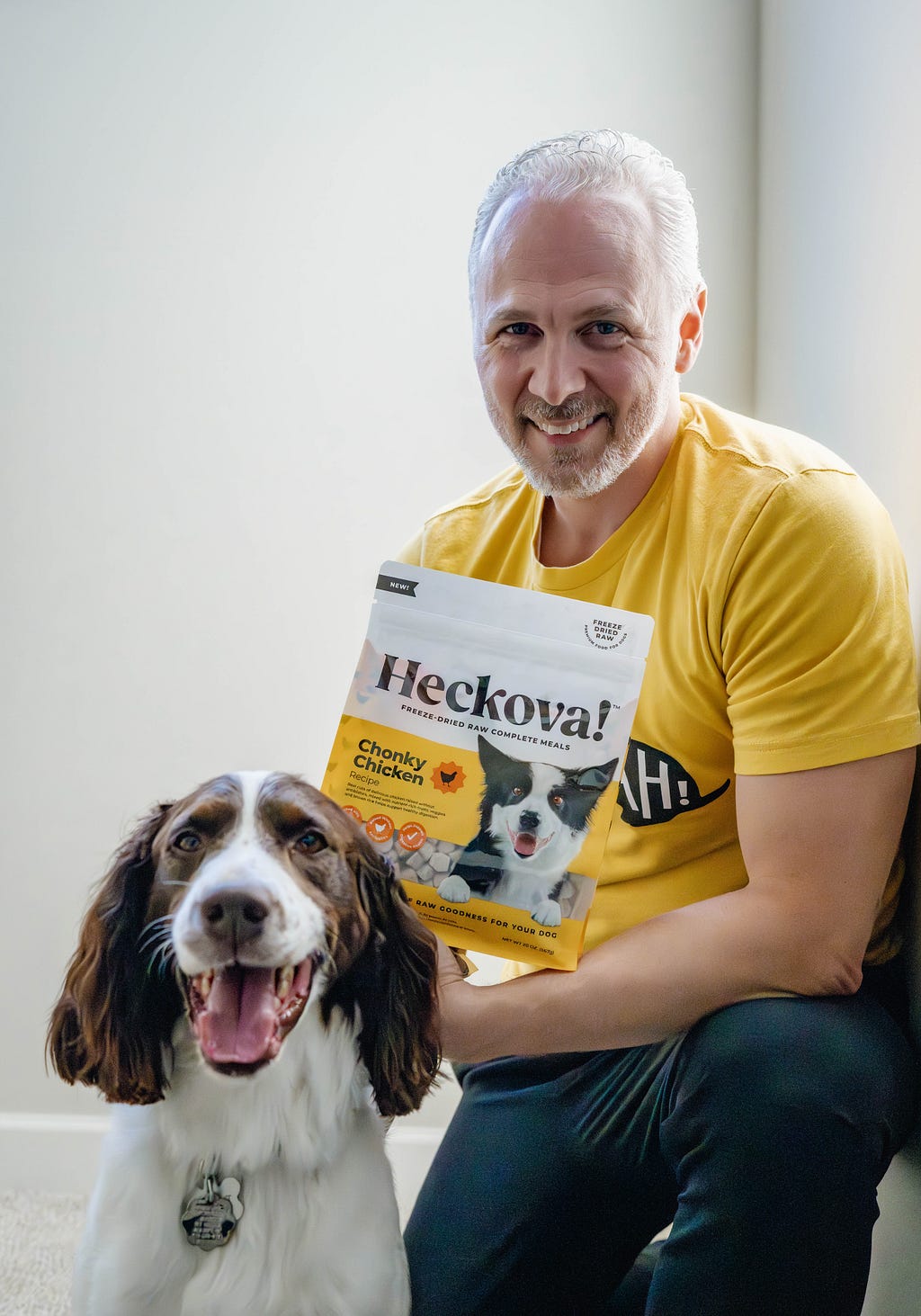
Traditional marketing methods are no longer sufficient in today’s dynamic and fast-evolving market. To truly engage and captivate audiences, businesses need to think outside the box and adopt innovative and non-traditional marketing strategies. What are these strategies, and how can they transform audience engagement? I had the pleasure of interviewing John Pawlowski. John is a brand builder, dog whisperer (only if he’s holding a treat), and lifelong marketer who got his start in a bunny suit for Cici’s Pizza and went on to lead mega dollar brands like Marie Callender’s, PF Chang’s, and Banquet at a Fortune 500 human food company. Now VP of Marketing at Heckova!, he’s launching dog food with attitude and proving that humor and heart can drive serious growth. When he’s not dreaming up pet treats, he’s chasing five kids, a Springer Spaniel named Bandit, and the next great idea.
Thank you so much for joining us in this interview series! To start, could you share when and how you got started in marketing?
When I was 15, I started my first job at Cici’s Pizza. On Easter weekend, they had me dress up in a bunny costume as part of their marketing blitz. It was all fun and games until a young kid walked into the bathroom and saw a headless bunny getting ready. I’ve been stuck in one sort of costume or another ever since.
What has been the biggest shift in the marketing industry and can you give us an example of how it impacted you?
When I think about the toolbelt we marketers wear around our hipster waists, the shift to an always-on digital/social presence has been profound. Back when I was in school (major: small animal costume design), the big philosophy was IMC — Integrated Marketing Communications — a fancy way of saying your brand needs a consistent, unified message that melds the minds of all your consumers in exactly the same way.
But today, with a million different pathways to reach your consumer (and no, they’re not all named “Nancy”), it makes far more sense to tailor micro-messages via digital and social channels — speaking to each person in a context they actually care about. It’s also ok (actually preferable) if certain messages only resonate with certain consumers.
Can you explain why it’s essential for businesses to break away from traditional marketing and embrace new strategies?
Your brand will only be as exciting and meaningful as you’re willing to make it. Small risks get small rewards. Early in my career at a Fortune 500 company, the marketing ethos could be summed up as: “Do something cool if you can — but do not mess this up.” The emphasis was very much on the last part.
I think the Innovator’s Dilemma (shoutout to Clayton Christensen) applies even more to communication style than to product development. My wife and I joke about how much “rizz” we’ve gained just by learning our teens’ vocabulary. Why do they need new words for the same old things? Because each generation passionately wants to break with what their parents thought was cool.
So it’s no surprise when once-powerful brands start to lose relevance if they don’t evolve. I had a front-row seat as that happened to Orville Redenbacher’s — a popcorn titan that took too long to adapt both messaging and product for a new generation of snackers who didn’t want to involve the microwave at all.
Could you share and briefly explain the first major change you made to break the trend of traditional marketing that was not so common?
Maybe not my first, but definitely my favorite was launching “Heckova!” — an awesome new dog treat and food brand (as in, “you have a heck of a dog”). In a category full of vet-endorsed, sustainability-certified, fear-driven, overly “natural” storytelling, we took a different route. We brought energy, color, and humor to a space that was taking itself way too seriously.
And it’s worked. When people see our bright yellow packaging and playful names, they light up and say, “Okay, this is a brand that gets me.”
What specific results did you see after implementing this change?
The most exciting thing has been retail buyer response. Despite being a new-to-the-world brand with limited sales history, we had select locations at Costco and Target pick us up within the first year or two — not an easy feat in a hyper competitive space. We’re now making headway with new partners in the pet specialty arena, and momentum is building.
How do you ensure that these new marketing strategies resonate with your target audience?
If you’re looking for guarantees, you might want to switch careers to engineering or physics. In marketing, trying to “ensure” success before launching is how many ideas die on the whiteboard.
One thing we can learn from the tech world is to experiment early and often. Twenty years ago, a single TV spot could cost $1 million just to produce — so there was no room for failure, which meant there was no room for risk.
But today, you can try almost anything. Our agency helping us with social (Bridgemark in Toronto) recently pitched a 20-second “ad” on social for our new Heckova! dog breath cologne. It was ridiculous. I loved it. We posted it on April 1, and it racked up over 1 million views with great engagement. (Check us out: @heckovapet.)
So my long answer to a short question:
a) Lean into your brand’s vibe.
b) Learn what your audience likes to consume — and give them more of it.
Be cool and approachable first. The sales will follow. (If you’ve seen the movie The Social Network, I’m kinda quoting Justin Timberlake’s character.)
Can you share an example of something you tried that didn’t deliver expected results or ended up ended up becoming a financial burden, and what you learned from that experience?
In a previous role, I spent a lot of money creating one of those aforementioned expensive TV spots — a goofy, fun concept that I believed would help us stand out. But it was a tough year, and leadership got cold feet. We never aired it. I didn’t push hard enough to resurrect it in the next fiscal year either.
So we blew a bunch of budget developing something that ultimately didn’t run — not because it was bad, but because I didn’t push through the usual corporate friction marketers always face.
That memory stuck with me. In my current role, I’ve made a decision: if it’s worth doing, I’m going all the way.
Great. Now, let’s dive into the heart of our interview. Could you list “5 Innovative & Non Traditional Marketing Strategies That Can Engage Audiences Like Never Before”?
(Sorry, I think the average human can only remember 3 things, so I’m sticking with that; remember that for your next campaign!)
1. Be Bolder — I was walking the floor of a big CPG company a few years ago during a meet & greet for a potential new job and a big banner on the wall caught my attention: “If you could do anything, what would you do?”
The takeaway for me is that we all naturally start to box in our creativity after about 5th grade as we learn what the social norms are. The line between parody and product is getting thinner, and that’s a playground where smart brands can thrive. Think Duolingo’s owl thirst traps on TikTok or Liquid Death’s murder-your-thirst ethos. Lean into absurdity — your consumers might just lean back with their wallets.
2. Build a Brand Persona That Actually Feels Like a Person — Too many brands sound like they were written by a committee that had a Word Cloud open. You know the ones: “We’re passionate about innovative, sustainable solutions for your empowered lifestyle.” Not even your mom cares, bro.
Modern marketing thrives on voice. That’s why brands like MoonPie, Slim Jim, and Wendy’s have built cult-like followings — not because of their products, but because they talk like someone you’d actually hang out with. At Heckova!, we try to speak like that friend who knows good nutrition matters, but also thinks your dog would totally eat a shoe for the story.
3. Treat B2B Like B2C
A lot of companies get nervous when marketing to retailers or buyers. “It’s a different audience,” they say. Sure — but a “company” is just a word that means this is where a lot of people go to work. People who watch reels, laugh at memes, and decide in seconds whether something feels fresh or feels like homework.
When we approached Costco and Target with a new pet food brand, we didn’t try to out-science the competition. We led with vibe, color, simplicity — and buyers responded. Even in boardrooms, energy matters.
What challenges might companies face when transitioning away from traditional marketing strategies, and how can they overcome them?
THE challenge is skepticism on “success,” as is usually measured by ROI/ROAS, or some other KPI acronym. The best advice I can give is to be precise on what it is you’re trying to accomplish, and sometimes it’s ok if the honest answer isn’t immediately attributable sales. (Please note, and in case my boss is reading: that does need to be part of the eventual plan.) Case in point, I spent a whole year of marketing to consumers, but with the real goal of catching the attention of a certain group of elite retail buyers. My goal was more long-term-strategic than it was this-month-tactical. Of course, being part of (or building!) an organization that can stomach that thinking is more of a culture question you have to dig deep to answer for yourself.
How do you measure the success and ROI of these new marketing strategies?
See above
Looking forward, how do you see the role of innovative marketing evolving in the next 5–10 years?
Did AI write my answers for this article or did I? (Answer: I did. No promises for the next one, though.)
What advice would you give to business leaders who are hesitant to move away from traditional marketing methods?
Get out of the way!
Can you share any upcoming initiatives or plans you have for further innovating your marketing strategies?
We should talk about trade shows. And talking dogs. And will people stop and listen to a talking dog? (they will!) Look for us at SuperZoo in Las Vegas this August. Or follow our new collaboration via social media with up-and-coming influencer, RxCKSTxR (he’s a big deal on Tik Tok and Instagram).
How can our readers follow your work and learn more about your approaches to modern marketing?
Follow us @heckovapet. Your pup will thank you. I also like making friends on LinkedIn if you’re not trying to sell me something. I have enough of that already.
This was great. Thank you so much for the time you spent sharing with us.
About the Interviewer: Chad Silverstein is a seasoned entrepreneur with 25+ years of experience as a Founder and CEO. While attending Ohio State University, he launched his first company, Choice Recovery, Inc., a nationally recognized healthcare collection agency — twice ranked the #1 workplace in Ohio. In 2013, he founded [re]start, helping thousands of people find meaningful career opportunities. After selling both companies, Chad shifted his focus to his true passion — leadership. Today, he coaches founders and CEOs at Built to Lead, advises Authority Magazine’s Thought Leader Incubator.
Breaking the Marketing Mold: John Pawlowski of Heckova On 5 Innovative & Non Traditional Marketing was originally published in Authority Magazine on Medium, where people are continuing the conversation by highlighting and responding to this story.