
Breaking the Marketing Mold: Talia Wolf Of Getuplift On 5 Innovative & Non Traditional Marketing Strategies That Can Engage Audiences Like Never Before
An Interview With Chad Silverstein
When customers see their own situation reflected in the story a brand tells, they immediately feel they’re in the right place. That emotional resonance is one of the strongest drivers of conversion.
Traditional marketing methods are no longer sufficient in today’s dynamic and fast-evolving market. To truly engage and captivate audiences, businesses need to think outside the box and adopt innovative and non-traditional marketing strategies. What are these strategies, and how can they transform audience engagement?
As a part of this series, we had the pleasure to interview Talia Wolf.
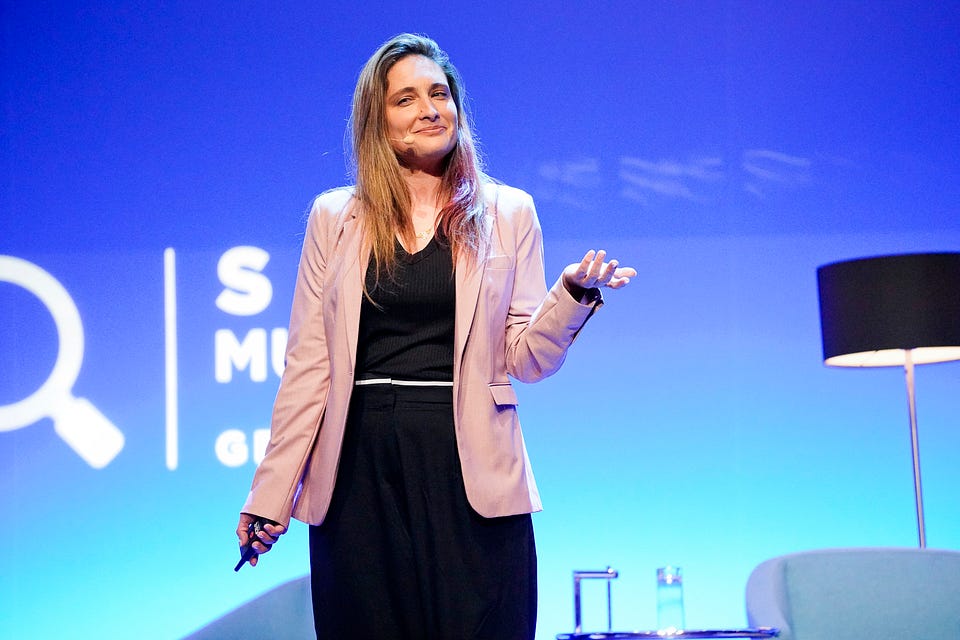
Talia Wolf is a conversion optimization expert, the author of the best selling book: Emotional Targeting and the founder of Getuplift — the conversion optimization agency brands like Amplitude, Bitly and Mercedes turn to when they want to drive measurable and substantial growth with a customer-first methodology. Talia was recently recognized as one of the most influential experts in the field of conversion optimization and has been invited to keynote on hundreds of stages to teach her Emotional Targeting Framework™, including Google, FWD: by Mailchimp, Growth Marketing Summit, Product Hackers Conference, SMX, and many more.
Thank you so much for joining us in this interview series! To start, could you share when and how you got started in marketing?
I’ve been in marketing for about 17 years. I actually started out as a Social Media Marketing Director at a social media agency, back when social media marketing was still very new and companies were just beginning to understand its potential. After that, I joined monday.com as their first Marketing Director, before the company was even called monday.com. It was an exciting experience to help build the marketing foundations of a growing tech company early on. A few years later, I co-founded a conversion optimization agency called Conversioner with two partners. We ran the agency for several years before selling it, and afterward we built a CRO tool focused on mobile optimization. In 2016, I founded GetUplift, the conversion optimization agency I run today, where we use the Emotional Targeting methodology I developed to help companies grow and scale by truly understanding their customers. I’ve worked with hundreds of brands and thousands of marketers using our methodology and it’s been a real adventure.
What has been the biggest shift in the marketing industry and can you give us an example of how it impacted you?
One of the biggest shifts I’ve seen in the marketing industry is the move toward being completely data-driven. Data has become the centerpiece of almost every marketing decision, which on the surface is a very positive thing. The problem is that in many cases, companies became so focused on dashboards, metrics, and experimentation that they started to forget the human behind the data. I see this a lot in growth teams. Marketers run A/B tests, analyze numbers, and look at behavioral analytics, but they don’t always stop to ask the deeper question: Why are customers behaving this way? What’s actually driving the decision? This trend had a huge impact on my work. It’s one of the reasons the Emotional Targeting Framework™ has had such a huge impact on our clients’ results. Instead of starting with experiments, best practices or assumptions, we start by deeply understanding the customer: their motivations, pains, anxieties, and desired outcomes, and then translate those emotional drivers into messaging, experiments, and optimization strategies. What we’ve seen is that when companies combine behavioral data with meaninigful customer insights, the results are dramatically better. The data tells you where the problem is, Emotional Targeting tells you why the problem is happening and how to fix it.
Can you explain why it’s essential for businesses to break away from traditional marketing and embrace new strategies?
Traditional marketing was largely built around broadcasting messages about the product, highlighting features, promotions, and brand claims, and hoping those messages would persuade people to buy. But the way people make decisions today has fundamentally changed. Customers are far more informed, far more skeptical, and far less influenced by what brands say about themselves. Before making a decision, they read reviews, ask questions in communities, compare alternatives, and look for validation from other customers. By the time they reach a company’s website, they’ve often already done a significant amount of research. Because of that, businesses can no longer rely on traditional approaches that focus primarily on the product or the brand. What’s essential today is shifting the focus to the customer. That means understanding what motivates them, what concerns them have, what problems they’re trying to solve, and what outcomes they care about most. When companies build their messaging and marketing strategies around those insights, they create experiences that resonate much more deeply with their audience. In my experience, the companies that embrace this shift, moving from product-centric marketing to truly customer-centric marketing, are the ones that stand out, build stronger trust, and ultimately drive much stronger growth.
Could you share and briefly explain the first major change you made to break the trend of traditional marketing that was not so common?
The major change I made was shifting the focus of optimization programs from testing elements on a page to running meaningful experiments that are customer-first. When I first started working in conversion optimization, I noticed that everyone was heavily focused on tactics, increasing A/B test velocity, changing specific elements on a page based on generic best practices and getting stuck on a hamster wheel. I noticed that many teams were testing random ideas without truly having a meaningful strategy to guide them. So instead of starting with experiments, I went back to the foundation of marketing and started with the most important question: WHY. I understood that in order to increase conversions we MUST understand why people buy and how they make buying decisions. I wanted to understand what people were actually feeling during the decision-making process, their motivations, their fears, their hesitations, and what success looked like for them and use these insights to really optimize the customer journey. That approach eventually became the foundation of what I later formalized as the Emotional Targeting Framework™. The framework was designed to uncover the emotional drivers behind a decision and translate those insights into messaging, design, and experiences, that actually resonate with customers. At the time, this wasn’t a common approach in optimization or growth marketing. Most teams were still focused on surface-level experimentation. But once we started applying these insights, the impact was clear: when you truly understand your customer’s emotional drivers, the changes you make become much more meaningful, and the results tend to follow.
What specific results did you see after implementing this change?
First, conversions increased (but more importantly, they were sustainable). Of course, improving conversions is always the goal in optimization. But what we found was that when messaging and experiences were built around the customer’s real motivations and concerns, the improvements weren’t just short-term test wins. Customers felt a deeper connection with the brand because they felt understood. That meant the growth was more stable and meaningful, rather than temporary spikes caused by superficial changes. We’ve helped brands generate millions $. Second, teams finally got aligned around the customer. One of the biggest benefits was internal clarity. Instead of every team having a slightly different idea of who the customer was or why people buy, everyone suddenly had a shared understanding. Teams knew exactly who they were speaking to, what questions customers had, what was preventing them from converting, and how to address common objections. That clarity and data made decision-making much easier and far more focused. Third, it helped break down silos inside organizations. When customer insights became the foundation of the work, departments that were often disconnected (sales, product, marketing, and customer success) suddenly had a reason to collaborate. Each team had valuable knowledge about the customer, and bringing those insights together created a much richer understanding. In many cases this internal alignment was just as impactful as the conversion uplifts (a common feedback we get is “we’re finally all on the same page and things are moving much more quickly).
How do you ensure that these new marketing strategies resonate with your target audience?
The entire methodology is built around customer research and intent, so any new experiment we launch, any new page we create, or email we write is first and foremost written and built for the customer.
Can you share an example of something you tried that didn’t deliver expected results or ended up ended up becoming a financial burden, and what you learned from that experience?
Great. Now, let’s dive into the heart of our interview. Could you list “5 Innovative & Non Traditional Marketing Strategies That Can Engage Audiences Like Never Before”?
1. Start with emotional research before any marketing strategy decision.
Most marketing strategies start with channels, campaigns, or experiments. A more effective approach is starting with deep customer research to understand what people are actually feeling when they make a decision to buy fro you or not. When you uncover those emotional drivers, you can build messaging, positioning, and experiences that resonate far more deeply than feature-driven marketing ever could.
2. Use meaningful customer insights to audit your entire customer journey
Once you understand your customers’ emotional drivers, you can start looking at your customer journey with fresh, strategic eyes. Instead of asking “Does this page look good?”, “what are best practices saying?” or “should I use a carousel”, you start asking better questions: Am I making it about the product, or about my customer? Does this page answer their biggest concerns? Can people see themselves on the page? Do we address their actual concerns and hesitations? This type of strategic audit allows you to see the gaps between what customers actually need in order to move forward and what your marketing currently communicates.
3. Optimize your customer journey with emotional resonance
Most websites focus almost completely on the product, features and pricing. The more effective approach is to create an experience that tells their story. From addressing their specific problems, frustrations, and hesitations, to acknowledging the moment they realized they needed a solution like yours, and showing the transformation they’re going to achieve through your product. Every feature you present should answer one simple question: What’s in it for them? Why should they care about it, and what will be the direct emotional result they achieve by using it? When customers see their own situation reflected in the story a brand tells, they immediately feel they’re in the right place. That emotional resonance is one of the strongest drivers of conversion.
4. Optimize everywhere (not just your website)
The way people buy has fundamentally changed. Many companies are still focused on optimizing their website pages, but buying decisions rarely happen on the website anymore. When people arrive there, they usually come with a checklist. They’re checking whether you have the features they need, whether your pricing fits their budget, and whether you offer the integrations they require. But once they confirm those basics, they often leave to make the real decision somewhere else. Those decisions now happen across the web: in Reddit threads, LinkedIn conversations, YouTube comments, Quora discussions, podcasts, and private communities. People are constantly researching, asking questions, and reading what others say about your brand or your industry. And with the rise of AI search tools like ChatGPT, Perplexity, and Claude, this matters even more. These tools don’t just read your website, they pull sentiment and information from across the entire web. If your brand narrative only exists on your website, you’re missing a huge part of the decision-making process. That’s why companies need to start optimizing everywhere. Understand what people are saying about you across communities, discussions, and reviews. Be part of those conversations. Shape the narrative beyond your own marketing channels.
5. Align your entire company around the customer
One of the most powerful and overlooked marketing strategies isn’t a campaign, it’s internal alignment. Rather than aligning around the product, when marketing, sales, product, and customer success all share the same deep understanding of the customer (their pains, motivations, hesitations, and goals) the entire experience becomes more consistent and effective throughout the entire web. Instead of working in silos, teams collaborate around a shared understanding of the customer. And when that happens, every touchpoint in the journey becomes stronger.
What challenges might companies face when transitioning away from traditional marketing strategies, and how can they overcome them?
Getting internal buy-in can be challenging — this approach can feel risky internally. Many teams are used to doing what everyone else in their industry is doing: focusing on features, best practices, technology and really following.what competitors are doing. Moving toward deeper customer research and emotional insights can feel unfamiliar, and sometimes people resist it because it feels risky. But that’s exactly why it works. When every company sounds the same and focuses on the same product-centric messaging, the brands that truly understand and reflect their customers stand out immediately. The way to overcome this is by grounding the entire organization in real customer research. When your team becomes aware of all the research you’ve conducted and there’s evidence you need to shift, it makes it easier. Another way is starting out with smaller micro experiments until you gain traction and everyone’s trust.
How do you measure the success and ROI of these new marketing strategies?
First, we look at conversion impact. At the end of the day, marketing strategies should drive measurable business results. When companies start building their messaging and experiences around real customer motivations and concerns, we typically see clear improvements in conversion rates, signups, demos, or purchases. But I always emphasize that it’s not just about a short-term lift. The real signal of success is when those improvements are sustained over time, because customers feel a stronger connection with the brand and more confidence in their decision. Second, we look at customer behavior and engagement. When messaging truly resonates with customers, you start to see changes in how people interact with the brand. Visitors spend more time engaging with the content, more people move forward in the journey, and fewer people drop off at critical decision points. Those behavioral signals tell us whether we’re actually addressing the motivations and concerns customers have. Third, we look at internal alignment and customer feedback. One of the most interesting outcomes is that when companies start building their strategy around real customer insights, teams across marketing, sales, product, and customer success suddenly have a much clearer understanding of the customer. Sales conversations become easier, objections are addressed earlier, and the messaging becomes more consistent everywhere.
Looking forward, how do you see the role of innovative marketing evolving in the next 5–10 years?
The customer-first mindset is the most important element of innovative marketing. Technology changes, people don’t. As long as you understand the customers behind the decisions, you’ll be able to create experiences for them that resonate on and off the website.
What advice would you give to business leaders who are hesitant to move away from traditional marketing methods?
Understanding your customers’ emotional drivers is no longer a nice to have. It’s the difference between converting… and being ignored. If you want more conversions, you need to understand your customers’ emotions. Their pains. Their fears. Their frustrations. How they want to feel about themselves. And how they want others to see them. Because once you understand those emotional drivers… You can optimize the entire customer journey, not just your website. And going forward, that’s going to be the real competitive advantage. Brands that stay focused only on analytics, funnels, and on-site optimization… Will struggle to survive in a world where trust is built everywhere else.
Can you share any upcoming initiatives or plans you have for further innovating your marketing strategies?
We’re building tools and platforms to help brands leverage their customer research to optimize the customer journey. We’re constantly adapting and optimizing our framework to deliver more meaningful results for our customers.
How can our readers follow your work and learn more about your approaches to modern marketing?
Follow me on linkedin — https://www.linkedin.com/in/taliagw/ Watch my tutorials on YouTube: https://www.youtube.com/c/TaliaWolf Download free guides: https://getuplift.co/
This was great. Thank you so much for the time you spent sharing with us.
About The Interviewer: Chad Silverstein is a seasoned entrepreneur with 25+ years of experience as a Founder and CEO. While attending Ohio State University, he launched his first company, Choice Recovery, Inc., a nationally recognized healthcare collection agency — twice ranked the #1 workplace in Ohio. In 2013, he founded [re]start, helping thousands of people find meaningful career opportunities. After selling both companies, Chad shifted his focus to his true passion — leadership. Today, he coaches founders and CEOs at Built to Lead, advises Authority Magazine’s Thought Leader Incubator.
Breaking the Marketing Mold: Talia Wolf Of Getuplift On 5 Innovative & Non Traditional Marketing… was originally published in Authority Magazine on Medium, where people are continuing the conversation by highlighting and responding to this story.