
One common mistake is treating purpose as something to communicate rather than something to practice. Leaders will often say the right things but make decisions that quietly contradict them, especially under pressure.
As a part of this series, we had the pleasure to interview Christina Holloway.
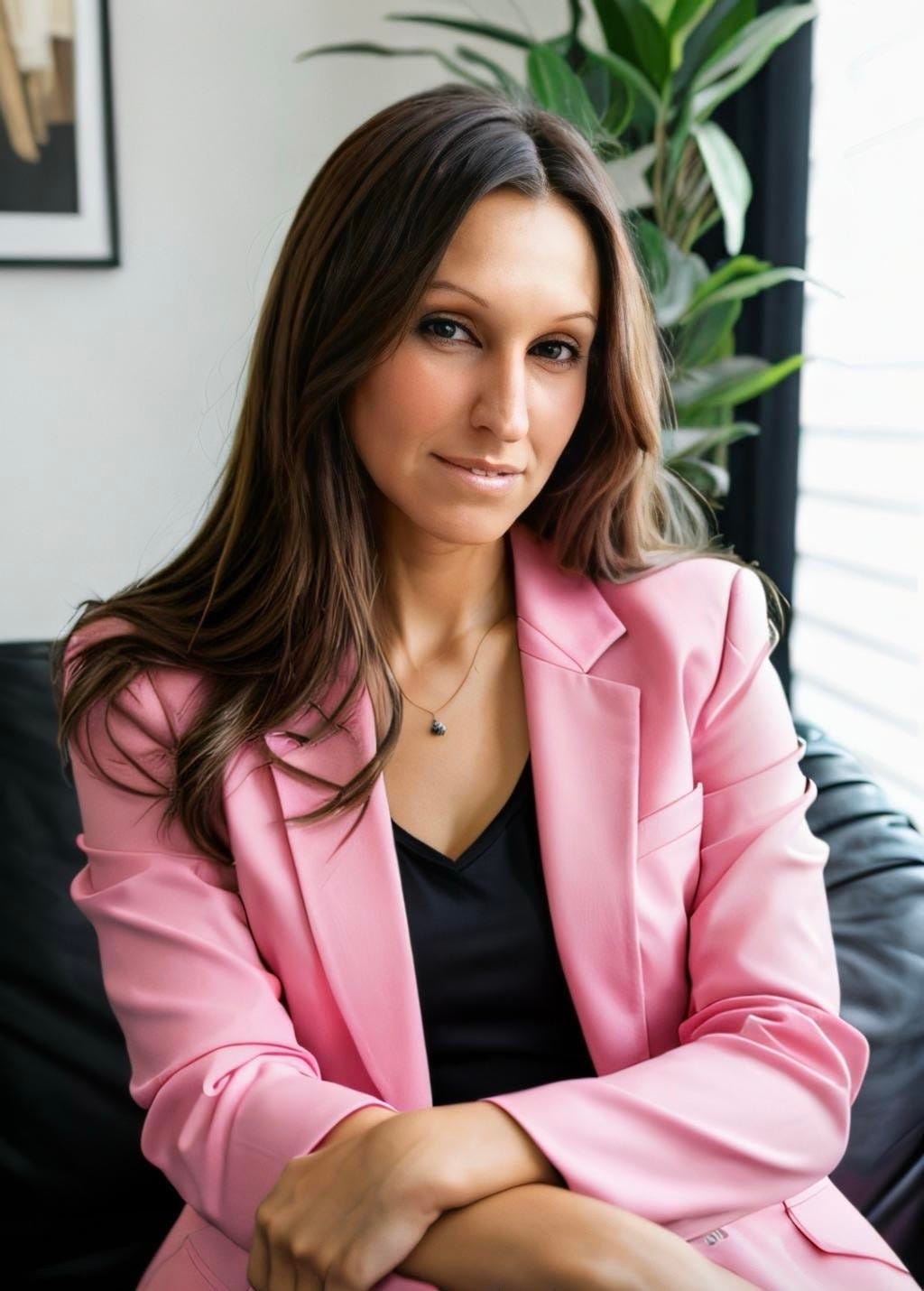
Christina Holloway is a Registered Nurse, Founder, and Nonprofit leader focused on human-centered innovation. She is the founder of UraSure, a healthcare diagnostics platform, and Got To Go, Inc, a nonprofit designed to create meaningful, accessible travel experiences for individuals facing cognitive and life-limiting conditions. Across her work, Christina focuses on building systems and cultures that prioritize sustainability, purpose, and real-world impact.
Thank you so much for joining us in this interview series. Before we dive into our discussion, our readers would love to “get to know you” a bit better. Can you share with us the backstory about what brought you to your specific career path?
My path into leadership and culture-building was not linear. An injury forced me to consider alternative career paths while engaging in the patent process for a diagnostic medical device. That moment shifted my focus from direct bedside care to something broader: revising processes so they could benefit more than just the single patient in front of me.
This occurred around 2015–2016. I began to see how deeply system design affects outcomes- not just for patients but for professionals working within those systems. I didn’t step away from care; I expanded how I thought about impact. The shift in understanding the business and compliance in the healthcare role ultimately shaped how I approach leadership, innovation, and purpose-driven work today.
Can you share the most interesting story that happened to you since you began working in leadership, culture building, or purpose-driven organizations?
One of my earliest high level leadership roles was in Hawaii, and it was incredibly formative. The culture and staff engagement were complex, and while many of the measurable outcomes around processes and procedures were improving, the human impact was not translating the way I expected.
I was assigned a leadership coach, and on paper my techniques, intent, and skills scored well- but the connection with staff lagged. That experience was truly inspiring because it forced me to confront the balance between operational success and relational trust. The lessons from that role still resonate through professional engagements and decisions today.
You are a successful leader. Which three character traits do you think were most instrumental to your success? Can you please share a story or example for each?
I think the traits people often come to me for are curiosity, steadiness, and discernment. Curiosity allows me to stay open- especially when something isn’t working. Steadiness matters when people are navigating uncertainty or change. And discernment helps me protect what truly matters, particularly purpose, when speed or optics try to take priority.
Let’s now jump into the focus of our interview. What does a “purpose-driven culture” mean to you personally, and why do you think it’s critical for attracting top talent?
For me, a purpose-driven culture is not about slogans or branding. It is about alignment- whether the purpose of the organization aligns with the purpose of the people choosing to be there. Top talent is looking for meaning but also for coherence. People want to know that their time, effort, and values are not being traded away quietly for short term gains. When purpose is clear and lived out consistently, trust follows. Trust is what keeps talented people engaged.
How did you identify and define the mission or purpose for your organization? Was it inspired by a particular event, challenge, or insight?
Purpose was the beginning of the process for me. Everything else was built around it. The mission wasn’t something added later or refined for optics; it was the anchor from which decisions, priorities, and structures formed.
What are the key steps leaders can take to embed purpose into the day-to-day operations and decision-making of their companies?
I think of this as values re-framed into action. First, leaders have to model boundaries- including personal ones. A daily behavior I prioritize is doing something that benefits me and my husband without involving work, like making- a gourmet dinner where work discussions are off-limits. If I am working 24/7, then I am checking boxes- instead of moving forward.
Second, I changed processes by intentionally involving college students in projects and management. This inclusion is building community, creates mentorship, and helps me see problems through different lenses.
Finally, when decisions feel murky, my rule is to learn more about the option I am most averse to. Avoidance often signals something important I have not fully understood yet.
What role does leadership play in championing and modeling a purpose-driven culture? Can you share an example of how you or another leader helped reinforce your organization’s purpose?
Leadership sets the tone for whether purpose is protected or quietly compromised. In my most recent role before reverting full-time to overseeing my own businesses, I found myself holding the organization’s mission in higher regard than those who were profiting from the excessive time and work product I was providing. That experience reinforced for me that purpose has to be actively modeled- not assumed.
How do you handle skepticism or resistance from team members or stakeholders who may not immediately understand the value of focusing on purpose?
I engage personally with skeptics and resistors. Understanding the background and context behind resistance helps me determine whether the outcome is a good fit or if the intent is purely driven by numbers.
Executives tend to push back the most, often because those roles feel like they need to be protected. At higher levels, there are fewer opportunities to move laterally or exit gracefully, and job searches can carry unintended consequences. Recognizing that vulnerability changes how I approach conversations.
What doesn’t work is being “right”. Founders and healthcare professionals need community and engagement to be successful, and that requires multidisciplinary approaches rather than individual authority.
Ok, let’s talk strategy. Based on your experience, can you share “5 Steps to Build a Purpose-Driven Culture That Attracts Top Talent”? If possible, please include examples or stories for each.
1. Clarify alignment between individual and organizational purpose
2. Translate values into observable relationships
3. Invest in relationships that bring results instead of the reverse.
4. Normalize learning curves and growth
5. Protect purpose when pressure increases
Can you share a specific example of how embracing a purpose-driven culture helped your company attract exceptional talent or achieve a significant business goal?
Including students and early- career professionals in meaningful work has consistently strengthened engagement and trust. When people feel invested in- not just utilized- they stay longer, contribute more thoughtfully, and help elevate the culture organically.
What advice would you give to leaders of smaller companies or startups who want to build a purpose-driven culture but don’t know where to start?
Start by being honest about why YOU choose to build or join the organization in the first place. Purpose doesn’t have to be lofty, but it does need to be real. In smaller companies especially, culture is shaped less by policies and more by daily behavior.
If you are early- stage, don’t over-engineer it. Pay attention to what you reward, what you tolerate, and what you protect when resources are tight. Those decisions tell your team far more about purpose than a mission statement ever will.
What are some common mistakes leaders make when trying to create a purpose-driven culture, and how can they avoid them?
One common mistake is treating purpose as something to communicate rather than something to practice. Leaders will often say the right things but make decisions that quietly contradict them, especially under pressure.
Another mistake is assuming alignment instead of checking for it. Purpose only works when people understand how their work connects to it- and when leaders are willing to hear where that connection feels strained or broken. Avoiding these mistakes requires humility, not certainty.
How do you ensure that your organization’s purpose evolves and remains relevant as your company grows and the world changes?
Purpose shouldn’t shift every time the market does, but it also shouldn’t be frozen in time. I try to revisit purpose through reflection rather than reinvention (which is funny to say as an Inventor)- asking whether the original intent still serves the people doing the work and the people being served. Growth creates distance, so leaders have to work harder to stay connected to the reality on the ground. Listening to team members across roles and levels is often the earliest signal that purpose needs refinement, not replacement.
What trends or shifts are you seeing in the workplace regarding purpose, and how do you think these will shape the future of business?
I think leaders are getting purpose wrong when they don’t examine whether the mission they are supporting aligns with why they chose the role in the first place. In the current economy and state of the union, many people are finally understanding that nothing is guaranteed. The reality is forcing more honest reckoning with what actually matters. I do not see technology as the central challenge. The real issue is whether leaders are willing to slow down long enough to build the trust and alignment before asking teams to move faster, and this can seem like the impossible challenge with AI progression.
In your opinion, how does having a purpose-driven culture impact not just employees, but customers, clients, and the broader community?
When purpose is lived internally, it shows up externally in consistency and trust. Customers and clients may not know your mission statement, but they feel the difference in how decisions are made, how problems are handled, and how people are treated when things don’t go smoothly. Over time, that kind of credibility extends beyond the organization. It shaped how communities experience your work.
You are a person of great influence. If you could start a movement that would bring the most amount of good to the most amount of people by building purpose-driven workplaces, what would that be? You never know what your idea can trigger. 🙂
Thank you for asking! I would normalize the reality that every new role or transition comes with a learning curve- and that acknowledging it is a strength, not a weakness. Too often, leaders are expected to arrive fully formed, which discourages curiosity, honesty, and growth. At its core, leadership is learning in public, If we invested in our teams with the patience, resources, and grace that we invest in ourselves, workplaces would be healthier, more resilient, and far more capable of sustaining purpose over time.
How can our readers further follow you online?
Readers can learn more about my work with UraSure and Got To Go, Inc via LinkedIn.
This was great. Thank you so much for the time you spent sharing with us.
Christina Holloway of UraSure On How to Build a Purpose-Driven Culture That Attracts Top Talent was originally published in Authority Magazine on Medium, where people are continuing the conversation by highlighting and responding to this story.