
Eric Nitzberg of Sierra Leadership On An Inside Look at the Benefits and Impact Of Working With an Executive Coach
An Interview With Chad Silverstein
To be successful, partner with people who are different from you. I’m an idea person: it’s easy for me to come up with a thousand ideas to innovate or address a problem. But sometimes I can get stuck at the stage of ideation and forget to execute. So I’ve learned that it’s crucial for me to partner with people who are more deadline and completion-oriented. The broader lesson here is to surround yourself with people who complement your strengths.
The competitive edge in business often comes down to a combination of strategy, foresight, and professional development. For executives looking to level up their skills, an executive coach can be their biggest asset. In this feature, we talk to business leaders who heavily invest in personal and professional development opportunities, coaching, and leadership programs. They’ll share why they invest so much and the impact it has on their life. Today, I had the privilege of speaking with Eric Nitzberg.
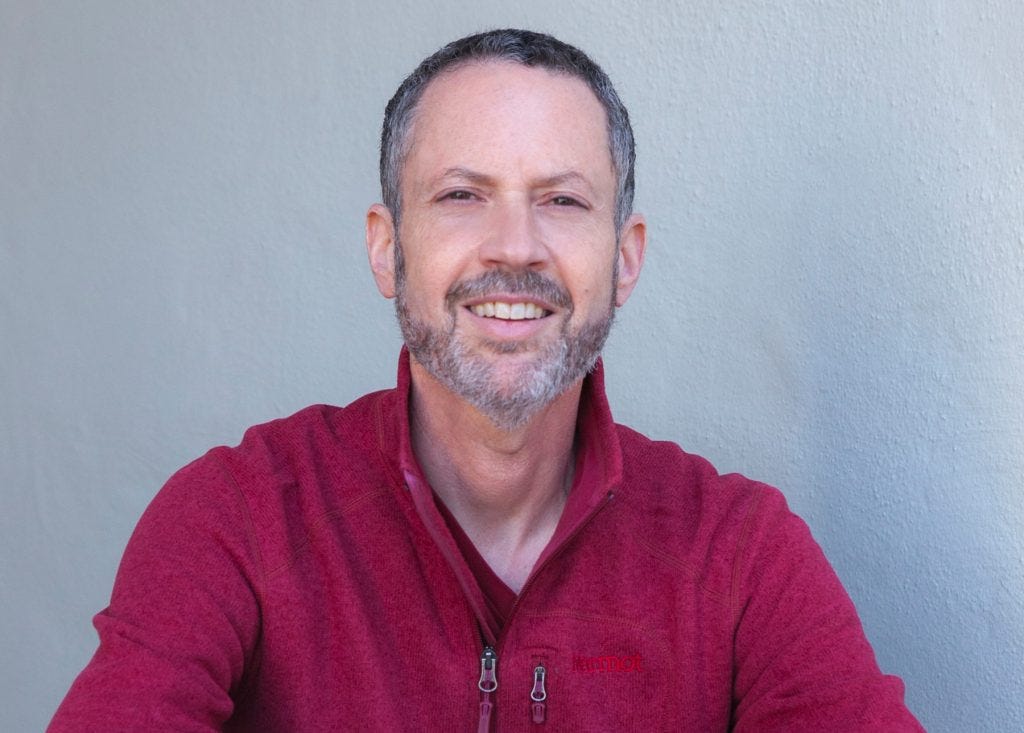
Eric Nitzberg partners with mission-driven CEOs and senior executives to help them accomplish their most essential work with clarity, confidence, and a deeper understanding of themselves. As an executive coach and trusted advisor to C-suite leaders, he draws on two decades of experience guiding high-performing executives through complex business challenges, personal growth, and lasting transformation.
Eric’s coaching combines strategic insight with a grounded, human approach, equipping clients to lead with conviction, navigate ambiguity, and make better decisions under pressure. His client list includes hundreds of leaders across fast-growth sectors like technology, software, and life sciences. Since 2015, he has coached more than 150 leaders at Google/Alphabet, including C-level executives, VP/GMs, and CEOs of emerging Alphabet companies.
Before launching his coaching practice, Eric served in senior leadership roles at a mission-driven organization and was a communication coach at Stanford Graduate School of Business, where he taught executive presence and persuasive storytelling. He holds a BA from the University of Oregon (Magna Cum Laude, Honors College) and an MTS from Vanderbilt University, where he was a full scholarship recipient. Eric is also certified in the Marshall Goldsmith Coaching Methodology. Today, Eric is known for his ability to help successful leaders evolve — and lead with a perspective that’s not only sharp but deeply sustainable. He has worked with hundreds of leaders born and raised outside the U.S. and is proficient in supporting global executives with geographically dispersed teams. He speaks conversational Mandarin and intermediate French.
First off, can you give us a snapshot of your life before you started your career?
I was born in New Jersey into a suburban family as the youngest of four boys. My dad was a family doctor, and my mom was a homemaker who later became a psychologist. My family moved to southern Oregon when I was nine, to a small town called Ashland, which is nestled in the mountains and known for its Shakespeare festival. That’s really where I grew up. Living in Ashland was one of the defining features of my childhood because of the beautiful mountains, where I spent many happy days. Reflecting on it now, my company name, Sierra Leadership, has its roots in my love for the mountains, which ignited during that period. As a child, I was also passionate about music (I played flute, jazz saxophone, and classical guitar), learning foreign languages (French and German), and the debate team. For my undergraduate degree, I went to the University of Oregon, where I majored in Chinese Language and Literature.
What was it about personal and professional development that attracted you to start investing in this area? And could you share when you started and what your first investment was?
As a young man, I was deeply involved in yoga philosophy and meditation. I began attending meditation workshops and groups when I was 17. For the next five years, through my college career, I was deeply focused on spiritual practice. This period of intense spiritual focus began a thread that’s continued throughout my life. That investment has been a major part of my personal growth.
My first career was in the ministry, in a large church in Silicon Valley. This was when I really started investing in professional development. I held a series of progressively responsible jobs, changing or expanding my role roughly every two years, until eventually I was leading the whole organization.
I had outstanding mentors and coaches along the way. I also actively pursued classes, continuing education workshops, and got my master’s degree from Vanderbilt in theology, with a focus on leadership. I made a point of getting all the leadership and management training I could, because I was determined to be skilled in the organizational part of ministry. My ministry career lasted a dozen years and included both spiritual leadership and executive roles.
Though spirituality doesn’t come up often in my executive coaching work, some of my clients do want to talk about their spiritual lives and how that informs their work as CEOs and executives.
Can you think back and share one of the biggest blind spots a client has had that you helped them to see, and something specific about what they learned and how it showed up in their life?
One client received some very critical feedback in a 360 degree assessment, which really surprised him. The next time we met, he shared an epiphany: prior to the 360, he felt that all of his colleagues were there to serve him. He was the customer. As a result of the 360 he realized that he needed to flip that: to view all of the people around him as his customers. It was a singular revelation, but it had a huge impact and changed the way he led and treated others.
How long have you been an executive coach?
I’ve been an executive coach since 2008, though I began studying coaching a few years prior to that when I was still in an executive role.
If I were sitting down with you, and asked “what’s the one thing clients need to work on more than anything else in the world,” what would I hear them say?
Self-awareness. You can never have too much of it. It covers a lot of territory like knowledge of your own strengths, passions, core values, what really matters to you, as well as knowledge of areas where you could develop more. If you think of yourself as a resource for your organization and for the world, the more in-depth and nuanced your understanding of that resource is, the better you can manage and deploy it to positive effect.
If you were questioned about your “ROI” (return on investment), is there anything you can point to that justifies how much people spend on being coached? If not, how do you justify it?
In working with senior executives, the return on financial investment is important, but it’s really the return on their investment of time that matters most. CEOs and C-level leaders, particularly in larger companies, have access to significant capital to invest wherever they think there is value. But their time is incredibly precious and limited.
If they spend an hour in a coaching session and it helps unlock a big, thorny business problem, it’s an extremely high-value return for relatively little time. In many cases it also yields a big financial return for their company. Or, if they lead 5,000 people and coaching enables them to become more effective as a leader, the cascading impact for their whole organization is enormous. For example, when they become more inspiring or make faster, better decisions, it impacts all of those people positively. So it’s a strong return on investment for both their time and money.
What are the top 5 things you’ve either gained or learned about yourself, where you specifically made changes, and have seen positive results? Be specific and feel free to give us either the background or the story about each.
- Well-being is more important than achievement. As an achievement-oriented person, I’ve always looked ahead to the next mountain to climb, and I’ve often worked very hard. At one point, I found myself in the emergency room. After conducting all their tests and finding “nothing wrong” with me, the attending physician looked me straight in the eyes and said, “You need to learn how to manage stress in your life.” It was a real wake-up call. Since then, I have gotten better at boundary setting and being consistent in taking care of myself and investing more in my personal life.
- Healthy conflict is crucial for good outcomes. This one I learned from my marriage, as well as my business. Many of us are conflict-averse. I come by it naturally, from my family of origin. That said, over a period of years, having my wife as my business partner, I learned that if you both speak the truth and fully share your perspective, and listen to each other, on the other side of a heated conflict is usually a solution that is better than either one of you could have come up with independently. That’s the beauty of conflict, when it’s well managed.
- Vulnerability engenders trust. As a young person, I was very secretive. I only shared my true inner thoughts with a small handful of people. In my early forties, I joined a men’s group; currently, it’s a group of 10 men who meet weekly to talk about their lives. In my early years in that group, I went out of my way to share more and more openly about myself, who I am, my struggles, joys, etc. I found that each time I was vulnerable and shared something that was difficult to disclose, I grew a little, became more self-accepting, and developed deeper trust and bonds with the men.
- Much of our happiness flows from how we think. I grew up with a super optimistic father and a more depressed mother. So I got those extremes. Early on, I think I internalized more of my mother’s way of thinking. But as an adult, I’ve been deliberate about cultivating optimism, gratitude, and a focus on the good. It’s incredible how these are so powerful in driving well-being. They also open us up to more expansive possibilities and experiences. Most of the CEOs I know are strong optimists, and that’s a good thing! In a complex, volatile world, we need leaders who envision ennobling possibilities and have deep conviction in them.
- To be successful, partner with people who are different from you. I’m an idea person: it’s easy for me to come up with a thousand ideas to innovate or address a problem. But sometimes I can get stuck at the stage of ideation and forget to execute. So I’ve learned that it’s crucial for me to partner with people who are more deadline and completion-oriented. The broader lesson here is to surround yourself with people who complement your strengths.
What advice would you give to others who don’t think it’s worth investing in a coach or spending money to join a leadership program?
Executive coaching has become a mature industry, so I am rarely asked to justify the expense of coaching. The question that’s coming up now, and it’s increasingly going to be coming up, is why should I work with a human coach rather than a far less expensive AI coach? Certainly, AI will democratize executive coaching in the next few years, and make good quality coaching available to a much, much bigger audience for much less money. It also excels at digesting huge amounts of data and extracting meaningful insights.
For senior executives who have the financial means to hire a human coach, the question will be: what’s the best mix of human coaching, AI coaching, or the combination that makes the most sense for me? Human coaching will continue to offer deep value by providing empathy that springs from lived human experience; confidentiality; human intuition and creativity; and a quality of authentic connection. Those things can be mimicked by AI, but they won’t be quite the same. Interestingly, as AIs become a fully integrated part of the workforce, the need for human connection will grow in the future.
Do you have any examples of how being coached impacts others who work with your clients? How has it spilled over to their teams or family?
I’ve had clients report that their spouse or partner appreciates me coaching them. So I know these leaders carry their learnings and personal growth from the workplace into their personal lives. Of course, they do — we bring who we are into our different roles.
I’ve also seen evidence of how one-on-one coaching with the leader impacts the people around them. I gave that example earlier of the leader who grew into the mindset that everyone is his customer. You can imagine the impact of that.
Sometimes, after coaching a leader for a while, I conduct a follow-up interview-based 360-degree assessment to ask about their progress. That’s a very direct way to understand how that person’s changed behavior or mindset has impacted others, because they tell me the leader is communicating better, or leading better, in specific ways that impact them.
There are so many executive coaches out there. How does one go about selecting the right one?
I would start by asking people in my network who they would recommend. That can be a good shortcut to finding capable coaching talent. If that’s not an option, then do your best via the internet to source some options. Vet them via their websites: look at the kind of work they’ve done in the past, who they have worked with, and what those people are saying about them. Then, meet with a few coaches. Make your choice not just based on their background, skills, or “resume,” but based on the quality or “fit” in the relationship. Chemistry is a lot of the magic that makes executive coaching work. Do you like them? Would you feel comfortable opening up to them? Your coach may challenge you at times, but the relationship should be a safe place for you to talk honestly about your work and life.
Where can our audience go to follow your journey and perhaps get inspired to invest in coaching themselves?
They can visit our website at www.sierraleadership.com.
This was great. Thank you so much for the time you spent sharing with us.
About the Interviewer: Chad Silverstein is a seasoned entrepreneur with 25+ years of experience as a Founder and CEO. While attending Ohio State University, he launched his first company, Choice Recovery, Inc., a nationally recognized healthcare collection agency — twice ranked the #1 workplace in Ohio. In 2013, he founded [re]start, helping thousands of people find meaningful career opportunities. After selling both companies, Chad shifted his focus to his true passion — leadership. Today, he coaches founders and CEOs at Built to Lead, advises Authority Magazine’s Thought Leader Incubator.
Eric Nitzberg of Sierra Leadership On An Inside Look at the Benefits and Impact Of Working With an… was originally published in Authority Magazine on Medium, where people are continuing the conversation by highlighting and responding to this story.