
An Interview With Chad Silverstein
The point isn’t to take the decision away from the seller. It’s to put real evidence in their hands at the moment they need it, instead of leaving them to guess. That’s the pattern in all our AI work — give people better judgment, faster, without removing them from the loop.
In today’s tech-driven world, AI has become a key enabler of business success. But the question remains — how can businesses effectively harness AI to address their unique challenges while staying true to ethical principles? To explore this topic further, we are interviewing Eyal Orgil.
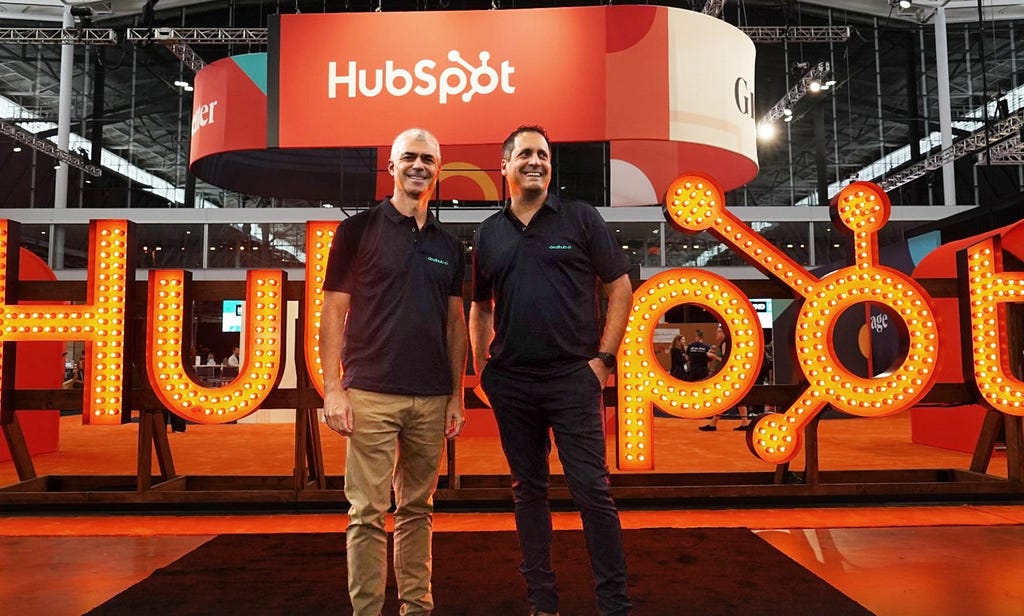
Eyal Orgil is the co-founder and Chief Growth Officer of DealHub AI, the Agentic Quote-to-Revenue Platform now serving roughly 1,000 customers worldwide. With more than 25 years of business experience, he co-founded DealHub in 2014 and spent over a decade leading revenue as CRO before moving into a strategic role focused on product vision and AI innovation. He lives with his family near Tel Aviv, Israel.
Thank you so much for joining us in this interview series! Before we dive into our discussion, our readers would love to “get to know you” a bit better. Can you share with us the backstory about what brought you to your specific career path in AI?
I didn’t come to AI from a research background. I came from the revenue side — I spent more than a decade as our CRO before stepping into a more strategic role, and that shaped how I see this technology.
When we started DealHub back in 2014, the problem we set out to solve was a very human one: the people in a deal — salespeople, operations, finance, the customer — were all working in different systems that didn’t really talk to each other. CPQ talked to the CRM, billing talked to the ERP, and the gaps in between were where things broke.
What pulled me toward AI is that it finally lets us close those gaps in a way that actually understands the work, instead of just automating simple rules. After years of selling the product, the chance to step back and ask “what should this become with AI?” was too interesting to pass up. So that’s really what brought me here — not AI for its own sake, but AI as a way to solve a problem I’ve been living with for a long time.
Can you share the most interesting story that happened to you since you started working with artificial intelligence?
The thing I keep coming back to isn’t a single dramatic moment — it’s a pattern I see every single week. I’ll get on a call and someone at a very sophisticated company will say, “We are in the process of building our own agents, can we connect it to your system?” A year ago that was pretty rare. Now it’s constant.
What’s interesting isn’t just the technology — it’s what it reveals about where people’s heads are. Everyone is experimenting, everyone is excited, and almost no one has fully thought through what happens after the prototype works. That gap, between “look what I built in an afternoon” and “now it has to run my revenue reliably for the next five years,” is the most interesting and most important problem in the space right now.
You are a successful leader in the AI space. Which three character traits do you think were most instrumental to your success? Can you please share a story or example for each?
- Staying grounded about scale. We’re around 300 people now, but my mindset is still the early days when the whole company could fit in my backyard for a barbecue. When I think about 300 employees, I think about 300 families being supported, and a thousand customer organizations getting real value. Keeping that human picture in front of me is what keeps the decisions honest.
- Refusing to oversell. I won’t trash a competitor, and I try not to oversell AI either. If something on our roadmap isn’t ready, I say it’s still in the lab. I think customers trust you more when you’re honest about what works today versus what’s coming — and that trust is worth more than any pitch.
- Designing around people, not features. From day one our philosophy was to look at every person involved in the process and ask what they need. If salespeople don’t adopt it, the best solution in the world fails. That obsession with the actual humans using the product — sales, ops, finance, the end customer — is the thread through everything that’s worked for us.
Can you share a specific example of how you or your organization used AI to solve a major business challenge? What was the problem, and how did AI help address it?
One of the oldest, most expensive problems in selling is pricing: “Am I quoting at the right price?” Most reps answer it with gut feel, and they’re often wrong in ways that quietly cost margin or lose deals.
We built AI price optimization to solve exactly this. Instead of a generic benchmark, it looks at where you’ve actually won and lost similar deals — same geography, same product line, same payment terms — because a 30-day deal and a 120-day deal aren’t the same price, and a deal through one partner isn’t the same as another. It compares against hundreds or thousands of genuinely relevant quotes and comes back in seconds with a recommended price for the specific situation in front of you.
The point isn’t to take the decision away from the seller. It’s to put real evidence in their hands at the moment they need it, instead of leaving them to guess. That’s the pattern in all our AI work — give people better judgment, faster, without removing them from the loop.
What are some of the common misconceptions you’ve encountered about using AI in business? How do you address those misconceptions?
The biggest one is that once you are using AI, the AI will know everything and will be able to answer any business question. Obviously this isn’t the case. AI has to be trained and narrowed down to the task you want the AI to accomplish such as prompt-based insights for finance teams, contract analysis that flags risks and obligations people miss, price optimization for sellers, conversational quoting — each one of them is unique agent that was trained and optimized for its use case.
The second misconception is that AI is now so easy you should just build it all yourself. For a prototype, sure. But I take calls constantly from companies that built their own agent and now realize that running it reliably is a different job entirely. There’s a real cost to turning your revenue team into a permanent engineering project.
I address both the same way: be honest about what AI is good at today, match the capability to the actual problem, and don’t confuse a working demo with a system you can trust to run your business.
In your opinion, what is the most significant way AI can make a positive impact on businesses today?
In today’s world, AI has become smart enough to offload a lot of the repetitive tasks we are doing on a daily basis and let humans focus on tasks which require human intelligence such as conducting a sales call, forecasting, strategic directions etc.
When it works, it doesn’t just make a company faster. It frees up human attention, and that’s the part that actually compounds.
Can you please share “5 Ways AI Can Solve Complex Business Problems”?
1. Put real evidence behind judgment calls
Most costly decisions are made on gut feel because the data is too scattered to use in the moment. AI can pull the relevant history — like our price optimization comparing thousands of similar won and lost deals — and hand the person an evidence-based answer in seconds, without taking the decision away from them.
2. Find the risks hiding in plain sight
A lot of expensive problems aren’t dramatic failures; they’re things nobody had time to read. We use AI to scan contract repositories for risks and obligations a team might have missed. That’s a perfect job for AI: tireless review across a mountain of documents.
3. Give the AI the full picture, not a fragment
The hardest problems live in the handoffs between tools, not inside any one of them — and AI is only as useful as the data it can actually see. When your quote-to-revenue data sits on one connected layer instead of scattered across systems, the AI can reason about a deal with full context behind it, rather than guessing from a single slice. The connected data does the unifying; the AI is what turns that complete picture into something useful.
4. Meet people where they already work
People don’t want to learn another interface. Whether it’s conversational quoting in Slack or connecting through an open MCP server, the impact comes from letting AI do the work inside the environment someone is already in.
5. Surface the patterns no one has time to see
People are good at the deal in front of them; they’re not good at spotting the trend across a thousand of them. AI can look across all your deals at once and catch things a person never would by eye — discounts quietly creeping up in one region, a type of deal that keeps stalling at the same stage, an early sign that a segment is softening. It isn’t replacing judgment; it’s handing leaders a pattern they didn’t know was there, while there’s still time to act on it.
How can smaller businesses or startups, with limited budgets, begin to integrate AI into their operations effectively?
Start with one real, painful, expensive problem — not “AI” as a goal. Pick a single workflow that eats time or quietly leaks money, and apply AI there.
Use what already exists rather than building your own; the barrier to entry has dropped enormously, and a small team can get real value from existing platforms without standing up an engineering project. Prove the ROI on that one use case, then expand. A tight budget is actually a gift here — it forces you to solve something real instead of chasing the hype.
What advice would you give to business leaders who are hesitant to adopt AI because of fear, misconceptions, or lack of understanding?
Separate the fear from the decision. You don’t have to bet the company. You run one contained, low-risk experiment on one real problem and look honestly at the result.
And be just as honest about the risk of standing still. I see it firsthand: companies that waited too long to modernize found themselves scrambling when the ground shifted under them. You don’t have to move recklessly. But “wait and see” is itself a decision, and it isn’t free. Start small, stay honest about what works, and let real results — not fear and not hype — guide the next step.
In your opinion, how will AI continue to shape the business world over the next 5–10 years? Are there any trends or emerging innovations you’re particularly excited about?
I think we move from AI that assists to AI that actually does the work — but with the right guardrails around it. Today everyone wants to build an agent. The next phase is making those agents reliable enough to trust with real revenue processes, and giving them clean, open ways to connect, which is why we’re opening our platform up through an MCP server.
In the next 5–10 years we’ll see far more autonomous agents doing real work — quoting, pricing, invoicing, renewals — with less and less human involvement in each step. But the harder, more interesting problem isn’t capability; it’s control. As we hand more decisions to agents, the questions that matter become: what is this agent allowed to do, who set those limits, and can we audit what it actually did after the fact? The companies and the categories that win the next decade won’t be the ones with the most autonomous AI. They’ll be the ones that made that autonomy governable — where every AI action is bounded by rules a human owns and is traceable when something goes wrong. That governance layer is going to matter as much as the intelligence itself.
How do you think the use of AI to solve business problems influences relationships with customers, employees, and the broader community?
The common thread is trust. With customers, AI used well makes things faster and more accurate — but only if a real person still owns the relationship; our customer success team being second to none matters more, not less, in an AI world. With employees, it lands when it’s clearly there to remove drudgery, not to replace them; communicate that honestly and people lean in. And for the broader community, the obligation is to be transparent about where AI is involved.
Used carefully, AI strengthens these relationships. Used as a black box, it erodes them. The technology doesn’t decide which — the people deploying it do.
How can our readers further follow you online?
The easiest way is LinkedIn — Eyal Orgil. I’ve got a fairly unique name, so I think there’s only one of me. Feel free to reach out; I’m happy to help where I can, and to connect you with the right person on our team if I can’t.
This was great. Thank you so much for the time you spent sharing with us.
About The Interviewer: Chad Silverstein is a seasoned entrepreneur with 25+ years of experience as a Founder and CEO. While attending Ohio State University, he launched his first company, Choice Recovery, Inc., a nationally recognized healthcare collection agency — twice ranked the #1 workplace in Ohio. In 2013, he founded [re]start, helping thousands of people find meaningful career opportunities. After selling both companies, Chad shifted his focus to his true passion — leadership. Today, he coaches founders and CEOs at Built to Lead, advises Authority Magazine’s Thought Leader Incubator. Learn more at www.chadsilverstein.com
Eyal Orgil of DealHub AI On How Artificial Intelligence Can Solve Business Problems was originally published in Authority Magazine on Medium, where people are continuing the conversation by highlighting and responding to this story.