
An Interview With Chad Silverstein
Ideas to generate more income. Businesses can use AI to uncover niches they might not be aware of or new product opportunities in their market. By using AI to analyze customer behavior or understand how your content performs on different platforms using different metrics, you can make smarter decisions about what products to release next because they’re grounded in real data
In today’s tech-driven world, artificial intelligence has become a key enabler of business success. But the question remains — how can businesses effectively harness AI to address their unique challenges while staying true to ethical principles? To explore this topic further, we are interviewing Kim Murray.
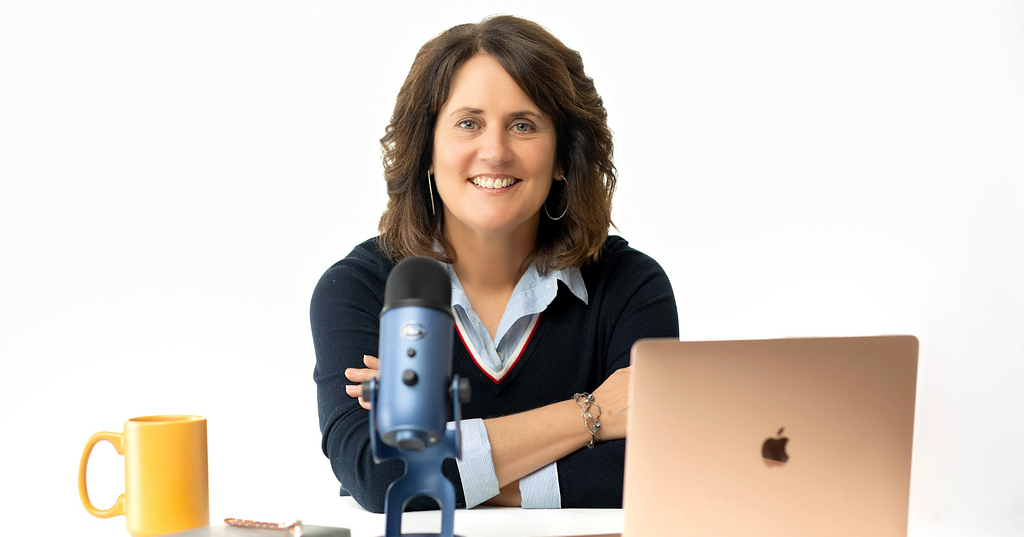
Kim Murray is the founder of Widow 411, an online space offering hope, help, and hard truths for widows rebuilding after loss. After losing her husband to brain cancer in 2014, Kim turned her grief into guidance by creating honest, practical tools that help widows feel seen and supported. She regularly writes and speaks about post-loss identity, emotional healing, and resilience.
Thank you so much for joining us in this interview series. Before we dive into our discussion, our readers would love to “get to know you” a bit better. Can you share with us the backstory about what brought you to your specific career path in AI?
I’m a grief educator and content creator who uses AI in my business, so I’m not technically in a specific AI-related career path. When I became a widow at 44 with two young sons and a brain full of questions, I searched the internet for answers, but widowhood resources were very limited at the time. So, I created Widow 411 to offer compassionate, practical support that helps make widowhood suck a little less. I used to get overwhelmed with all the information I wanted to share, like blog posts, emails, resources, and other parts of content creation. What used to take me days or weeks to create, organize or categorize, now takes far less time and AI makes my business run a lot more smoothly.
Can you share the most interesting story that happened to you since you started working with artificial intelligence?
I’ve been talking about using artificial intelligence in my business and personal life for the past few years, and whenever I’d bring it up in conversation, people would step back and say, “whoa, too sci-fi for me.” I would share stories of how I streamlined this or organized that, and I would be met with blank stares. One of the most interesting things I’ve noticed is how many people say, “I’ll never use AI,” not realizing they already do! Whether it’s Google Maps, voice-to-text, or autocomplete in emails and texts, AI is already part of our everyday lives. The people I personally know who were actively against AI are slowly coming around and sometimes whisper to me how they’re using it in their own lives now. I don’t understand the whispers, as if it’s something to keep secret. I remind people that AI is an awesome tool (we can save the “AI is taking over the world” conversation for another day) and it’s here to stay. I’ve found that the more I share the real, down-to-earth ways I’m using it, the more curious people are about how they can incorporate it into their own lives.
You are a successful leader in the AI space. Which three character traits do you think were most instrumental to your success? Can you please share a story or example for each?
As a solopreneur, I do everything business related by myself. All the web design, content creation, marketing, accounting, etc., falls on me. If something breaks or needs tweaking, I have to figure it out. That resourcefulness is what led me to AI in the first place. I don’t have a team to help me organize or streamline my business but now I can use AI to help me create, organize, and package all my content in a sustainable way.
Persistence has played a big part in my success because I could have quit a long time ago when everything was overwhelming and I was burning out from doing it all on my own. But I keep going because I believe in what I do. I just keep learning, experimenting, and trusting myself to learn new tools like AI even when it’s way out of my comfort zone.
The third character trait I would say is clarity. I promise the no-BS version of widowhood and I tell it like it is. Because I’ve walked the walk, I can take complex, emotional, or even techy topics and make them more relatable. I don’t sugarcoat things and that’s helped me build trust with my audience.
Let’s jump to the primary focus of our interview. Can you share a specific example of how you or your organization used AI to solve a major business challenge? What was the problem, and how did AI help address it?
I created the Widow 411 Grief Companion, a custom GPT that’s basically a 24/7 grief guide. It’s trained on real conversations, blog posts, and resources I’ve spent years developing for widows, making it the first tool of its kind to speak widowhood fluently.
The problem is that I’m not available 24/7 to answer every widow’s question or offer support when they need it most. I wish I could spend hours addressing every widow’s needs, but it’s just not feasible. My main goal was to offer support to widows in the wee hours when sleep doesn’t come, or whenever they need someone to “talk” to regardless of day or time. Many widows say they don’t want to be a “bother,” so they don’t reach out for help when they need it most.
When I realized I could create a tool that sounds like me, answers questions like I would, and is a compassionate support tool available whenever someone needs it, it was a no-brainer. AI helped me solve the real challenges of my limited time, a widow’s fear of reaching out, and their need for a private space to explore confusing, overwhelming feelings. This is significant for my widow audience.
What are some of the common misconceptions you’ve encountered about using AI in business? How do you address those misconceptions?
When I introduced the Widow 411 Grief Companion to my community, the reactions were all over the map. Some people were hesitant or skeptical because AI felt intimidating for them. Privacy is a big issue for the widow community, and some people think it’s too risky to share personal information online or they think AI is kind of creepy and don’t want to “talk to a robot.”
I’ve addressed this by sharing how the tool is private and secure. I’ve also created a cartoon image of me as the face of the custom GPT and shown examples of the kind of answers a widow could expect to receive. I have spent a lot of time training the custom GPT to remove words I wouldn’t use or phrases that don’t sound like things I would say. Since it looks like me and sounds like me, I can confidently say it’s not robotic in any way. I also clarify that this tool isn’t intended for therapy or a replacement for actual connection. I have many resources available on my website to find those services.
Instead, I focus on what it is: a nonjudgmental, always-available support tool.
For every person who’s against AI, I have others who reply with, “this is incredible…you’re a genius!” I don’t take credit for the genius part, that’s AI’s jam, but I did train it on the content I’ve already created so it was a logical next step for my business.
I find it interesting that the biggest challenge I face with AI isn’t building the tools or handling the tech aspects, it’s getting people to trust it.
In your opinion, what is the most significant way AI can make a positive impact on businesses today?
AI can help small businesses, especially solo entrepreneurs like me, cut through the clutter to respond faster and provide deeper support without burning out. Getting help organizing or executing the more mundane business tasks gives me more time and the mental capacity to create content that matters and support widows walking the same path I did.
Ok, let’s dive deeper. Based on your experience and research, can you please share “5 Ways AI Can Solve Complex Business Problems”? These can be strategies, insights, or tools that companies can use to make the most of AI in addressing their challenges. If possible, please share examples or stories for each.
- Data mining. Every business has tons of data. For me, it’s blog posts, resources, digital downloads, and online courses. AI helps me extract themes, patterns, and frequently asked questions from what I’ve already created. I used hundreds of conversations with widows to identify common struggles, then shaped content and support tools that truly meet them where they are. The bigger the data bank, the harder it is to find information in a timely fashion. AI can help you find what you’re looking for, compartmentalize data, or rework certain structures to better benefit you and your end users in a fraction of the time.
- Create custom GPTs to streamline business tasks. Every business has tons of tasks that need to be completed on a daily, weekly, or monthly basis. Whether it’s onboarding, creating FAQs, internal SOPs, or social media content, creating custom GPTs can save tons of time.
- Reduce overwhelm and decision fatigue. Running a business means you’re always making decisions. AI can reduce the “analysis paralysis” and help you test ideas, generate outlines, or draft content so you don’t get stuck in overthinking. When you’re not worried about every single minute detail of your business, it gives you the time and space to do the work that actually matters.
- Offer personalized support. Whether it’s a website chatbot, a quiz to send users into the right marketing funnel, or a custom GPT, you can create exactly what your customer needs. Based on your own business model and content you can stop generating generic messages and ensure your audience gets personalized responses that make them feel like they matter.
- Ideas to generate more income. Businesses can use AI to uncover niches they might not be aware of or new product opportunities in their market. By using AI to analyze customer behavior or understand how your content performs on different platforms using different metrics, you can make smarter decisions about what products to release next because they’re grounded in real data.
How can smaller businesses or startups, with limited budgets, begin to integrate AI into their operations effectively?
The crazy thing about artificial intelligence is that you can ask it to help you understand artificial intelligence! It’s meta, but it works. In other words, ask ChatGPT to walk you through how to use ChatGPT in the most effective way for your business. Start by literally asking it, “How can I use AI to help my [type of business]?” or “What’s one way I could save time this week using AI?”
You don’t need a massive budget or a tech background to get started. You just need a willingness to experiment.
What advice would you give to business leaders who are hesitant to adopt AI because of fear, misconceptions, or lack of understanding?
It’s like back in the early ’90s when the internet came out. We were afraid of what that type of connection meant and overwhelmed by the unknown. Before the internet, we used the Yellow Pages to find phone numbers, read actual newspapers to stay on top of current affairs, and referenced the Encyclopedia Britannica to find answers to random questions. And then, suddenly, we were connected to everything. It seemed super sci-fi back then, just like AI does now.
But we soon learned that the internet opened a world of opportunities most of us never thought possible. Now we couldn’t live without an internet connection.
So, it’s kind of like that.
AI is following the same path because it’s opening a world of opportunities most of us never thought possible. But the only way to prevent fear, misconceptions, or lack of understanding is to use it for yourself and learn by doing.
You don’t know how to do something before you learn how to do it. We all start at the beginning. So, start experimenting and ask some questions to learn how it works.
Once you see how it can support your work and free up your time, it stops being so scary.
In your opinion, how will AI continue to shape the business world over the next 5–10 years? Are there any trends or emerging innovations you’re particularly excited about?
AI will continue shaping the business world by its sheer efficiency. It will change how we make decisions, serve customers, and compete. Using the internet as an example, it didn’t just eliminate jobs, it created entirely new industries we couldn’t imagine before. This is what AI is doing right now.
I’m most excited about how small businesses like mine can leverage technology that used to be reserved for bigger companies with bigger budgets. AI is leveling the playing field because I can multitask more efficiently (no need to hire additional staff) and extend my reach in ways I could never do before.
How do you think the use of AI to solve business problems influences relationships with customers, employees, and the broader community?
When you’re dealing with underserved communities like mine, the key is using AI to enhance rather than replace human connection. Instead of spending hours on administrative tasks, I can invest that time building genuine relationships and creating content that addresses widows’ specific needs. This means widows in rural areas or those who can’t afford traditional grief counseling now have resources available to them, so they don’t have to go without.
You are a person of great influence. If you could start a movement that would bring the most amount of good to the most amount of people through AI, what would that be? You never know what your idea can trigger. 🙂
I’d make AI-powered emotional support accessible to everyone facing life’s hardest moments. I imagine a similar tool that wasn’t just for widows but for anyone dealing with trauma, divorce, job loss, or any major life transitions. I would want to see more AI companions trained on real human experiences that could provide 24/7 support in multiple languages, making emotional guidance available regardless of location, income, or circumstances.
How can our readers further follow you online?
This was great. Thank you so much for the time you spent sharing with us.
About the Interviewer: Chad Silverstein is a seasoned entrepreneur with 25+ years of experience as a Founder and CEO. While attending Ohio State University, he launched his first company, Choice Recovery, Inc., a nationally recognized healthcare collection agency — twice ranked the #1 workplace in Ohio. In 2013, he founded [re]start, helping thousands of people find meaningful career opportunities. After selling both companies, Chad shifted his focus to his true passion — leadership. Today, he coaches founders and CEOs at Built to Lead, advises Authority Magazine’s Thought Leader Incubator.
Kim Murray of Widow 411 On How Artificial Intelligence Can Solve Business Problems was originally published in Authority Magazine on Medium, where people are continuing the conversation by highlighting and responding to this story.