
Purpose Before Profit: Elicen Renz Of Benny Bee On The Benefits Of Running A Purpose-Driven Business
…My goodness, if I could inspire a movement, it would be one filled with kindness, inclusion, and focused in care for mental health, not just for individuals, but for families too…
In today’s competitive business landscape, the race for profits often takes center stage. However, there are some leaders who also prioritize a mission-driven purpose. They use their business to make a positive social impact and recognize that success isn’t only about making money. In this interview series, we are talking with some of these distinct leaders and I had the pleasure of interviewing Elicen Renz.
Fashion designer Élicen Renz draws on a family legacy of over 60 years in crafting footwear, bags, and leather accessories. Her talent and creativity have been nurtured since childhood, shaping her distinctive design sensibility. Today, she continues to honor that heritage through Benny Bee Wear, a brand that crafts customized clothing for children with disabilities.
Thank you so much for doing this with us! Our readers would love to get to know you a bit better. Can you tell us your “Origin Story”? Can you tell us the story of how you grew up?
I was born and raised in Novo Hamburgo, a Southern Brazilian city shaped by the waves of immigration (German and Italian) and the footwear industry. Coming from a humble family of five children, I was a curious, energetic, and tomboyish youngest daughter. At a young age, I was inspired by my sister’s English studies and an American exchange student who lived with us, and I developed a fascination for languages and dreamed of going abroad. I would pretend I was speaking English with my dolls, and later in life, I moved to the United States with my husband.
My parents ran a small shoe factory, where we all helped. As proactive and entrepreneurial as I could be, by the age of 7, I was sewing leather on industrial machines and delivering packages to neighbors. I loved observing my mother interact with luxury brands, like Prada, Manolo Blahnik, and Christian Louboutin. I would try them all and realize how special and unique they were. Very different than what I was used to seeing in my small town. My curiosity led me to begin designing doll clothes from leftover fabrics, unknowingly sharpening my eye for detail.
At 10, I was already making and selling embroidered items to buy my own supplies. A few years later, my brother (and mentor, who I truly admire) encouraged me to pursue design after seeing my drawings. I enrolled in a Footwear Design course, landed an internship in three months, and immersed myself fully in the design and creative process. Since then, I’ve had the joy of learning alongside talented professionals and growing in a field that has always felt like home.
Can you share the most interesting story that happened to you since you began leading your company or organization?
I am sure that it was God’s will! I was in a season of designing only random collections, without any real purpose. When I was waiting for my son to get dressed for school, he gave me a hard time just to put on a simple t-shirt, and I started getting mad. I always want to be a happy and fun mom, but he chose to have a tantrum that morning. I was losing my strength and went to the bathroom, looking at myself in the mirror and mumbling, “Why doesn’t he just get dressed and go to school? It’s so hard.” Then the thought came to me: “What about mothers who have children with special needs? Have you ever thought about how hard it can be for them?”
I felt like someone had hit me on the head, and I understood what my next sketch would be. I began a long process of research and studies through the internet and even American ergonomics books. I contacted families and mothers so I could understand their greatest pains. I got to meet extremely generous people who responded and shared their stories. That’s how Benny Bee was born! Fully inspired by God and by my “Benny”, my Benjamin, the greatest treasure of my life.
I worked as a doula part-time, and in the breaks, when my son was sleeping or my husband took him to the park, I drew, held meetings with the technical modeling team in Brazil, sent emails, and met with a lawyer to open the company and obtain a trademark. All with great care and affection, knowing that the responsibility of developing a project with such a purpose is immense. My greatest desire since the beginning has always been to create products that deliver more than just clothing, but that make families feel embraced and seen. My desire is for the brand to be a movement to raise awareness of accessibility and inclusion.
I truly believe that we all have something to give back to the world, and at some point, in our lives, this starts to beat stronger in our chest and we need to build something truly good that touches other people’s lives.
We often learn the most from our mistakes. Can you share one that you made that turned out to be one of the most valuable lessons you’ve learned?
I waited… and waited… and waited. I kept thinking I needed everything to be perfect, every little detail just right. So, I took my time, probably too much time. Then, something really special happened. I met someone who became like an older brother to me. A real mentor. He took my hand and gently showed me that what I had already built was beautiful. Not just the idea, but the purpose behind it, the product, the whole structure of the business, it all had so much value.
He gave me that little push I needed. He helped me stop overthinking and start doing it. He reminded me that things don’t just happen by magic… we make the magic happen. That changed everything for me.
I learned something big: fear can really hold you back. But the right people? They lift you up. Good friends can become mentors, and mentors can become truly great friends. And slowly, I started to trust, not just in others, but in the process, in the project, and most importantly, in myself.
And honestly? Every single person who’s crossed my path so far has been amazing. I mean it. I feel so blessed. God has really placed the kindest, most genuine people in my life. I’m grateful every day.
As a successful leader, it’s clear that you uphold strong core values. I’m curious what are the most important principles you firmly stand by and refuse to compromise on. Can you share a few of them and explain why they hold such significance for you in your work and life?
Well, first and foremost, nothing would be possible without God. He gives me the strength to keep going. If I had to name just a few of the core values I hold sacred, they would be: dignity, inclusivity, empathy, purpose-driven innovation, and above all, honesty. These aren’t just business principles to me, but the guiding lights behind every decision I make, both professionally and personally.
* Dignity IS NON-NEGOTIABLE. (it’s in uppercase because it means a lot to me.).
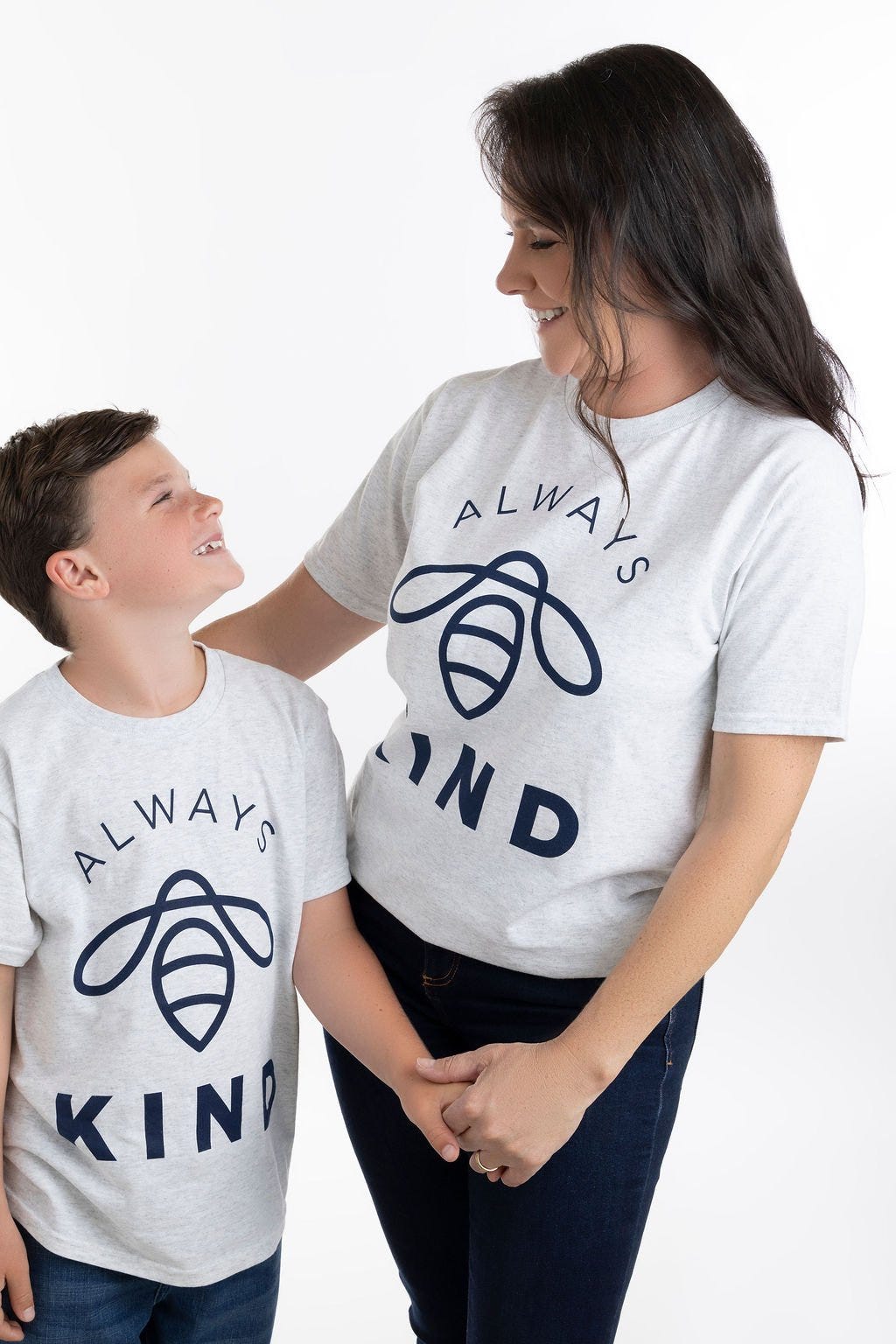
Too often, children with disabilities are overlooked in mainstream design. Benny Bee is here to change that narrative. Every item we create must affirm a child’s sense of worth and confidence, not just meet a functional need. You can see it in the T-shirts, the prints I created, they show and inspire, encourage the power of each person to flourish.
* Inclusivity
It is obvious, but nowadays we must repeat it over and over, so I figured that a clothing line could and should be more than wearing something. Inclusivity is living in a way that every child will feel seen, valued, and comfortable in their own skin, especially when it comes to something as personal as clothing. This value drives us to create adaptive pieces that are stylish, functional, and respectful of every child’s unique needs.
* Empathy
God made us to be united, no matter what. And for me, I believe that empathy is what keeps us grounded. Listening to families, caregivers, and the children themselves helps us design better, communicate better, and lead with heart. This way we won’t be just making assumptions; we will stay close to those we serve.
* Purpose-driven innovation
And finally, purpose-driven innovation. Our mission isn’t just to sell clothes — it’s to solve real problems and improve lives. That purpose keeps us focused, even when things get tough. I believe when your “why” is rooted in service, your leadership becomes more authentic and impactful.
These values hold deep significance for me because they reflect both the professional standard I want to set and the personal legacy I hope to leave. They’re not just what I stand by, they’re what I stand for. The goal for Benny Bee is to be a movement for strength, power, individuality, and uniqueness. Every child has the innate ability to overcome challenges and thrive in whatever they want to do, have, or be.
What inspired you to start a purpose-driven business rather than a traditional for-profit enterprise? Can you share a personal story or experience that led you to prioritize social impact in your business?
I believe that our goal as human beings is to become more empathetic and compassionate. We must train our eyes to see different perspectives and make others’ lives easier within our capacities. We must see the power in those differences, how strong and capable people with disabilities are. They face multiple adversities, and they are Olympic Athletes, successful developers, business leaders, politicians… Even in a society that hides its flaws and makes people’s lives harder without access to places, information, and even clothing.
The way I see businesses and products offered in the market for children and young adults with special needs, the vast majority of them use very basic, general, and random attributes to classify a product as “special needs.” It bothers me because what these families experience goes far beyond the simple and basic. They need to be TRULY SEEN, and to access solutions that will give them freedom, comfort, and support. So, if I have to say “what” inspired me, I would say that it was the desire to do something honest and that would bring dignity.
Can you help articulate a few of the benefits of leading a purpose-driven business rather than a standard “plain vanilla” business?
The market is so saturated with mass production that everything seems so identical and artificial. As human beings, we will all, at some point, feel our inner calling, and this will be reflected in everything in our lives. From what we choose to eat, wear, and give to our children, we reevaluate the world we live in and what we want to leave behind. And while many companies compete on price or product, purpose gives you a unique voice because you are truly speaking from the heart.
This helps you stand out and stay on track.
Purpose-driven companies tend to experience crises with greater resilience. When challenges arise, their mission serves as a “moral compass,” helping them respond with integrity. Our team has a strong connection: we feel like we are contributing to a larger mission, and this keeps us more engaged.
And as a result, we have a positive impact because the decisions we make have long-term value in mind, not just quarterly profits. With a strong sense of values in mind, we create virtuous ecosystems of customers, partners, and employees who connect and win together.
How has your company’s mission or purpose affected its overall success? Can you explain the methods or metrics you use to evaluate the impact of this purpose-driven strategy on your organization?
Benny Bee is rooted in our sense of community and the desire to bring dignity and inclusivity to people with disability. It is not about us only, but about them! And that sounds JUST RIGHT to me. We are purposeful because we were born out of love and care, that naturally permeates everything we do, from our designs to the way we work and interact daily.
While we’re still early in our journey, it’s our mission that drives us every day: to raise awareness and work toward the social impact. We may not have high sales or impressive profits yet, but what we do have is a deep belief in why we started. We’re here to make a difference in the lives of children with special needs and their families by offering clothing that’s not just functional, but made with love, dignity, and empathy.
Every feedback we receive, every conversation we start, and every small step forward reminds us that purpose comes first, and we believe that, over time, awareness will grow, as will the impact we’re here to make.
We may not have large numbers yet, but we’re already seeing the value of our purpose through the conversations we’re starting, the families connecting with our story, and the small victories that remind us that we’re on the right path. This is how we measure success now: by the lives we touch and the community we’re slowly building around something that truly matters.
Can you share a pivotal moment when you realized that leading your purpose-driven company was actually making a significant impact? Can you share a specific example or story that deeply resonated with you personally?
I know it might sound a little bit silly with my example, but it’s a personal experience with my son. He was leaving school at the end of the day, and a girl was using a walker. He looked at me in silence. We walked to the car, and only then he said:
— Mom, you’re going to help all these children with special needs, right? And they’ll be able to be astronauts, surfers, or whatever they want! I love you, Mom!
What I learned in that moment, no mentor or university could teach me. I was able to see a business through the genuine eyes of a child, and I understood that YES, I am on the right path, and I’m sending the right message to anyone who comes into contact with Benny Bee.
Our desire is to do better, for those who deserve all the best in this world.
Have you ever faced a situation where your commitment to your purpose and creating a positive social impact clashed with the profitability in your business? Have you ever been challenged by anyone on your team or have to make a tough decision that had a significant impact on finances? If so, how did you address and reconcile this conflict?
Yes, I had to make some truly difficult decisions where staying true to my purpose clashed with what could have been the most profitable choice. This business I built from scratch didn’t just happen. My husband and son supported me every step of the way, but it was a lot of hard work and sacrifice. We didn’t take out loans or bring in investors. I worked nights as a doula to finance every small part of the project, and my husband worked during the day and on weekends to cover the family expenses. Every brick, every product, every idea–it all came from our own hard work.
Because of all this family efforts, this business has always been deeply personal. It was never just about making money; it was about building something with heart, something that could actually help people and have a positive impact.
There were definitely times when I had to choose between doing what felt right and doing what might have made things easier financially. I’ve had team members questioning why we wouldn’t cut certain corners or follow trends that didn’t align with our values. And it’s ok, I get it, we all want to see growth. But for me, compromising on our purpose was never an option.
I’ve learned that staying true to your values may slow things down, but it builds something that lasts, something you can be proud of. And in the end, that matters more than any short-term gain.
What advice would you give to budding entrepreneurs who wish to start a purpose-driven business?
It’s good to know that purpose-driven businesses can be deeply rewarding, but they also bring unique challenges, and resilience will become part of your brand and legacy. Perfection isn’t a good goal when you’re starting out; purpose-driven businesses are a journey of evolution and learning.
All of this will surround you with a team that truly believes in you.
The most important thing for me is to anchor your purpose in reality and your mission in the market. Would this still work if the mission were removed? If not, revisit your value proposition, it should guide you in every decision until it becomes second nature.
What are your “5 Things You Need To Create A Highly Successful Purpose-Driven Business.” If you can, please share a story or example for each.
1. A meaningful purpose core: Your purpose must go beyond product and profit, it must be the reason why your business exists.
2. Culture based on authenticity and values: Values should guide daily decisions, policies, and behaviors, not just marketing copy. Companies are created by people and for people, and the most human thing must always be the most important: dignity.
3. Building Community and Engagement: Purpose-driven brands thrive by truly nurturing an engaged community of customers who identify with the brand’s purpose and become its biggest advocates and partners. I remember when the first mother responded to me on Instagram, and the first thing she wrote was, “Thank you for thinking about our children, your project is beautiful.” And so it was, one mother after another, even the occupational therapist, who responded the same way. A journalist contacted me to showcase my project, and I just thought, “But I’m just doing what I’m supposed to do.” It seemed so ordinary to me, because I’d been experiencing the project for a long time, since the business plan, but to other people, they had never imagined something like this, because they live the daily pain of not being seen or being purposefully forgotten. And I contacted them exactly the opposite: I saw them.
4. Stories that connect and move: Sharing real stories, not just highlights, builds trust, loyalty, and wins over everyone with your purpose. One mother said to me, “You, as a little ant alone in the desert, sleep and wake up thinking about your project, working, and building, and it’s not even for you.” And that gave me more strength and the desire to continue.
5. Staying Focused on Impact and Purpose: Monitor how your purpose translates into real value for your community, your direct customers, employees, and the health of your business.
I’m interested in how you instill a strong sense of connection with your team. How do you nurture a culture where everyone feels connected to your mission? Could you share an example or story that showcases how your purpose has positively influenced or motivated people on your team to contribute?
I believe the energy, the vibe of the project as a whole, everything has great meaning, right down to the name, was built with a lot of love and determination. I don’t know if it was inspiration or pure madness (laughs). I have a great friend who collaborated on the studies and definitions for the social media ideas, and it was very interesting because she had started a project in Norway before me, and it was on standby. When she started working with Benny Bee, she completely abandoned her personal project, started building a completely new project, and moved to Portugal. She says that having contact with a project with such a clear purpose made her realize she needed to better define her personal purpose, understand what she truly felt and desired, and then sought the right direction. Today, she is preparing to launch her own brand in Brazil, and we will have good news and wonderful collaborations.
Imagine we’re sitting down together two years from now, looking back at your company’s last 24 months. What specific accomplishments would have to happen for you to be happy with your progress?
My biggest dream is to sell a million t-shirts so I can donate to a cause that means a lot to me and for sure for everyone who understands the great things they do, like Special Olympics.
I also wish that I can meet Mindy Scheier one day. She has been such an inspiration to me, especially during some of my toughest times working and building the project, and I’d love to thank her in person.
Another dream of mine is to be part of the Runway of Dreams Fashion Show. That moment would be so special to me. That stage represents so much more than fashion, it’s about inclusion, visibility, and pride in who we are.
You are a person of enormous influence. If you could inspire a movement that would bring the most amount of good to the most amount of people, what would that be? You never know what your idea can trigger. 🙂
Me? Ow my goodness, if I could inspire a movement, it would be one filled with kindness, inclusion, and focused in care for mental health, not just for individuals, but for families too.
As someone who cares deeply about the special needs community, I know how important it is to support the whole family, not just the child. Families often give so much of themselves, and sometimes they forget to care for their own hearts and minds. I truly believe that when families feel emotionally supported, they can give even more love and strength to their children.
Mental health is not always easy to talk about, but it matters, and matters so much. We all need to feel seen, understood, and accepted for who we are. And sometimes, just knowing you’re not alone can make all the difference.
We need to help each other and create a world where everyone feels included and uplifted, where dignity is the starting point, and where no one feels like they have to carry everything by themselves.
How can our readers further follow your work or your company online?
Facebook: https://www.facebook.com/profile.php?id=61556907710052&mibextid=wwXIfr
Instagram: https://www.instagram.com/bennybeewear?igsh=ZjQxdjJzZ3pyeWQ5&utm_source=qr
Website: https://bennybeewear.com
This was great. Thanks for taking time for us to learn more about you and your business. We wish you continued success!
About the Interviewer: Chad Silverstein is a seasoned entrepreneur with 25+ years of experience as a Founder and CEO. While attending Ohio State University, he launched his first company, Choice Recovery, Inc., a nationally recognized healthcare collection agency — twice ranked the #1 workplace in Ohio. In 2013, he founded [re]start, helping thousands of people find meaningful career opportunities. After selling both companies, Chad shifted his focus to his true passion — leadership. Today, he coaches founders and CEOs at Built to Lead, advises Authority Magazine’s Thought Leader Incubator.
Purpose Before Profit: Elicen Renz Of Benny Bee On The Benefits Of Running A Purpose-Driven… was originally published in Authority Magazine on Medium, where people are continuing the conversation by highlighting and responding to this story.