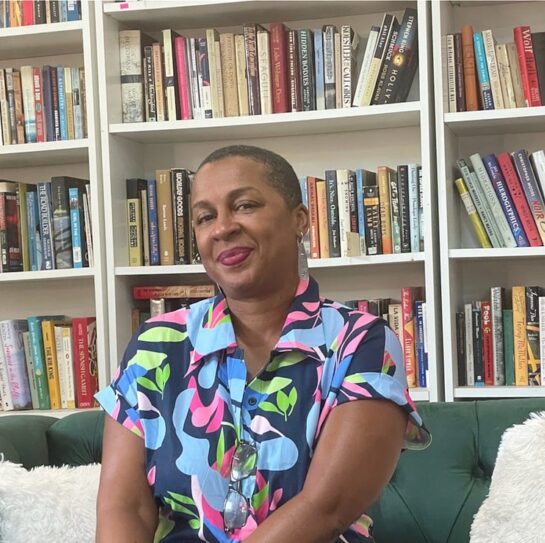
Purpose Before Profit: Janvieve Williams Comrie of Radiant Grief On The Benefits Of Running A Purpose-Driven Business
An Interview With Chad Silverstein
A Vision for Growth and Legacy — Success in purpose-driven business isn’t just about current impact — it’s about creating lasting change. In my case, this means developing ways to scale our impact without losing the personal touch that makes our work effective. One of the long term for example, is to create certification programs to train other grief counselors in our methodology, ensuring that culturally sensitive, accessible grief support can reach more communities. The process to get there includes writing workbooks that can be used by families and practitioners alike, developing training programs, and creating systems that can be replicated while maintaining the integrity of the work.
In today’s competitive business landscape, the race for profits often takes center stage. However, there are some leaders who also prioritize a mission-driven purpose. They use their business to make a positive social impact and recognize that success isn’t only about making money. In this interview series, we are talking with some of these distinct leaders and I had the pleasure of interviewing Janvieve Williams Comrie.
Janvieve Williams Comrie is a grief companion, death doula, writer, and human rights strategist based between the Bronx and Panama, where she brings a unique perspective to grief work through her experience with both personal and collective loss. As the founder of Radiant Grief and AfroResistance, she is revolutionizing grief support by making it accessible to traditionally underrepresented and underserved communities. She teaches The New School and NYU Wagner Graduate School of Public Service, her work, including her book ‘Dancing with Death: A Lighthearted Guide to Embracing Life’s Final Chapter,’ bridges cultural traditions with contemporary approaches to grief, drawing from her extensive experience in human rights advocacy and her personal journey as a Black Latina migrant navigating various forms of loss.
Thank you so much for doing this with us! Our readers would love to get to know you a bit better. Can you tell us your “Origin Story”? Can you tell us the story of how you grew up?
I grew up in Panama, between two neighborhoods — Chanis and Parque Lefevre. But it was in Parque Lefevre, where my twin grandmothers’ house stood, that I first learned the profound lessons that would shape my life’s work. Their house wasn’t just a building; it was the heart of our family, a place where I witnessed firsthand what it meant to build community and fight for dignity.
I remember vividly watching my grandmother Perla at her sewing machine, creating curtains and bedspreads late into the night, sometimes even on Christmas Eve. She was a seamstress, but what she really crafted was community. She would often work for minimal payment — sometimes none at all — for community members who needed her services. Through her, I learned that true wealth isn’t measured in money, but in relationships. The way people looked at her, spoke about her, the deep respect and love they showed — that was the real currency of our community.
My grandmothers weren’t what we’d call ‘organizers’ today — they were simply human beings doing their best to live with dignity and helping others do the same. Through them, I learned that justice isn’t always about grand gestures or formal movements; sometimes it’s in the small acts of care, like staying up late to finish a neighbor’s curtains, that create lasting change.
As a child, I would often accompany them to visit their friends, many of whom were older adults in the community. I remember vaguely hearing about these elders passing away, though I didn’t fully understand then how these early experiences with loss and community care would later influence my work. These moments planted the seeds for my understanding of how grief, community, and justice are deeply interconnected.
Can you share the most interesting story that happened to you since you began leading your company or organization?
Well, because sometimes the most interesting stories often emerge from unexpected connections, for me that connection was discovering how my years of human rights work would profoundly shape my approach to grief support and coaching. While many might see human rights advocacy and grief work as separate paths, my experience continues to show me they are deeply intertwined.
Before I focused on my current grief work, I spent over a decade working in human rights and social justice. During this time, I learned that grief isn’t just about death — it’s about the many ways we experience loss, particularly in communities facing systemic injustice. One of the most transformative experiences in my journey came through my work with Afro-Colombian communities who were facing internal displacement. To understand the gravity of this situation, imagine being forced to leave not just your home, but your ancestral lands — lands that have been collectively owned and cultivated by your community for generations. Internal displacement occurs when people are forced to flee their homes due to conflict, violence, or persecution, but remain within their country’s borders.
In Colombia, I witnessed how Afro-Colombian communities faced death threats that forced them to abandon their collectively owned territories — lands that weren’t just property, but the foundation of their cultural identity, spiritual practices, and economic survival. These communities had a profound understanding of collective grief because their losses weren’t just individual — they were communal. When they lost their land, they lost their way of life, their connection to ancestors, their traditional practices, and their sense of community.
What struck me most deeply was how these communities approached grief. It wasn’t just about mourning deaths — though there were many to mourn — but about grieving the loss of their collective way of life. They taught me that grief doesn’t exist in isolation. Their collective grieving practices weren’t just about processing loss; they were acts of resistance and preservation of cultural memory.
This experience fundamentally shaped my understanding of how grief, justice, and human rights are interconnected. When communities face displacement due to violence, the trauma creates layers of loss that require both justice and healing. Through their example, I learned that addressing grief means acknowledging not just personal loss, but the systemic injustices that create these losses in the first place.
This perspective now influences everything I do in my grief work — understanding that sometimes, the most profound grief comes not just from death, but from the loss of community, culture, and connection to place. It’s why I’m so passionate about creating spaces where all forms of grief can be acknowledged and honored.
In regards to what captures the unexpected ways grief work manifests in both personal encounters and systemic human rights work, two stories come to mind.
The first is about a 24 year old man I met who had lost his baby sister in a car accident when he was 8 years old. For over two months following her death, he recalls that his parents, though taking care of his physical needs, never had a conversation with him about his sister’s death. They were so consumed by their own grief that this young man’s pain went unacknowledged. He was living in a house where the most significant event in their family life had become an unspoken weight, he shared that he has been told as an adult that they just simply did not know how to talk to him about it, and they did not have the will. What struck me most about this encounter was how readily he shared this story with me, as if he had been waiting for permission to speak about his sister, about his grief, about the silence.
The second story reflects a different kind of unspoken grief I’ve witnessed in my human rights work. Behind the public advocacy and policy work of migrant rights organizations, there’s this silent, unfunded, and deeply human aspect that few people see. When undocumented migrants die alone, organizations quietly shoulder the sacred responsibility of dealing with the aftermath. We find ourselves having difficult conversations with families across borders, coordinating to send bodies back to their countries of origin, and navigating both bureaucratic systems and profound grief — all while operating without formal recognition or funding for this crucial work.
These experiences, though very different, share a common thread — they reveal how grief often exists in the shadows, whether in a family home or in organizational work. They’ve shown me that creating spaces for grief work isn’t just about adding new services — it’s about acknowledging and supporting the grief work that’s already happening, but that are usually invisible and without recognition.
We often learn the most from our mistakes. Can you share one that you made that turned out to be one of the most valuable lessons you’ve learned?
One of my most valuable lessons emerged from my own journey as a migrant, and my initial reluctance to acknowledge how my personal experiences with grief were actually a crucial foundation for my work. For years, I approached my human rights and social justice work from what I thought needed to be a purely professional perspective, trying to maintain what I now recognize was an artificial distance from my own experiences of loss and displacement.
My mistake was not recognizing sooner that my own journey as a Black, Latina migrant — with all the unspoken grief that comes with leaving one’s homeland, navigating multiple cultures, and experiencing various forms of displacement — was actually a source of strength and insight in my work, not something to compartmentalize. Through years of therapy and life coaching, I gradually learned to acknowledge the constant presence of grief in my own life — not necessarily to ‘deal with it’ or ‘get over it,’ but to recognize how it shapes my perspective and impacts my work.
This journey taught me something profound about authenticity in both personal growth and professional practice: sometimes what we perceive as our vulnerabilities are actually our greatest assets. By trying to separate my personal experiences from my professional work, I was missing the opportunity to bring my whole self to both my human rights advocacy and grief support work.
Now, after 12 years in consulting and more recently transitioning into focused grief work, I understand that my ability to connect with others in their grief journeys is deeply enhanced by my willingness to acknowledge my own. When I work with individuals navigating loss, including the kind of unspoken grief that comes with migration, cultural displacement, or systemic injustice, I’m able to create safer spaces for them precisely because I understand these experiences from the inside out.
This realization has transformed how I approach my work. Rather than seeing my personal experiences with grief as something to keep separate from my professional practice, I now understand them as an essential part of what makes my work unique and effective.
As a successful leader, it’s clear that you uphold strong core values. I’m curious what are the most important principles you firmly stand by and refuse to compromise on. Can you share a few of them and explain why they hold such significance for you in your work and life?
This question makes me smile because in my consulting and coaching work, I’ve actually become known as the ‘queen of values alignment.’ Values aren’t just professional principles for me — they’re the foundation of my family life too. Even with my children, we have ongoing conversations about our family values and how they guide our decisions and actions. These same values thread through everything I do, whether I’m working in human rights advocacy, providing grief support, or sitting at our dinner table.
My core values are deeply rooted in my lived experiences, in my professional work, and my current journey into grief companionship. These principles aren’t just guidelines — they’re fundamental truths that guide both my work and life:
Dignity is Non-Negotiable: My grandmother taught me this, life and love isn’t about grand gestures, but about how we treat people every day. In our home, this means everyone has a voice that must be listened to. In my grief work, it means honoring each person’s or each families unique journey with loss. Whether I’m helping my children process a difficult day at school or supporting a client through grief, the principle remains the same: every person deserves to be seen and heard with respect.
Community must be cared for: As a migrant raising a family between the Bronx and Panama, I’ve learned that community care isn’t just about support — it’s about survival and thriving. At home, this means teaching my children that we’re part of something bigger than ourselves, and that we are part of a community that takes care of each other. In grief work, it means creating spaces where people can share their stories and support each other. We practice this daily, whether we’re helping neighbors or supporting families through loss.
Be your true self: Being authentic about my own journey, whatever that is allows my children to understand me and my journey, and at work it helps my clients feel safe sharing their stories. It’s about showing up as your whole self, whether at the kitchen table or in a professional setting.
Two Things Can Be True at Once
This value is fundamental to how I understand both life and grief. In our family, we embrace the understanding that seemingly contradictory experiences can coexist, i can deeply miss Panama and still love building a life in the Bronx, you can be both strong and vulnerable, you can laugh while grieving. This principle is especially vital in grief work, where I help people understand that joy and sadness aren’t opposing forces — they’re often dance partners in our healing journey.
What inspired you to start a purpose-driven business rather than a traditional for-profit enterprise? Can you share a personal story or experience that led you to prioritize social impact in your business?
My experience with my mother’s Alzheimer’s and my mother-in-law’s strokes has profoundly shaped how I approach grief work, helping me understand that these journeys involve entire ecosystems of care, memory, and relationship. When someone we love faces a progressive condition, it’s not just about the person experiencing it — it’s about how the whole family system adapts, grieves, and grows through the experience.
With my mother’s Alzheimer’s, I’ve learned firsthand that grief isn’t a linear path — it’s a constantly evolving relationship with loss. As caretakers, we’re not just managing medical care; we’re navigating changing relationships, preserving memories, and creating new ways of connecting. Some days, we’re grieving the mother who no longer remembers our shared stories, while simultaneously creating new moments of connection with the person she is now. This duality — holding both what was and what is — has deeply influenced how I support families facing similar journeys.
My mother-in-law’s situation, with her strokes affecting both mobility and verbal communication, taught me about the importance of expanding our understanding of connection and presence. When traditional forms of communication change, we must find new languages of love and care. This experience has enriched my approach to grief work, helping me guide families in discovering alternative ways of maintaining relationships and creating meaningful moments, even when circumstances dramatically change.
These personal experiences have shown me that grief support, especially with conditions like Alzheimer’s and stroke recovery, must embrace the full complexity of the journey. It’s about weaving together the practical demands of daily caregiving with the profound emotional experiences of family members, while honoring both the legacy of who our loved ones were and who they are becoming. We must create space for new ways of connecting and relating, even as previous forms of communication change or fade. This work requires us to tend carefully to the caregivers, whose own needs often go unspoken, while fiercely protecting the dignity and agency of those experiencing the condition. Through it all, we must remember that grief isn’t just an individual experience — it’s collective, touching everyone in the family system and requiring us to find ways to navigate it together. This understanding of grief’s many dimensions allows us to hold space for both the sadness of what’s changing and the joy of discovering new ways to love and connect.
This comprehensive understanding now informs how I structure my grief support services, ensuring that we create space for all these aspects while acknowledging that each family’s journey is unique. It’s about helping people navigate not just the loss itself, but the complex web of relationships, memories, and care that surrounds it.
Can you help articulate a few of the benefits of leading a purpose-driven business rather than a standard “plain vanilla” business?
I’ll admit I’m making assumptions about the phrase ‘plain vanilla,’ though I understand it to mean regular businesses that focus primarily on profit without a deeper social mission or purpose.
The benefits of leading a purpose-driven business, especially in grief work, are profound and multifaceted. When profit isn’t your only metric of success, you can create services that truly serve community needs. For example, making grief support accessible to migrants, Black people, and communities of color isn’t just about business growth — it’s about addressing historical gaps in access to these essential services.
Because my work emerges from personal experience with my mother’s Alzheimer’s and my mother-in-law’s stroke recovery, I can connect with clients from a place of genuine understanding. This authenticity creates trust that goes beyond typical business relationships, allowing for deeper, more meaningful support.
When your primary motivation is addressing unmet needs in your community, you’re driven to innovate in ways that traditional businesses might not. Recognizing how grief intersects with migration, social justice, and cultural identity has led me to develop more comprehensive and culturally sensitive approaches to grief support. While traditional businesses might struggle during challenging times, purpose-driven work carries you through difficulties because your motivation goes beyond profit. The stories of transformation and healing I witness in my work provide a different kind of return on investment — one that fuels my passion and commitment. When you’re truly serving your community’s needs, growth often happens organically through word of mouth and community trust. The relationships you build aren’t just client relationships — they’re partnerships in creating positive change.
For me, this isn’t just about running a business — it’s about creating spaces where unspoken grief can be acknowledged, where cultural practices around loss are honored, and where healing can happen in community. The ‘profit’ in my work isn’t just financial — it’s measured in the number of people who find support they wouldn’t have accessed otherwise, in the conversations about grief that become possible, and in the healing that happens when people feel truly seen in their loss.
How has your company’s mission or purpose affected its overall success? Can you explain the methods or metrics you use to evaluate the impact of this purpose-driven strategy on your organization?
As a relatively new venture in the grief support space, I’m in an interesting position to address this question. The truth is, I’m currently developing formal metrics to measure our impact, because grief work requires a different kind of measurement than traditional business success indicators.
Our purpose — making grief support accessible to communities while acknowledging the intersection of loss with justice — has actually shaped how we need to think about success and impact. Traditional metrics like client retention or revenue alone don’t tell the full story of what we’re trying to achieve.
Currently, I observe our impact through the depth and authenticity of community engagement — when people feel safe enough to share their stories of loss, whether it’s about a parent with Alzheimer’s or the grief of migration, or the loss of their loved one, we know we’re creating necessary spaces for healing. There’s also a beautiful ripple effect in families and communities — when one person receives support in navigating their grief journey, it often leads to others in their circle feeling empowered to seek support or start conversations about loss.
As we develop more structured ways to measure our impact, we’re looking beyond traditional business metrics. Instead of focusing solely on client numbers or revenue growth, we’re creating frameworks to understand how our services affect access to grief support in traditionally underserved communities. This includes tracking not just who we serve, but how our support ripples out into families and communities.
What makes our approach to measuring success different is our focus on qualitative impact alongside quantitative growth. While we currently have capacity for three coaching clients and three death worker clients, our success isn’t measured by filling these slots, but by how deeply we can support each person and their extended community. We’re developing ways to track how our work contributes to broader conversations about loss, dignity, and justice, including through initiatives like our anonymous grief help column, which will allow us to support people while building authority in the grief space.
Our metrics need to capture both the immediate impact of our work and its longer-term effects on how communities approach grief and loss. This might mean tracking how many families feel ready and able to have conversations about end-of-life planning, or how our work influences cultural narratives around grief and loss. We’re particularly interested in understanding how our culturally sensitive approach affects communities that have historically been underserved in this space.
What’s fascinating is that this purpose-driven approach has actually created organic growth through word-of-mouth and community trust. While this might be slower than aggressive marketing strategies, it creates deeper, more sustainable relationships with the communities we serve. Our success metrics need to reflect this emphasis on depth and quality of impact over rapid expansion.
Can you share a pivotal moment when you realized that leading your purpose-driven company was actually making a significant impact? Can you share a specific example or story that deeply resonated with you personally?
A pivotal moment in recognizing the impact of this purpose-driven work came through writing my workbook, ‘Dancing with Death: A Lighthearted Guide to Embracing Life’s Final Chapter.’ During my research, I discovered a significant gap — there weren’t many resources written in simple, accessible terms that families could keep on their kitchen tables and use to have these important conversations.
What truly illuminated the potential impact was testing the workbook exercises with my own children, who were 12 and 14 at the time. Their fascination with the information and eagerness to engage in conversations about death and cultural practices around the world was eye-opening. While their peers weren’t typically thinking about these matters, my children developed elaborate plans for how they wanted their life transitions honored. This showed me something profound — when we normalize these conversations and make them accessible, everyone, even young people, can participate meaningfully in designing not just the life they want, but how they want their transitions honored. It provides clarity and guidance to those who love us about how to honor our wishes.
But perhaps the most profound confirmation of impact came through my professional work, when I was given the honor of accompanying Don Pancho, a Puerto Rican elder through his final journey. This experience spanned nearly a year — from supporting him and his wife while he was in a rehab center, to helping transition him home, to the sacred task of laying his ashes to rest. The process included everything from the practical aspects of packing up his room to the deeply meaningful work of setting up an altar in Puerto Rico and organizing a memorial that brought together the local community, including the mayor.
This comprehensive journey — from writing a workbook that makes death conversations accessible to families, to providing hands-on support through someone’s final transition — showed me the true power of purpose-driven work in this field. It’s not just about providing a service; it’s about transforming how we approach death, grief, and loss in our culture. When we make these conversations accessible and normal, we create ripples of change that extend far beyond individual clients to touch entire communities.
These experiences confirmed for me that this work isn’t just about business success — it’s about creating genuine, lasting impact by helping people navigate one of life’s most challenging transitions with dignity, cultural sensitivity, and deep respect for both the practical and spiritual aspects of the journey.
Have you ever faced a situation where your commitment to your purpose and creating a positive social impact clashed with the profitability in your business? Have you ever been challenged by anyone on your team or have to make a tough decision that had a significant impact on finances? If so, how did you address and reconcile this conflict?
This question touches on one of the most challenging aspects of purpose-driven work — the tension between making services accessible and ensuring sustainability. In my case, this challenge is deeply personal because my commitment to providing affordable grief support services exists alongside my responsibility to care for my own family, including my mother who has Alzheimer’s.
When pricing my services, I constantly navigate this complex terrain. On one side, I understand intimately how crucial these services are for underserved communities — migrants, people of color, families navigating progressive illnesses like Alzheimer’s. I know firsthand the financial strain that comes with caregiving, having experienced it with both my mother and mother-in-law. This makes me deeply conscious of not wanting to price people out of accessing support during their most vulnerable moments.
However, I’ve also learned that sustainability isn’t selfish — it’s necessary. The reality is that I need to maintain a viable business to continue serving others while also caring for my own family. This includes the practical costs of caregiving for my parents, including my mother with Alzheimer’s, supporting my children, and ensuring I have the resources to keep showing up fully for my clients.
I’ve come to understand that pricing isn’t just about numbers — it’s about value and impact. Rather than seeing it as a conflict between purpose and profit, I’ve learned to frame it as finding the sweet spot where accessibility meets sustainability. This has led me to develop flexible pricing models and creative solutions, like offering some services on a sliding scale or creating resources like my workbook ‘Dancing with Death’ that can reach more people at a lower price point.
What’s interesting is that being transparent about these challenges has actually deepened my connections with clients. When they understand that fair pricing enables me to continue this work while caring for my own family, including a mother with Alzheimer’s, it creates a different kind of relationship — one based on mutual understanding and respect for the value of care work, whether professional or personal.
This approach has taught me that purpose and sustainability aren’t opposing forces — they’re essential partners in creating lasting impact. By ensuring the business is sustainable, I can continue to serve my community for the long term, while also modeling the importance of valuing care work in all its forms.
What advice would you give to budding entrepreneurs who wish to start a purpose-driven business?
My advice to budding purpose-driven entrepreneurs comes from my own journey of creating multiple entry points for people to access grief support services. The key is to understand that you can serve your purpose while creating a sustainable business model through diverse offerings at different price points.
For example, I started with my workbook, ‘Dancing with Death,’ which makes conversations about death and grief accessible to families right at their kitchen table. This allows people to begin their journey at their own pace and in their own space. From there, I developed more personalized services like family consultations for those needing direct support, particularly in palliative care and nursing home settings. I deliberately structured these with an initial pricing model of $500–1,000, with a special launch offer of $350–500 for the first three families to make it more accessible while establishing the service.
My advice would be to think creatively about how your services can meet people where they are — both financially and in terms of readiness. In my case, this means offering everything from individual grief support to family consultations, from workshops for organizations to resources for caregivers navigating progressive conditions like Alzheimer’s.
Another crucial piece of advice is to recognize that purpose-driven work often requires partnership and community building. I’m developing relationships with healthcare facilities, community organizations, and cultural centers because this work can’t happen in isolation. These partnerships not only extend our reach but also create more sustainable ways of serving our communities.
Looking ahead, I’m exploring subscription-based services that will provide ongoing support at a more accessible price point. The key is to create multiple ways for people to engage with your work while ensuring your business can sustain itself and grow.
What are your “5 Things You Need To Create A Highly Successful Purpose-Driven Business.” If you can, please share a story or example for each.
1 . A Personal Connection to the Purpose — My journey into grief work didn’t start as a business plan — it emerged from the layers of grief I’ve experienced and witnessed throughout my life. As a migrant from Panama due to a military invasion, I understand the profound grief of leaving behind a life, a community, and a way of being. This grief coexists with my current reality of caring for my mother with Alzheimer’s and my mother-in-law after her strokes. Through my work at AfroResistance, I’ve also witnessed how communities process collective grief through war, displacement, and migration.
These intersecting experiences of personal and collective grief — from the daily losses of watching my mother’s memories fade, to the complex emotions of building a new life while grieving the one left behind in Panama — have given me a unique lens on how grief manifests in different ways. This personal connection helps me understand the nuances of what families and communities need, from practical support to emotional guidance. When you’re genuinely connected to your purpose through lived experience, you can anticipate needs before they’re even expressed because you’ve walked similar paths yourself.
2 . Strong Values That Guide Decision-Making — Being known as the ‘queen of values alignment’ isn’t just a title — it’s a practice that guides every business decision. For example, when designing our services, we balance accessibility with sustainability. This means creating pricing and products for individuals, families and groups who need support while ensuring we can continue providing quality service. These values help navigate difficult decisions, especially when business needs meet social impact.
3 . Understand and believe that Purpose-driven doesn’t mean profit-less. — I learned this lesson while balancing the needs of my own family, with making our services accessible. Creating a sustainable business model means being able to serve your community long-term. For us, this includes developing partnerships with healthcare facilities, creating subscription-based services, and building multiple revenue streams while staying true to our mission of making grief support accessible to all.
4 . Cultural Competency and Community Understanding — In my work with both domestic and international communities, I’ve learned that cultural competency isn’t just about knowing of, nor understanding different traditions — it’s about creating intentional spaces where these traditions can be honored. This understanding shapes everything from how we approach grief support to how we structure our services.
For instance, when a family requested a priest who could speak their native Spanish for their mother’s final blessing, it wasn’t a regular referral — we worked to find someone who specifically understood their country traditions and could incorporate the particular prayers and rituals that would bring comfort to both the dying and their family.
Our family consultations consider not just individual needs but the whole family and their community contexts. This might mean understanding how migration stories impact grief, recognizing the importance of certain cultural rituals in healing, or acknowledging how different generations within the same family might experience and express loss differently based on their cultural connections.
5 . A Vision for Growth and Legacy — Success in purpose-driven business isn’t just about current impact — it’s about creating lasting change. In my case, this means developing ways to scale our impact without losing the personal touch that makes our work effective. One of the long term for example, is to create certification programs to train other grief counselors in our methodology, ensuring that culturally sensitive, accessible grief support can reach more communities. The process to get there includes writing workbooks that can be used by families and practitioners alike, developing training programs, and creating systems that can be replicated while maintaining the integrity of the work.
Another way that I bring this vision to life is while I currently work directly with families navigating grief, I’m also documenting our approaches and methodologies so they can be taught to others. This isn’t just about growing a business — it’s about creating a legacy that can continue to serve communities long after we’re gone. It’s about training the next generation of grief workers who understand how to support families through both traditional losses and the ‘invisible’ griefs that come with experiences like migration, cultural displacement, and progressive illnesses.
This vision for growth includes not just expanding our services, but deepening our impact through relationships and partnerships with healthcare facilities, community organizations, and cultural centers. It’s about creating a movement that transforms how we approach grief and loss in our society, particularly for communities that have historically lacked access to these essential services.
I’m interested in how you instill a strong sense of connection with your team. How do you nurture a culture where everyone feels connected to your mission? Could you share an example or story that showcases how your purpose has positively influenced or motivated people on your team to contribute?
I really appreciate this question because it highlights an important truth about purpose-driven work — it’s never truly solo, even when you’re technically working alone. While I currently operate independently, I’m deeply embedded in a rich network of death workers, hospice workers, and hospital chaplains who share my commitment to dignified end-of-life care and grief support.
Rather than a traditional team structure, I’ve found strength in what I call ‘collaborative independence.’ I regularly consult and share experiences with other death workers, creating a community of practice where we support each other while maintaining our individual approaches. This network allows us to serve our communities better by sharing resources, insights, and sometimes even referring clients to ensure they receive the most appropriate support for their specific needs.
For example, when I’m working with a family navigating both grief and complex medical decisions, I can draw on the expertise of hospital chaplains who understand the intersection of spiritual care and medical systems. Similarly, my experience with cultural approaches to grief and loss often provides valuable perspectives to my colleagues working in more traditional healthcare settings.
The beauty of this approach is that our shared purpose — providing dignified, culturally sensitive end-of-life and grief support — creates natural bonds of collaboration. We’re not bound by organizational charts but by a common commitment to transforming how our society approaches death, dying, and grief.
This model of working independently while staying deeply connected to a community of practice has shown me that ‘team’ can mean different things in purpose-driven work. Sometimes the strongest teams aren’t found within a single organization but across a network of independent practitioners united by shared values and purpose.
Imagine we’re sitting down together two years from now, looking back at your company’s last 24 months. What specific accomplishments would have to happen for you to be happy with your progress?
Looking back from 2027, I envision several key accomplishments that would signal meaningful progress in transforming how we approach grief support and death work in our communities.
First, we will have expanded our resources for families and practitioners through at least two more workbooks. Building on the success of ‘Dancing with Death,’ these new workbooks will address specific aspects of grief work, particularly focusing on cultural approaches to loss and supporting families through progressive conditions like Alzheimer’s. These resources will continue our mission of making grief conversations accessible and culturally relevant.
A crucial milestone will be the training of over 200 providers — including social workers, home care attendants, and teachers. This diverse group of practitioners represents our commitment to embedding grief support skills across different sectors of care work. By training professionals who are already deeply connected to their communities, we multiply our impact and reach people where they are.
One of our most significant achievements will be the launch of our cultural sensitivity death worker certification program. This program will fill a critical gap in the field, ensuring that death workers are equipped to serve diverse communities with understanding and respect. It’s not just about training — it’s about transforming how the field approaches cultural differences in grief and death practices.
The success of at least three international grief retreats, starting with our first women’s retreat in Panama in late 2025, will demonstrate our ability to create immersive spaces for healing that honor different cultural approaches to grief. These retreats will bring together people from various backgrounds, creating opportunities for both personal healing and cross-cultural understanding.
But beyond these concrete metrics, success means seeing a shift in how communities approach grief and loss. It means witnessing more open conversations about death in families, seeing more culturally sensitive practices in institutions, and knowing that people who previously lacked access to grief support are finding the resources they need in ways that honor their cultural traditions and personal journeys.
You are a person of enormous influence. If you could inspire a movement that would bring the most amount of good to the most amount of people, what would that be? You never know what your idea can trigger. 🙂
I envision a movement that transforms how we understand and navigate grief in all its forms — what I call ‘The Grief Justice Movement.’ This isn’t just about death and dying, but about acknowledging all the invisible losses that shape our lives and communities.
This movement would recognize that grief isn’t just personal — it’s political, cultural, and collective. It would acknowledge how displacement, migration, systemic injustice, and cultural loss create forms of grief that often go unrecognized and unsupported. As someone who has experienced the grief of leaving Panama, watching my mother’s memories fade with Alzheimer’s, and witnessing communities navigate collective trauma through my human rights work, I understand how these different forms of grief intersect and compound each other.
Imagine a world where we create spaces for all types of grief to be acknowledged and honored. Where migrants can speak about the pain of leaving their homelands without being told to just be grateful for new opportunities. Where families dealing with progressive illnesses like Alzheimer’s can find support that understands both the practical and emotional dimensions of their experience. Where communities facing displacement or cultural loss have their grief recognized as valid and worthy of attention.
How can our readers further follow your work or your company online?
I’d love to stay connected with readers who resonate with this work around grief, justice, and healing. The best way to follow our journey and access our resources is through our new website www.radiantgrief.com, which reflects our evolution in making grief support more accessible and culturally responsive.
For those interested in learning more about our services, upcoming retreats, or our grief support programs, you can reach us directly at info@radiantgrief.com. We’re particularly excited about sharing updates about our new initiatives, including our certification programs, international retreats, and our subscription service ‘Letters of Light.’
You can also follow my broader work and insights on social media:
Instagram: @jwpanama and @afroresistance
Twitter: @jwpanama
Facebook: @janvieve
For those interested in my writing, my workbook ‘Dancing with Death: A Lighthearted Guide to Embracing Life’s Final Chapter’ is available now, with more resources coming soon. Stay connected through our website to learn about upcoming workbooks and training opportunities.
I look forward to continuing this important conversation about grief, justice, and healing with all of you.
This was great. Thanks for taking time for us to learn more about you and your business. We wish you continued success!
About the Interviewer: Chad Silverstein is a seasoned entrepreneur with 25+ years of experience as a Founder and CEO. While attending Ohio State University, he launched his first company, Choice Recovery, Inc., a nationally recognized healthcare collection agency — twice ranked the #1 workplace in Ohio. In 2013, he founded [re]start, helping thousands of people find meaningful career opportunities. After selling both companies, Chad shifted his focus to his true passion — leadership. Today, he coaches founders and CEOs at Built to Lead, advises Authority Magazine’s Thought Leader Incubator.
Purpose Before Profit: Janvieve Williams Comrie of Radiant Grief On The Benefits Of Running A… was originally published in Authority Magazine on Medium, where people are continuing the conversation by highlighting and responding to this story.