
Purpose Before Profit: Landon Ash of Big Horn Bison Ranch On The Benefits Of Running A Purpose-Driven Business
An Interview With Chad Silverstein
“Whether on a racetrack or a ranch, the most rewarding moments have always been the ones that create an impact beyond the venture itself.”
As a part of this series, we had the pleasure to interview Landon Ash.
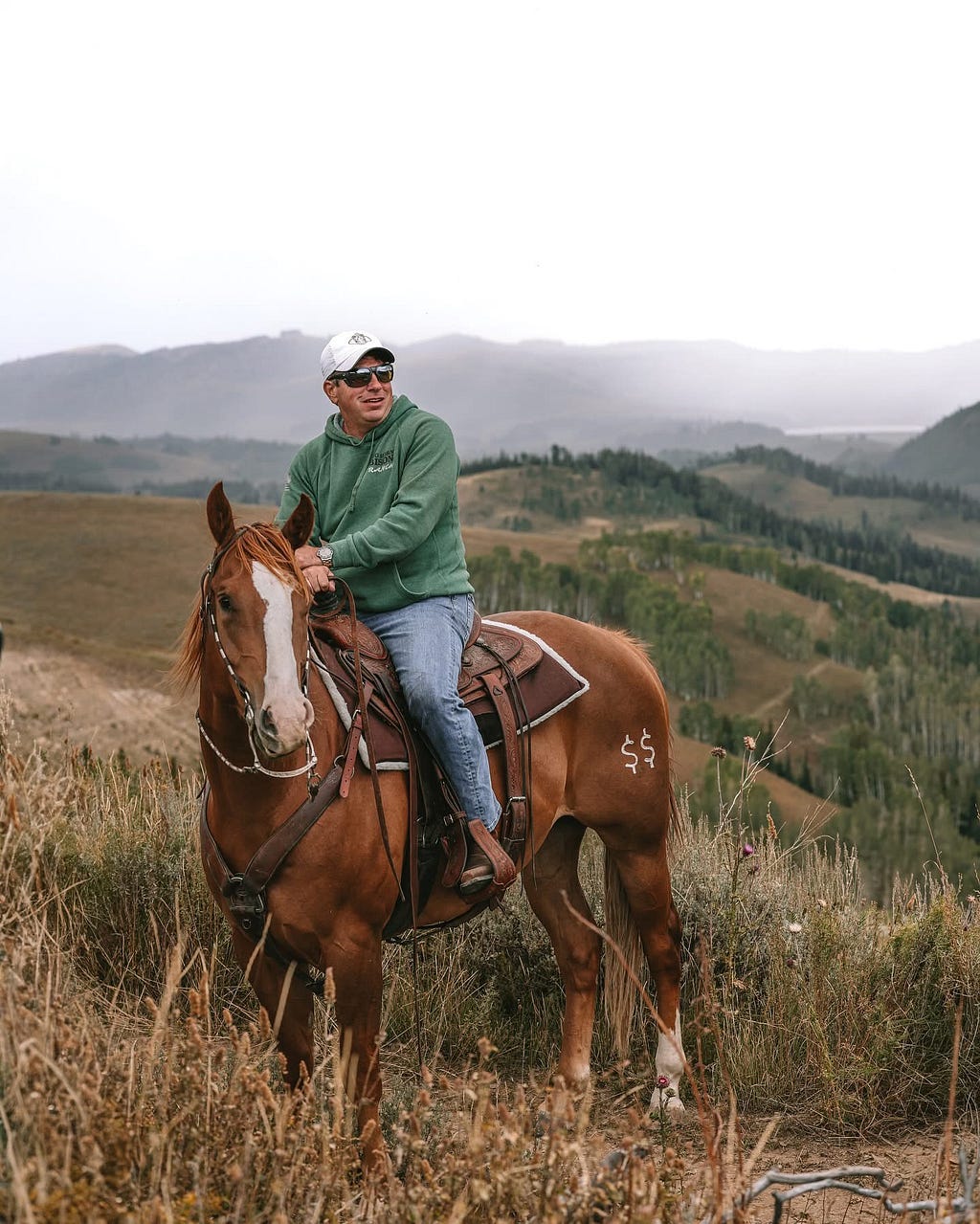
Landon Ash is an entrepreneur, rancher, and conservation advocate dedicated to preserving the landscapes, and wildlife of the American West. As the owner and founder of Big Horn Bison Ranch in Sheridan, Wyoming, he oversees the stewardship of more than 350 bison and works to advance sustainable agriculture and native grassland conservation. Through his ranch, consumer brands, and other business ventures, Ash combines entrepreneurship with a commitment to heritage, craftsmanship, and responsible land management. Whether restoring bison populations, building brands rooted in authenticity, or supporting those who protect and serve, Ash continues to lead with the same principle that shaped generations before him: quality, integrity, and purpose above all else.
Thank you so much for joining us in this interview series! Our readers would love to get to know you a bit better. Can you tell us your “Origin Story”? Can you tell us the story of how you grew up?
I grew up in Birmingham, Alabama, in a loving family that instilled a strong work ethic and an appreciation for doing things the right way. Some of my earliest memories involve animals. My mother volunteered at the local zoo, so I spent a lot of time around wildlife, including elephants and bison, and those experiences left a lasting impression on me. I’ve often said that my fascination with bison began when I first saw the Buffalo Nickel as a child. There was something powerful and symbolic about that animal, and that curiosity never left me.
Family also shaped the values that guide me today. My grandmother was unable to attend college because of financial limitations and the barriers women often faced at that time. She carried that regret throughout her life and made it her mission to help future generations access educational opportunities. My grandfather gave me another lesson that has stayed with me: “Never sacrifice quality because quality keeps customers coming back.” That simple principle has influenced every business I’ve built. Later in life, losing both of my parents to cancer reinforced the importance of giving back and supporting causes that matter. When I look back, those experiences helped shape not only my career but also my sense of responsibility to others.
Can you share the most interesting story that happened to you since you began leading your company or organization?
One of the most memorable experiences of my entrepreneurial journey came from my involvement in NASCAR and a partnership centered on a cause much bigger than racing itself. Through one of my first entrepreneurial pursuits, Xtreme Concepts, we sponsored the Service Dog 200 at Arizona Speedway in 2019. We partnered with Toyota, TRD, Kyle Busch, and the IK9 program to help raise awareness for the incredible roles service and working dogs play in people’s lives.
The race became unforgettable when Kyle Busch won the event in the IK9-branded car. While the victory itself was exciting, what made the experience special to our team was the mission behind it. The platform allowed us to bring national attention to service dogs, emotional support animals, and programs supporting veterans and first responders, all of which mean a lot to me. Kyle’s legacy in the sport is defined not only by championships and victories, but also by the ability to draw attention to initiatives that make a difference in people’s lives. Being part of that experience showed me how influential platforms and businesses can be when they’re used in the service of something greater than themselves.
The same philosophy now drives Big Horn Bison Ranch, where our focus extends beyond raising bison to preserving wildlife heritage, supporting Western communities, and helping people reconnect with the land. Whether on a racetrack or a ranch, the most rewarding moments have always been the ones that create an impact beyond the venture itself.
We often learn the most from our mistakes. Can you share one that you made that turned out to be one of the most valuable lessons you’ve learned?
One of the most valuable lessons I’ve learned is that no opportunity is worth pursuing if your team isn’t fully aligned behind it. Early in my career, I sometimes believed that if I saw the vision clearly enough and worked hard enough, I could make almost any initiative successful. However, what I’ve learned over time is that individual conviction is never a substitute for team alignment.
There have been opportunities that looked promising on paper, but when the entire team wasn’t fully bought in or equipped to execute at the same level, the results fell short of expectations. Those experiences taught me that success is rarely, if ever, about one person’s effort. Success comes from having the right people moving in the same direction, sharing the same goals, and clearly understanding their role in achieving them.
That lesson also reinforced another principle I live by today: don’t move too quickly. It’s very easy to get excited about a new opportunity and rush into action, but I’ve learned that you can get into situations much faster than you can get out of them. Taking the time to carry through due diligence, validate all assumptions, and ensure everyone is committed to the mission ultimately leads to better decisions and better outcomes. Today, I view team alignment as one of the strongest indicators of whether a project is likely to succeed, and I think that is one of the major reasons why ventures such as Big Horn Bison Ranch have been as successful as they are. It would not be possible without a great team!
As a successful leader, it’s clear that you uphold strong core values. I’m curious what are the most important principles you firmly stand by and refuse to compromise on. Can you share a few of them and explain why they hold such significance for you in your work and life?
The first principle is faith. My beliefs shape how I approach leadership, relationships, and decision-making. I don’t believe in compromising my character or my convictions simply because it may be easier or more convenient. Faith, to me, is tied directly to integrity.
The second principle is quality. That lesson came directly from my grandfather, who, as I previously noted, always said, “Never sacrifice quality because quality keeps customers coming back.” I’ve carried that advice into every venture I’ve been involved with. Whether it’s a product, a service, or a partnership, cutting corners for short-term gain almost always creates long-term problems. In a world that often prioritizes speed and convenience, I believe consistency, quality, and strong values create businesses that endure.
What inspired you to start a purpose-driven business rather than a traditional for-profit enterprise? Can you share a personal story or experience that led you to prioritize social impact in your business?
For me, it started with a deep appreciation for the land and wildlife. I’ve always loved spending time in the foothills of the Bighorn Mountains, and I’ve been fascinated by bison for as long as I can remember. They represent something bigger than themselves through their history and connection to the land, and are an important part of our nation’s history.
Throughout my journey, I realized I didn’t just want to build a business that generated profit. I wanted to build something that reflected the values that are important to me and continue to build community. The opportunity to help restore native grasslands, support the continued growth of bison on their historic ranges, and provide food that comes directly from the ranch to the table felt like a way to do that.
I’ve always believed business can be a force for good when it’s grounded in stewardship and responsibility. While profit is important because it allows a business to grow, I wanted the true success of the business to be tied to something greater — taking care of the land and making a positive contribution to the Western communities we serve.
My commitment to social impact comes directly from my family and the values they instilled in me growing up. I was taught that if you’re fortunate in life or business, you have a responsibility to help others who may not have had the same opportunities. That belief has guided many of the decisions I’ve made throughout my career.
One of the biggest influences was my grandmother. As I mentioned above, she never had the opportunity to attend college, and it was something she regretted throughout her life. As a result, she became passionate about helping young people access educational opportunities. She often said she wanted to help every child she could attend college if that were their dream. Watching her turn a personal challenge into a mission to help others left a lasting impression on me. Continuing that legacy has been important to me, which is one reason I’ve supported scholarship initiatives and educational institutions over the years.
Another defining experience was losing both of my parents to cancer. That loss reinforced how important it is to use success to make a difference in the lives of others, which is why cancer research remains a cause that is deeply personal to me.
Over the years, that sense of responsibility has expanded to include supporting veterans, first responders, conservation efforts, and community organizations. Through initiatives like the IK9 First Foundation, we’ve helped connect veterans and first responders with service dogs that can have a life-changing impact. Across my businesses, we’ve also tried to build giving directly into the mission, whether that’s supporting educational opportunities, contributing to conservation organizations, or creating products that give back to the communities and industries they serve.
I’ve always believed that success should create opportunities and strengthen your team and others. That’s why I don’t see social impact as separate from business. To me, it’s part of the purpose of business itself. If you’re fortunate enough to build something successful, it is your responsibility to leave people, communities, and the world better than you found them.
Can you help articulate a few of the benefits of leading a purpose-driven business rather than a standard “plain vanilla” business?
I’ve always believed in the saying “If you don’t stand for something, you’ll fall for anything.” A purpose-driven business gives you a foundation and discipline for decision-making that goes beyond convenience or short-term profitability. There is a standard that helps you stay focused when there is pressure to compromise.
Purpose also gives employees, customers, and partners something deeper to connect with. People want to know not only what you and the business do, but why you do it. When your mission is clear, it creates loyalty and trust. It also becomes easier to make difficult decisions because you have a set of principles guiding you. In my experience, businesses built around purpose tend to be more resilient because they are anchored in something bigger than fast results, and the mission can carry the team and business forward.
How has your company’s mission or purpose affected its overall success? Can you explain the methods or metrics you use to evaluate the impact of this purpose-driven strategy on your organization?
Our mission most definitely influences how we measure success, as it is the anchor behind Big Horn Bison Ranch. Financial performance is important because it allows us to continue growing and serving people, but it isn’t the only metric that matters. There is also a humanitarian return on investment.
We evaluate impact by looking at what our businesses are helping make possible. That might mean supporting veterans and first responders, funding educational opportunities, preserving wildlife habitat, restoring native grasslands, or contributing to charitable causes through product sales. Those outcomes matter just as much as revenue growth. When I look at the health of a business, I want to see both financial sustainability and tangible evidence that we’re making a positive difference in the communities and environments we touch.
Can you share a pivotal moment when you realized that leading your purpose-driven company was actually making a significant impact? Can you share a specific example or story that deeply resonated with you personally?
There wasn’t one single moment, as much as a series of moments that reinforced why purpose matters across my business ventures. One of the most meaningful experiences has come through previous work with the IK9 First Foundation, which helps connect veterans and first responders with service dogs. When you see firsthand how a service dog can help someone regain independence and confidence, it becomes impossible to view that work as just another business initiative. With the way the community and media highlighted IK9’s work, you could tell it really stuck with people and was making a real impact in our community.
I’ve also witnessed the difference that educational support, charitable giving, and community assistance can make in people’s lives. Whether it’s helping fund scholarships, supporting families facing hardship, or contributing to causes that improve communities, those moments remind me that success is measured by the lives you touch along the way.
The experiences that stay with me most are the ones where you can clearly see that something your organization helped create made a tangible difference for another person. Those are the moments that reinforce why purpose has to remain at the center of everything we do.
Have you ever faced a situation where your commitment to your purpose and creating a positive social impact clashed with the profitability in your business? Have you ever been challenged by anyone on your team or have to make a tough decision that had a significant impact on finances? If so, how did you address and reconcile this conflict?
Absolutely. One of the clearest examples occurred during the government shutdown and the COVID pandemic. Like many businesses, we faced difficult decisions about whether to reduce staff to protect the company’s finances.
From a purely financial perspective, layoffs may have been the easier decision. Instead, we chose to do everything we could to keep our employees on board. It came at a significant financial cost, but I viewed those employees as family. They had families of their own to support, children to care for, and responsibilities that didn’t disappear because the economy was uncertain. We absorbed losses because we believed it was the right thing to do.
For me, profitability matters, but not at the expense of abandoning people when they need support the most, especially your team that has stood by your side.
What advice would you give to budding entrepreneurs who wish to start a purpose-driven business?
The first thing I would tell entrepreneurs is to make sure they’re pursuing something they are genuinely passionate about. Building a business is not an eight-to-five job. It’s more like raising a child. It requires constant attention, energy, sacrifice, and commitment. If you don’t nurture it, it won’t survive.
Passion is what carries you through the difficult periods when things aren’t going according to plan. Most businesses face setbacks, and many fail because people give up too soon. The entrepreneurs who succeed are usually the ones who persevere, adapt, and keep moving forward when challenges arise. Purpose matters because it gives you a reason to keep going when the work becomes difficult.
What are your “5 Things You Need To Create A Highly Successful Purpose-Driven Business.”
1. Know your strengths and weaknesses. Every entrepreneur needs an honest understanding of what they do well and where they need help. Self-awareness is one of the most valuable business skills because it allows you to focus on your strengths while recognizing the areas that require support.
2. Build support around your weak areas. No one builds a successful company alone. Whether it’s hiring talented people, finding mentors, bringing in consultants, or developing strategic partnerships, you need people around you who complement your skill set. The strongest organizations are built by teams, not individuals.
3. Identify a genuine market opportunity. A successful business has to solve a real problem or serve a market that isn’t being fully served. In today’s world, technology and AI can accelerate competition, which means good ideas don’t stay exclusive for long. You need to understand your niche, create real value, and build something that can remain relevant as markets evolve.
4. Do your due diligence, but don’t wait forever. You need to research the opportunity, validate assumptions, and make sure there is a viable business model behind your idea. At the same time, you can’t spend years planning while the market passes you by. There’s a balance between being prepared and being willing to act.
5. Build a team that shares your culture and values. Skills are important, but alignment is critical. People need to understand and believe in the mission. When a team shares the same values and purpose, decision-making becomes easier, accountability improves, and the organization becomes more resilient during challenges.
Underlying all five of these principles is the need to build something sustainable, adaptable, and measurable. Financial performance matters, but purpose-driven businesses should also measure their impact on people, communities, and the environment. The most successful organizations create value across all of those areas while staying true to the mission that inspired them in the first place.
I’m interested in how you instill a strong sense of connection with your team. How do you nurture a culture where everyone feels connected to your mission? Could you share an example or story that showcases how your purpose has positively influenced or motivated people on your team to contribute?
One approach I’ve borrowed from my military background is cross-training. I believe every team member should understand the basics of what other people on the team do. That creates empathy, respect, and appreciation for the challenges others face.
When people understand each other’s responsibilities, they work together more effectively and are better equipped to support one another when needed. Cross-training also helps organizations stay adaptable as technology changes roles and responsibilities. Beyond that, I try to create a culture where people understand the purpose behind the work. People are far more engaged when they know how their individual contributions connect to a larger mission.
Imagine we’re sitting down together two years from now, looking back at your company’s last 24 months. What specific accomplishments would have to happen for you to be happy with your progress?
One goal is to continue expanding our coffee business franchise model, which benefits Big Horn Bison Ranch, throughout the Southeast and Midwest. However, this growth goal alone isn’t the measure of success. What really matters most in this area of the business’s growth is whether we’re helping to restore trust in the products people consume every day.
I want consumers to feel confident that what they’re buying is genuinely what it claims to be. For my business, whether it’s honey that hasn’t been diluted, grass-fed and grass-finished bison raised responsibly, or coffee sourced directly from trusted farmers and roasted for freshness, the goal is integrity. If, two years from now, we’ve expanded while helping more people access healthier, higher-quality products, I would consider that meaningful progress.
We are also looking to continue growing awareness about the crucial work we are doing at Big Horn Bison Ranch. We would love to continue sharing about our bison and farming systems with our Wyoming and Western communities, and continue to be involved in ways that support ranching families and our treasured Western land.
You are a person of enormous influence. If you could inspire a movement that would bring the most amount of good to the most amount of people, what would that be? You never know what your idea can trigger. 🙂
I would focus on food-chain integrity and helping consumers better understand what they’re putting into their bodies. Too often, convenience and profit take priority over transparency and quality. I believe people deserve to know where their food comes from, how it was produced, and what ingredients it contains.
The movement I would like to see encourages higher standards, clearer sourcing, and greater accountability throughout the food supply chain. It’s not about creating fear, but rather restoring confidence. Consumers should be able to walk into a grocery store, restaurant, or convenience store and trust that what they’re buying is safe, healthy, and honestly represented. If we can help create that level of transparency and trust, I believe it would have a massive positive impact on millions of people.
How can our readers further follow your work or your company online?
Big Horn Bison Ranch
Website: www.bighornbison.com
Instagram: https://www.instagram.com/bighorn_bison/ (@bighorn_bison)
Bison Union Co.
Website: https://www.bisonunion.com/
Instagram: https://www.instagram.com/bisonunion/ (@bisonunion)
This was great. Thanks for taking time for us to learn more about you and your business. We wish you continued success!
About The Interviewer: Chad Silverstein is a seasoned entrepreneur with 25+ years of experience as a Founder and CEO. While attending Ohio State University, he launched his first company, Choice Recovery, Inc., a nationally recognized healthcare collection agency — twice ranked the #1 workplace in Ohio. In 2013, he founded [re]start, helping thousands of people find meaningful career opportunities. After selling both companies, Chad shifted his focus to his true passion — leadership. Today, he coaches founders and CEOs at Built to Lead, advises Authority Magazine’s Thought Leader Incubator. Learn more at www.chadsilverstein.com
Purpose Before Profit: Landon Ash of Big Horn Bison Ranch On The Benefits Of Running A… was originally published in Authority Magazine on Medium, where people are continuing the conversation by highlighting and responding to this story.