
An Interview With Chad Silverstein
AI can free us from meaningless work. Imagine a world where people only worked on tasks they love, and AI handled the boring, repetitive stuff. That shift would make work more human, not less. It’s not about replacing people, it’s about helping them do their best work.
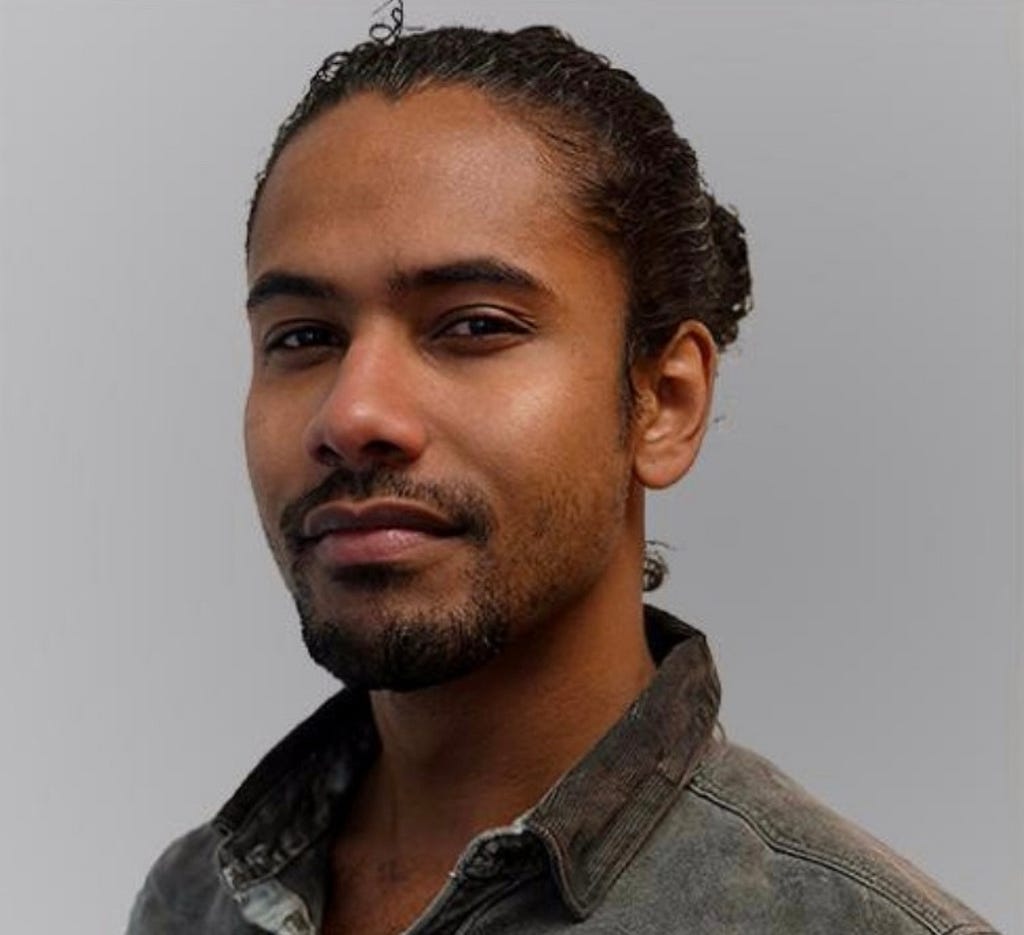
In today’s tech-driven world, artificial intelligence has become a key enabler of business success. But the question remains — how can businesses effectively harness AI to address their unique challenges while staying true to ethical principles? To explore this topic further, we are interviewing Ronnie Kwesi Coleman. Ronnie Kwesi Coleman is the CEO and Co-Founder of Puntt AI, which helps global brands automate marketing compliance with AI. A serial entrepreneur with a successful exit, he’s on a mission to advance human creativity by using AI to free us from meaningless work.
Thank you so much for joining us in this interview series. Before we dive into our discussion, our readers would love to “get to know you” a bit better. Can you share with us the backstory about what brought you to your specific career path in AI?
I’ve been building tech companies my whole life. I’m a serial entrepreneur, and most recently, I built a talent marketplace that helped marketing teams at large enterprises find top creative talent. Through that experience, especially while building Meaningful Gigs, I saw a consistent pattern: marketing teams in highly regulated industries like CPG, healthcare, and personal care were constantly slowed down by inefficient compliance processes.
That insight led me to start Puntt AI. Our goal is to make regulatory and brand compliance feel invisible. Marketing and legal teams want to move fast without sacrificing safety, and ultimately, they want to grow faster while staying efficient. We’re here to enable that.
Can you share the most interesting story that happened to you since you started working with artificial intelligence?
One of the most compelling moments was during a pilot with a leading healthcare brand. Their campaign review backlog had hit a breaking point. We ran their creative through our AI system, and within minutes, it flagged a claim that had already been approved internally, but was non-compliant with updated FDA guidance. Catching that one issue prevented a launch-day disaster. It reminded me that AI, when applied thoughtfully, can truly de-risk speed.
You are a successful leader in the AI space. Which three character traits do you think were most instrumental to your success? Can you please share a story or example for each?
Personally, two traits have guided me:
Integrity: I believe in doing what I say, even when no one’s watching.
Grit: I don’t stop until the job is done.
Those values have shaped our company culture at Puntt AI. Our team lives by three operating principles:
Customer Obsession: Solve real problems, not hypothetical ones.
Love Solving Hard Problems: If it’s easy, it’s probably not valuable.
Move with Urgency: Execution speed compounds over time.
Each of these has helped us earn trust with early customers and move quickly in a complex, regulated space.
Let’s jump to the primary focus of our interview. Can you share a specific example of how you or your organization used AI to solve a major business challenge? What was the problem, and how did AI help address it?
We partnered with a global beauty brand that was scaling product launches across regions. Their legal team was swamped, manually reviewing ads for regulatory and brand compliance. The process took weeks and introduced risk every time they missed a detail.
We built an AI-powered system trained on both their brand rules and global regulatory frameworks. The result? Asset review time dropped from 14 days to less than 48 hours. Risk went down, speed went up, and now they’re scaling campaigns without bottlenecks.
What are some of the common misconceptions you’ve encountered about using AI in business? How do you address those misconceptions?
Here are a few I see often:
“AI will replace people.” In practice, the best results come when AI augments expert teams, not replaces them.
“AI is magic.” It isn’t. It’s math. It needs the right data, supervision, and purpose.
“You need a huge AI team to get started.” Most companies can create impact by applying AI to one repetitive task with high cost or friction.
We help customers demystify AI by focusing on very practical, specific use cases with measurable outcomes.
In your opinion, what is the most significant way AI can make a positive impact on businesses today?
AI can unlock a lot of untapped value for large enterprises. I was speaking with a CPG executive recently who shared a striking estimate: a full AI transformation could increase net revenue by 6 to 10 percent and add 3 to 5 points to EBITDA margins. That translates to $160 to $270 billion in annual profit globally that CPG companies have yet to capture. That’s not theoretical, that’s an opportunity waiting to be claimed.
Based on your experience and research, can you please share “5 Ways AI Can Solve Complex Business Problems”? These can be strategies, insights, or tools that companies can use to make the most of AI in addressing their challenges.
1. Reduce Compliance Risk
Automatically flag brand claims or visual elements that violate regulatory guidelines before launch.
2. Accelerate Campaign Reviews
Speed up marketing approvals by giving legal and brand teams AI-augmented checklists and summaries.
3. Make Subjective Feedback Measurable
Train models to understand your brand’s tone, voice, and visual identity, then apply it consistently.
4. Increase Speed to Market
Shorten the feedback loops between marketing, legal, and brand teams so campaigns launch faster.
5. Free Teams for Strategic Work
Eliminate repetitive manual checks so experts can focus on what truly moves the needle, innovation and growth.
How can smaller businesses or startups, with limited budgets, begin to integrate AI into their operations effectively?
Start by identifying one painful, repetitive task, something that slows you down but doesn’t need deep creativity. Then look for an AI tool or startup focused on solving just that. You don’t need a large AI team. You need a clear problem and a focused solution.
What advice would you give to business leaders who are hesitant to adopt AI because of fear, misconceptions, or lack of understanding?
Start small, get quick wins, and build trust internally. Let your teams see the benefit before trying to scale it. Most fear comes from not knowing where to begin or worrying about job displacement. Reframe AI as a teammate, not a threat.
In your opinion, how will AI continue to shape the business world over the next 5–10 years? Are there any trends or emerging innovations you’re particularly excited about?
AI will be embedded into every workflow, the way software is today. We’ll stop talking about “AI tools” and start expecting intelligence as a default. The real shift will come from domain-specific AI models trained on specialized data. These vertical solutions will outperform general-purpose tools and reshape entire industries.
How do you think the use of AI to solve business problems influences relationships with customers, employees, and the broader community?
AI raises the bar for trust. It can help businesses respond faster and more accurately, but it can also erode confidence if it makes mistakes without accountability. That’s why we believe in “human-in-the-loop” systems, to keep AI grounded in judgment, ethics, and empathy.
You are a person of great influence. If you could start a movement that would bring the most amount of good to the most amount of people through AI, what would that be? You never know what your idea can trigger. 🙂
AI can free us from meaningless work. Imagine a world where people only worked on tasks they love, and AI handled the boring, repetitive stuff. That shift would make work more human, not less. It’s not about replacing people, it’s about helping them do their best work.
How can our readers further follow you online?
You can follow me on LinkedIn or learn more at www.puntt.ai
This was great. Thank you so much for the time you spent sharing with us.
About the Interviewer: Chad Silverstein is a seasoned entrepreneur with 25+ years of experience as a Founder and CEO. While attending Ohio State University, he launched his first company, Choice Recovery, Inc., a nationally recognized healthcare collection agency — twice ranked the #1 workplace in Ohio. In 2013, he founded [re]start, helping thousands of people find meaningful career opportunities. After selling both companies, Chad shifted his focus to his true passion — leadership. Today, he coaches founders and CEOs at Built to Lead, advises Authority Magazine’s Thought Leader Incubator.
Ronnie Kwesi Coleman Of Puntt AI On How Artificial Intelligence Can Solve Business Problems was originally published in Authority Magazine on Medium, where people are continuing the conversation by highlighting and responding to this story.