
Sonya McDonald Of Sonya McDonald Coaching On An Inside Look at the Benefits and Impact Of Working With an Executive Coach
An Interview With Chad Silverstein
Sometimes the greatest ROI is not just what you build. It is who you become while building it.
As a part of this series, we had the pleasure to interview Sonya McDonald.
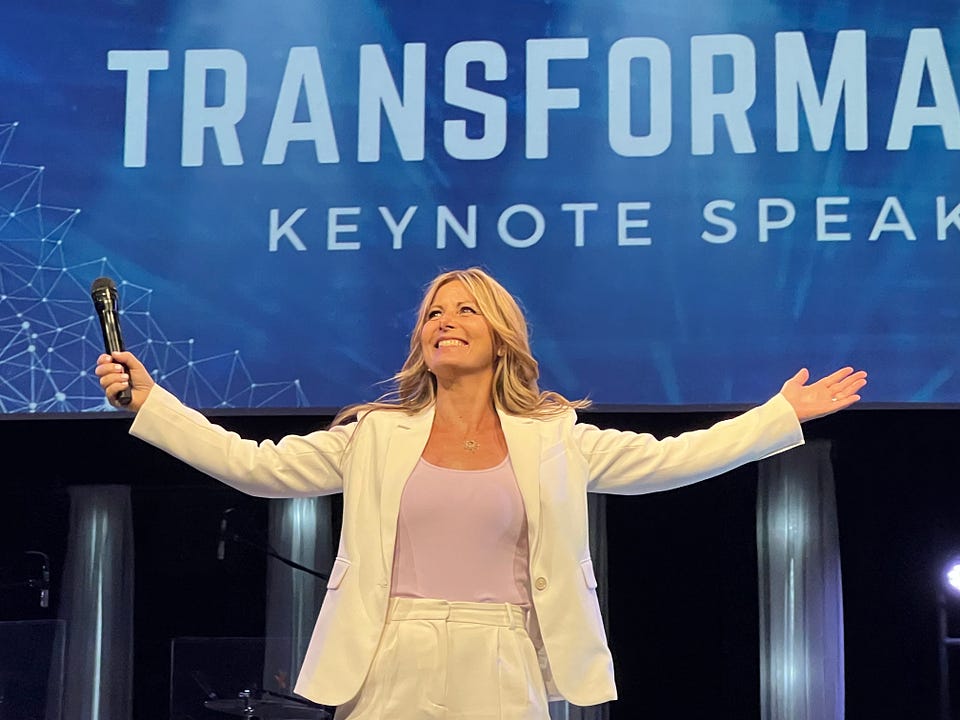
Sonya McDonald, RN, BSN, BCC, is a TEDx Speaker, High-Performance Coach for executives and high achievers, and international bestselling author of Unshakable: Unlocking Your Blueprint to Living Well Despite Limitations. Known by many as the “Emotional Defibrillator,” she helps leaders reset when stress, burnout, and overwhelm knock them out of rhythm. Through her Energy Intelligence Method™, Sonya teaches executives, entrepreneurs, and high achievers how to regulate stress, reclaim their energy, and lead with clarity, resilience, and what she calls an Unshakable mindset.
First off, can you give us a snapshot of your life before you started your career?
Before I ever stepped into my career, I was someone who naturally wanted to help people. Even early in life, I was often the person others came to when they needed encouragement, support, or someone to truly listen. I was drawn to people’s stories, their struggles, and the deeper question of what helps someone heal, grow, and keep going when life gets hard.
That desire to care for people eventually led me into nursing. Long before coaching, speaking, or writing became part of my life, I was learning about human resilience in a very real way. Nursing gave me a front-row seat to both suffering and strength. I saw people at their most vulnerable, and I also saw how powerful the human spirit can be.
At the same time, I was also someone who believed in working hard, pushing through, and being strong for everyone else. That mindset served me in some ways, but later in life I learned that strength without self-awareness can become a dangerous pattern. Looking back, my early years gave me the compassion, work ethic, and heart to serve others, but they also set the stage for the deeper lessons I would later learn about stress, burnout, boundaries, healing, and what true resilience really means.
In many ways, the work I do now was planted long before I had the language for it. I just did not yet know that my own life would eventually become part of the message.
What was it about personal and professional development that attracted you to start investing in yourself? When did you start and what was your first investment?
My real commitment to personal and professional development began during a turning point in 2020.
At that time, my body was quite literally screaming for help. Years of stress, pushing through long nursing shifts, burnout, and living with autoimmune illness had taken a serious toll on my nervous system and my health. I had spent so much of my life showing up for everyone else that I had not fully learned how to care for myself at the level my body, mind, and spirit truly needed.
Eventually, it all caught up with me, and I landed in the hospital.
That moment was a wake-up call. It forced me to face a difficult truth: I could not keep living the same way and expect a different outcome. I was surviving, but I was not truly living. I was functioning, but I was not thriving. I knew something had to change.
After I left the hospital, I made a promise to myself that I would no longer ignore what my body had been trying to tell me. I wanted to understand how to live with more peace, clarity, energy, and resilience. I wanted to understand the deeper patterns that had contributed to my burnout, my stress, and the way I had learned to override my own needs.
Shortly after that turning point, I attended a Tony Robbins event, and that experience shifted something in me. It expanded my thinking around mindset, emotional resilience, personal power, and the possibility that life could be rebuilt from the inside out. It was one of the first times I felt a bigger vision open up in front of me.
That led me to make one of the most important investments of my life: I enrolled in the Robbins-Madanes Training Institute, where I later became a board-certified transformational life coach.
At first, that investment was for me. I wanted to understand stress, fear, burnout, patterns, behavior, and the tools that actually help people create change. But as I began applying what I was learning to my own life, my healing, my mindset, and my daily habits, something powerful happened. I realized this was not only helping me rise, it was becoming a message I was meant to share.
Over time, that journey became the foundation for my Energy Intelligence Method™, my IGNITE Tool™, my book Unshakable, and the work I now do helping executives, entrepreneurs, and high achievers regulate stress, reclaim their energy, and rebuild their lives from a healthier, more powerful place.
In 2025, I shared that journey publicly through my book Unshakable, and later that same year I delivered my TEDx talk, “How to Shatter the Snow Globe and Live Unshakable.” I will also be featured on the nationwide PBS series Recipe for Wellness, airing in 2026, where I share more of this message and the habits that helped me learn how to live well despite limitations.
My mission today is to help people before they reach the point where their body forces them to stop. Too many people are living stressed, depleted, and barely holding on. I want them to know there is another way to live with greater balance, clarity, calm, and energy.
Can you share one of the biggest blind spots someone helped you see? What did you learn and how did it show up in your life?
One of the biggest blind spots someone helped me see was that I had confused pushing through with strength.
For most of my life, I believed that being strong meant enduring, carrying more, doing more, handling more, and not slowing down. As a nurse, that mindset was reinforced. In healthcare, especially in demanding environments, you learn to keep going. You show up. You push through fatigue. You put others first. You do what needs to be done.
What I did not realize was that this pattern had followed me far beyond my job. It had become part of how I lived.
A coach helped me see that constantly overriding my body, my emotions, and my need for rest was not resilience. It was a survival strategy. And survival strategies may keep you functioning for a while, but they do not lead to peace, health, or sustainable success.
That insight changed everything for me.
It showed up in my life by changing how I define high performance. I no longer believe high performance means running on empty, ignoring your limits, and wearing burnout like a badge of honor. I believe true high performance means learning how to regulate your nervous system, protect your energy, honor your body, and lead from a place of clarity instead of chaos.
That blind spot also became one of the foundations of my coaching work. Many of the executives, entrepreneurs, and high achievers I work with are incredibly capable, but they are exhausted. They have learned to perform, but they have not learned to recover. They know how to lead externally, but they have not always learned how to lead themselves internally.
Seeing that in myself first helped me teach it more powerfully to others.
How long have you had an executive coach and how would you describe your relationship?
I have worked with coaches, mentors, and transformational leaders at different stages of my life and career for several years now, and each relationship has served a different purpose depending on the season I was in.
Some coaching relationships were centered around deep personal transformation. Others were focused more on leadership, visibility, business growth, mindset, or how to navigate bigger opportunities with more confidence and clarity. What I have learned is that coaching is not one-size-fits-all. The right coach often meets you at the right stage of your growth.
I would describe my relationship with coaching as one of trust, honesty, challenge, and expansion.
A great coach does not simply validate you. A great coach helps you see what you cannot see on your own. They ask the questions you have been avoiding. They challenge the stories, patterns, and assumptions that may be holding you back. They help you close the gap between where you are and who you are capable of becoming.
For me, the strongest coaching relationships have always been the ones where I felt both supported and stretched. I want someone who sees my potential, but who also refuses to let me stay comfortable inside a smaller version of myself.
That is one of the reasons I value coaching so deeply. It creates a container for growth that is hard to create alone.
If I were sitting down with your coach and asked, “What is the one thing your client needs to work on more than anything else?” what would they say about you?
I believe they would probably say that I need to keep working on slowing down enough to fully honor and celebrate how far I have come, instead of immediately shifting into the next level, the next goal, or the next responsibility.
Like many high achievers, I naturally see potential. I see what is next. I see what else could be built, created, expanded, or improved. That drive has helped me rise, but it can also make it easy to keep moving without fully pausing to acknowledge the growth that has already happened.
For years, much of my focus was on survival, healing, and rebuilding. Then it became about purpose, impact, speaking, writing, coaching, and serving. When you are mission-driven, it is easy to keep pressing forward.
But coaching has taught me that reflection is not a luxury. It is part of leadership.
When we stop long enough to recognize our growth, we deepen our confidence. We build trust with ourselves. We strengthen gratitude. We lead from a more grounded place.
So I think a coach would say that one of my biggest growth edges is continuing to balance ambition with presence. Not shrinking the vision, but learning to breathe inside it.
If someone questioned your ROI on coaching, is there anything specific you can point to that justifies the investment? If not, how do you personally justify it?
Absolutely.
There are tangible results I can point to, and there are also intangible results that have been just as valuable.
On a tangible level, coaching has contributed to the clarity, confidence, and courage that helped me write and release my book Unshakable, refine my message, build my coaching business, deliver my TEDx talk, grow my visibility, and step into media and speaking opportunities I once would have only dreamed about.
But the ROI goes much deeper than milestones.
Coaching helped me change the way I think. It helped me see patterns I could not see alone. It helped me move through fear faster. It helped me strengthen my decision-making, trust myself more deeply, and stop shrinking back from the very things I felt called to do.
It also helped me personally in ways that matter beyond business. It helped me rebuild my life after burnout. It helped me regulate stress more intentionally. It helped me see that health, mindset, nervous system regulation, and emotional resilience are not separate from leadership. They are foundational to it.
That understanding eventually became part of my Energy Intelligence Method™, which is now central to how I help others.
So if someone questioned the return on coaching, I would say this: sometimes the greatest ROI is not just what you build. It is who you become while building it.
The right coach helps you access a level of clarity, courage, and capacity that would have taken far longer to reach on your own.
Let’s get specific. What are the top five things you have gained or learned about yourself through coaching where you made changes and saw positive results? Please share context or stories for each.
1. Greater Self-Awareness
Coaching helped me see the patterns that were running in the background of my life. I started noticing how often I pushed through stress, how much I tied worth to performance, and how easy it was for me to prioritize responsibility over restoration. Once I became aware of those patterns, I could begin changing them. That awareness alone became a turning point because you cannot transform what you are unwilling to see.
2. A Healthier Relationship With Stress And My Nervous System
Before, I thought stress was just part of life and success. Coaching helped me understand that unmanaged stress affects everything, including physical health, emotional stability, energy, clarity, and decision-making. As I began learning to regulate my nervous system through breathwork, reflection, gratitude, prayer, movement, and intentional pauses, I saw very real changes in my peace, my health, and my ability to lead. That learning later became a major part of my Energy Intelligence Method™.
3. Clarity Of Purpose
I had a story, experience, and heart for helping people, but coaching helped me refine what I was truly here to do. It helped me connect the dots between nursing, chronic illness, transformation, leadership, stress regulation, and high performance. It helped me see that my work was not just about motivation. It was about helping people live and lead differently. That clarity made my message stronger and gave direction to my book, my speaking, my TEDx talk, and my business.
4. The Courage To Fully Own My Story
For a long time, parts of my story felt too personal, too vulnerable, or too hard to share. But through coaching, I began to understand that the very experiences I once wanted to hide were the ones that would give other people hope. Sharing openly about rheumatoid arthritis, fibromyalgia, burnout, fear, and healing became one of the reasons people connect so deeply with my message now. It also gave birth to my identity as the “Emotional Defibrillator” because I now help people reset before stress takes them to a breaking point.
5. The Ability To Think Bigger
Coaching helped me expand my vision of what was possible. It pushed me beyond the life I had been trying to survive and into the life I felt called to create. It helped me see myself not only as a nurse or someone living with illness, but as an author, speaker, leader, coach, and messenger. That shift changed everything. It is why I wrote Unshakable. It is why I stepped onto a TEDx stage. It is why I continue saying yes to opportunities like PBS and national media. Coaching helped me stop living inside a smaller story.
What advice would you give entrepreneurs who do not think it is worth investing in a coach or leadership program?
I would lovingly challenge them to ask themselves whether what they are avoiding is the investment or the growth it requires.
Many entrepreneurs hesitate because they see coaching as an expense. I understand that. But I believe the deeper question is this: what is the cost of staying where you are?
What is the cost of continuing with the same blind spots, the same stress patterns, the same fear-based decisions, the same limits on your vision, the same lack of accountability, the same emotional exhaustion?
I do not believe every coach is right for every person, and I do believe discernment matters. But I also believe that growth accelerates when you are willing to invest in your development.
Even elite athletes have coaches. Not because they are weak, but because they understand that perspective improves performance.
A good coach or leadership program can help you think differently, lead more effectively, manage stress better, see your blind spots sooner, and make stronger decisions. It can help you become the person capable of carrying the vision you say you want.
To me, coaching is not about dependency. It is about expansion.
Do you have examples of how being coached has impacted others around you? How has it influenced your team or family?
Yes, absolutely. Growth is never isolated. It creates a ripple effect.
When I began doing deeper work on myself through coaching, it changed how I showed up in every relationship around me. It changed how I listened. It changed how I responded under stress. It changed how I communicated, how I set boundaries, and how I led.
In my family, it has meant becoming more intentional, more present, and more aware of the energy I bring into a room. When you are more regulated yourself, you naturally create more calm, steadiness, and emotional safety for others. That matters deeply.
In my work, it has influenced how I coach clients, how I hold space, and how I lead conversations around stress, performance, healing, and high achievement. Because I have been coached, I know firsthand the power of being seen clearly and challenged wisely. That helps me do the same for others.
I also think being coached made me more courageous in my visibility. My willingness to share my story, write my book, speak publicly, and teach what I have lived creates permission for others to stop hiding too. That kind of impact is hard to measure, but it is very real.
When one person chooses growth, it often gives others permission to do the same.
There are many executive coaches available. How did you choose the right one for you?
For me, choosing the right coach has always come down to alignment, trust, and depth.
I look for someone whose values resonate with me and whose perspective expands me. I do not want someone who simply tells me what I want to hear. I want someone who can challenge me, sharpen me, and help me see what I might otherwise miss.
I also pay attention to whether their work feels embodied. Do they live what they teach? Can I feel integrity in their presence, their message, and their leadership? That matters deeply to me.
Another important piece is whether they understand the level of growth I am seeking. I need a coach who can meet me not only in my current season, but in the next version of leadership I am stepping into.
Because my work sits at the intersection of health, mindset, stress regulation, performance, and transformation, I am especially drawn to coaches who understand that success and well-being are not separate conversations.
The right coach should not just match your goals. They should match your evolution.
Lastly, where can our audience follow your journey and learn more about working with you?
Readers can learn more about my work, speaking, and coaching at:
Thank you for sharing these insights!
About The Interviewer: Chad Silverstein is a seasoned entrepreneur with 25+ years of experience as a Founder and CEO. While attending Ohio State University, he launched his first company, Choice Recovery, Inc., a nationally recognized healthcare collection agency — twice ranked the #1 workplace in Ohio. In 2013, he founded [re]start, helping thousands of people find meaningful career opportunities. After selling both companies, Chad shifted his focus to his true passion — leadership. Today, he coaches founders and CEOs at Built to Lead, advises Authority Magazine’s Thought Leader Incubator.
Sonya McDonald Of Sonya McDonald Coaching On An Inside Look at the Benefits and Impact Of Working… was originally published in Authority Magazine on Medium, where people are continuing the conversation by highlighting and responding to this story.