
An Interview With Chad Silverstein
By the time you’re a young adult, able to earn a salary, the “value of a buck”, becomes clear when it’s your dollars. The summer before I went to college, I worked as a messenger. I still remember passing a store near Union Square, seeing blue and white leather Puma sneakers in the window , and going in and buying them and putting them on right then and there. I wore them the rest of the summer for my messenger work, and through college till they practically disintegrated. I was finally able to treat myself to Pumas !
As a part of our series about The 5 Essentials of Smart Investing, we had the pleasure of interviewing Stephen Callahan.
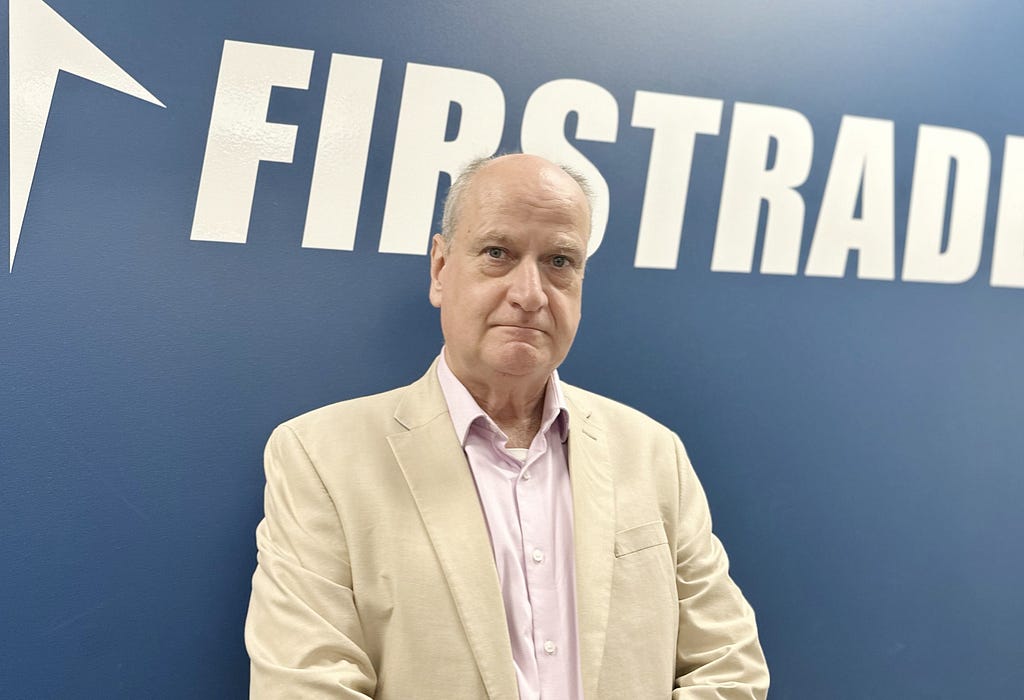
Stephen Callahan is a General Securities Principal , an Options Principal as well as a Municipal Securities Principal. He has been a Registered Rep for close to thirty years and is currently a Customer Service Specialist at Firstrade Securities , where he has worked for almost eighteen years. He has a BA degree in Communications from CUNY Queens College.
Thank you for doing this with us! Our readers would like to learn a bit more about you. Can you tell us the “backstory” about what brought you to the finance industry?
I didn’t get my brokerage license till I was 32 years old. My first job out of high school was in the financial district, working in a mail room down on Dutch street. I worked in the travel industry for a few years and my phone experience led me to try cold calling for a small firm on Wall street.
Can you share with our readers the most interesting or amusing story that occurred to you in your career so far? Can you share the lesson or take away you took out of that story?
I’ve worked for firms both big and small. While at a large investment bank, I was working as a sales assistant and my boss asked me to meet a client’s assistant and pick up about a half million dollars worth of bearer bonds and bring them back to our office. So I’m riding the subway with these bonds in my beat up little suitcase. Looking back on it, it took nerve of them to ask me to do this, but I didn’t give it much thought at the time. Perhaps in retrospect, the lesson is/was, “ do what is required” , and I did.
Are you working on any exciting new projects now? How do you think that will help people?
We recently rolled out overnight trading. This is more than simply expanding upon our already available extended hours trading. We’ve partnered with Blue Ocean, a firm that’s experienced offering this type of service. Together , we’re allowing the little guy, the retail investor , to act on political and financial developments real time. Firstrade was already providing market news and research to our clients. We are constantly offering webinars , in a variety of different information to our clients, all free. The more resources we can provide to help educate our clients, the better able they are to make informed and timely trading decisions based on their own situation.
Ok. Thanks for all that. Let’s now jump to the main core of our interview. According to this report in Fortune, nearly two-thirds of Americans can’t pass a basic test of financial literacy. In your opinion or experience what is the cause of these unfortunate numbers?
I’ve read the report in Fortune, with the statistics provided by Finra to back up their premise- Many Americans are financially illiterate. I found it concerning, but not shocking. I think a lot of people are too busy working, focusing on their families, or just living their lives to spend too much time on financial matters. Or, maybe anything related to economics is for “other people”, not their concern. Many middle, or working class folks may not see how basic financial information, being money savvy , directly impacts them. It’s abstract to them.
If you had the power to make a change, what 3 things would you recommend to improve these numbers?
My recommendations to improve American’s financial “batting average” is to start early. Begin at home and in grade school. Be simple at first, then gradually demonstrate how numbers can relate to dollars. Secondly, keep the learning process going. For example, Finra, the agency that provided the information to the Fortune piece are not just regulators, providers of free information on their sight. The are just one source of free seminars, webinars etc. For people who are old school, there’s always print and TV. Finally, after processing the basics, apply this knowledge to your own situation. It’s never been easier to open a retirement account, or some other plan to put your work for you, Tax preparers, local banks or insurance brokers are there to help get started. And if the consumer is more active or aggressive , open account online with a firm like Firstrade Securities.
Ok, thank you! Now to the main question of our interview: You are a “finance insider”. If you had to advise your adult child about 5 non intuitive essentials for smart investing, what would you say? Can you please give a story or an example for each?
Based upon my observations 5 non intuitive essentials to smart investing, as far as advice to an adult child might include the following, ( there might be some overlap with what I previously discussed).
1 . By the time you’re a young adult, able to earn a salary, the “value of a buck”, becomes clear when it’s your dollars. The summer before I went to college, I worked as a messenger. I still remember passing a store near Union Square, seeing blue and white leather Puma sneakers in the window , and going in and buying them and putting them on right then and there. I wore them the rest of the summer for my messenger work, and through college till they practically disintegrated. I was finally able to treat myself to Pumas !
2 . Warren Buffet is a proponent of investing in what you know. That works for me. If a new income earner isn’t particularly interest in finance, then how about companies that make, or are involved with what you like ? Music, media, car or motorcycles. Try to make doing the research relevant and fun.
3 . When your able to land a job that offers investing, a retirement plan, 401K etc. , contribute asap. First paycheck if possible. It’s natural for young people to not think about the future, and keep every possible dollar, but that little bit of discipline will pay dividends. Once the deductions from your check become routine, it may get to a point where you don’t mis it, or even think about it.
4 . As your nest egg grows, think further growth beyond what your job offers. The dollar cost averaging approach can now be used for stocks and ETFs as well as mutual funds. Depending upon your interests , your strategy can evolve into more exotic sectors, precious metals, real estate etc. Of course keep risk and liquidity in mind.
5 . Ultimately, the young adult investor will age and priorities and goals change. Utilize the same approach to knowledge, education and curiosity but for a family of your own. Sometimes life is circular.
What are your thoughts about investing in cryptocurrency? Can you explain what you mean?
Although Firstrade doesn’t currently offer cryptocurrency trading, anyone following financial markets needs to pay attention. Crypto is here to stay and will be part of our future. I know we currently have a federal government that is crypto friendly, but I also feel that the rules and regulations need to be made clearer for the benefit of all. The best way for investors to participate, and be comfortable is all parties to be on the same page. Do currency rules apply ? Securities rules ? It’s best to remove some of the mystery.
What are your thoughts about daytrading, using apps like Robinhood? Can you explain what you mean?
Firstrade Securities is proud to be one of the firms that offer day trading. We’re constantly fine tuning our website and app. I strongly recommend that aspiring day traders familiarize themselves with day trading rules. What codes a client as a day trader, how day trading buying power and day trading calls works, can be a bit tricky. We also keep an eye out for what our competition, such as Robinhood are doing. The retail investor wants the latest and best apps. Go with the flow, or get left behind.
None of us are able to achieve success without some help along the way. Is there a particular person who you are grateful towards who helped get you to where you are? Can you share a story about that?
Throughout my career, I’ve always tried to take something positive away from all my experiences, good or bad. I’ve had many bosses, some better than others, but my current one , Mr John Liu, Firstrade’s CEO certainly stands out. I remember, my third and final interview before being hired , was with John. He had my resume in front to him, and he could see that I was experienced. He wanted to know if I was ready for the “battlefield”. I think his only concern was if I had the “belly” to be part of Firstrade. I assume, I passed, this was almost eighteen years ago.
Can you please give us your favorite “Life Lesson Quote”? Can you share how that was relevant to you in your life?
You are a person of great influence. If you could inspire a movement that would bring the most amount of good to the greatest amount of people, what would that be? You never know what your idea can trigger. 🙂
If you’ll indulge me, I’d like to offer 2 Life Lesson Quotes. First, “ Success is the sum of small efforts-repeated day in and day out” — Robert Collier
“It’s not enough that we do our best: sometimes we have to do what’s required.” Winston Churchill
Thank you for the interview. We wish you continued success!
About the Interviewer: Chad Silverstein is a seasoned entrepreneur with 25+ years of experience as a Founder and CEO. While attending Ohio State University, he launched his first company, Choice Recovery, Inc., a nationally recognized healthcare collection agency — twice ranked the #1 workplace in Ohio. In 2013, he founded [re]start, helping thousands of people find meaningful career opportunities. After selling both companies, Chad shifted his focus to his true passion — leadership. Today, he coaches founders and CEOs at Built to Lead, advises Authority Magazine’s Thought Leader Incubator.
Stephen Callahan of Firstrade On The 5 Essentials for Smart Investing was originally published in Authority Magazine on Medium, where people are continuing the conversation by highlighting and responding to this story.