
Steve Allison Of Fire-Dex: Lessons I Learned From Last Year To Take Our Organization to the Next Level in 2025
Many people are surprised to learn that the number one cause of death for firefighters on the job is cardiac strain. All of that gear creates a significant load. Even worse, much of that equipment traps heat inside, overheating the firefighter — at best, this makes them uncomfortable; at worst, it can lead to all sorts of health problems and even death. That’s a problem the industry keeps running into — but every problem is an opportunity. That’s why we were so excited to recently launch our AeroFlexTM line of gear. The gear provides unprecedented breathability to keep the firefighter much cooler while still providing the high level of safety that their work requires.
I had the pleasure of interviewing Steve Allison. Steve Allison is the CEO of Fire-Dex, the fastest-growing manufacturer of personal protective equipment (PPE) for first responders, and Gear Wash, the world’s largest independent service provider (ISP) of PPE care and maintenance. Steve brings over 25 years of fire service in PPE manufacturing and sales experience. Steve holds a Bachelor of Arts in Business Administration from Wittenberg University and previously served as the company’s president (3 years), VP of sales & marketing (2 years) and director of sales (2 years).
Thank you so much for doing this with us! Can you share a little about your background and what pivotal moments led you to your current position as an executive?
I’ve had the pleasure of working in the personal protective equipment (PPE) business for 35 years, with the majority of those working specifically with first responder PPE. I joined Fire-Dex in 2014, becoming president in 2018 and then CEO in 2021.
I’m a very curious person by nature, which has really given me the opportunity to learn all aspects of a business. I started out in sales, but have worked in marketing, operations, supply chain and R&D throughout my career. This commitment to always learning and growing has really helped me see the big picture. I’ve learned how to balance all of those priorities in a business, to assemble and manage a high-performance team, and set a strategy and vision for an organization.
What were the early challenges you faced in your career, and how did they shape your approach to leadership?
As a young manager, I struggled with patience, wanting to see results or changes now instead of waiting to see how things developed. This, I learned, really affects not only you as an individual, but also your whole team. To use a sports metaphor, no coach ever reevaluates a game plan three minutes into a basketball game — you wait until later to make adjustments after you’ve seen more of how the current one plays out.
What I found was, the more impatient I was, the more we ended up repeating the same things over and over after abandoning one path and then starting along it again a couple of months later. This wasted time and energy and really stressed out my teams. I learned that, for high-performing teams, the key is to create a clear vision of your desired results and to anticipate any problems with that vision. No one wants to play “whack-a-mole” for an erratic leader. All of this instilled in me the discipline to not review right away, but to stay the course until defined stages are met before you review.
We often learn the most from our mistakes. Can you share one that you made that turned out to be one of the most valuable lessons you’ve learned?
Many years ago, I sold a large, multimillion-dollar contract to a large oil and gas corporation. The logistics for this contract were very complicated, and I didn’t fully realize the client’s sense of urgency around the contract. I neglected to ask some of the hard questions about their needs and expectations during the process and as a result, I nearly lost the contract and ended up giving a price reduction because the work was behind their very urgent expectations.
Through this experience, I learned the importance of asking uncomfortable or difficult questions. I know how to ask the clarifying questions and at the end of the process to ask, “Am I going to get your next order? Is there anything I need to do to make this better?” That all feeds into my constant desire to learn and grow, always looking to be better the next time.
As an executive, how do you define success, both personally and for your organization?
I think most great leaders will tell you that, if the organization is successful, then I’m successful. I really live by that. My goal for the organization is always to create a clear vision and strategy to work toward. This also involves demonstrating positive behavior and then giving my high-performing team the resources they need to meet those goals.
At Fire-Dex, it’s been about creating a strategy of growth and brand recognition, which we do by constantly improving our products and expanding our operations. I’m also very passionate about creating associate opportunities for growth, giving them personal recognition for their successes. I’ve found that, in most cases, our financial results will be favorable if we’re able to drive that vision and strategy with positive behavior and good organization.
Reflecting on 2023, what was the most unexpected challenge you faced, and how did you navigate it?
Our biggest challenge in 2024 was a very good one to have: Over the last few years we’ve experienced incredible growth and success, celebrating record revenues and overall superb financial results. The challenge has been finding that balance between celebrating that success and still staying aggressive for the future. Here at Fire-Dex, we have very high expectations of ourselves — where some other organizations would love to even have half the success we’ve had over the past few years, we want to keep pushing beyond that.
Each year sets a baseline for the subsequent year, so maintaining focus on achieving higher and higher results is difficult. I never want to characterize winning as losing, so I want to celebrate and recognize the tremendous results — but keep the challenge to do more once we open the next door.
What was a significant risk you took this year, and how did it turn out?
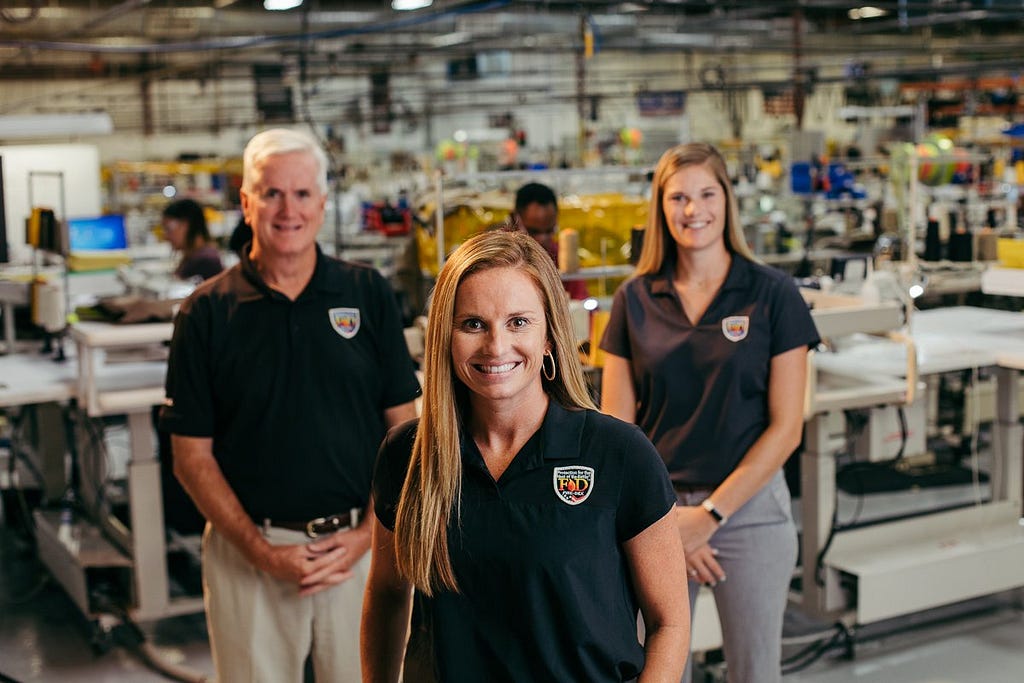
We recently opened a new factory in Old Fort, North Carolina, to increase our production capacity. It was a former sewing factory that unfortunately had to close down. The employees were hit with sudden layoffs, but we saw an opportunity to rehire them and start up our production very quickly. We had to act fast (basically over a weekend) to sign a lease, track down the former employees and rehire them, and get the new management team in place. Almost a year later, the team is developing into a fantastic cut-and-sew operation, and I’m very proud of them all.
How has your company’s mission or purpose affected its overall success? Can you explain the methods or metrics you use to evaluate the impact of this purpose-driven strategy on your organization?
The mission of Fire-Dex is “To Serve Those Who Serve.” This is, by design, a very straightforward mission. If you stop any of our associates and ask them, “What is the mission of Fire-Dex?” they would be able to repeat this to you verbatim. Because it’s so simple and well-understood, everyone is on the same page and has clarity and buy-in from everyone on the team. We know where we’re going in terms of product innovation, quality and service levels.
We measure this in a couple of ways. Because we’re always looking to innovate, we want to see what percentage of our revenues are from new products and set goals around that. On the service and quality side, we’re constantly monitoring our RTFT (Right The First Time) numbers and tracking orders that miss their promise date (time frame when an order is to be received). Those issues are critical from a client perspective, but when we consider our mission to serve, they become critical to us too.
Have you ever faced a situation where your commitment to your purpose and creating a positive social impact clashed with the profitability in your business? Have you ever been challenged by anyone on your team or have to make a tough decision that had a significant impact on finances? If so, how did you address and reconcile this conflict?
Part of the blessing of being a privately held company is that we can almost always prioritize the long term over the short term. Companies that can only think in the short term have more struggles with doing the right thing in the moment. But for us, we can say that if something is the right thing to do for customers, community or associates, it always has a long-term benefit that will outstrip any short-term consequences.
In our decision-making processes for new products, our first question is always, “Does this negatively impact safety?” and if the answer is yes, then it’s an absolute no. It all ties back to our mission to serve those who serve, and we always take that very seriously.
Could you list the top five things you’ve learned in 2023, with specific examples of how these lessons impacted your decisions or strategies? If you can, please share a story or example for each.
1. In many ways, 2023 was the first real “post-pandemic” year. A lot of organizations took that opportunity to go back to the office, but we took the opportunity to commit to being a “virtual-first” operation. As of December 31, we had 52 remote or hybrid operations employees, with an additional 20 who came into the office every day. This approach has allowed us to grow and be much more agile but also comes with challenges. The greatest challenge is keeping our culture intact and staying connected across a virtual space. We try to have a good cadence of all-hands meetings, like our annual in-person sales meeting or virtual town halls. It can be difficult, but we really believe this approach is going to help us continue to grow and achieve great things.
2. As everyone in the business world knows, higher interest rates have presented a whole series of challenges. We’ve had to make decisions about what investments we want to make now or put off until later, always with an eye to growing and meeting customer expectations.
3. We’ve had extremely rapid growth over the past few years — more than doubling the number of associates we have since 2020. We realized that we needed to bring in a senior HR executive to help facilitate our growing and ever-more-complex footprint. We hired a new Vice President of Human Resources in December, and we’re thrilled with how that’s already shaping our processes for the better.
4. We had intended to make more acquisitions in 2023, especially with the Gear Wash side of business, but negotiations this time have been tricky. However, we’re excited for 2024 and 2025 and plan to make some big moves in the year to come.
5. Many people are surprised to learn that the number one cause of death for firefighters on the job is cardiac strain. All of that gear creates a significant load. Even worse, much of that equipment traps heat inside, overheating the firefighter — at best, this makes them uncomfortable; at worst, it can lead to all sorts of health problems and even death. That’s a problem the industry keeps running into — but every problem is an opportunity. That’s why we were so excited to recently launch our AeroFlexTM line of gear. The gear provides unprecedented breathability to keep the firefighter much cooler while still providing the high level of safety that their work requires.
How have these top five lessons from 2023 changed your outlook or approach for 2024?
As you can see, most of our challenges in 2023 were building capacity for handling tremendous growth. We believe we’ve solved many of those challenges or made great progress in solving them. I’m confident that the work we did last year is going to result in an even better 2024, and I can’t wait to see what the successes this year will bring for us and for our customers.
In terms of innovation and adaptation, what’s one change you implemented in 2023 or plan to do in 2024 that you believe will be crucial for the future of your business?
2023 was all about innovating across all parts of an organization. Innovation isn’t just about products — though we also made great strides in that area — but must also involve operations, HR, finance, marketing. Encouraging a full-stream innovation across the organization is key and will continue to fuel our growth going forward.
I also want to create a culture where we are quick to implement, quick to fail and then quick to revise into a better version in 2.0. Any company that just keeps dusting off its old playbook and doesn’t take risks isn’t going to grow.
As a leader, how do you foster a culture of continuous learning and improvement within your team or organization?
Thomas Edison famously failed almost 3,000 times before he invented the lightbulb. I try to emulate that in my leadership style. The most important thing to me is to create an environment in my organization where associates are able to try new products, designs, concepts, ideas without fear. To build a culture of continuous improvement and learning must start with an environment that rewards a hunger to be curious and try new stuff.
The best way to get a repeat customer is not to show them the same thing they’ve seen a thousand times. But if I can show them 10 new products, they’re going be excited about us and our mission. AeroFlex is a great example of this. No one else is doing this, and it’s a great testament to that spirit of innovation. It’s meeting a need our customers have and is creating a lot of buzz in the industry.
Looking at the broader industry landscape, what emerging trends do you think will be most influential in the coming year?
We’re always monitoring our customers’ needs, and a trend now is for a new class of materials called non-fluorinated barriers. We are proud to say that we offer the first option on the market, and we think this is going to be a key choice for fire departments in the future.
If you and I were having a conversation one year from now, and we were looking back at the past 12 months, what specifically has to happen for you to be happy with your progress?
We’ve already launched our groundbreaking AeroFlex line and an industry-first non-fluorinated moisture barrier option, as well as the FDXL90 boot this year. We’re also making updates to some of our ordering software that is going to improve how our customers interact with us.
I also look forward to seeing how our investments in HR operations will improve our hiring and onboarding processes — we’re 4 months into the year and already seeing great results.
Finally, I’m very excited about our Technology Committee. This is a group I’ve tasked with coming up with ideas and tools that we could use to be more efficient across all lines of business. We always want to evaluate how we can leverage new technologies to make better products and come up with better ideas. This group is off to a great start, and I think 12 months from now we’ll really see a lot of exciting things come from the effort.
How can our readers further follow your work or your company online?
You can follow me on my LinkedIn page, and you can follow Fire-Dex on Facebook, Instagram, YouTube, and LinkedIn.
Thank you so much for sharing these important insights. We wish you continued success and good health!
About the Interviewer: Chad Silverstein, is a seasoned entrepreneur with over two decades of experience as the founder and CEO of multiple companies. He launched Choice Recovery, Inc., a healthcare collection agency, while going to The Ohio State University. His team earned national recognition, twice being ranked as the #1 business to work for in Central Ohio. In 2018, Chad launched [re]start, a career development platform connecting thousands of individuals in collections with meaningful employment opportunities. He sold Choice Recovery on his 25th anniversary, and in 2023, sold the majority interest in [re]start so he can focus his transition to Built to Lead as an Executive Leadership Coach. Learn more at www.chadsilverstein.com
Steve Allison Of Fire-Dex: Lessons I Learned From Last Year To Take Our Organization to the Next… was originally published in Authority Magazine on Medium, where people are continuing the conversation by highlighting and responding to this story.