
The real power comes from listening inward, honoring what you know to be true, and giving yourself permission to build something that doesn’t look like anyone else’s.
In the world of business and within every industry, there are forward-thinking leaders who go against the status quo and find success. Their courage to take risks, embrace innovation, and inspire collaboration separates them from the competition. Until 2002, Apple’s famous slogan was “Think Different”. This attitude likely helped them become one of the most successful organizations in history. This interview series aims to showcase visionary leaders and their “status quo-breaking” approach to doing business.
As part of this series, I had the pleasure of interviewing Risa August.
Risa August is an award-winning author, screenwriter, TEDx speaker, Gestalt practitioner, and patient advocate who turned a brain tumor diagnosis, a cross-country bike journey, and the unraveling of a former life into a story of radical reinvention. Her memoir The Road Unpaved inspires audiences worldwide to embrace authenticity and face life’s pivots with courage. Through her speaking and creative work, Risa empowers others to transform adversity into purpose, reminding us all that healing and thriving are always possible.
Thank you so much for doing this with us! Our readers would love to get to know you a bit better. Can you tell us your “Origin Story”? Can you tell us the story of how you grew up?
Thank you for the opportunity to share a bit about my evolution and what I’ve learned along the way. I grew up in a dysfunctional household, where staying safe meant staying small. I followed all the rules. My young brain believed that if I stayed obedient, quiet, and in the background, I might be able to keep the peace, make things better, and create some sense of harmony. But underneath that rule-follower lived someone else entirely. A girl who adored the Indiana Jones movies, played in the dirt, and secretly carried an adventurous spirit, a love of the unknown, a hunger for freedom, and a surprising amount of grit. As a child, I wanted more than survival, I wanted to live a big life, one beyond my wildest dreams. The need to always appear composed and feel in control followed me into adulthood. I played the roles I was supposed to play. I stayed obedient in my career, my relationships, and the version of life I thought I was meant to live. On the outside, I was doing everything “right.” On the inside, something in me was quietly suffocating. Everything changed when I was diagnosed with a brain tumor and a destructive disease. But what initially felt like a devastating interruption became an unexpected opportunity. I was forced to confront my mortality, and in doing so, I finally gave myself permission to ask a question I had never really asked before: Who am I, if I stop living by everyone else’s rules and expectations? That diagnosis became a major life pivot. It was the moment I stopped trying to fit into roles that no longer belonged to me and started breaking free, physically, emotionally, and creatively. What looked like a breakdown from the outside became the beginning of my truest life and the truest version of myself.
Can you give us a glimpse into your journey into this industry and share a story about one of the most significant challenges you faced when you first started out? How did you end up resolving that challenge?
It took me more than seven years to receive a diagnosis. During that time, my symptoms were repeatedly dismissed by doctors who told me nothing was wrong. I knew in my body that something was wrong, yet I was made to doubt myself again and again. After my diagnosis and treatment, I discovered that my experience was not unique. Patients all over the world, especially women, were being dismissed, overlooked, and medically gaslit. That realization changed everything for me. What I had endured wasn’t just personal; it was systemic. And it had to stop. For the first time in my life, I felt a profound sense of purpose. I didn’t want to simply survive, I wanted to live differently and be a better human. I wanted to turn my pain into impact and use my voice to challenge a system that was failing so many people. After years of living small, following the rules, and doing what I was told I should do, I finally stopped playing by those rules. I found my voice, for what felt like the first time, and that was the moment I broke free. That’s when I became Risa Unleashed.
Who has been the most significant influence in your business journey, and what is the most significant lesson or insight you have learned from them?
There isn’t one single person who has influenced my business journey. Much of my business instinct is inherent, it comes naturally to me. I’ve learned to trust my gut, my intuition. What has shaped me is exposure to many voices, experiences, and perspectives. I gather what resonates, discard what doesn’t, and intentionally integrate the pieces that I feel aligned with. Then, I morph them into something entirely my own, my version. I am a product of a lifetime of lived experience: my health journey, heartbreak, resilience, reinvention, and growth. The most significant lesson I’ve learned is that there is no single blueprint for success. The real power comes from listening inward, honoring what you know to be true, and giving yourself permission to build something that doesn’t look like anyone else’s.
Can you share a story about something specific that happened early on that you would consider a failure but ended up being a blessing in disguise or ended up being one of the most valuable lessons you had to learn on your own?
My truth is that I don’t experience failures. And I don’t recall labeling any specific moment(s) in my life that way. To me, these experiences are vital, and I’m genuinely grateful for all of them because each one shaped who I am today. What could be called a “failure” by traditional standards has always felt more like information to me. Each experience expanded my perspective and taught me how to stay open to possibility, to uncertainty, and to the unknown. That openness became one of my greatest strengths. Overall, if I had to name one lesson, it would be this: never compromise myself. More importantly, the real blessing wasn’t a single event, it was learning early on to release the idea of failure altogether. That mindset has allowed me to move forward without fear, trust my intuition, and build a life and business rooted in curiosity, growth, and self-trust rather than perfection or approval.
Leading anything is hard, especially when grappling with a difficult situation where it seems that no matter what you decide, it will have a negative impact on those around you. Can you share a story about a situation you faced that required making a “hard call” or a tough decision between two paths?
One of the hardest leadership lessons I’ve had to learn is releasing responsibility for disappointing others when I’m acting in integrity. I can’t lead, or live, while constantly worrying about how my choices will be received. My intentions are always grounded in care, honesty, and the highest good. But leadership sometimes requires making decisions that are uncomfortable, and necessary. Early on, that showed up in my coaching work. I’ve had to make the hard call to let clients go when I knew the relationship wasn’t the right fit. It’s never easy, but I’ve learned to trust that forcing alignment helps no one. When I choose clarity over people-pleasing, it creates space for everyone involved to find what truly supports them. The decision to lead from integrity rather than approval continues to guide every hard choice I make.
Let’s shift our focus to the core of this interview about ‘Successful Rule Breakers’. Why did you decide to “break the rules”? Early on, did you identify a particular problem or issue in how businesses in your industry generally operated? What specifically compelled you to address this and want to do things differently? Please share how you went about implementing those changes and the impact they had.
When it comes to business and advocacy, I’m clear about which role I’m in. I lead with intention, not emotion, and I don’t dilute my message to make it more comfortable for others. Early on, I saw a major issue in the work I was doing: the deeply imbalanced doctor–patient dynamic. Too often, patients are expected to be passive, compliant, and quiet, even when their lived experience tells them otherwise. I knew that model was broken, because I had lived the consequences of it. Breaking the rules meant speaking up and challenging long-standing norms. I began advocating for co-active, collaborative doctor–patient relationships where patients are informed, empowered, and respected as partners in their care. That required finding my voice, standing my ground, and being willing to disrupt systems that benefit from silence. I’m not concerned with pleasing everyone. I’m concerned with impact. And while not everyone agrees with how I do it, what matters most is this: the conversation has changed, people are paying attention, and voices that were once ignored are finally being heard.
In the ever-changing business landscape, how exactly do you decide when to adhere to industry norms versus “breaking the rules” and forging your own way? Can you share an example?
When something feels like a constant grind with little return, energetically or tangibly, I pause and reassess. I check in with my goals, my values, and my passions, and ask a simple question: Is this still in alignment? I don’t make decisions based on industry norms or external pressures. Consistency for the sake of consistency doesn’t interest me. What matters is how I feel about the work I’m putting into the world and the impact it’s creating. If something feels expansive, energizing, and purposeful, it’s a yes. If it feels forced or heavy, I’m willing to walk away. A clear example of this is how I approach marketing and sales. I don’t believe in convincing or chasing people. I trust resonance. Either someone is drawn to my work, or they’re not, and that’s okay. Just like any relationship, whether friendship, romantic, or professional, alignment can’t be forced or contrived. Breaking the rules, for me, means honoring intuition over obligation. And that choice has allowed me to build a business rooted in authenticity, ease, and mutual desire rather than pressure or persuasion.
What guidance or insight can you offer to new entrepreneurs trying to follow existing and accepted industry norms while at the same time trying to differentiate themselves in the marketplace?
It truly depends on the industry, but in general, my guidance is simple: do it your way. Be you. You’re allowed to gather pieces and ideas from others, but don’t copy and paste someone else’s formula and expect it to work. Take what resonates, leave the rest, and intentionally shape it into something that reflects who you are, how you think, and what you value. Differentiation doesn’t come from trying harder to stand out, it comes from being honest. The more you trust your instincts and lead from authenticity rather than approval, the clearer your voice becomes in the marketplace and more of the right people will be drawn to you. The moment you stop trying to fit into someone else’s version of success is the moment your own path begins. How exciting is that?!
Here is the main question of our interview. To make an impact, you have to champion change, get creative, and take risks. Please think back about the decisions you’ve made that have helped your business get to where it is today, and share your top 5 strategies or decisions that helped you succeed by doing things differently. If you can, please share a story or example for each.
To create real impact, I had to stop trying to fit inside existing boxes and start designing my own. These are the five decisions and strategies that most shaped my business, and my life:
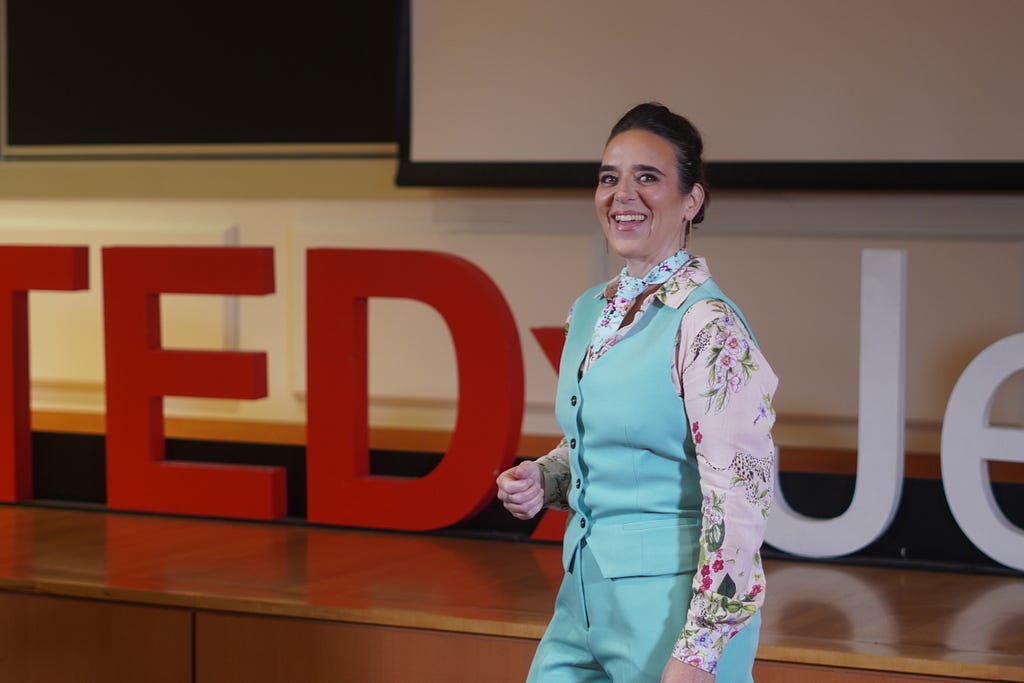
1. I defined who I wanted to be, not who I was expected to be.
Before I built a business, I spent time getting radically honest about how I wanted to show up in the world. That meant experimenting, both personally and professionally. I played with new styles, explored different coaching modalities, and allowed myself to blend what resonated into something entirely my own. I didn’t rush to brand myself; I let myself become myself first.
2. I refuse to quit… ever.
If something doesn’t work, I don’t see it as a roadblock; I see it as a detour. If I can’t do it one way, I find another way, another my way. That mindset has carried me through health challenges, business pivots, and moments where walking away would have been easier. Persistence doesn’t always look loud; sometimes it looks like quiet determination to keep going, even if it’s a different route entirely.
3. I stopped doing what I “should” do and started doing what felt good.
At some point I realized: Wait… I get a say in this! I began choosing strategies, projects, and partnerships based on alignment rather than obligation. When something feels good, the energy, creativity, and results follow. That shift alone changed how sustainable and enjoyable my business has become and continues to be through its evolution.
4. I found my voice and learned how to use it intentionally.
Finding my voice wasn’t enough; I had to learn how to nurture it and wield it productively. I stopped shrinking, healed my need for approval, and began speaking with clarity and conviction. That voice became central to my leadership, my advocacy, and the way I guide others to trust their own.
5. I always set goals, whether they make sense to others or not.
I stopped asking for permission to want what I want. The goals I set don’t have to be logical, linear, or palatable to anyone else. It’s my life, my business, my rules. That freedom has allowed me to build something deeply aligned, impactful, and sustainable because it’s rooted in truth, not expectation.
As a leader, how do you rally others to align with your vision? Also, how do you identify those who may not be fully committed or even silently sabotaging or undermining your efforts? What steps do you take to address these situations?
My favorite quote by Lao Tzu says it beautifully:
“The best leaders are those the people hardly know exist.
When their work is done, their task fulfilled,
the people will say, ‘We did it ourselves.’”
However, when people feel disenchanted in any scenario, it’s rarely just about what’s happening on the surface, there’s almost always something deeper going on that often has nothing to do with the situation at hand. It’s important to stay curious by asking questions, stay open and receptive, and make it a priority. Also, I pay close attention to body language, what’s being said, and what’s not being said. When I sense misalignment, resistance, or subtle undermining, I don’t ignore it. I address it directly, respectfully, and clearly. If open conversation doesn’t resolve the issue, it’s time to part ways. I don’t have space for silent sabotage or prolonging misalignment. Leadership, to me, is about forward motion, clean communication, and surrounding myself with people who are truly aligned and on a similar path.
Imagine we’re sitting down together two years from now, looking back at your company’s last 24 months. What specific accomplishments would have to happen for you to be happy with your progress?
Because I’m in the business of inspiring people to live fully, as well as saving lives, two years from now I would be thrilled to look back knowing my film is produced and nearing release. I will be speaking on a much wider range of stages that are not limited to medical conferences but reaching broader audiences who are hungry for stories of resilience, reinvention, and what’s possible after life-altering moments. That kind of reach would tell me the work is landing where it’s meant to, and that the impact is expanding far beyond where it began.
You are a person of enormous influence. If you could inspire a movement that would bring the most amount of good to the most amount of people, what would that be? You never know what your idea can trigger. 🙂
My goal is to inspire a movement centered on radical self-trust and empowered advocacy, especially around health, identity, and personal agency. I want people to trust what they know in their soul’s core, to stop outsourcing their intuition to systems that don’t always listen, and to understand that asking questions, speaking up, and taking up space is not disruptive, it can be lifesaving in many facets. This movement will normalize curiosity over compliance, collaboration over hierarchy, and self-awareness over silence. It will encourage people to stop shrinking to fit expectations and start participating fully in their own lives, decisions, and healing. If enough people trusted themselves, honored their lived experiences, and refused to be dismissed, whether in a doctor’s office, a boardroom, or a relationship, the ripple effect would be profound. Lives would be changed. And in some cases, lives would be saved.
How can our readers continue to follow you or your company online?
https://www.instagram.com/risaunleashed/
www.linkedin.com/in/risa-august-9b130524a
Thank you so much for sharing all of these insights. We wish you continued success and good health!
Thank you again for this opportunity to reflect and share!
About the Interviewer: Chad Silverstein is a seasoned entrepreneur with 25+ years of experience as a Founder and CEO. While attending Ohio State University, he launched his first company, Choice Recovery, Inc., a nationally recognized healthcare collection agency — twice ranked the #1 workplace in Ohio. In 2013, he founded [re]start, helping thousands of people find meaningful career opportunities. After selling both companies, Chad shifted his focus to his true passion — leadership. Today, he coaches founders and CEOs at Built to Lead, advises Authority Magazine’s Thought Leader Incubator.
Successful Rule Breakers: Risa August On How To Succeed By Doing Things Differently was originally published in Authority Magazine on Medium, where people are continuing the conversation by highlighting and responding to this story.