
An Interview With Chad Silverstein
Purpose gives direction. Profit gives oxygen. Personal brand gives trust.
The most successful modern CEOs are rewriting the rules of leadership. They’re not only building profitable companies but building purposeful brands with personal voices behind them. These leaders understand that in today’s world, people invest in people. Their stories, values, and visibility fuel loyalty, attract opportunities, and drive business growth far beyond traditional metrics. In this interview series, we’re sitting down with leaders who’ve learned to balance purpose, profit, and personal brand — and who are using their influence to shape the future of business leadership.
As part of this series, I had the pleasure of interviewing Phil DePaul.
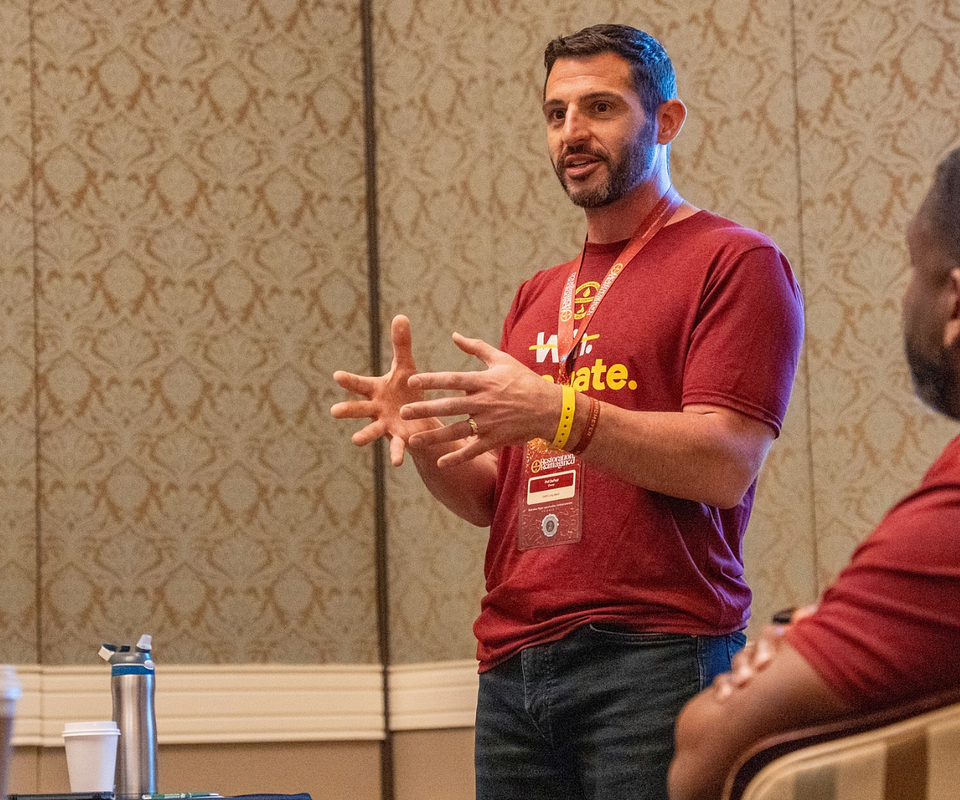
Phil DePaul is an entrepreneur, operator, and leadership builder who owns and operates multiple home service businesses on Long Island. Known for his inside-out approach to leadership, Phil focuses on building durable companies by developing people, culture, and accountability before scale. His work centers on helping leaders balance purpose, profit, and responsibility in the real world — not just in theory.
Thank you so much for joining us in this series. Before we begin, our readers would love to get to know you a bit better. Can you share your backstory and what led you to become the leader you are today?
I didn’t grow into leadership through a clean, linear path. I grew into it through pressure, mistakes, and responsibility, arriving faster than I was ready for.
I started in business with a solid work ethic and ambition, but very little understanding of what it actually meant to lead people. Early on, I confused hustle with leadership and assumed that wanting something badly enough would make it work. It didn’t. What forced my growth wasn’t success — it was the cost of inconsistency, half-measures, and avoiding hard decisions.
Over time, running real businesses with real people depending on me changed how I show up. Leadership stopped being about being impressive and became about being dependable. Today, I see leadership as the willingness to endure pressure, create clarity, and raise standards — first in yourself, then in the organization.
What’s the “why” that drives your work? How has your personal sense of purpose evolved as your business has grown?
My “why” used to be achievement-based: build something meaningful, prove I could do it, create freedom. That motivation got me moving, but it wasn’t strong enough to sustain me as the stakes rose.
As the business grew and people’s livelihoods became tied to my decisions, my purpose matured. Today, my why is about responsibility — building spaces where people can grow into better versions of themselves through meaningful work. I believe most people want to rise, but they need structure, standards, and belief around them to do it.
Purpose, for me, isn’t abstract. It shows up in how decisions are made, how people are treated under pressure, and whether leaders are willing to own their impact instead of outsourcing blame.
Let’s now move to the core of our discussion. This series is about balancing purpose, profit, and personal branding. Can you help explain why each of those three matters, and why they can sometimes pull against each other? If possible, share a real example from your experience.
Purpose gives direction. Profit gives oxygen. Personal brand gives trust.
The tension happens when one is chased at the expense of the others. I’ve seen leaders talk about purpose while ignoring financial reality — and that eventually harms everyone involved. I’ve also seen leaders obsess over profit while hollowing out culture, which creates short-term wins and long-term instability.
Personal brand complicates things because it exposes the leader. Visibility forces alignment. If your values, decisions, and behavior don’t match what you say publicly, the gap becomes obvious very quickly.
In my experience, the balance comes from sequencing. Profit sustains purpose. Purpose guides profit. And personal brand is not a spotlight — it’s a mirror.
Many CEOs focus heavily on strategy and profitability but hesitate to invest in their personal brand. What do you think about that? What have you seen work best?
The hesitation usually comes from misunderstanding what personal brand actually is. Many CEOs think it means self-promotion. I see it as trust at scale.
Your personal brand already exists — the question is whether you are intentional about it or not. When leaders communicate clearly, consistently, and honestly, it reduces friction everywhere: hiring, partnerships, sales, and internal alignment.
What works best is not trying to be everywhere, but being real somewhere. Sharing lessons from the field, owning mistakes, and articulating how you think builds credibility far faster than polished messaging.
What are some misconceptions you’ve encountered about personal branding in the C-suite, and how do you challenge those narratives?
One major misconception is that personal brand is separate from leadership. It’s not. Your brand is simply the accumulated evidence of how you lead.
Another misconception is that visibility is risky. Silence is riskier. When leaders don’t define their values and standards publicly, others define them for them — often inaccurately.
I challenge those narratives by tying visibility to accountability. When you say what you stand for out loud, you raise the bar on your own behavior. That’s not ego — that’s responsibility.
What’s one specific way your visibility as a leader, through interviews, speaking, or social media, has directly impacted your organization’s success? Walk us through what happened. How did you know it worked, what changed in measurable terms?
As I became more visible and explicit about standards, values, and expectations, something interesting happened internally: ambiguity dropped.
Team members understood what mattered, what didn’t, and what “good” actually looked like. Externally, it attracted partners and clients who were aligned and repelled ones who weren’t.
The measurable impact showed up in better hiring fits, stronger referral relationships, and fewer mismatched opportunities draining energy and margin.
Balancing profit and purpose is easier said than done. What practices or principles guide your decision-making when those two goals seem to conflict?
I use a simple filter: Does this decision build strength or create dependency?
Sometimes the most profitable short-term decision weakens the organization — by lowering standards, overextending people, or avoiding a hard truth. I’ve learned to delay gratification in favor of resilience.
Profit is not the enemy of purpose. Short-sighted profit is.
Can you share a story about how aligning your personal values with your company’s mission created a breakthrough in performance or growth?
One of the hardest lessons I learned was letting go of a business that no longer deserved my full conviction. On paper, it looked like persistence. In reality, it was avoidance.
Selling that business freed capital, focus, and integrity. It sent a clear signal internally: we don’t cling to things that dilute standards. Performance improved not because of the sale itself, but because clarity returned.
In your view, what separates a leader who simply “runs a company” from one who builds a movement around their message?
A company runs on execution. A movement runs on belief.
Leaders who build movements articulate why the work matters, not just what needs to be done. They invite people into identity, not just roles. Movements require courage — because once people believe, mediocrity is no longer tolerated.
How do you integrate storytelling into your leadership, both internally with your team and externally with your audience or clients?
Internally, stories make standards stick. Metrics tell people what happened; stories explain why it matters.
Externally, storytelling builds trust. I share real experiences — including failures — because they create permission for others to be honest about where they are.
Can you share a time when taking a public stand or sharing your story authentically strengthened your credibility or influence?
Publicly owning a failed business decision was uncomfortable, but it clarified who I am as a leader. The response wasn’t criticism; it was respect.
People don’t expect perfection. They expect ownership.
What are your “Top 5 principles for balancing purpose, profit, and personal visibility?” (Please include a short example for each, plus one action a reader could try this week.)
1. Earn the microphone.
Example: Don’t teach what you haven’t lived.
Action: Share one lesson you learned the hard way this week.
2. Clarity beats charisma.
Example: Clear standards outperform motivational speeches.
Action: Write down what “good” actually looks like in your role.
3. Visibility creates accountability.
Example: Say your values publicly — then live up to them.
Action: Share one principle you’re actively working on.
4. Profit funds integrity.
Example: Healthy margins allow ethical decisions.
Action: Review one area where margin erosion is causing stress.
5. Build from the inside out.
Example: Personal growth precedes organizational growth.
Action: Identify one habit you need to tighten as a leader.
Finally, if you could summarize your leadership philosophy in one sentence, what would it be — and why?
Leadership is the discipline of becoming someone others can safely depend on when it matters most.
How can our readers continue to follow you or your company online?
Readers can follow my work and reflections on leadership, business, and personal growth through my online platforms, where I share lessons from the field and the ongoing journey of building durable organizations.
Please visit https://boomzeal.com for information, and connect with me on:
Instagram @theboomzealguy and LinkedIn https://www.linkedin.com/in/pdepaul/.
Thank you so much for sharing all of these insights. We wish you continued success and good health!
About The Interviewer: Chad Silverstein is a seasoned entrepreneur with 25+ years of experience as a Founder and CEO. While attending Ohio State University, he launched his first company, Choice Recovery, Inc., a nationally recognized healthcare collection agency — twice ranked the #1 workplace in Ohio. In 2013, he founded [re]start, helping thousands of people find meaningful career opportunities. After selling both companies, Chad shifted his focus to his true passion — leadership. Today, he coaches founders and CEOs at Built to Lead, advises Authority Magazine’s Thought Leader Incubator.
The New CEO Playbook: Phil DePaul Of BoomZeal Enterprises On Purpose, Profit, and Personal Brand was originally published in Authority Magazine on Medium, where people are continuing the conversation by highlighting and responding to this story.