The Power of Personal Branding: Kayley Hamilton of UPLVL Agency On How Publicists Shape Influential Leaders
An Interview With Chad Silverstein
Take a Clear Stand For AND Against Something
Bland gets ignored. You must be opinionated about what you believe and explicitly stand against its opposite. I have a client who’s a root cause health practitioner who takes a strong stance against using pharmaceuticals as band-aids for chronic health problems without addressing the root cause through multi-dimensional healing. While controversial, this authentic position attracts her ideal clients who’ve been failed by traditional medicine and are seeking her holistic approach.
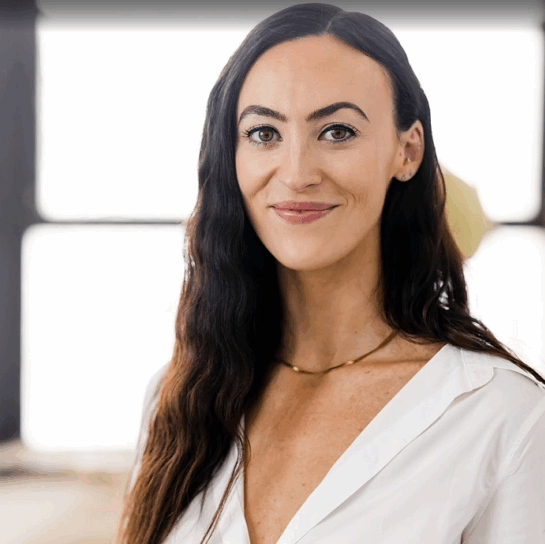
In today’s digital-first world, personal branding has emerged as a cornerstone of professional success and influence. Behind many of the most recognized leaders and personalities stands a strategic partnership with skilled publicists who craft and convey their stories, values, and visions to the world. I had the pleasure of interviewing Kayley Hamilton, a 2X Emmy Award-winning producer, former Hollywood reporter, and CEO & Founder of UPLVL Agency, a boutique PR firm that transforms purpose-driven experts into celebrity thought-leaders. With a decade of experience interviewing A-list stars for major entertainment outlets including Entertainment Tonight, The Insider, and Us Weekly magazine, Kayley leverages her insider expertise to secure mainstream media exposure for founders and industry experts. Her strategic approach to personal branding and storytelling has earned her clients features in top-tier publications, national TV appearances, and top-rated podcasts. Kayley’s own expertise has been recognized in Forbes and Business Insider, establishing her as a leading authority in PR, media, and thought-leader brand building.
Thank you for joining us. To start, could you share your “origin story” with our readers? How did you begin your journey, and what challenges did you face in the early days?
Thank you so much for having me! My origin story is honestly one of complete transformation — from being literally known as “the shy girl” in sixth grade to interviewing A-list celebrities on red carpets all over Hollywood.
Growing up in Colorado, I was painfully shy. I never raised my hand in class, barely spoke up, and you’d find me hiding in the back of the room. But I had this secret obsession with Hollywood — I watched Entertainment Tonight religiously every night and read Us Weekly cover to cover every week. I wasn’t just drawn to the glamour, but the actual humans behind the characters and pop stars. I was mesmerized by celebrity news because it dove into the real lives these people lived. There was such a fascinating contrast between me not even being able to speak up in class and these people performing on the literal world stage. I wanted to know them, connect with them, learn from them — understand the person behind the persona.
The biggest challenge wasn’t rejection in Hollywood — it was my own comfort zone and imposter syndrome. I would step so far outside what felt safe that I’d literally black out from nerves before interviews. I’d be more terrified than I’d ever been in my entire life. But here’s the thing — after every single terrifying moment, it became the most exhilarating experience of my life. After working my first red carpet, I knew I was meant to be there. I had never felt more excited, proud, and fulfilled, even though it was simultaneously the scariest thing I’d ever done. That validation told me I was on the right track, making my dreams come true, even when it felt extremely uncomfortable.
What I learned from that journey is that getting over the uncomfortability and stepping far outside your comfort zone is where the magic happens. I had to completely rewire my identity using what I now teach as my 3E Confidence Method. I found expanders — people already living my dream life — and studied them obsessively. I experienced myself through visualization on those red carpets so intensely that it felt real before it ever happened. Then I started embodying that confident future version of myself, even when I felt terrified inside.
What I learned from that journey is that your self-belief truly is the stepping stone between where you are and where you want to be. That transformation taught me everything I needed to know about helping other experts step into the spotlight, which is exactly what we do at UPLVL Agency today.
Can you share a transformative moment or campaign in your career where you significantly altered the personal brand of a leader, and what was the impact of that change?
One of the most transformative campaigns I’ve led was with Jamila Musayeva, an etiquette expert from Azerbaijan who had a significant presence on YouTube but was only known on YouTube and in her local region. She wanted to become the global go-to authority on etiquette, particularly in the U.S. market. We developed a comprehensive media strategy that positioned her as the definitive expert by securing her quotes in virtually every major etiquette-related article across top-tier publications. This consistent media presence not only established her credibility but drove millions of new readers to discover her work, dramatically expanding her audience and client base.
What made this campaign particularly powerful was how we leveraged her unique international background to differentiate her from other etiquette experts. We secured podcast interviews from Miami to London to Dubai to New York, positioning her expertise through the lens of global business and social etiquette — not just traditional manners. We also made her the go-to TV expert, getting her booked for national and local news segments whenever etiquette was trending. The result was a complete transformation of her brand from a YouTube creator to an internationally recognized thought leader, with exponential growth in her business opportunities and global recognition as the definitive etiquette authority.
How do you navigate the balance between a leader’s authentic self and the public persona you craft for them in their branding strategy?
The key to balancing authenticity with public persona is going deeper, not more surface-level. We start with our proprietary 101-question visibility questionnaire that dives into everything — their business, personal journey, goals, and life experiences. But the real magic happens in our follow-up interview process, where I apply the same investigative techniques I used with A-list celebrities to uncover those headline-worthy gems that make someone truly compelling.
Our superpower is excavating the deeply authentic stories that clients often don’t even realize are their greatest assets. We’re not creating a fake persona — we’re identifying and amplifying the most powerful, genuine aspects of who they already are. From there, we craft these raw, authentic elements into an elevated storytelling strategy that positions them as thought leaders while staying true to their core essence. The result is a public persona that feels completely authentic to them because it IS them — just presented in the most compelling, media-worthy way possible. This approach ensures that when they’re interviewed or featured in media, they’re not performing or pretending; they’re simply sharing their truth in a way that captivates audiences and drives real connection.
What are the most common misconceptions leaders have about personal branding, and how do you address these in your work?
The biggest misconception leaders have about personal branding is that they associate it with influencers dancing on TikTok rather than recognizing it as a serious business strategy. They see personal branding as superficial self-promotion instead of understanding that the most successful leaders today — from Steven Bartlett to the Sharks to Gary Vaynerchuk to on Shark Tank — have reached the pinnacle of their industries precisely because they’ve built powerful personal brands. These leaders understand that in today’s marketplace, people connect with people, not faceless corporations.
I address this misconception by showing clients the parallel between Hollywood and business leadership. The biggest celebrities aren’t just talented — they consistently promote themselves through red carpets, interviews, and media appearances. Similarly, the most influential business leaders are essentially the “celebrities” of their industries because they share their stories, expertise, and yes, even aspects of their personal lives in ways that create genuine human connection. I point to examples like how Elon Musk has more followers than Tesla, or Richard Branson outshines Virgin on social media. When leaders realize that personal branding is about being authentically human while showcasing their expertise — and see how their industry’s top performers are doing exactly that — they understand it’s not vanity, it’s strategic visibility that drives real business results.
In a crisis situation, what steps do you take to protect or rehabilitate the personal brand of a leader?
In a crisis situation, my approach depends on the severity, but I always start with immediate damage assessment and strategic timing while we craft the right response. I would have them record a personal, face-to-camera video where they apologize, address their missteps, take full accountability, and communicate their genuine apology. But the response strategy goes much deeper than just the apology.
We control the narrative timing and channels — sometimes that means getting ahead of the story, other times it means strategic patience. We leverage their owned media channels first (website, social platforms) before engaging with external press. We also develop stakeholder-specific messaging: one approach for press and media that focuses on factual accountability and corrective measures, and another for their owned audience — their social media community, email list, and groups — that’s more personal and addresses the relationship they’ve built with their followers.
Most importantly, I ensure they take real action to show genuine regret and support whoever was hurt — not just talk the talk, but walk the walk of their apology. Then we create a long-term reputation rebuilding strategy that demonstrates sustained behavioral change through consistent positive work, strategic media placements showcasing their transformation, and gradually reintroducing them to thought leadership platforms. The goal isn’t just to weather the storm, but to emerge stronger by proving genuine change through sustained action over time.
Could you list and briefly explain “5 Things You Need to Know to Shape a Personal Brand” based on your experiences and insights? If you can, please share a story or example for each.
Here are the 5 Things You Need to Know to Shape a Personal Brand based on my Taylor Swift Method —
- Master Relatability Through Strategic Vulnerability
Your audience needs to see themselves in your story. Share the struggles, failures, and “me too” moments that make people think “that’s exactly what I’m going through!” I had a client who owned a social media marketing agency for music artists. Her brand story was that as a young girl, she was so obsessed with the Backstreet Boys that she created their fan club. Years later, she came full circle when the Backstreet Boys became her actual clients. This story was incredibly relatable for any woman who was once a young fan of boy bands, making her instantly relatable and memorable.
2. Take a Clear Stand For AND Against Something
Bland gets ignored. You must be opinionated about what you believe and explicitly stand against its opposite. I have a client who’s a root cause health practitioner who takes a strong stance against using pharmaceuticals as band-aids for chronic health problems without addressing the root cause through multi-dimensional healing. While controversial, this authentic position attracts her ideal clients who’ve been failed by traditional medicine and are seeking her holistic approach.
3. Create Your Signature Look and Personality Traits
People need to instantly recognize you — both visually and through your personality. My etiquette expert client embodies grace and beauty and looks remarkably like Audrey Hepburn — the epitome of elegance. She leans into this comparison with her classic styling and soft, refined voice. People constantly comment on the resemblance, making her instantly memorable and perfectly aligned with her etiquette expertise.
4. Brand Up Through Strategic Association
Elevate your status by associating with names and platforms bigger than yours. When consulting for a children’s cancer foundation, we connected them with a famous singer whose child had also battled and overcome childhood cancer. He was so moved by their mission that he posted a video endorsing the charity on his social media, instantly elevating their visibility and credibility through his massive platform and personal story.
5. Show Up Consistently Everywhere Your Audience Is
Personal branding that converts requires omnipresence using the 7/11/4 rule (7 hours of engaging, 11 different interactions, in 4 different locations — a study done by Google). The celebrity thought leaders like Mel Robbins, Jay Shetty, and Steven Bartlett master this by taking it 100X. They don’t just host their own podcasts — they appear on others, speak on stages, post consistently across every social platform, and show up wherever their audience consumes media. They understand that genuine impact requires genuine omnipresence.
Looking forward, how do you see the role of technology and social media evolving in the way publicists shape and manage the personal brands of leaders?
Looking forward, I see technology and social media fundamentally changing how we approach personal branding, but the human element becomes more critical than ever. With celebrity becoming democratized through social platforms, leaders must own their niche personal brand and build loyal communities that become lifelong brand ambassadors. This requires authentically showing up on social media — not just posting, but genuinely connecting, guiding, and inspiring your audience.
Traditional mainstream media will also remain crucial for breaking out of your social media echo chamber. While you build your owned audience, you need strategic media placements to reach new audiences and gain the credibility that distinguishes you from other experts in your field. This combination of owned community plus earned media creates unstoppable momentum.
AI is revolutionizing our efficiency in unprecedented ways. We can now train AI on our storytelling, messaging, tone, mission, and audience insights to accelerate content creation and develop compelling narratives for the media. This technology allows us to move faster and create more strategically than ever before.
But here’s what won’t change: the need for authentic human connection. In a world increasingly dominated by AI, your most valuable asset becomes your tribe — those brand ambassadors who genuinely connect with you and are inspired by you as a human being. Efficiency and optimization aren’t the ultimate goals; building real relationships with people who need what you offer is. The leaders who succeed will be those who use technology to amplify their humanity, not replace it. Your authentic human story and genuine connections will be your competitive advantage in an AI-driven world.
How can our readers follow your work?
You can connect with me on Instagram @kayleyhamilton_ and LinkedIn at Kayley Hamilton.
Follow for our latest client media wins on Instagram @uplvlagency_.
And check out our work at www.uplvlagency.com.
Thank you for offering such valuable insights into the power of personal branding. We wish you continued success in all of your work.
About the Interviewer: Chad Silverstein is a seasoned entrepreneur with 25+ years of experience as a Founder and CEO. While attending Ohio State University, he launched his first company, Choice Recovery, Inc., a nationally recognized healthcare collection agency — twice ranked the #1 workplace in Ohio. In 2013, he founded [re]start, helping thousands of people find meaningful career opportunities. After selling both companies, Chad shifted his focus to his true passion — leadership. Today, he coaches founders and CEOs at Built to Lead, advises Authority Magazine’s Thought Leader Incubator.
The Power of Personal Branding: Kayley Hamilton of UPLVL Agency On How Publicists Shape Influential… was originally published in Authority Magazine on Medium, where people are continuing the conversation by highlighting and responding to this story.