
An Interview With Chad Silverstein
Consistency is the most important thing in podcasting. You don’t need to have the best voice or the most experience, you just need to be the person who is willing to keep running when you’re tired.
As a part of this series, we had the pleasure to interview Wilder Adams.
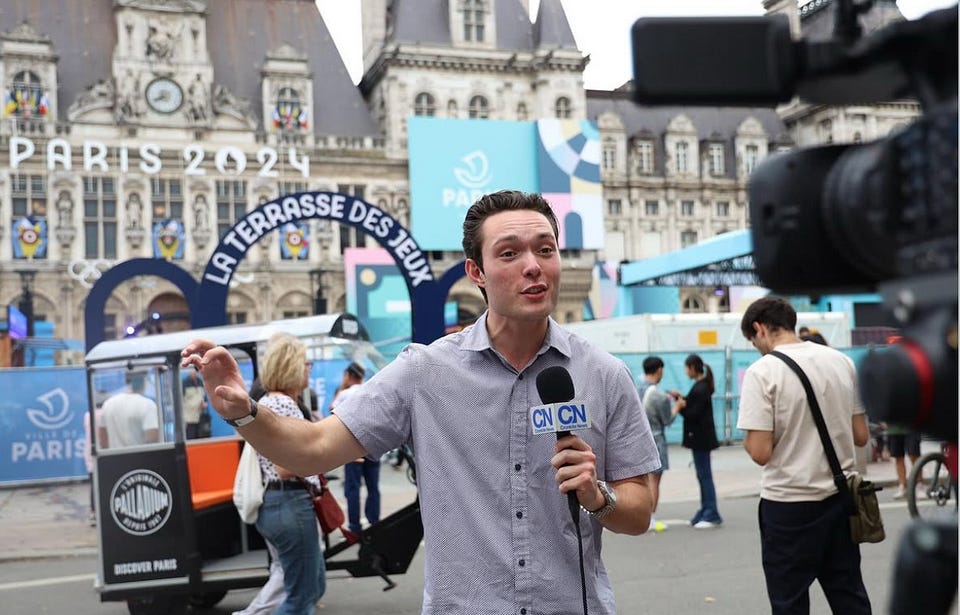
Wilder Adams is an independent podcaster and host of Wilder Wolves Podcast. He recently graduated from Walter Cronkite School of Journalism and Mass Communication at Arizona State University, often considered the most prominent journalism school in the country. He has covered the USA Men’s Basketball Team at the 2024 Paris Olympics, with additional experience covering the Phoenix Suns, the 2024 election, and various sports from the youth to professional levels. He decided to take the entrepreneurial route in journalism and create a modern digital platform covering the team he grew up loving.
Thank you so much for doing this with us! Before we dig in, our readers would love to get to know you a bit more. Can you tell us a bit of your “personal backstory? What is your background and what eventually brought you to this particular career path?
I am from Minneapolis, Minnesota and grew up in a family of sports fans. Ever since I was born, I could find my dad in his man cave watching the Minnesota Vikings play. At any family gathering, I heard football being discussed. It naturally gave me curiosity about sports and that interest in football grew into a passion and my enjoyment of playing basketball eventually gave me interest in the NBA as well. I grew up in an entrepreneurial family, as my parents opened franchises of Woodhouse Spas, which are in Maple Grove, Woodbury, and Rosedale, MN. My family is very supportive of creating your own opportunities and I did that right away with sports coverage. At the age of 14, I made a Minnesota Timberwolves blog on Instagram called “Wolves News the Future.” It was my introduction to my passion to create sports content. I began watching The Herd on Fox, and whatever sports shows I could find and I began envisioning myself in those studios talking about my favorite teams. In 2018, I went to a Sports Illustrated sports broadcasting camp in Los Angeles and later went to a broadcasting boot camp at Arizona State University in 2019. From then on, I knew I wanted to cover sports for a living. I committed to Arizona State University’s Walter Cronkite School of Journalism and Mass Communications as soon as I could. In college, I gained experience reporting, play-by-play, podcasting, news and anchoring. I was one of two dozen students in the school selected to cover the Paris Olympics and I was able to be in the presence of my favorite athletes growing up, as I specifically covered USA basketball. Later that year, I was also selected by the school to be a lead anchor for the school’s 2024 election show. I seized every chance I could to discover my sports career path. I was gaining momentum and was considering multiple paths. I took every opportunity I could to meet with news stations from around the country, through the school. I was getting interest from multiple markets to be a news anchor and was very close to taking a job as a reporter and anchor in a major market. However, my family’s entrepreneurial roots were calling me. Through thorough conversation with my closest mentors and family members, I decided I wanted to create my own media platform. With the experience I’ve gained in entrepreneurship and opportunities I’ve created for myself, I felt confident to take this step. I spent months figuring out where I could fill a void in the media market and ultimately landed on creating Wilder Wolves Podcast, a fan-oriented podcast and Timberwolves community. Wilder Wolves is now eight months old and has nearly 3,000 subscribers, 160,000 views and approximately 1,000 watch hours per month. I’m very grateful for the path I chose.
Can you share a story about the most interesting thing that has happened to you since you started podcasting?
Last year, on my previous podcast called Objectively Biased, I had a take about former Hawks point guard Trae Young and didn’t think much about it after. The reel didn’t have a ton of views or likes, but the right person saw it. The next day a friend sent me a message and told me that the huge ESPN-affiliated podcast called Numbers on the Board found my Trae Young take, gave me a shoutout and made it a segment. That was my first exposure to ESPN. That was an incredible experience and added fuel to my fire to find my way on ESPN again.
It has been said that our mistakes can be our greatest teachers. Can you share a story about the funniest mistake you made when you were first starting? Can you tell us what lesson you learned from that?
On my first podcast, I landed an incredible guest, Joel Moran, host of Pick a Side Podcast. His platform has hundreds of thousands of followers. He was kind enough to make time to talk basketball with me. We had a great show, great chemistry. Maybe the best episode of my life. When I eagerly went to rewatch the tape, I realized I had forgotten to press the record button. Drowning in guilt and panic, I made the call of shame and told him that the 75-minute podcast didn’t record and it was my fault. I thought I missed out on a great opportunity, but he was generous enough to record the podcast again with me. The second time turned out well, but I was embarrassed. But after all of it, I made a friend, which I’m grateful for.
How long have you been podcasting and how many shows have you aired?
This is the first year of my podcast Wilder Wolves, which is the first podcast I made with the true intention of making a business. I have been experimenting with podcasting since high school. I had my own independent podcast called What’s On TAP NBA, which was just me ranting about football and basketball without much strategy. But it did lead to some of my content being featured on Bleacher Report, ESPN and NBA on Amazon Prime. I created a second podcast called Windshield Hoops with a good friend early in my college career. It was good practice for me getting comfortable with the production side of podcasting, as well as leaning into a niche. The podcast was about young players in the NBA only. It didn’t become the next Joe Rogan podcast, but it did teach me a lot from a production standpoint. Last year, I did a podcast with friends already in the sports industry called Objectively Biased. It was a very good show and a big step in terms of podcast quality. It was hard to keep that going, as we were all juggling such different schedules, but it built my confidence in my ability to grow an audience.
What are the main takeaways, lessons or messages that you want your listeners to walk away with after listening to your show?
I want my listeners to walk away excited and refreshed. As a sports podcaster, I am aware that sports are supposed to be entertainment, an escape from the real world. The motto of my show is “Hall of Fame Mode Fandom.” In a video game, the hardest mode is Hall of Fame level. Being a Timberwolves fan historically has been incredibly difficult and it’s frankly admirable that so many loyal Minnesota fans never jumped ship during the decades of dysfunction. Therefore, my show is a community for those loyal fans. I don’t want them to view me as just a podcaster or someone talking at them. I want them to feel truly connected to me, the show and others who listen to it. If my show can be that escape for people and give them something to look forward to outside of their busy schedules, I did my job.
In your opinion what makes your podcast binge-listenable? What do you think makes your podcast unique from the others in your category? What do you think is special about you as a host, your guests, or your content?
I believe it’s a combination of things. Number one, I have spent six years of my life polishing my abilities as a speaker. I attended sports broadcasting camps, participated in marketing clubs in high school that taught me how to present, I went to media school and I had seven internships throughout college (many of them directly helping my broadcasting and all of them helping with my communication skills). I took acting classes. These experiences made me more confident on camera, which allows me to be my authentic self. That authenticity, I believe, people find attractive. I also understand the niche of my podcast, a fan-oriented podcast, a community. People know what they’re going to my podcast for. That combination of the polish I’ve worked on as a podcaster and my clear branding have both been exceptional helps.
Doing something on a consistent basis is not easy. Podcasting every work-day, or even every week can be monotonous. What would you recommend to others about how to maintain discipline and consistency? What would you recommend to others about how to avoid burnout?
As humans, we are a product of daily habits and habits are built on consistency. Training on a skill is hard. Being consistent on something that doesn’t give you immediate results is difficult. You need to teach yourself how to be comfortable with persistence when things aren’t immediate. You do that by teaching yourself every day to do something that’s uncomfortable. I am someone who studies and exercises regularly. Not because I can’t wait to bike, but because I don’t enjoy it. Working out doesn’t give you immediate results, you need to be consistent every day. I was comfortable starting a podcast and being consistent, because I’ve taught myself to be that way in other aspects of my life. It’s not something that I’ve mastered, but something I am getting better every day. So, for me, exercising, studying, working, is as valuable as the podcast itself because it teaches me to be consistent with whatever I put my mind to. We are all different, so whatever way you can teach yourself to be consistent in your lifestyle, you need to do that. It’s never comfortable, never easy.
What resources do you get your inspiration for materials from?
I am always thinking about how to improve content while watching others simultaneously. Every morning, I wake up, thinking about what I might say or what I might create. I observe the styles and topics of other podcasts and creators. Not necessarily to take from them, but to admire a trait that they showcase and make it my own. My creativity and quality continue to improve because I admire others and I’m curious about the topic of my craft. I don’t necessarily believe in extrinsic competition in the podcasting industry. You’re not competing for timeslots. Instead, I compete with myself every day, which allows me to admire the work of other great presenters while continuing to improve in a grounded way.
Ok fantastic. Let’s now shift to the main questions of our discussion. Is there someone in the podcasting world who you think is a great model for how to run a really fantastic podcast? What are the ingredients that make that podcast so successful?
Colin Cowherd was my hero as a sports broadcaster growing up. Initially, I just admired him for his show on FS1. However, he has full awareness of where the media industry is going. It’s transitioning more digitally and self-publishing. He created his sports media company, The Volume, and you can find all his shows in essentially any media distribution, whether it’s audio, video or social media. He shoots his shows from his own personal studio but can essentially record from anywhere. His site sells merchandise, etc. He is certainly a forward thinker and I admire somebody who was as successful as he was in traditional media yet is still willing to take a chance creating his own digital media company. Now he isn’t only my hero for his sports takes, but his entrepreneurial acumen as well.
You are a very successful podcaster yourself. Can you share with our readers the five things you need to know to create an extremely successful podcast? (Please share a story or example for each, if you can.)
1. Find your niche
When you are trying to break into the podcasting world, you are competing in very infested waters. The vast majority of the competition will try to cover the same thing within a broad industry. For example, people will make a podcast just about the NBA. Or just about politics. But they don’t have the brand yet for people to trust your coverage of a highly competitive topic. When you start with a very specific niche, it makes it easier for people to find you. For example, my podcast is a Timberwolves fan podcast. That specific unfilled niche allows people to find me without needing to search for me. And then from there, I can show them what I can do. Then they can decide if they like it, that determines how much my brand grows and then it’s up from there. I have created three previous podcasts. I thought they were solid, but two were not super specific in niche. Why would people who listen to broader NBA podcasts also spend time listening to me? They’re going to listen to the people who are more well known than I am, people who also likely started from the ground up, from a niche. So, when you decide to create a podcast, you need to figure out what you want to talk about, then determine what specifically you can discuss that adds value and allows people in the target market to find you. My podcast wouldn’t be growing at the rate it was if I wasn’t clear about my niche. If you eventually want to cover something more broadly, it’s important to have a proof of concept first.
2. Consistency
Like any skill, any industry, the people who tend to win in this world are the people who are the last ones standing. Many people quit right before things start becoming fruitful for them in the podcasting world. They tie their value to the numbers their podcast is generating. That lends itself to people getting burnt out. It’s important to understand that you shouldn’t tie your value to the podcast initial results. You need to have the stamina to start, fail, learn, fail again, learn and know you’re going to get a little better every day. Eventually, your big hit will come, but if you don’t stay persistent, you will never discover it. Consistency is the most important thing in podcasting. You don’t need to have the best voice or the most experience, you just need to be the person who is willing to keep running when you’re tired.
3. Production
Production is incredibly underdiscussed. When I watch some of my old podcasts, I cringe because the audio, lighting, none of it is up to par. I see why those didn’t grow. Subconsciously, we connect polish with credibility and good production is polish. You don’t need the fanciest equipment, but you do need an intuition for good audio, quality, enough lighting and a clean background. I used to think that the content would carryover whatever deficiencies there were in the production, but it always catches up to you. Make sure you have a good microphone, a camera that faces you and isn’t blurry and your background is clean. It makes a big difference.
4. Distribution
There are more ways to consume content than ever before. People use social media, they watch podcasts on YouTube for video, they use Spotify, Apple Podcasts, etc. If you aren’t on the majority of those platforms, you’re missing out on your audience. I see people who only do video, only do audio, or social media. By doing that, you’re going to miss out on people who could love your work. If you get your podcast on video, on audio and understand social media by making reels, that’s how you will get recognized.
5. Curiosity
The media industry is evolving at a rapid rate. If you aren’t observing trends and patterns, you will fall behind. Being curious on how to improve your content, where things are going and how to position yourself for the future, that’s a superpower. I didn’t walk into professional podcasting with all the answers, but I am learning quickly and continue to adapt. I’m always watching what other people are doing, observing how content is changing and anticipating where it’s going.
Can you share some insight from your experience about the best ways to: 1) book great guests; 2) increase listeners; 3) produce it in a professional way; 4) encourage engagement; and 5) the best way to monetize it? (Please share a story or example for each, if you can.)
- Booking guests: Fill your cup before pouring it. Relationships are everything, being able to grow relationships in an authentic way is a skill. I have booked incredible guests on my show, such as the Timberwolves CEO, well-known creators, loyal fans. The reason for that is they trust me because I don’t lead with asking for something I want. I genuinely care about them as people and I intentionally get to know people. Booking them as a guest should be a bonus and not the core. A guest being on your show is a favor and they do it as a favor because they like you. With social media, you can reach out to people and attempt to build a relationship. Someone will engage. When that person engages, being curious about the person and making it clear who you are makes a big difference. I lead with that because that’s how you land great guests without having an established brand yet. Once it is established, it is much easier to land people who you might not know as well. But I always believe relationship building is the most important.
- Increase Listeners: Having an established target market is critical. For example, I will never try to target people who seek pageant content because that’s not who I am. If I tried to position toward that target market, I would fail. Knowing who you are and what your audience wants, being consistent, making yourself known by being on as many platforms as possible. That goes a long long way.
- Produce it in a Professional Way: The most important elements of production are strong audio, good lighting and a background that is not distracting visually. Having a good microphone and solid camera are more valuable than anything beyond the basics. I remember the first podcast I had in high school and looking back, using just a computer, microphone and voice recording was not a good idea. When your voice isn’t clear and your setting isn’t professional, people will scroll right past you because people connect production quality with credibility and that builds trust and trust gives you loyal listeners. For the foundation for any strong podcast, I emphasize those things. Eventually, it is smart to expand beyond that by getting familiar with photoshop/graphic design and video editing skills to make strong edits, templates and thumbnails that appeal to people. But don’t let inexperience with editing stop you from starting a podcast. Start, learn the basics and grow from there.
- Encourage Engagement: I love to interact with my followers and listeners. I often will make interactive posts that ask them direct questions about the team, polls and react to what fans are saying on my show. I truly believe that those who try to connect with their audience have a higher floor in generating engagement and more potential to obtain loyalty. That’s a little thing that I do, but I also make sure to make my content as timely, consistent and quality as possible and the engagement comes along with that.
- The Best Way to Monetize It: Monetization is something I’ve already been building through the growth of my YouTube channel and through initial sponsorships and I continue to expand on as the platform grows. In podcasting, you can be monetized through YouTube and social media engagement, sponsorships, subscription/memberships on multiple platforms and merchandise. I have landed a couple sponsors and they reached out to me directly. However, I am making myself familiar with other sponsors for more long-term opportunities. It’s important to study other podcasts of similar genres to understand what type of businesses affiliate with them as sponsors and from there, reach out to as many as possible until you hear a yes. This takes time, but eventually it will work out. Once your brand is established with loyal listeners, the potential for engagement with memberships, subscriptions, merchandise all follow. Podcasting has many streams of revenue.
For someone looking to start their own podcast, which equipment would you recommend that they start with?
A good microphone is key because if your audio isn’t sharp, people will automatically scroll somewhere else. I have a Blue Yeti and it’s very solid. Rode is also a fantastic brand. I love StreamYard as my go-to software because it allows me to distribute everywhere: YouTube, Spotify, Apple Podcasts and social media. It also has a ton of great production features that can make your show look like ESPN. I would also buy a ring light, because good and consistent lighting is critical for video. A solid camera (I have a Sony A7 IV) is never a bad investment either. Many computers have good cameras built in, so a separate camera is not a necessity, but I would still recommend one. It’s also important to purchase a dock of some sort when you have multiple pieces of equipment because a laptop, for example, cannot handle the electricity usage of both a camera and microphone. A Thunderbolt dock will help you regulate all of it.
Ok. We are almost done. 🙂 Because of your position and work, you are a person of enormous influence. If you could inspire a movement that would bring the most amount of good to the greatest amount of people, what would that be? You never know what your idea can trigger. 🙂
My generation is the first that has dealt with social media from the very beginning of life. With that has come an overload of information, conflicting messages and pressures that I believe has really affected the self-esteem of many. I believe a part of the struggles many people face is from people trying to fit in a box. I want to help people in my generation fully embrace their own greatness. They don’t have to try to be anybody else, they just need to be themselves as unapologetically as possible. If we can teach people in my generation to be their authentic selves, I believe that would make a big difference for the mental health of many. I strive to be as authentic as possible and set an example for others of what is possible if you embrace every part of what makes you, you. Your quirks, your strengths, your weaknesses, your gifts. All of it is who you are. If we can teach people in my age group to love themselves, I believe it’ll save the lives of many.
How can our readers follow you online?
You can find my podcast on YouTube: https://youtube.com/@wilderwolvespodcast?si=-dHQkpqYE-OjmVAW Spotify: https://youtube.com/@wilderwolvespodcast?si=-dHQkpqYE-OjmVAW Apple Podcasts: https://podcasts.apple.com/us/podcast/wilder-wolves-podcast/id1820469000?i=1000752746907 Socials: Instagram: https://www.instagram.com/whatsontapnba?igsh=am5qaTIxNGVlcDds&utm_source=qr https://www.instagram.com/wilderwolvespodcast?igsh=MWh3bHJzNzR6ZHgxZw%3D%3D&utm_source=qr Tik Tok: https://www.tiktok.com/@whatsontapnba?_r=1&_t=ZP-94NuAZ3csk2 https://www.tiktok.com/@wilderwolvespodcast?_r=1&_t=ZP-94NuBIlLFPC X: https://x.com/whatsontapnba?s=21
Thank you so much for sharing your time and your excellent insights! We wish you continued success.
About The Interviewer: Chad Silverstein is a seasoned entrepreneur with 25+ years of experience as a Founder and CEO. While attending Ohio State University, he launched his first company, Choice Recovery, Inc., a nationally recognized healthcare collection agency — twice ranked the #1 workplace in Ohio. In 2013, he founded [re]start, helping thousands of people find meaningful career opportunities. After selling both companies, Chad shifted his focus to his true passion — leadership. Today, he coaches founders and CEOs at Built to Lead, advises Authority Magazine’s Thought Leader Incubator.
Wilder Adams On 5 Things You Need To Know To Create a Very Successful Podcast was originally published in Authority Magazine on Medium, where people are continuing the conversation by highlighting and responding to this story.