
Winning Together: Victor Rancour of Rocket Group On How Strategic Partnerships Can Unlock New Sales Opportunities
An Interview With Chad Silverstein
People get emotionally attached to “100% ownership,” but 100% of zero is still zero. Partnerships can be the roadmap if you’re willing to run the play.
Strategic partnerships have the potential to unlock growth and create new opportunities in ways that businesses can’t achieve alone. To explore this important topic, we had the pleasure of interviewing Victor Rancour.
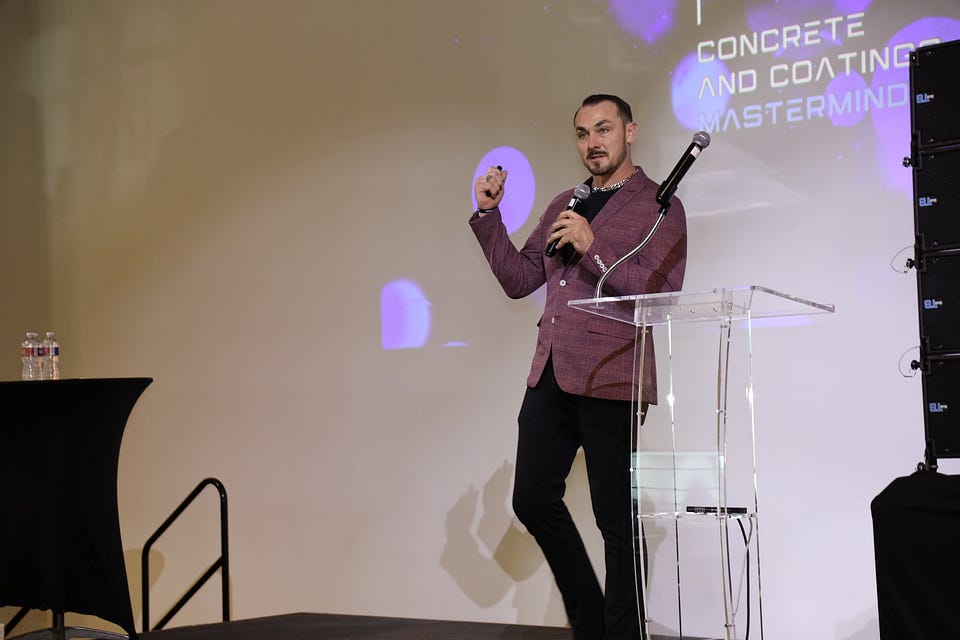
Victor Rancour is a dynamic entrepreneur and CEO of Rocket Group who rose from an HVAC technician in 2015 to a visionary leader partnering with home service companies across the United States. His success in building and scaling home service businesses has established him as an industry authority with a proven track record. Victor’s passion for mentorship drives him to share his expertise in sales processes and business growth.
Thank you so much for joining us in this interview series. Before we dive into our discussion, our readers would love to “get to know you” a bit better. Can you share with us the backstory about what brought you to your specific career path?
I didn’t start out with a grand master plan or a polished résumé. I was 25 years old, had a newborn daughter who was about five months old, and I was doing odd construction jobs just trying to keep my head above water. Like a lot of people in that stage of life, my priorities shifted overnight. Stability, benefits, and the ability to truly provide for my family suddenly mattered more than anything else. In 2015, I answered a Craigslist ad for a company called Service Champions in Southern California. At the time, I didn’t even know what HVAC stood for. What caught my attention was the promise of consistent income, a company vehicle, benefits, and a future. I went to a group interview, and out of dozens of candidates, five of us were hired. Once I was inside the organization, something clicked. I discovered I loved the trades, I loved working with my hands, and even more importantly, I realized how powerful communication and trust are when you’re serving customers. The combination of technical work and human connection changed everything for me. Over time, I grew into one of the top sales performers in the country, and that success eventually opened the door to leadership, strategy, and partnerships.
Can you share the most interesting story that happened to you since you began working with partnerships or collaborations?
The craziest one for me was our very first deal. This owner was originally a client who I had consulted with for a couple years. When he first came to us, he was doing about $300,000 a year. Through coaching and execution, we helped him grow to over $2 million a year. Then he came to us wanting to partner. The interesting part? He had already talked to three other groups, private equity and private partnerships, and they all turned him down. They told him the market was too small and there wasn’t enough upside. But I remember the call. My partner, Michelle and I said, “Okay — we’re going to do it.” And honestly, at the time, I wasn’t even sure it was possible, because this was truly Small Town USA in Northern Arizona — population under 150,000, far from vendors, far from talent, tough for recruiting. We went in anyway and did what we always do which is process, sales, leadership, execution. We doubled revenue in the first six months, we went from $2 million to $6 million. The following year we doubled again to $12 million. And now we are pacing for close to $20 million in that same “too-small” market. The funniest part is now private equity is already reaching out trying to buy it, 18 months later after they wanted nothing to do with it. That’s when you realize: the market isn’t always the limitation, execution is.
You are a successful leader. Which three character traits do you think were most instrumental to your success? Can you please share a story or example for each?
The most important character trait that drove my success is resilience with failure; I don’t fold under pressure. A lot of people are so scared to fail they don’t even try. I am the opposite. I’m used to failure, so it doesn’t scare me. I grew up playing sports. I’ve thrown four interceptions in a game…but you still have to keep throwing the ball. When something goes sideways, I don’t spiral. I go, “Okay…how do we pivot? How do we make it happen?” If you don’t quit, things have a way of working out. Another essential quality I possess is belief in myself, the mission, and other people. You have to believe and you have to get other people to believe in you too. I believe things are possible that other people don’t. I believe people can do more than they think they can. That belief becomes contagious. It’s how you get partners, employees, and entire teams to do what they thought was impossible. I told my Rocket Group partners we are building a $100 million business. It sounded crazy at the time. Now it feels inevitable. My third defining characteristic is speed and decisiveness. We named the company Rocket Group for the reason that we do everything fast. One of the biggest things we look at when vetting a partner is how quickly they move. Because how fast someone handles diligence is usually how fast they implement. If you can’t implement fast, you slow down the entire platform. Speed isn’t a personality trait, it’s an advantage.
Let’s now jump to the focus of our interview. What does a “strategic partnership” mean to you, and why do you think it’s such an essential part of sales growth today?
To me, everything in business is partnerships. If you don’t build the right relationships, you’re going to struggle whether that’s vendor relationships that help you lower costs, or relationships with people who’ve already done what you want to do. For Rocket Group specifically, the partnerships I’ve built over the last five years are what give us leverage now: buying power, resources, marketing vendors, financing terms. All of which comes from investing in relationships for years. When we partner with small businesses, often sub-$3 million, we bring buying power, sales process, and a full team so they can grow faster than they could alone. Partnerships aren’t “nice to have.” They’re survival and scale.
How do you go about identifying potential partners that align with your business goals? Are there specific qualities or traits you look for in a partnership?
Two big things stand out when identifying potential partners. Work ethic and humility are absolutely essential. Partnering with us doesn’t mean you work less, it usually means you work more. We need people who are willing to do what makes money and don’t think they already know everything. Equally important is their speed of implementation. During diligence we watch how fast they move. That tells you everything. If you can’t implement it quickly, you become a bottleneck.
What steps do you take to build trust and ensure that a partnership will be mutually beneficial for both sides?
It starts with checks and balances and setting expectations up front, operating agreement, roles, responsibilities, and what “winning” looks like. If expectations aren’t clear early, that’s where partnerships break later. Then we earn trust by showing up daily. Our track record helps, but it’s still about execution: being present, backing them up, and doing what we said we would do every day.
Can you share a specific example of a strategic partnership you were involved in? How did it come about, and what impact did it have on your business?
That first Northern Arizona deal is a great example. It came about because he was a coaching client first. He’d grown from about $300K to $2M+ with us, and when three other groups passed, we stepped in. The impact was remarkable. We scaled from $2M to $6M in 6 months, then doubled to $12M, and are now pacing close to $20M in a town under 150,000 people, far from vendors and talent. Now it’s attracting the same buyers who rejected it initially.
What role does communication play in maintaining a strong, long-lasting partnership? Are there particular practices or tools you use to keep everyone aligned and engaged?
Communication is everything because it keeps people aligned on reality. We use several tools and practices to maintain this alignment. Slack and text channels keep everyone aware of what’s happening in real time. CRM integration provides visibility and data that all partners can access. Strong reporting is essential, we cross every T and dot every I. We also employ outside accounting firms to ensure financial accuracy. Shared visibility is non-negotiable, with all partners having access to key systems like bank accounts and QuickBooks so there are real checks and balances. The goal is transparency. Checks and balances keep honest people honest.
Let’s now focus on actionable strategies. Based on your experience, can you share “5 Steps to Create Strategic Partnerships That Drive Sales Growth”? If you can, please share examples or stories for each.
1. Start with the outcome, not the journey
Most people hunt for a “perfect partner,” but that rarely exists. Instead, start by defining the outcome you want and then find a partner who aligns with that mission. One example that stands out is a business we partnered with that had all the fundamentals of a great operation, it just lacked a few critical elements that we specialize in. First, it needed a true sales culture to consistently drive revenue, which we addressed through sales and mindset training. Second, it needed clear direction, which came from shifting leadership roles to people who were ready to lead the company forward. Third, it required accurate and timely financial reporting, so we implemented better tracking and best practices. Once those gaps were filled, the business was able to turn profitable quickly. The opportunity was always there; it just needed the right alignment.
2. Partner with audience owners
The fastest growth comes from partnering with people who already have trust within the audience you’re trying to reach, especially those who have built a strong local brand. Community trust is incredibly hard to replicate. When a partner is already active in their community whether through PTA involvement, local events, parades, or service initiatives it shows they’ve invested time and energy into giving back. That level of credibility can’t be manufactured overnight. If you don’t already have it, you’re starting from zero, which is why partnering with someone who does is such a powerful accelerator.
3. Make the win obvious immediately
If a partner can’t quickly see how they win, momentum stalls. While we always sell the long-term vision, we also show what success looks like in the short term. The reality is that the road isn’t glamorous and it’s not easy. That’s why having clear data and early financial wins matters. When you can show the numbers and sometimes even deliver a tangible payout or distribution within the first few months it becomes a powerful motivator and reinforces confidence in the partnership.
4. Systemize the partnership
Strong partnerships are built on systems, not guesswork. That means clear tracking, accountability, standardized reporting, and defined processes for referrals or co-marketing when applicable. When partnerships are systemized, performance can be measured, optimized, and improved over time instead of relying on assumptions or personalities.
5. Scale what converts; cut what doesn’t
Relentless measurement is critical. We constantly evaluate pipeline impact, double down on what produces strong ROI, and eliminate distractions. Over the years, I have worked with hundreds of marketers. A small handful are consistently strong, some perform well seasonally, and others simply don’t deliver. We follow a Rule of 7 in our home service businesses: if a channel produces over 7x ROI, we scale it. If it falls below that threshold, we evaluate why and then pivot or cut it. These decisions are also budget driven. Our total marketing spend is designed to stay just under 7% of total revenue, ensuring growth remains both aggressive and sustainable.
What advice would you give to smaller companies or startups that may not have the resources or networks of larger businesses but want to start building strategic partnerships?
Start with vendors. Vendors are the first strategic partnership for almost any business. When I started, I told a vendor: “I’m brand new, but I’m going to be one of the biggest companies in this market. I need you to play ball with me.” They gave me a deal: hit a number and they’d price me like I was already there. That relationship, with Daikin, started years ago when I had nothing. They gave me early pricing, credit support, and as we grew, the partnership grew. Now we’ll likely buy $7–10 million from them this year. Lead with vendors. They can change your economics before you ever “feel big.”
How do you handle challenges or conflicts that may arise in a partnership to ensure that the relationship stays strong and productive?
It goes back to expectations and the dispute process. You can’t go into disagreements angry. You have to come with solutions. When we have a problem, we bring what we believe the solution is, then we decide together. And you need a defined mechanism for disputes whether it’s a vote or another agreed process so you can move forward without everyone trying to burn the house down.
Can you share a surprising or unexpected lesson you learned from a past partnership?
People lie. Numbers don’t. Early on, we invested $500,000 into a small business partnership. The business started improving, then suddenly the money wasn’t there. We found out funds were being funneled for personal use. That taught me two things: Be careful who you invest in. More importantly: track and monitor relentlessly, so you control where money is going.
What trends or changes are you seeing in how businesses approach strategic partnerships, and how do you think this will evolve in the coming years?
Home services have been heavily consolidated by private equity over the last decade. Before, private equity would buy almost anything with little earnings. Now they’re getting smarter, owners are getting smarter too, and there’s been a shift toward only investing in companies with strong systems, a strong base, and real process. At the same time, small businesses are going to struggle more. Costs are rising dramatically. If you don’t have strategic partnerships buying power, process, resources you risk getting left behind.
In your opinion, how do strategic partnerships impact not just sales, but a company’s reputation, relationships, and long-term growth?
When we partner, we’re different than the stereotype of private equity. We still have to make money but we’re focused on building businesses that still feel like family businesses, where employees aren’t treated like a number, and the company still feels connected to the community. We run the business on numbers but we don’t turn people into numbers.
You are a person of great influence. If you could start a movement that would inspire more companies to embrace collaboration and partnerships, what would that be? You never know what your idea can trigger. 🙂
A mindset shift around collaboration and equity. I’d encourage more owners to join communities where best practices are shared whether that’s something like Profit Rocket or another group where you can learn from people who have already done what you’re trying to do. And I’d push this idea hard: I’d rather own 50% of a golden goose than 100% of something that’s not making money. People get emotionally attached to “100% ownership,” but 100% of zero is still zero. Partnerships can be the roadmap if you’re willing to run the play.
How can our readers further follow you online?
YouTube, Instagram, LinkedIn, TikTok: @victorrancour Rocket Group: https://rocketgroupholdings.com/
This was great. Thank you so much for the time you spent sharing with us.
About The Interviewer: Chad Silverstein is a seasoned entrepreneur with 25+ years of experience as a Founder and CEO. While attending Ohio State University, he launched his first company, Choice Recovery, Inc., a nationally recognized healthcare collection agency — twice ranked the #1 workplace in Ohio. In 2013, he founded [re]start, helping thousands of people find meaningful career opportunities. After selling both companies, Chad shifted his focus to his true passion — leadership. Today, he coaches founders and CEOs at Built to Lead, advises Authority Magazine’s Thought Leader Incubator.
Winning Together: Victor Rancour of Rocket Group On How Strategic Partnerships Can Unlock New Sales… was originally published in Authority Magazine on Medium, where people are continuing the conversation by highlighting and responding to this story.