
An Interview With Chad Silverstein
Measure, celebrate, and course-correct publicly. We have almost no hierarchy and being a close/tight knit team we do our quarterly town halls and dsily briefings in office other: This reinforces that purpose is non-negotiable.
Purpose has become the new currency of success in today’s workplace, and leaders who prioritize mission-driven cultures are standing out in the war for talent. To explore this important topic, we are interviewing Jeff Schwartz.
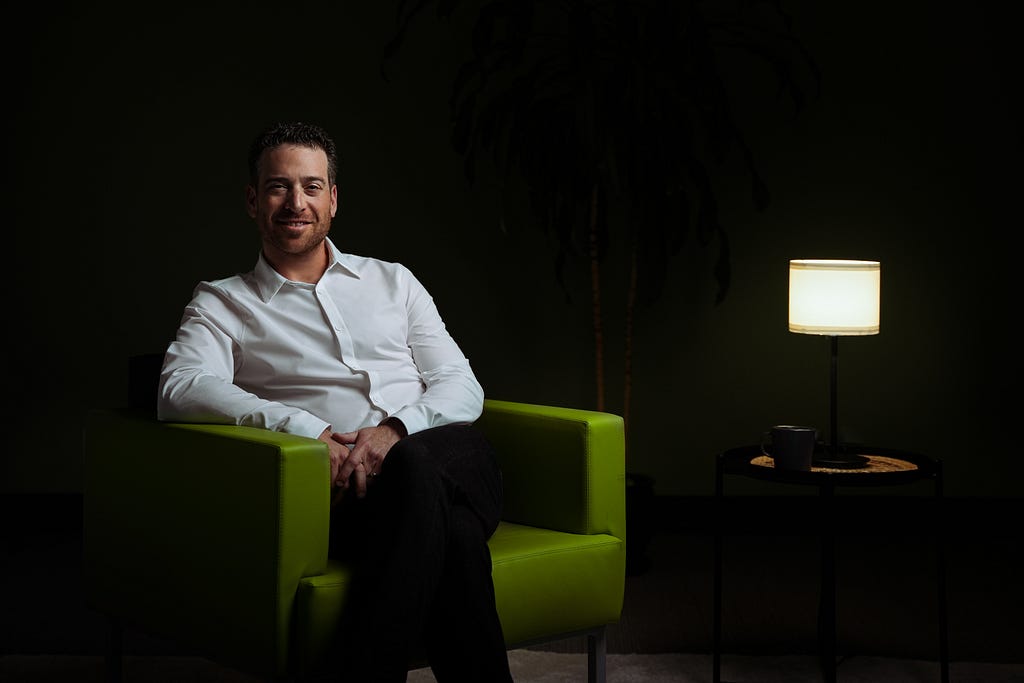
Jeff Schwartz is a transformative business leader, President & CEO of Go Lime Inc., and seasoned board director with a track record of driving bold growth, building high-performance teams, and delivering exceptional customer value across complex, rapidly evolving industries. With over two decades of executive experience spanning startups to global enterprises — including senior leadership roles at Enercare Inc., Bell Canada, and Calix — he’s led major brand integrations, M&A initiatives, and sustainable innovation at scale. Passionate about human-centered leadership, Jeff champions trust, transparency, and impact, both in business and in the community, where he serves on the City of Toronto’s Larry Grossman Forest Hill Memorial Arena Board and advocates for mental health, professional development and sustainability initiatives.
Thank you so much for joining us in this interview series. Before we dive into our discussion, our readers would love to “get to know you” a bit better. Can you share with us the backstory about what brought you to your specific career path?
Thank you for having me, it’s a pleasure to be part of this conversation.
My path has never followed a straight line, but what’s guided me throughout is a deep curiosity about people, business, and what it takes to create meaningful impact. I started my career at Bell Canada, where I spent nearly two decades immersed in everything from brand integrations and marketing to national sales and growth strategy. It was there that I learned how scale and complexity can be powerful tools for transformation when paired with clarity, empathy, and courage.
Later, I joined Enercare Inc., (a Brookfield Infrustructure Comoany) where I had the opportunity to help scale the company into one of North America’s largest home and commercial services businesses. That experience opened my eyes to the possibilities of combining operational excellence with customer-first thinking. Eventually, I stepped into the President & CEO role at Go Lime Inc. a company built to disrupt an industry that often lacks trust and transparency. What brought me here, ultimately, was a desire to lead differently: to build a company that doesn’t just grow fast, but grows with heart, with integrity, and with a real sense of purpose.
Can you share the most interesting story that happened to you since you began working in leadership, culture building, or purpose-driven organizations?
One of the most interesting and transformative moments in my leadership journey happened early on, during my time at Bell Canada. I was leading a large marketing team at the time, and I had built a reputation for being driven, strategic, and results-focused. But one day, after what I thought was a successful team meeting, a colleague pulled me aside and said, “You know Jeff, you don’t always have to be the loudest guy in the room.” My colleague Pete C always had a knack to call it like it was and likely one of the reasons he was so successful and retired as a seasoned Director at Bell just a few years ago.
At first, I was caught off guard, maybe even defensive. But that moment stuck with me. It became a turning point. I realized that while I was leading with competence and conviction, I wasn’t always leading with compassion or openness. That single comment sparked a journey of self-reflection that ultimately changed how I lead. I began listening more deeply, asking better questions, and creating space for others to step up and shine.
Since then, I’ve made it a priority to build cultures where people feel seen, trusted, and inspired, not just directed. It taught me that the most lasting impact comes not from control, but from connection.
You are a successful leader. Which three character traits do you think were most instrumental to your success? Can you please share a story or example for each?
Thank you. I believe leadership success is never a solo act. It comes down to how we show up, especially when things are uncertain or uncomfortable. For me, the three most instrumental traits have been resilience, empathy, and courage.
1. Resilience:
In any leadership role, there are moments when the plan breaks, the numbers dip, or the unexpected throws everything off course. I remember during a major brand transition at Bell, we faced enormous pressure to deliver results while integrating multiple teams and cultures. The pace was relentless, and the expectations were sky-high. What kept us grounded was the mindset that setbacks weren’t signs of failure, they were signals to adapt. I stayed focused, kept the team aligned, and never let short-term turbulence shake our long-term vision. That resilience helped us hit milestones others thought were out of reach.
2. Empathy:
At Enercare, we were scaling quickly, and with that came growing pains: teams expanding, processes changing, and people stretched. During one town hall, I heard a frontline technician express how disconnected he felt from head office. It hit me. So I made it a point to spend more time in the field, riding along on service calls, listening without agenda. That shift deepened my understanding of the business and more importantly, helped build trust and engagement from the ground up. Empathy turned out to be the most powerful connector. I have amazing memories with another leader at Enercare who also lead from the front with our team!
3. Courage:
Launching Go Lime Inc. was, in many ways, an act of courage. We stepped into a mature, competitive market with the bold claim that we could do it better than the incumbents in our space: more transparently, more sustainably focused, and most importantly more customer-centrically. It would have been easier to play it safe. But we all believed in the mission, and I believed in the people we were bringing together. I joined a co-founder who with his father spent 15 years building out a family run business that was ready to grow exponentially. Courage meant making hard calls, challenging the status quo, and standing by our values — even when the path was unclear. That decision has changed not just my career, but the way I think about impact and legacy.
Let’s now jump into the focus of our interview. What does a “purpose-driven culture” mean to you personally, and why do you think it’s critical for attracting top talent?
To me, a purpose-driven culture means that people know why they show up, not just what they do. It’s about creating a shared sense of meaning that goes beyond the metrics. When your team believes in the mission, when they feel connected to a cause bigger than themselves, it changes everything; from how they serve customers to how they collaborate, innovate, and lead.
At Go Lime, our purpose is to bring trust, transparency, and customer centricity to an industry that hasn’t always been known for those values. That mission attracts people who want to do work that matters, people who care about helping families make smarter decisions for their homes, businesses, and the planet. Top talent today isn’t just chasing compensation; they’re looking for alignment, impact, and authenticity. If your culture lacks purpose, you may still get people in the door, but you won’t inspire them to stay, grow, and give their best.
Purpose gives people energy. It turns jobs into journeys. And in a competitive talent market, that’s not just a nice-to-have, it’s a differentiator.
How did you identify and define the mission or purpose for your organization? Was it inspired by a particular event, challenge, or insight?
The mission behind Go Lime was born out of a mix of frustration and possibility. After years in the home services industry, working with large, established players — I saw firsthand how often customers were left feeling confused, pressured, or underserved. The space was ripe for disruption, not just with better products, but with a fundamentally better experience. One where trust, transparency, and customer care weren’t afterthoughts, they were the foundation. I also had the opportunity to join a family run business that has been in this space for over 15 years and working with our co-founder Kirill and his father Vasili allowed us to come together and really solidly a joint vision together.
There wasn’t a single “aha” moment, but rather a pattern we couldn’t ignore. Whether it was hearing a technician vent about broken processes, a homeowner confused about pricing or contract terms, or watching teams struggle with misaligned incentives, the insight was the same: the industry wasn’t built for the customer. So we flipped that model. We built Go Lime to empower people to help them make smarter, more sustainable decisions for their homes and businesses, without the sales games or fine print.
Our mission came from listening. From paying attention to what wasn’t working, and choosing to build what could.
What are the key steps leaders can take to embed purpose into the day-to-day operations and decision-making of their companies?
Embedding purpose into day-to-day operations doesn’t happen through posters or slogans, it happens through choices, consistency, and leadership behaviour. There are three key steps I’ve found critical.
First, align your incentives. If you say you’re purpose-driven but your comp plans reward short-term wins over long-term trust, you’re sending mixed signals. At Go Lime, we designed our compensation and customer experience metrics to reflect our values: transparency, care, and customer satisfaction — not just speed or volume. We also eliminated any potential for high pressure sales tactics doing the exact opposite of what our competitors do in this space.
Second, bring purpose into every conversation. Whether it’s a daily in-person conversation with our team in our office/retail/warehouse, a strategic hiring decision, or a vendor negotiation, we ask: does this align with who we are and the impact we want to make? Purpose becomes real when it’s used as a lens for decision-making, not just a line on a website.
Third, model it from the top. Leaders need to live it out loud: and that starts by how they treat people, how they respond in moments of pressure, and how they prioritize. If your team sees you make a tough call because it’s the right thing to do, not just the profitable thing — they’ll believe the purpose is real. And they’ll carry it forward.
What role does leadership play in championing and modeling a purpose-driven culture? Can you share an example of how you or another leader helped reinforce your organization’s purpose?
Leadership sets the tone. If purpose is just words on a wall, people will feel that. But if leaders consistently model purpose through their actions, especially in tough moments, it becomes part of the organization’s DNA.
At Go Lime, I try to embody our mission by staying close to both our customers and our team. One example that stands out: when I joined the company I noticed that our competitors had dormant LinkedIn accounts with executives that either are completely silent or unavailable to the end customer. I decided early on to do the exact opposite — and make my self the number one evangelist for the company and make myself available over LinkedIn, email or mobile anytime they need me. We have thousands of customer interactions every week so we don’t always get it right — but I’m committed to making it right for everyone each and every day no matter what! . Rather than deflect or blame, we always own it and fix it real time. I personally call the customers, listen to their concerns, and then if needed bring to our other team members to make sure we learn and fix immediately for the next customer. We don’t just fix the issue, we are continuously learning and growing as we train, communicate, and follow through.
That experience reinforced two things: first, that trust is earned in moments of difficulty; and second, that when leaders are transparent and accountable, it gives others permission to do the same. Purpose-driven culture starts at the top, but it becomes real when everyone feels empowered to lead through it.
How do you handle skepticism or resistance from team members or stakeholders who may not immediately understand the value of focusing on purpose?
Skepticism is natural, especially in industries where people have been burned by buzzwords or seen “purpose” used as PR rather than practice. I don’t take that resistance personally. In fact, I see it as an opportunity to listen, learn, and build trust through action.
At Go Lime, when someone questions the value of purpose, I don’t try to convince them with a speech, I show them how it drives real results. I share stories where doing the right thing led to stronger customer loyalty, better retention, or a more engaged team. I also ask questions to understand what they value, because often, people are aligned in spirit but just using different language.
The key is to meet people where they are, not where you wish they were. Then, slowly and consistently, you model what purpose looks like in action. Over time, people don’t just hear it, they genuinely feel it. One example that I try to model weekly is our Friday team emails, and always try to convey weekly that purpose and performance aren’t at odds, but actually fuel each other, that resistance tends to melt away.
Ok, let’s talk strategy. Based on your experience, can you share “5 Steps to Build a Purpose-Driven Culture That Attracts Top Talent”? If possible, please include examples or stories for each.
- Co-create an authentic purpose, don’t dictate it. When we launched the brand we brought representation from across the company to build it together with us. Truthfully I moderated the sessions so it came bottom up from the team and was never too down.
- Hard-wire purpose into incentives and decision rules. Go Lime moved away from industry norms having a heavy variable variable focus to commissions to a balanced scorecard that entirely eliminated aggressive variable driven sales tactics: we brought the customer to us vs going to them, started focusing on measuring customer satisfaction scores everywhere that is trackable, first-visit resolution, and energy-savings impact carry the same weight as sales. Reps went from sales driven compensation to customer driven solutions.
- Embed purpose in rituals and storytelling. Every Friday, Jeff’s “Friday Team Email features a short shout-out — like a tech who stayed late to teach a customer how to use their new smart thermostat, showcasing 5 star customer reviews and always tying the action back to the mission. New hires also have awesome opportunities to grow as we are an in-office culture that has found collaboration improve in both speed and accuracy especially vs our competitors in our space.
- Empower purpose champions at every level. Customer operational teams carry the ability to make it right without escalating to a manager. Without even looking at the detailed results I can tell you with 100 percent certainty speaking to customers daily that solving problems in the sport moves a potential detractor into a five-star reviewer.
- Measure, celebrate, and course-correct publicly. We have almost no hierarchy and being a close/tight knit team we do our quarterly town halls and dsily briefings in office other: This reinforces that purpose is non-negotiable.
Can you share a specific example of how embracing a purpose-driven culture helped your company attract exceptional talent or achieve a significant business goal?
One powerful example came quite recently during our most recent hiring push. We were expanding into new geographical markets and needed experienced, high-integrity experts to join our team — people who could deliver not just on technical skill, but on our promise of trust and transparency. Rather than lead with job specs or salary, we led with our purpose: empowering homeowners through education, not pressure; building sustainable solutions, not quick wins.
That message resonated more deeply than we expected. One standout hire from a well-known competitor told us they were drawn to Go Lime because they had tired of being pushed to “upsell at all costs.” They said, “I want to work for a company that’s built around doing the right thing, not just hitting quota.”
What advice would you give to leaders of smaller companies or startups who want to build a purpose-driven culture but don’t know where to start?
My advice? Don’t overthink it and don’t wait until you’re “big enough.” Purpose isn’t about having a glossy mission statement or a huge budget. It’s about clarity, consistency, and courage. Start by asking: Why do we exist beyond profit? Who are we here to serve, and what would it look like to genuinely care about them? Then build from there.
At Go Lime, even when we were just getting started, we made purpose part of our daily language. We talked about it in hiring interviews, in customer calls, and even in how we named internal tools. You don’t need a culture deck you need to model the values you want your team to live.
Most importantly, involve your people. Ask your team what they’re proud of, what frustrates them, and what kind of company they want to help build. Purpose built in isolation rarely sticks, but purpose built in collaboration becomes a movement. Start small, stay authentic, and let your actions do the talking. It’s how we can confidently say we are setting a revolution across Ontario for millions of home owners who are not satisfied with their current home service provider!
What are some common mistakes leaders make when trying to create a purpose-driven culture, and how can they avoid them?
One of the biggest mistakes leaders make is treating purpose like a marketing campaign rather than a way of operating. If your stated values don’t match the day-to-day experience, whether it’s how you treat your team or how you handle customer issues — people will see right through it. Authenticity is everything. Purpose has to be lived, not just launched.
Also leaders often forget to connect purpose to performance. If your comp plans, feedback loops, and operational goals don’t align with your values, you’ll end up rewarding behaviour that contradicts your culture.
In short, avoid the trap of performative purpose. Keep it real, keep it practical, and most importantly model it every day.
How do you ensure that your organization’s purpose evolves and remains relevant as your company grows and the world changes?
The key is treating purpose as a living strategy, not a fixed slogan. At Go Lime, we see our purpose as a compass, not a script. It guides our direction, but we’re always reevaluating how it shows up in practice as the world, our customers, and as our people evolve.
To keep it relevant, we stay relentlessly curious. We listen to our customers, frontline teams, and partners. We ask: Are we still solving the right problems? Are our actions still aligned with the impact we want to make? For example, as demand for sustainability grows, we will continue to expand our offerings to include enhancements to our solar, EV chargers, and smart battery integrations — still grounded in trust and transparency, but applied to new challenges.
What trends or shifts are you seeing in the workplace regarding purpose, and how do you think these will shape the future of business?
Over the last few years I’ve seen “purpose” move from a differentiator to a baseline expectation — especially among younger talent and that shift is being amplified by several converging trends:
- Purpose as a talent non-negotiable. Nearly nine in ten Gen Z and millennial workers now say a clear sense of purpose is critical to their job satisfaction and wellbeing. When that many people filter career choices through a values lens, companies that can’t articulate why they exist will struggle to hire or keep high performers.
- Sustainability and social impact in the operating model. Stakeholders are pushing organisations to show how their core business reduces carbon emissions, inspires innovation and creates shared values. Reports from leading research firms make it clear: purpose-led companies outperform on talent retention, innovation and long-term profitability.
- Radical transparency and real-time metrics. Investors and employees expect visible proof that purpose drives the best possible decisions pushing leaders to treat purpose as a living KPI rather than a marketing line.
What this means for the future: businesses that embed purpose into strategy, incentives and everyday behaviour will attract mission-minded talent, and unlock new forms of innovation. For us being the first in our space to build an e-commerce platform and being truly customer centric ensures we move forward with the best interests of our customers in mind.
In your opinion, how does having a purpose-driven culture impact not just employees, but customers, clients, and the broader community?
Purpose is a force-multiplier that flows far beyond the walls of the company. For employees, it gives work meaning and boosts engagement; for customers and clients, it builds trust and loyalty; and for the broader community, it channels business resources toward shared progress.
- Employees. When people feel their daily work advances a mission they believe in, discretionary effort climbs and turnover falls. At Go Lime our best employees love their jobs, love our mission and love delighting our customers.
- Customers and clients. Trust is now a purchase criterion on par with price and quality. Global research shows that 45 % of consumers self-identify as “purpose-driven,” meaning they choose brands whose values mirror their own. We see that play out in higher repeat-purchase rates and referral volumes where our own customers evangelize our offering to other customers in their local community.
- Community. Purpose-led firms like Go Lime are saving our customers money and bringing back trust into our communities for essential services like hot water.
When your culture is genuinely purpose-driven, every stakeholder becomes an advocate and that shared advocacy accelerates both impact and growth.
You are a person of great influence. If you could start a movement that would bring the most amount of good to the most amount of people by building purpose-driven workplaces, what would that be? You never know what your idea can trigger. 🙂
If I could start a movement, it would be called “The CARE Huddle” a 30-minute weekly ritual every company commits to, designed to put Communicate, Acknowledge, Respect, and Empathy into action. Not as abstract values, but as everyday leadership practices that shape culture from the inside out. I am in the midst of writing a book and this is actually a central theme so maybe some of your readers will check out my LinkedIn account to learn more below.
But heres how the CARE Huddle would work
- Communicate: Start by sharing one real story. From a customer, a teammate, or the community that connects back to the company’s purpose. This grounds the conversation in human impact, not KPIs.
- Acknowledge: Invite each person to reflect on their role where they contributed, where they struggled, or where they saw others lead with heart. Recognition becomes shared, not top-down.
- Respect: Create space for every voice, regardless of title. These huddles are built on psychological safety — where people feel heard, not judged.
- Empathy: End by identifying one action the team can take to better support each other or serve more meaningfully in the week ahead.
Imagine this happening across thousands of organizations, millions of people showing up to work not just with tasks, but with intention. Purpose-driven workplaces would no longer be rare, they’d be expected. The CARE Huddle isn’t about perfection; it’s about consistent, compassionate connection. And when we practice CARE as a habit, not a one-time initiative, we build companies where people feel truly human and deeply committed. I invented something called the CARE one page framework that your readers can learn more about when my book publishes later this year.
How can our readers further follow you online?
Best way to follow me is on my LinkedIn account as I would love to have your follow and/or connect.
http://linkedin.com/in/jbschwartz
This was great. Thank you so much for the time you spent sharing with us.
Thank you so much it was truly a pleasure!
About the Interviewer: Chad Silverstein is a seasoned entrepreneur with 25+ years of experience as a Founder and CEO. While attending Ohio State University, he launched his first company, Choice Recovery, Inc., a nationally recognized healthcare collection agency — twice ranked the #1 workplace in Ohio. In 2013, he founded [re]start, helping thousands of people find meaningful career opportunities. After selling both companies, Chad shifted his focus to his true passion — leadership. Today, he coaches founders and CEOs at Built to Lead, advises Authority Magazine’s Thought Leader Incubator.
Jeff Schwartz of Go Lime On How to Build a Purpose-Driven Culture That Attracts Top Talent was originally published in Authority Magazine on Medium, where people are continuing the conversation by highlighting and responding to this story.