
Michael Cooper of The Big Scoop with Coop: 5 Things You Need To Know To Create A Very Successful Podcast
An Interview With Chad Silverstein
The Best way to monetize is to look for sponsorship. The correct sponsor that aligns with your podcast will be a great deal for you and your podcast.
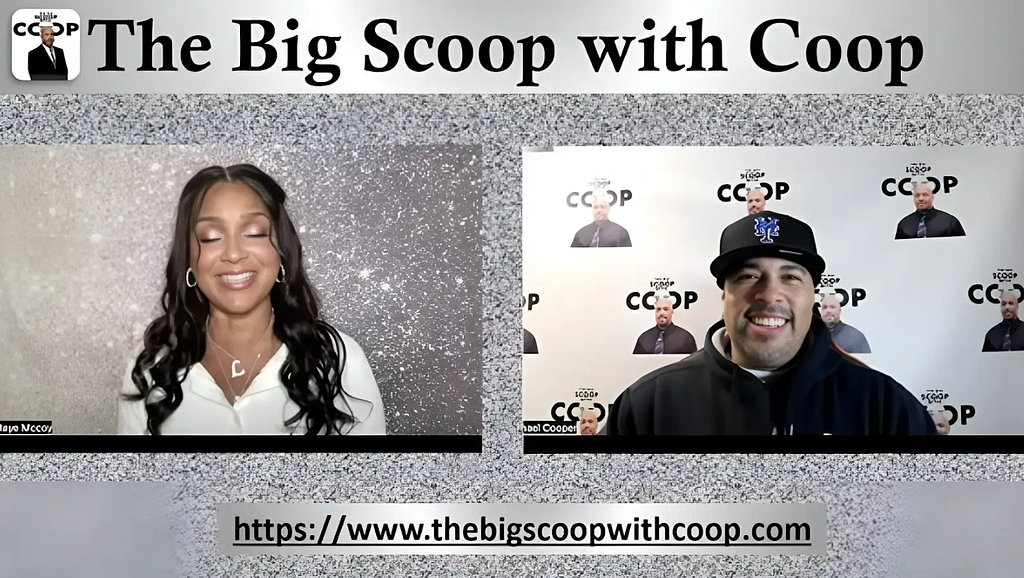
As part of my series of interviews about “5 things you need to know to create a very successful podcast”, I had the pleasure of interviewing Michael Cooper “Coop”.
Michael Cooper “Coop” is the owner and host of The Big Scoop with Coop, a purpose-driven interview podcast featuring many award-winning guests. Coop is known for his engaging interviews and spotlighting of represented and underrepresented voices, and he has built a platform that blends entertainment, inspiration, and great information. Michael is also in college for a business degree and is becoming a media entrepreneur dedicated to elevating creatives across different industries.
Thank you so much for doing this with us! Before we dig in, our readers would love to get to know you a bit more. Can you tell us a bit of your “personal backstory? What is your background, and what eventually brought you to this particular career path?
I was born and raised in Rocky Mount, North Carolina. When I was a kid, I always enjoyed watching sitcoms (The Cosby Show, A Different World, TNBC, and more), too many shows that I used to watch, and they would mesmerize me. I always told myself that I could act in these shows. I always wanted to act. In 2013, I had my chance, and I was honored to be in two indie movies. One movie I did a voice-over for, and the other was an on-screen appearance with lines. I told myself this is what I wanted to do. I couldn’t afford to leave to go to NY, ATL, or L.A. to attempt to become an actor. I am married and, at the time, had three very young kids (who are now teenagers and one is now grown). I told myself I don’t want to leave the entertainment industry. I researched what I can do while I am working a full-time job to help take care of my family. My next best option was the media. I knew God gave me the gift of gab, and I was ready to use it. I ran into the world of podcasting. In 2013, podcasting wasn’t as big as it is now in 2025. I did my research and came across Blog Talk Radio, and The Big Scoop with Coop was born. I had minimal equipment, a USB Turtle Beach headset with a built-in microphone for gaming. My first guest was the filmmaker of the two movies I was in, but I wanted to go bigger, and IMDb Pro became one of my best friends. I reached out to publicists, and I was privileged to interview clients who have appeared in television shows, movies, and commercials with very minimal experience in podcasting. Fast forward 12 years, and I have had the honor of interviewing many well-known and up-and-coming guests who are making significant contributions in various industries (television, movies, sports, politics, business, education, and music). The Big Scoop with Coop has become an emerging brand.
Can you share a story about the most interesting thing that has happened to you since you started podcasting?
The most interesting thing that has happened to me is the people that I have met over the last 12 years. I had the honor of being part of the press coverage when Hillary Clinton was running for President of the United States, and the campaign came to Rocky Mount, NC. I got to meet Bill Clinton, I have been in newspaper articles and received recognition for my show, been invited to go on sets to interview casts for a couple of shows, but it’s nothing like meeting new people. Networking is huge to me. The people that I have met are doing big things in entertainment, sports, education, and business.
It has been said that our mistakes can be our greatest teachers. Can you share a story about the funniest mistake you made when you were first starting? Can you tell us what lesson you learned from that?
I can laugh at it now, but a few years ago, I was so embarrassed! In the first few months of my podcast career, I had a big-name guest (I won’t name the guest) on my show. I told myself that I knew all about this guest, and I didn’t have to do any research. Well, I was mispronouncing her last name for the whole show. When the show ended, she told me that I was pronouncing her last name wrong, and I felt so embarrassed! I had to go back and edit to take out her last name. The moral of the story is to do your research on your guests and topics, no matter how much you think you know about a topic or a person.
How long have you been podcasting and how many shows have you aired?
I am in my 12th season of podcasting (12 years). There are 173 episodes aired, and trust me, I have enjoyed every one of them. There are many more to come!
What are the main takeaways, lessons or messages that you want your listeners to walk away with after listening to your show?
I want my listeners and viewers to walk away with empowerment! The guests on my show have obtained a certain level in their careers, and they speak about their beginnings and where they are now. I want everyone to know that if my guests can do it, you can do it too! My guests are no better than my listeners and watchers. The majority of my guests put the work into their careers, and I want everyone listening or watching my show to know that if they put the work in, they can do it too! There is nothing too big in this world that you (who is reading this) can’t accomplish!
In your opinion what makes your podcast binge-listenable? What do you think makes your podcast unique from the others in your category? What do you think is special about you as a host, your guests, or your content?
What makes my show binge-listenable is that my guest isn’t just promoting, they are revealing. Each episode feels like a meaningful conversation; my guests are opening up about themselves and not just a promotional tour. My viewers are learning about my guests and not just what they are currently doing, and it makes each viewer want more. They are ready for the next episode to see or hear about my next guest and learn something straight from their mouth. What makes me different than other podcast hosts is that on my show, I give my guests the space to be heard and know when to jump in and ask the right question at the right time. I am just as interested in what my guests are going to say as the listeners and watchers. I am not doing this for clickbait, instant fame, or popularity. Each episode, I try to make each guest feel respected, and my audience recognizes that. I don’t try to outshine my guests, and I treat my guests the same way I want to be treated. My platform brings each well-known name or underrepresented name to the forefront, and I do it with professionalism.
Doing something on a consistent basis is not easy. Podcasting every work-day, or even every week can be monotonous. What would you recommend to others about how to maintain discipline and consistency? What would you recommend to others about how to avoid burnout?
My advice is don’t go 0 to 100. If you are new to podcasting or have been doing it for a long period, pace is the name of the game. If you have guest(s) on your show or if you are doing your show solo, it is always good to take time and do research on your topic that you will talk about or the person you are going to interview. If you rush to get on the mic or in front of a camera, it will show during your podcast. Set realistic goals for how many episodes you will be able to do based on the events in your life. I work a full-time job, I am in college, I am a full-time dad, and a full-time husband. So it’s all about pace and research that make my podcast more authentic. Your guests and listeners can recognize burnout, and they will love to hear a fresh you because they will be able to feel your energy, and they will appreciate the work you have put into your podcast!
What resources do you get your inspiration for materials from?
My resources come from real-life stories, cultural shifts, and conversations that are in and out of mainstream media. I pay close attention to many legitimate voices in entertainment, business, sports, and activism, especially those creating impact quietly but powerfully. My guests inspire my next wave of material through their journey, which deserves more visibility. Doesn’t matter if you are well-known in a specific industry or underrepresented in the industry you are in. If you are making noise, let’s make sure the world hears it.
Ok fantastic. Let’s now shift to the main questions of our discussion. Is there someone in the podcasting world who you think is a great model for how to run a really fantastic podcast? What are the ingredients that make that podcast so successful?
There are a few out there that I could name, but I will stick to one. On Purpose Podcast by Jay Shetty. The podcast has inspirational interviews with guests from all industries. The conversations are about why that person does what they do.
You are a very successful podcaster yourself. Can you share with our readers the five things you need to know to create an extremely successful podcast? (Please share a story or example for each, if you can.)
1 . Subject Matter — This ranks #1 to me. Picture yourself scrolling on Apple Podcasts, YouTube, or wherever you listen or watch your podcasts, and you click on a podcast. The host is just sitting there saying nothing or talking randomly about nothing. How long will that podcast have your attention? Will you be inspired to listen to another episode of that podcast when the host is just saying random words or the first thing that comes to mind?
2 . Personality — The host runs the show. Two groups of people will feed off your personality, your guests, and your listeners. If you have nervous guest(s), and when your personality shines, it will help relax your guest(s), and they will go with the flow of you and your personality. Your personality can shine through your podcast, where it will reach your listeners and will have them tuning in for more.
3 . Pace — I spoke about that earlier. Your pace is important for each episode. You don’t want to “burn out” in the middle of your podcast by running out of things to talk about because you rushed your podcast. You don’t want to book a podcast episode daily or weekly if you don’t have enough material to talk about. Gather enough material for the amount of time that you have planned for each episode. When your podcast is planned and paced, you will enjoy the results of a successful podcast.
4 . Direction of your podcast — You need to find out if you are trying to make podcasting long-term or short-term. This isn’t the same as subject matter, because this isn’t about what you are going to talk about; it is more about what your plans are for your podcast. Do you see your podcast as something bigger in the future, or do you enjoy podcasting as a hobby?
5 . Equipment — One of my biggest obstacles within my first few seasons, without even realizing it, was the poor quality of audio that I was using. I was having so much fun creating my podcast that I wasn’t thinking about what it sounded like. I was happy with the Turtle Beach gaming headset. Then I started researching what successful podcasters use, and I went for my first of many upgrades, which was a Snowball USB microphone. That was a game-changer for me and my show!
Can you share some insight from your experience about the best ways to: 1) book great guests; 2) increase listeners; 3) produce it in a professional way; 4) encourage engagement; and 5) the best way to monetize it? (Please share a story or example for each, if you can.)
- The best way to book great guests is to utilize social media, IMDb, and the old-fashioned way: get out and network, talk to people. When you converse with people, ask yourself, Are they a fit for your podcast? If so, tell them about your podcast and invite them.
- To increase listeners will take some time unless you have a big company backing you up. Don’t treat your podcast as a “microwave podcast” by saying I have been doing this for a few months and expect your numbers to be sky high instantly. Enjoy the journey, talk about your podcast when you are out in public. Use social media and different forums. In the early days of my podcast, I had business cards created and gave them out or left them in public places. In 2025, it’s all about strategy when it comes to increasing your numbers, but one thing that hasn’t changed is to make episodes continuously. The more you create, the better chances for your podcast viewership to rise.
- To produce it professionally, there are 2 things that you have to do. First, research podcast equipment, and check the reviews on it. Watch videos of people who use the equipment, and if the quality is good or great, start investing in getting the equipment. Also, plan out the format of your podcast. If you have an idea of how you want your podcast to unfold in each episode, write it down in sequence and imagine your podcast in that order.
- There are so many ways to encourage engagement. You can do a Q&A, giveaways, and encourage people to send you suggestions for future guests and topics. Speak to your listeners because they are part of your podcast.
- The Best way to monetize is to look for sponsorship. The correct sponsor that aligns with your podcast will be a great deal for you and your podcast.
For someone looking to start their podcast, which equipment would you recommend that they start with?
To keep it simple and reliable, I will recommend the USB Snowball Ice or Snowball Blue microphone. Snowball microphones have 3 different settings with a built-in filter so you can filter out surrounding noise. For headphones, I recommend the Audio-Technica ATH-M20x. They have good audio quality, the sound reproduction is accurate, they’re comfortable, and they are good for noise isolation. Your laptop or desktop has enough processing power and storage for recording and editing. Last but certainly not least, you will need recording and editing software such as Audacity or GarageBand; there are free and paid services.
Ok. We are almost done. 🙂 Because of your position and work, you are a person of enormous influence. If you could inspire a movement that would bring the most amount of good to the greatest amount of people, what would that be? You never know what your idea can trigger. 🙂
That is a great question! Let me start off by saying reach for the stars, and when you accomplish that, go beyond the stars. Every person has a purpose in life. Some know what they want to do or what they think they want to do. Others are still trying to figure it out, but have a gut feeling about what they want to do. Make every moment count in your life, regardless of whether you know the outcome! Leave a legacy behind and be the best you that you can be! I have plans myself, that is, to open up a multimedia production company. It would produce podcasts (audio and video), talk shows, television shows, music, and more. This will be a one-stop shop for the majority of the entertainment industry. People will have a chance to complete their projects there. This will help anyone in the entertainment industry, regardless of where you are in your career. Never settle for your current situation, regardless of whether everything is going well or wrong. Keep trying to the next level of your life.
How can our readers follow you online?
The best ways to follow me online are: https://www.thebigscoopwithcoop.com
http://www.imdb.me/michaeld.cooper
https://www.tiktok.com/@thebigscoopwithcoop
www.facebook.com/thebigscoopwithcoop
www.instagram.com/bigscoopwithcoop
www.youtube.com/thebigscoopwithcoop
Thank you so much for sharing your time and your excellent insights! We wish you continued success.
About the Interviewer: Chad Silverstein is a seasoned entrepreneur with 25+ years of experience as a Founder and CEO. While attending Ohio State University, he launched his first company, Choice Recovery, Inc., a nationally recognized healthcare collection agency — twice ranked the #1 workplace in Ohio. In 2013, he founded [re]start, helping thousands of people find meaningful career opportunities. After selling both companies, Chad shifted his focus to his true passion — leadership. Today, he coaches founders and CEOs at Built to Lead, advises Authority Magazine’s Thought Leader Incubator.
Michael Cooper of The Big Scoop with Coop: 5 Things You Need To Know To Create A Very Successful… was originally published in Authority Magazine on Medium, where people are continuing the conversation by highlighting and responding to this story.