
An Interview With Chad Silverstein
A leader must be visible and authentic for people to understand what an organization stands for and why it exists.
The most successful modern CEOs are rewriting the rules of leadership. They’re not only building profitable companies but building purposeful brands with personal voices behind them. These leaders understand that in today’s world, people invest in people. Their stories, values, and visibility fuel loyalty, attract opportunities, and drive business growth far beyond traditional metrics. In this interview series, we’re sitting down with leaders who’ve learned to balance purpose, profit, and personal brand — and who are using their influence to shape the future of business leadership.
As part of this series, I had the pleasure of interviewing Bill Provine.
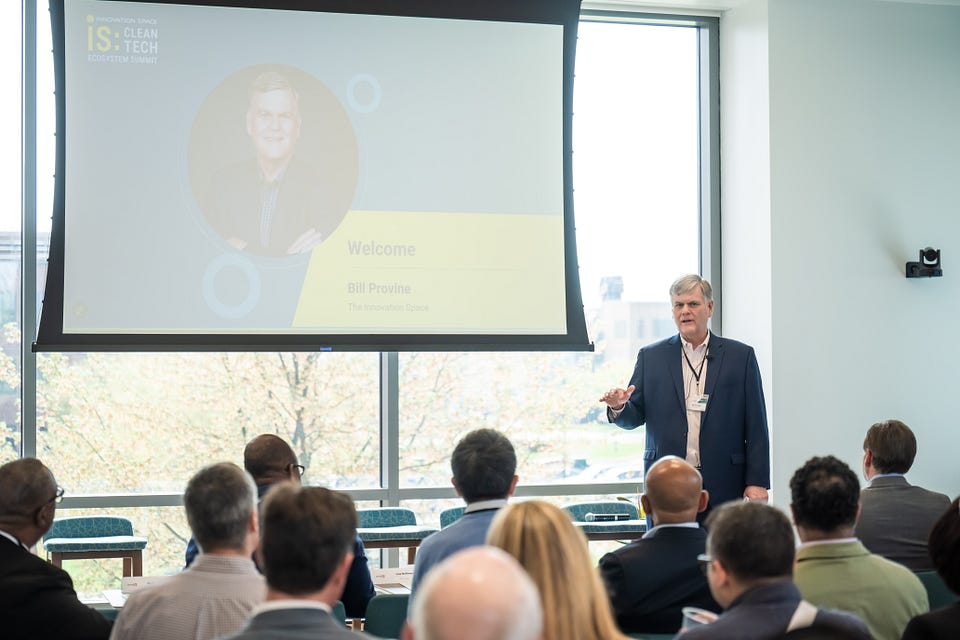
Bill Provine is the founder, president, and CEO of The Innovation Space in Wilmington, Delaware, a nonprofit science-focused incubator that helps transform startups into success. Bill previously spent 30 years at DuPont in senior global leadership roles across science, engineering, and innovation. He serves on The Innovation Space, and has held board positions with American Association for the Advancement of Science (AAAS), The Resolution Project, and the National Advisory Council on Innovation and Entrepreneurship (NACIE).
Thank you so much for joining us in this series. Before we begin, our readers would love to get to know you a bit better. Can you share your backstory and what led you to become the leader you are today?
Thank you for having me. I have gravitated to science since I was young. I was that kid who asked why things worked the way they did, and it became pretty clear to me early on that I wanted to do something that allowed me to explore why things worked the way they did and how to make them better. With this path in mind, I went to the University of California, Berkeley earning a BS in 1987, then onwards to the University of Delaware where I earned a PhD in 1992; both in chemical engineering. I joined DuPont immediately thereafter where I’ve been for more than 33 years, which wasn’t planned. But it was the best training ground to shape my thinking about science, innovation, and leadership and their combined impact on diverse markets across the globe.
I started out in DuPont’s esteemed Central Research and Development corporate division, where I worked on materials and chemical processes. Then I took roles in manufacturing, business development and establishing new venture efforts. What sticks with me to this day from that time was learning how long it takes for an idea to go from the concept to commercialization depending on its value proposition. It’s not always a linear process, because challenges surface and learnings occur that stretch timelines. Getting to learn that learning fast is good; learning that the return of moving the project forward is not worth the investment early can be a blessing even though it requires shutting down the project. But all of this just provides the next opportunity for commercial success. All of this was invaluable for me to experience from different perspectives and roles over the years.
My roles in DuPont pushed me to explore the world beyond the lab, which I am immensely grateful for. Each role stretched my skillset in a different way, and they gave me key insights and learnings that I would apply later on, integrating the fabric of innovation into a cohesive solution that someone was willing to pay for. But the most important thing that stuck with me was that just great science isn’t enough; it must reach customers or solve a real problem to go far.
What I also learned in these early years was that successful innovation has different needs and goals depending on where you are in the world and what market you are serving. It has to include all for it to be real innovation. It has to reflect culture, community, and the way real people in practice utilize the innovation. I learned all that from helping build regional innovation efforts where I worked with universities, national labs, corporate partners, and startups. My goal throughout these partnerships was to ensure everyone benefits in the process of innovation; deals and collaborations had to be structured in a way that benefited all stakeholders in some form of balance. This led me to start The Innovation Space nine years ago here in Wilmington, Delaware. The startups here are tackling hard problems in the life sciences, advanced materials, and clean technologies, where the stakes are high and the hours are long, but the work matters. We are enabling the entrepreneurs and startups that are trying to change the world and make everyone’s lives better via the process of innovation.
The other thing I loved about creating The Innovation Space is that it is a startup (in its own right) that helps other startups. It’s also a way for me to give back to Delaware, a place that welcomed me with open arms and gave me opportunities I could have never imagined as a kid asking why. Delaware is my own backyard and is a special place that is very important to me, and I am so happy to have The Innovation Space rooted here.
As a leader, it’s important not to overcomplicate things. You have to remain both practical and aspirational because building something that will last for generations takes a more open-ended approach. At The Innovation Space, we work with curious, driven people — who are both succeeding and failing, to some extent, everyday as part of our community of innovators. I view my role as the conduit to create the right environment and structure to enable them to overcome their obstacles, learn from each other, and re-energize each day. Being an entrepreneur can be invigorating and challenging on any given day. I want to give our community of innovators one of the best places to work and the freedom to innovate each and every day.
What’s the “why” that drives your work? How has your personal sense of purpose evolved as your business has grown?
My “why” is to change the world for the better. I use this as a guiding principle on how and who we dedicate our support and resources of The Innovation Space. Who doesn’t want to get more cures to market for cancer and other diseases? Who doesn’t want to improve the quality of life for people on this planet?
The Innovation Space felt immediate, not abstract or aspirational, when it first started. Once I got the partnerships established, coordinated, and signed, we then had a strong foundational partnership between DuPont, University of Delaware, and State of Delaware with a building, cash, and an aspiration with one employee (me). To borrow an analogy, we were building the plane while we were flying it. This saw us being more reactive versus proactive, because we had to learn in real time and make decisions as we went. There were days that felt like progress, and there were other days that it felt like everything came to a standstill — especially given we were just beginning to hit our stride when the pandemic hit us in our third year of operation. The common denominator across all this was urgency, because our founders had to keep moving forward.
Early on, I focused on individual companies and popped in when founders were stuck or needed some words of wisdom. As we grew, I had to shift my role and mindset to give founders the right environment to keep going to test another idea and to see it through. This approach was a bit quieter, but more meaningful to our founders. It doesn’t change our purpose; rather, it helps make our purpose clearer. We’re here to help good innovative concepts built with strong science to get through the tough times, and to make sure the people behind the science get through the rough patches. We are “entrepreneurs first,” and I never want our founders to ever feel alone. I want them to feel supported so that they can focus on the critical work which fuels their growth and route to market.
Let’s now move to the core of our discussion. This series is about balancing purpose, profit, and personal branding. Can you help explain why each of those three matters, and why they can sometimes pull against each other? If possible, share a real example from your experience.
It’s a cliché, but I really think purpose is why you get up in the morning. Our purpose is to help science-based innovations succeed and make their way into the world and improve lives. Without purpose, the work becomes transactional, and that leads to wasted energy and a lack of motivation in your organization.
At The Innovation Space, we are a “not-for-profit” organization but inherently we are still a business that always needs to profitably close its books. I prefer to think of profit as financial sustainability, and this is what allows us to live out our purpose. The Innovation Space needs to drive our purpose and mission and measure our progress via impact metrics so that we can attract continued and new investments into our organization and be responsible with our resources, while operating in a manner that best serves our founders and our funders. You can’t expect to last on purpose alone. As I mentioned earlier, I once thought good science alone was enough to advance innovation, but I quickly learned that a sustainable financial model is just as critical to this mission.
When it comes to personal branding, I prefer to think of this as advancing clarity and trust of the organization and our mission. A leader must be visible and authentic for people to understand what an organization stands for and why it exists. In our early days, my desire to be visible helped explain what we were building and who it was for, which helped us to attract the right founders and partners.
The tension comes when one of these overpowers the others. Here’s an example: early on, we were trying to figure out how wide a net to cast. Do we focus on growth for growth’s sake, and fill our spaces and financial coffers? Sure, this would have helped our numbers and would have made for an easier marketing strategy. But, it would have been a distraction from our original purpose to support the startups who are trying to “change the world for the better.” When the three are aligned and linked, they reinforce and make each other better. You feel it when this doesn’t happen. I look to identify this tension early and make the necessary choices to keep them in balance, even if it feels easier to lean too hard in one direction. Part of that lately as the organization has grown is to purposely deemphasize my personal brand while elevating others in the team, as our combined personal brand is so much more important.
Many CEOs focus heavily on strategy and profitability but hesitate to invest in their personal brand. What do you think about that? What have you seen work best?
I know that many CEOs might think a personal brand means putting themselves out there, front and center, as their organization’s face. I understand that to some degree and I also get why there are some who are hesitant to invest in their personal brand because of internal and external pressures. But it takes a village to create a strong personal brand. Our work only happens because of collaboration and partnerships. I prefer to shine a light on the collective rather than just me because it’s more authentic and effective.
If I do have a personal brand, then it centers on making myself available to founders when they need guidance or a sounding board. When I meet a founder for the first time, I don’t want them to think I am talking to them just because I want to “sell” The Innovation Space. We might not be the right fit for them or vice versa. Still, I want to help where I can and support them, as I am a strong proponent in paying it forward. Rather than selling, I try to be critically insightful to help them sell themselves and their startups better and connect them to others or other resources or programs that can really help them move and grow faster.
I have found that the best CEOs do not separate their role from the organization’s mission. Uplifting The Innovation Space means uplifting myself, and vice versa. I am proud to have helped shape the organization’s strategy and direction, which helps contribute to my personal story in a very natural way. I prefer this because it’s a more genuine way to build a personal brand rather than trying to build one just by myself.
What are some misconceptions you’ve encountered about personal branding in the C-suite, and how do you challenge those narratives?
Some think personal branding is all about ego and it’s a matter of being pompous that takes attention away from the organization. And I get that, but I have found that when you do it right, it strengthens the organization.
My personal brand and The Innovation Space are tied together. This is not to say that I am the organization, but rather it’s meant to say that I need to show up in a meaningful, authentic way. When I talk to a founder or the media or post on social media, I want to show the audience who Bill Provine is and what he believes, while amplifying The Innovation Space’s work and mission through storytelling. Potential startups and partners want to see that there is a real person behind the quote or post, and they want to know that you can help them to avoid the minefields you have discovered over your career.
At the end of the day, it comes down to authenticity. Our sector is driven by relationships and referrals, so you have to be honest. When I am in my points of view and in speaking to audiences from different cultures and perspectives, I am building trust and putting a human face on our organization.
I put myself out there to bring attention to The Innovation Space and our startups, but also to let other founders know, “I’m here to help, and I have many connections and experiences to share.” That’s how I open the door to start a conversation, which attracts partners because they want to be part of something meaningful and authentic. When all is said and done, it’s never been about me; it’s about supporting the organization and our startups. And that’s what makes it all worthwhile.
What’s one specific way your visibility as a leader, through interviews, speaking, or social media, has directly impacted your organization’s success? Walk us through what happened. How did you know it worked, what changed in measurable terms?
One of the key enablers for early success for The Innovation Space was being able to leverage my network from (at that time) 24 years in roles with DuPont travelling and collaborating across the globe, my board roles in AAAS and NACIE, and online platforms like LinkedIn to quickly build a following and engage volunteers and enroll early staff into the venture. This enabled us to break into regional and national conversations early-on.
It was important to be visible, but it was just as critical to be consistent in what was being said, especially early on. People would hear “The Innovation Space” and assume we were just a space or just labs for rent. This was a real hurdle that we had to overcome in the beginning, so I would give the same message over and over because I wanted to make sure founders knew what we were building for them, and what separated us from other incubators, accelerators, and investors — we had all three components centered on commercialization. We are not talking about entrepreneurship from an academic point of view; we are bringing experience to the table with community members such as startup CEOs who have “been there, done that” joining as our Entrepreneurs-in-Residence, our subject matter experts and startup mentors, who know and have commercialized products. This is all complemented by our incredible staff of ecosystem advocates — our leadership team that makes The Innovation Space the best place to work and innovate — not only for us but for all the employees that work in all of the startups that we help to support.
It took a little time, but after several interviews and speaking opportunities, we started hearing from founders across the country. And the founders weren’t asking us who we were and what we did, they were wondering how we could work together or when their company could move in. We didn’t have to spend the first half of the meeting to explain who we are and what we did, but we could use this time on talking about impact and working together.
The takeaway for me from all this was that visibility is not about self-promotion; it’s about providing clarity. A leader needs to explain the organization’s why and how in plain language that meets the founder where they are. When you do that well, the right people will find you faster and want to join with you.
Balancing profit and purpose is easier said than done. What practices or principles guide your decision-making when those two goals seem to conflict?
It always comes back to our mission. We’re a nonprofit that is supporting founders. Fiscal stability is more important than ever, so every choice we make is guided by our mission and purpose. Our decisions need to help our startups grow faster by giving them better access to funding or facilities or expert advice.
We’re creating an innovation hub that provides founders with all they need to move their science forward. We can’t do that without being fiscally minded. We see revenue, investments and partnerships as tools to help us deliver on our mission. Because of that, I don’t see our purpose coming into conflict with fiscal considerations. I remind our team that as long as we keep our focus on our purpose and who we serve, the financial decisions will naturally align. Our success isn’t dictated by shareholders or earnings report; it’s measured by the strength and impact of who we support. Everything else flows from there. If our entrepreneurs succeed and prosper; I guarantee more will come.
Can you share a story about how aligning your personal values with your company’s mission created a breakthrough in performance or growth?
This one is easy. As the founder of The Innovation Space, I embedded my personal values of “change the world for the better,” partnership, collaboration, safety, ethics, resiliency, openness, and teamwork into our guiding principles. This enabled the attraction of supportive partners and clients to create the rocket fuel for the early and ongoing growth for our organization. This alignment drives a much stronger drive for results but in alignment with also the personal value of partners enabled the deal to close faster and with much more momentum during negotiations and then upon launch of the new organization with the full power of the partners together and aligned.
In your view, what separates a leader who simply “runs a company” from one who builds a movement around their message?
For me, the difference starts with how you see your role. I come from a science background, and that keeps me fundamentally and philosophically grounded as a guiding principle. Like with our entrepreneurs. I don’t wake up thinking about running an organization but looking to create a new future state. The mechanics of running an organization are important, but they don’t rule my life. I wake up thinking about how we can build the best environment for innovation. How can I better enable my great team to better assist science-based startups so that they can bring breakthrough ideas into the world and change it for the better as fast as possible. When you focus on the outcome more often than the work or , everything shifts.
The Innovation Space was built in a very unique way. From the beginning, it had real buy-in from universities, government, industry, and the local community. Our strength comes from the collective wisdom of our community of partners and innovators, and we simply cannot do this work purely on our own. Because of that, I see it as a privilege to build on what was started back in 2017 and to keep growing something that is bigger and more impactful every day.
That is where the idea of a movement comes in. My role goes far beyond simply running a company. I have had the opportunity to support more than 150 startups that have raised over $1.2 billion, which in turn has created over 1,000 jobs and bring truly transformative technologies to life and to market. That kind of impact changes how you think about leadership. This work matters in a very real way, and it carries a responsibility that I take seriously.
I think leaders who are just running a company often focus first on numbers. Numbers are important, but they are not the whole story. I care deeply about people. I think about the founders, the teams, the partners, and the community that surrounds The Innovation Space. I am not just focused on the next quarter or the next year. I am thinking about where these companies will be five years from now and whether we are setting them up to succeed with the right space, funding, and mentorship.
Building a movement means looking beyond your own organization. It means investing in the broader ecosystem and showing up where it matters. For me, that has meant staying involved across sectors and supporting science, innovation, and entrepreneurship wherever I can. When leaders lead with purpose, people, and long-term impact in mind, the message spreads naturally. That is when a company becomes something more, and that is what turns leadership into a movement. This includes being there on a local, state, regional, and national level.
How do you integrate storytelling into your leadership, both internally with your team and externally with your audience or clients?
The work we do is hard, and often technical. Talking just about goals, metrics or spreadsheets makes teams lose sight of why what they’re doing matters. Storytelling is how people understand things and keep us grounded. It connects progress and work into the real world where we all live and breathe.
When I talk to others about The Innovation Space or with our team, I talk about the founders behind the work. I love the stories about the companies that started with just a small team and an idea and grew into something bigger than they ever imagined. These stories provide perspective and remind us that progress is a tortuous path.
You can’t just share success stories especially with your own team; you have to share the stories where things didn’t go well. I’ve been in this industry for more than 30 years, and I had to learn to talk about my challenges, mistakes and failures. If sharing my challenges, my mistakes and failures give our team the permission to be honest and take risks, then it’s worth it.
Can you share a time when taking a public stand or sharing your story authentically strengthened your credibility or influence?
I have shared with entrepreneurs how some of my prior board members questioned whether I was entrepreneurial enough and how I used that as fuel to keep driving for measurable growth of our efforts and now 150+ startups, $2.1B raised by them, and a hyper supportive physical and virtual enterprise, those original critics are more silenced now. With our entrepreneurs, it is to see criticism or suggestions as a gift and use them to make yourself better and more resilient as the ride of entrepreneurship is a wild one!
At first, I was uncomfortable sharing my story and personal growth journey. But those moments became the most impactful. They led me to stop sounding like I knew it all or read from a script and just be honest. I started speaking plainly about why The Innovation Space and the work we do matters, the difficulties faced by founders in this space, and that we were figuring it out as we went along. I didn’t have all the answers, so it made no sense to pretend I did. Entrepreneurs are trained to act like they know everything and that uncertainty shows weakness. If I’m uncertain, then why would someone fund me? I turn that into how being honest with risk shows how you’re tackling the most important uncertainty first and have a mitigation plan for other risks as you move forward. I used that as a mantra for building The Innovation Space and it fueled our success and growth and established trust with our partners and funders. Once you have that trust, it becomes a lot easier to work and build together.
What are your “Top 5 principles for balancing purpose, profit, and personal visibility?” (Please include a short example for each, plus one action a reader could try this week.)
1. Your mission is the filter.
If the mission is not moved forward by a major decision, then it is probably the wrong move to make. Tension between purpose and profit usually comes from a weak mission that has become blurry.
Example: We have turned down opportunities that looked financially attractive but did not truly serve our mission and our why which is working with “startups that can change the world for the better”.
Try this: Take one decision you are wrestling with and write down how it strengthens or advances your mission or business in one sentence. Ask yourself is the return on investment strong enough? Am I compromising my principles for a quick buck?
2. Visibility is about creating connections and driving inspiration, not self-promotion.
Visibility works best when it is about engaging others and not promoting yourself. The early days saw me spend a lot of time explaining what our organization was because people thought we were just a physical space. Providing clarity led to far more growth than any self-promotion ever could.
Example: I hate to repeat myself, but it is good to do that in different forums to some degree with each time mixing in new elements for engagement. Repeating the same simple core message in interviews and talks helped founders and partners finally “get it” that we offer many aspects to fuel their success.
Try this: Practice explaining what you do in plain language to someone outside your industry and notice where they get confused. Do this in the context of a story of either a current or future customer and how you are trying to “change the world for the better”.
3. People before metrics.
Numbers matter, but they are not the whole story. When you focus on helping people succeed, the outcomes tend to improve naturally. Our biggest growth moments came when we centered our work on enabling and developing our own team while addressing founders’ real problems instead of abstract goals.
Example: Shifting from building an organization to building a team that is enabled and inspired to build a great organization.
Try this: Take your mission or vision statement — does it talk more about your business impact and products more than the people involved like customers and your employees?
4. Share your mistakes.
You can’t build trust by pretending everything is going smoothly. Being honest about challenges, mistakes, and learning curves makes your leadership more believable and your message more human.
Example: Sharing stories of experiments that failed or decisions that had to be corrected helped normalize learning and resilience.
Try this: Share one lesson learned from something that did not go as planned and talk about what you would do differently next time.
5. Think long term, even when the pressure is short term.
It is easy to chase quick wins, but lasting “change the world” impact comes from patience and resiliency. I try to make decisions with an eye toward what will make our founders and our ecosystem transverse challenges of not only today nor next next quarter, but what they will be five years from now.
Example: Investing early in partnerships and infrastructure paid off by stabilizing growth faster than expected especially as the pandemic of 2020 hit.
Try this: Look at your goals and ask how they support where you want to be in five years.
Finally, if you could summarize your leadership philosophy in one sentence, what would it be — and why?
Create a strong mission and purpose for your business which has a strong value proposition and hire the people and engage the partners/investors who believe in and support that mission and purpose.
How can our readers continue to follow you or your company online?
You can find me and my organization — The Innovation Space — on LinkedIn and at our website (www.innovationspace.org)
Thank you so much for sharing all of these insights. We wish you continued success and good health!
About The Interviewer: Chad Silverstein is a seasoned entrepreneur with 25+ years of experience as a Founder and CEO. While attending Ohio State University, he launched his first company, Choice Recovery, Inc., a nationally recognized healthcare collection agency — twice ranked the #1 workplace in Ohio. In 2013, he founded [re]start, helping thousands of people find meaningful career opportunities. After selling both companies, Chad shifted his focus to his true passion — leadership. Today, he coaches founders and CEOs at Built to Lead, advises Authority Magazine’s Thought Leader Incubator.
The New CEO Playbook: Bill Provine Of The Innovation Space On Purpose, Profit, and Personal Brand was originally published in Authority Magazine on Medium, where people are continuing the conversation by highlighting and responding to this story.