
Breaking the Marketing Mold: Shawn Porat Of OpenFortune On 5 Innovative & Non Traditional Marketing Strategies That Can Engage Audiences Like Never Before
An Interview With Chad Silverstein
Marketing will become less about exposure and more about belonging. Consumers will gravitate toward brands that feel like cultural participants rather than advertisers.
As a part of this series, we had the pleasure to interview Shawn Porat.
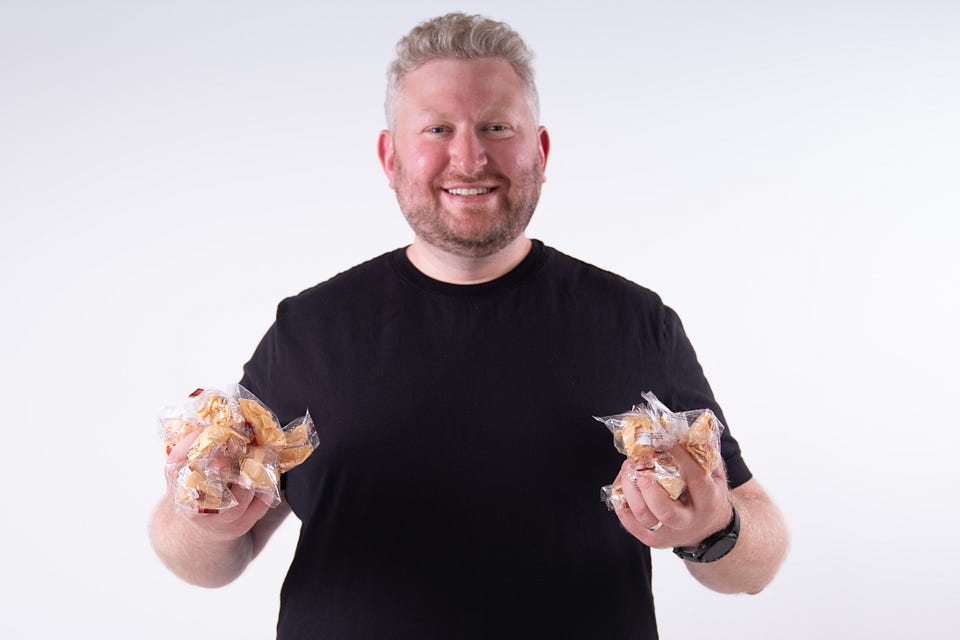
Shawn Porat is the Founder and Chief Fortune Officer of OpenFortune, a global advertising platform that places branded messages inside fortune cookies distributed through tens of thousands of restaurants across 30+ countries. Under his leadership, OpenFortune has partnered with major global brands and reimagined an everyday cultural icon as a measurable, premium media channel. A serial entrepreneur and investor, Shawn focuses on building unconventional businesses that blend creativity, distribution, and data. He lives in New York with his family.
Thank you so much for joining us in this interview series! To start, could you share when and how you got started in marketing?
I didn’t come from a traditional marketing background. I came from entrepreneurship first. I’ve always been obsessed with attention… how you capture it, how you hold it, and how you turn it into something meaningful. OpenFortune really started as a curiosity experiment. I saw fortune cookies as one of the few remaining physical media channels that people actually stop and engage with. Nobody ignores a fortune cookie. You crack it open, you read it out loud, you pass it around the table. It’s social, tactile, and memorable. That moment stuck with me. What started as a small idea — “what if brands could live inside that moment?” — turned into a global advertising platform. So, my entry into marketing wasn’t academic. It was hands-on experimentation: testing human behavior in the real world and building a system around attention.
What has been the biggest shift in the marketing industry and can you give us an example of how it impacted you?
The biggest shift is that people no longer trust interruption; they trust experiences. Traditional advertising was about inserting yourself into someone’s day. Modern marketing is about becoming part of a moment they want to participate in. We felt this immediately. If we positioned fortune cookies as ads, brands were skeptical. But when we framed them as experiences, collectibles, surprises, conversations at the dinner table… everything changed. Brands started seeing them less as media inventory and more as cultural touchpoints. That shift forced us to design campaigns around emotion and memory, not impressions.
Can you explain why it’s essential for businesses to break away from traditional marketing and embrace new strategies?
Because consumers already have. People filter out banner ads mentally. They scroll past sponsored posts without even realizing it. Attention has become defensive. If your marketing looks like marketing, you’re already at a disadvantage. Breaking away from traditional formats isn’t about being trendy; it’s about meeting people in environments where their guard is down. The brands that win today don’t chase attention. They embed themselves into moments people already value.
Could you share and briefly explain the first major change you made to break the trend of traditional marketing that was not so common?
We stopped selling ads and started selling storytelling environments. Instead of pitching brands on reach alone, we pitched them on context: the emotional moment of opening a fortune cookie at a shared meal. That was unusual at the time. Media was still obsessed with digital scale and CPM math. We said: What if the metric isn’t just impressions, and what if it’s memorability? That reframing changed the entire business model.
What specific results did you see after implementing this change?
Engagement went through the roof. Brands started reporting higher recall, stronger social sharing, and more organic conversation than campaigns that cost multiples more in digital. We saw people keeping fortunes, taking pictures, posting them, and collecting them. It proved that when marketing becomes an artifact instead of a pop-up, people treat it differently.
How do you ensure that these new marketing strategies resonate with your target audience?
We obsess over the human moment, not the media plan. Every campaign starts with a simple question: Would a normal person enjoy this? If it feels forced, gimmicky, or overly branded, it dies in the concept stage. We test creatively, watch behavior in the real world, and adjust.
Can you share an example of something you tried that didn’t deliver expected results or ended up becoming a financial burden, and what you learned from that experience?
Early on, we chased scale too aggressively. We invested in distribution ideas that looked impressive on paper but didn’t preserve the intimacy of the experience. We learned that not all growth is good growth. If scaling dilutes the emotional core of what makes your platform special, you’re just building a bigger version of something weaker. That lesson saved us from becoming a commodity media network.
Great. Now, let’s dive into the heart of our interview. Could you list “5 Innovative & Non Traditional Marketing Strategies That Can Engage Audiences Like Never Before”?
1. Physical Media Experiences in a Digital World
Tangible artifacts people can hold, keep, and share create deeper memories than pixels.
2. Collectible Storytelling
Campaigns that unfold in pieces, series, numbered editions, surprises, trigger curiosity, and repeat engagement.
3. Embedded Brand Moments
Marketing placed inside everyday rituals: meals, travel, celebrations, events.
4. Participation-Driven Campaigns
Invite people to co-create: scan, vote, reveal, unlock, share.
5. Conversation-First Design
Marketing built to spark dialogue between people, not just between brand and consumer.
What challenges might companies face when transitioning away from traditional marketing strategies, and how can they overcome them?
The biggest challenge is fear of measurability. Executives are comfortable with dashboards, even if those dashboards measure shallow engagement. New strategies often feel harder to quantify at first. The solution is hybrid measurement: combine traditional metrics with qualitative signals, recall, sentiment, organic sharing, and brand lift.
How do you measure the success and ROI of these new marketing strategies?
We look at a mix of:
- Brand recall studies
- Direct response signals (QR scans, search lift, site visits)
- Social amplification
Looking forward, how do you see the role of innovative marketing evolving in the next 5–10 years?
Marketing will become less about exposure and more about belonging. Consumers will gravitate toward brands that feel like cultural participants rather than advertisers. The line between product, media, and experience will blur even further. The winners will design ecosystems, not campaigns.
What advice would you give to business leaders who are hesitant to move away from traditional marketing methods?
Don’t abandon what works, but don’t confuse familiarity with effectiveness. Run experiments alongside your traditional strategy. Innovation doesn’t require a leap of faith. It requires controlled curiosity.
Can you share any upcoming initiatives or plans you have for further innovating your marketing strategies?
We’re expanding beyond restaurants into travel, events, and large-scale cultural environments where shared moments naturally happen. The goal is to place brands inside memories, not just media placements. We’re also leaning heavily into collectible formats and interactive layers that connect physical experiences to digital engagement in a seamless way.
How can our readers follow your work and learn more about your approaches to modern marketing?
The easiest way is through OpenFortune (http://openfortune.com/). We share our campaigns, experiments, and partnerships openly. We treat marketing as a living lab, and people can watch it evolve in real time. And honestly, the best way to understand what we do is simple: open a fortune cookie and pay attention to how it makes you feel. That’s the blueprint.
Thank you for sharing these insights!
About The Interviewer: Chad Silverstein is a seasoned entrepreneur with 25+ years of experience as a Founder and CEO. While attending Ohio State University, he launched his first company, Choice Recovery, Inc., a nationally recognized healthcare collection agency — twice ranked the #1 workplace in Ohio. In 2013, he founded [re]start, helping thousands of people find meaningful career opportunities. After selling both companies, Chad shifted his focus to his true passion — leadership. Today, he coaches founders and CEOs at Built to Lead, advises Authority Magazine’s Thought Leader Incubator.
Breaking the Marketing Mold: Shawn Porat Of OpenFortune On 5 Innovative & Non Traditional Marketing… was originally published in Authority Magazine on Medium, where people are continuing the conversation by highlighting and responding to this story.