
The value isn’t “AI replaces expertise”. The value is that AI compresses the time to insight, highlights plausible causal links across silos, and helps teams converge on a concrete set of moves they can test and execute.
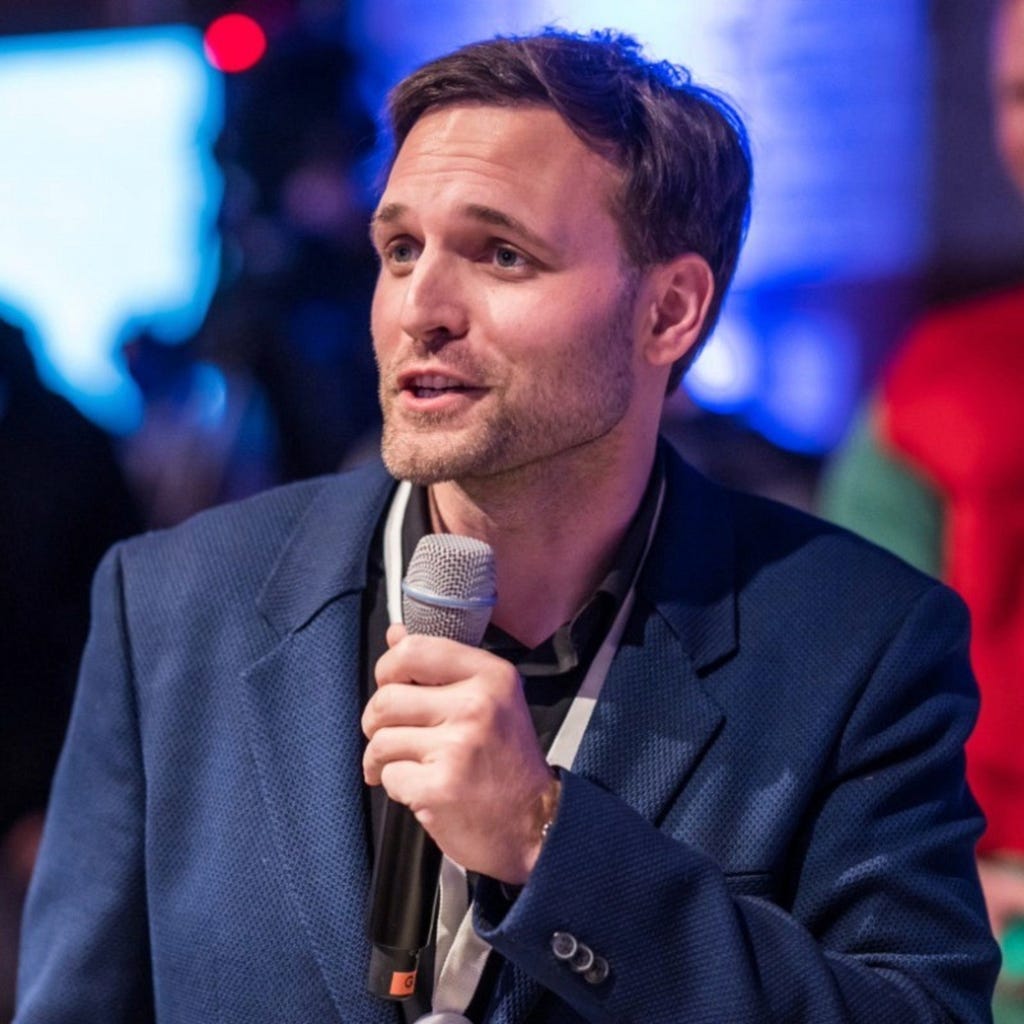
As a part of this series, we had the pleasure to interview Lukas Egger.
Lukas Egger is a global leader in AI-driven business transformation, helping some of the world’s largest companies navigate the complexities of adopting artificial intelligence. As the Vice President of Product Strategy and Innovation at SAP Signavio, Lukas spearheads cutting-edge AI initiatives, de-risks ambitious projects, and drives product discovery to create transformative solutions. His work focuses on re-engineering business systems, fostering innovation, and preparing organizations for what he calls “graceful failures” in the adoption of new technologies. With a proven track record in team building and data-driven technology, Lukas has developed and implemented successful product discovery methodologies that empower teams and deliver long-term value. He is deeply involved in strategic formulation, designing roles and responsibilities, and crafting operating models that align with innovation goals. Lukas also engages with C-suite clients and stakeholders, providing thought leadership through public speaking, podcasts, and written pieces. Beyond his professional achievements, Lukas is the host of the Process Transformers podcast, where he helps businesses separate signal from noise in the AI space and think about artificial intelligence in practical, inspiring, and transformative ways. His dedication to advancing AI strategy extends to fostering academic collaborations and securing patents, ensuring that SAP Signavio remains at the forefront of technological advancement.
Thank you so much for joining us in this interview series. Before we dive into our discussion, our readers would love to “get to know you” a bit better. Can you share with us the backstory about what brought you to your specific career path in AI?
For the longest time, I felt like many people around me knew exactly what they wanted to become: doctors, lawyers, especially when I was younger. I was never so sure about that for myself. It took me a long time to realize that the most interesting things three years from now are often the ones that don’t exist today. Because of that, I naturally gravitated towards innovation work. Not because it’s glamorous, but because it optimizes for learning. You’re surrounded by smart people, real constraints, and messy problems that matter. About ten years ago, it became clear to me that AI and machine learning would move from an academic specialty into a general-purpose capability that would reshape how products and organizations work. I didn’t “switch into AI” as a narrow job title. I followed the gravity of where the frontier was going, and I tried to build a career around being useful at that frontier.
Can you share the most interesting story that happened to you since you started working with artificial intelligence?
This is a complicated question because, looking back, things that once seemed surprising now seem obvious. However, if I were talking to a version of myself from 15 years ago, the most unintuitive development is the democratization of the technology. Fifteen years ago, machine learning felt like an esoteric art; you needed deep computer science and math knowledge just to get anything going. I assumed the applications would stay niche, mostly in research-heavy domains. Today, the barrier to entry has lowered so drastically that a whole new world of opportunity has opened up. Watching people in my own family, including my mother, interact with AI naturally, without intimidation, has been genuinely mind-bending. It’s not just “tech people” anymore. The entry barrier has collapsed, and that unlocks a new class of creativity and productivity.
The second surprise is what AI revealed about humans. Ultimately, I am now most intrigued by AI as a kind of mirror. Not because it tells us objective truth about ourselves, but because it reflects our language, incentives, fears, and aspirations back at us in a distorted, sometimes clarifying way. That is not a philosophical angle I would have expected to take a decade ago. Ten years ago, I didn’t expect AI to become a tool for self-understanding and sense-making, not just automation.
You are a successful leader in the AI space. Which three character traits do you think were most instrumental to your success? Can you please share a story or example for each?
Intense Curiosity: When you engage at the frontier of innovation, there is no playbook. You never know whether an initiative will pan out or end up as a footnote in history. Curiosity is what keeps you learning when the environment changes weekly and yesterday’s “obvious” answer becomes tomorrow’s trap. In practice, curiosity looks like constantly asking, “What’s the real constraint here?” and “What would have to be true for this to work?” You have to engage with the technology, business models, and ideas for the love of it. If you have a purely transactional perspective, you won’t enjoy the process enough to stick with it, and you won’t be able to separate hype from signal.
Grit (the willingness to do the unglamorous repetitions): I often compare innovation to training for a marathon. Many people want to say they have completed a marathon as a token of pride, and it takes 30 seconds to explain how to do it, training zones, increasing mileage, and so on. But the difficulty isn’t in the explanation; it’s in actually putting in the work when no one is watching. Most projects don’t fail because the idea is impossible. They fail because teams underestimate the sustained effort it takes to get from a prototype to something reliable, governable, and adoptable in a real organization. Some of the most important “wins” in my career came from sticking with the boring parts: instrumenting, validating, iterating, and doing the work when nobody is clapping.
Collaborative Framing (turning “my AI project” into “our shared win”): There is often a “cool kids” syndrome in tech, where people say, “We are doing AI, step aside.” That attitude fails in big organizations. If you want to go fast, go alone; if you want to go far, go with others. I learned that I needed to frame AI in terms of bringing others along on the journey, helping them succeed, not displacing them. For me, that meant being comfortable not “owning” every AI project, but supporting others’ work. The highest form of innovation isn’t centralizing everything under one team. It’s raising the organization’s capacity to innovate, so more people can move faster with confidence. Greatness lies in the agency of others.
Let’s jump to the primary focus of our interview. Can you share a specific example of how you or your organization used AI to solve a major business challenge? What was the problem, and how did AI help address it?
A classic enterprise problem is the gap between business intent and operational reality. Historically, “Business” and “IT” have been two separate silos, and connecting them is notoriously difficult. Leaders talk in outcomes, working capital, cycle time, customer experience, and resilience. Teams on the ground deal with processes, systems, data quality, and handoffs. The translation between those worlds is often slow and fragile. We created a tool within SAP Signavio called Transformation Advisor to help close that gap. It gathers public information on a company (based on regulatory filings) and combines it with data supplied by the customer, like strategy documents, OKRs, and the like. The AI then translates these high-level inputs into relevant, actionable process improvements at the system level. Previously, it was very hard to map a high-level objective, like improving liquidity, directly to purchase order configurations or book-closing strategies in the ERP system. Now, we can bridge that gap. Instead of spending weeks aligning narratives across business and IT, teams can get to a shared starting point quickly, then validate and refine it with domain experts. We trialed this Proof of Concept, received fantastic feedback, and put it into production. The value isn’t “AI replaces expertise”. The value is that AI compresses the time to insight, highlights plausible causal links across silos, and helps teams converge on a concrete set of moves they can test and execute.
What are some of the common misconceptions you’ve encountered about using AI in business? How do you address those misconceptions?
There are too many to list, but I think we are currently in the “peacocking” phase of AI. Because chat interfaces (like ChatGPT) were the first runaway success, everyone is copying that modality to “show their feathers” and prove they have AI integration. I believe that for 90% of business use cases, a chat interface is actually not the best User Experience, it’s just a first-order approximation. The best AI experiences often look like structured workflows, just-in-time UI, guardrailed actions, and assistive automation embedded into how people already work. We are slowly breaking out of that paradigm into more canvas-based or context-aware interfaces.
The other major misconception is that AI creates digital artifacts essentially for free, so content becomes the product. While content is becoming cheap, trust is becoming expensive. Provenance, governance, security, and domain grounding become the differentiators. You cannot monetize digital artifacts the same way in the future. Instead, knowing where data comes from and having partners that understand the reality of your systems will be the premium asset.
In your opinion, what is the most significant way AI can make a positive impact on businesses today?
If I take this question literally regarding today, the answer is that every single employee can meaningfully improve their work by using AI as a sparring partner. Whether it is checking assumptions, creating evidence-based feedback loops, stress-testing decisions, or navigating tricky interpersonal communications, there is almost no task that cannot be improved by “sparring” with an AI. It isn’t about the AI making the decision for you; it’s about the compounding effect of every employee using these tools to get slightly better every day. Even before you build complex automation, AI can improve drafts, challenge assumptions, offer alternatives, and help people learn faster. Small improvements across thousands of daily decisions create an outsized organizational lift. That compounds.
Ok, let’s dive deeper. Based on your experience and research, can you please share “5 Ways AI Can Solve Complex Business Problems”? These can be strategies, insights, or tools that companies can use to make the most of AI in addressing their challenges. If possible, please share examples or stories for each.
Connecting Silos
AI can translate between domains that previously spoke different languages, like Business and IT. As seen with our Transformation Advisor, you can link high-level goals (working capital, resilience) to concrete process-level improvements in purchase-to-pay or order-to-cash workflows.
The “Council of Sharks” (Structured Devil’s Advocacy)
You can use AI to play Devil’s Advocate. Just as Charlie Munger advocated for “inverting” a problem, you can have AI act as a critical mentor, a whole panel of them, if you like to test-drive your ideas, shoot holes in your logic, and help you refine your strategy before you present it to humans. Stress-test a product launch across legal, security, UX, and adoption risks before it goes anywhere.
Communication Translation
When there is friction between teams, you can “vent” to an AI, get all the frustration out, and ask it to translate your thoughts into compassionate, professional language that the other party can actually hear and act upon. It handles the heavy lifting of emotional translation. The result: a message that preserves facts, intent, and relationships.
Digital Artifact Elevation
Whether it is sales copy, marketing assets, customer support, or video, AI allows you to drastically increase the quality and speed of your output. Tailored outbound messaging, summarized account context, support responses with citations from internal knowledge. If the quality of your digital artifacts hasn’t skyrocketed in the last year, you are already falling behind.
Vibe Coding for Product Discovery
AI dramatically lowers the cost of creating prototypes, UI concepts, and testable artifacts. Today, you can use “Vibe Coding” tools to test-drive new product ideas and get meaningful feedback from potential customers instantly. If you aren’t using AI-assisted prototyping tools to do product discovery, you are doing it the slow way.
How can smaller businesses or startups, with limited budgets, begin to integrate AI into their operations effectively?
Too many people think AI requires a clear-cut, top-down strategy. My advice is to start with the “time thieves,” not the grand strategy decks. Pick a handful of recurring workflows where time is wasted, or quality is inconsistent: customer emails, support responses, proposal drafts, meeting notes, lightweight analytics. Use off-the-shelf tools first. Add simple guardrails around privacy and data handling. Measure outcomes like cycle time, quality, and customer satisfaction. Then iterate. Give your team the tools, explain the risks and the ultimate goals, and then let them run like kids in a candy store. Innovation implementation should be bottom-up, where the people who actually meet the customer and understand “how the sausage gets made” apply the tech. Facilitate conversations about what works and what doesn’t, but don’t over-regulate it too early. Honestly, you don’t need a massive budget for this. Compared to the value it provides, AI access is incredibly cheap. You need focus, clear boundaries, and a habit of learning.
What advice would you give to business leaders who are hesitant to adopt AI due to fear, misconceptions, or lack of understanding?
You will not be able to “buy your way out” of this transformation later. In the past, you could often throw money at a problem, like moving to the cloud, to catch up. But AI is not just a technical change; it is changing how work itself gets done. Treat AI like a capability shift, not a feature rollout. Start with small, reversible experiments that are easy to evaluate. Invest in basic AI literacy across leadership, not just in a specialist team. Define what “good” looks like with simple metrics. Most importantly, don’t wait for perfect clarity. Clarity comes from doing, as long as you do it responsibly. If you don’t engage now, that is your choice, but don’t be upset if, in a few years, you are struggling just to maintain whatever market share you have left. The future is being carved out right now by those utilizing AI.
In your opinion, how will AI continue to shape the business world over the next 5–10 years? Are there any trends or emerging innovations you’re particularly excited about?
I am convinced AI will have an outsized impact simply because we are still so early. Even if technological progress stopped today, we have enough “capability overhang” to fuel the next decade of business transformation just by figuring out how to use what we already have. The big shift will be from AI that answers questions to AI that completes tasks inside workflows with humans guiding, approving, and supervising. In other words, copilots become agents, and software becomes more outcome-oriented.
Personally, I am particularly excited about Affective Computing. We have never had technology capable of making meaningful emotional connections before. Moving beyond deterministic software to systems that understand how people relate on an emotional basis is a new frontier. That opens huge opportunities for customer experience, coaching, and enablement, and it also raises new responsibilities around transparency and trust.
For businesses, the winners won’t just be the ones using AI for efficiency gains (doing the same thing faster). The winners will be those who figure out what new, differentiated things can be done that were impossible before.
How do you think the use of AI to solve business problems influences relationships with customers, employees, and the broader community?
AI changes relationships because it’s technology capable of creating emotional rapport at the marginal cost of electricity. There is also a risk of parasocial relationships. But I see the opportunity space outweighing the threat. It allows for a level of personalization and responsiveness that can actually make technology feel more human, provided we navigate the ethical implications carefully. Trust becomes a competitive advantage.
You are a person of great influence. If you could start a movement that would bring the most amount of good to the most amount of people through AI, what would that be? You never know what your idea can trigger. 🙂
We are currently running a massive experiment by feeding all of human creation into AI, effectively creating a distorted AI mirror of humanity. There is a famous E.O. Wilson quote: “We have the paleolithic emotions, medieval institutions, and god-like technology.” If I could start a movement, it would be around AI for human agency and flourishing, using that mirror to spark a broader societal conversation about what we actually want. I would like us to stop viewing AI solely as a tool for shareholder value or output production, and instead treat it as a social technology. It will shape how we learn, how we work, and how we relate to each other. We need to ask: Do we want to trade psychological safety for efficiency? AI should help people become more capable, more resilient, and more connected, not just more optimized.
How can our readers further follow you online?
The best way to follow me is on LinkedIn, but also feel free to send me an email at lukas.egger@sap.com. I am always excited about serendipitous outreach and connecting dots. I also run a podcast called Process Transformers, where I talk with industry leaders about AI, business transformation, and how work is changing, so please tune in there.
Links: LinkedIn: https://www.linkedin.com/in/lukas-np-egger/, Process Transformers Podcast: https://podcasts.apple.com/us/podcast/process-transformers/id1717605907 and SAP TechEd session: https://www.sap.com/events/teched/virtual/flow/sap/tev25/catalog-virtual/page/catalog/session/1752171993303001r1Wr
Thank you so much for the time you spent doing this interview. This was very inspirational!
Lukas Egger of SAP Signavio On How Artificial Intelligence Can Solve Business Problems was originally published in Authority Magazine on Medium, where people are continuing the conversation by highlighting and responding to this story.